Accurate modeling of Electroencephalography (EEG) signals is an important problem in clinical diagnosis of brain diseases. The method using support vectors machine (SVM) based on the structure risk minimization provides us an effective way of learning machine. But solving the quadratic programming problem for training SVM becomes a bottle-neck of using SVM because of the long time of SVM training. In this paper, a local-SVM method is proposed for modeling EEG signals. The local method is presented for improving the speed of the prediction of EEG signals. The experimental results show that the training of the local-SVM obtains a good behavior.
We address the problem of locating multiple nodes in a wireless sensor network with the use of received signal strength (RSS) measurements. In RSS based positioning, transmit power and path-loss factor are two environment dependent parameters which may be uncertain or unknown. For unknown transmit powers, we devise two-step weighted least squares (WLS) and maximum likelihood (ML) algorithms for node localization. The mean square error of the former is analyzed in the presence of zero-mean white Gaussian disturbances. When both transmit powers and path-loss factors are unavailable, two nonlinear least squares estimators, namely, the direct ML approach and combination of linear least squares and ML algorithm, are developed. Numerical examples are also included to evaluate the localization accuracy of the proposed estimators by comparing with two existing node positioning methods and the Cramér–Rao lower bound.
Node localization has played an important role in wireless sensor networks. In this paper, cooperative localization using received signal strength (RSS) measurements is addressed. The technique of weighted multidimensional scaling (WMDS) which relies on pairwise distance information between nodes is utilized in our algorithm development. Assuming that the transmit power is available, we first convert the original nonlinear localization problem to a system of linear equations, leading to computational attractiveness. It is also proved that the positioning accuracy of the WMDS solution attains the Cramér–Rao lower bound at sufficiently small noise conditions. Furthermore, the proposed method is extended to the unknown transmit power case by exploiting the ratio of squared distance estimates extracted from the RSS information. The effectiveness of the WMDS approach is demonstrated via comparison with several conventional RSS-based positioning methods.
The linear least squares (LLS) technique is widely used in time-difference-of-arrival based positioning because of its computational efficiency. Two-step weighted least squares (2WLS) and constrained weighted least squares (CWLS) algorithms are two common LLS schemes where an additional variable is introduced to obtain linear equations. However, they both have the same measurement matrix that becomes ill-conditioned when the sensor geometry is a uniform circular array and the source is close to the array center. In this paper, a new CWLS estimator is proposed to circumvent this problem. The main strategy is to separate the source coordinates and the additional variable to different sides of the linear equations where the latter is first solved via a quadratic equation. In doing so, the matrix to be inverted has a smaller condition number than that of the conventional LLS approach. The performance of the proposed method is analyzed in the presence of zero-mean white Gaussian disturbances. Numerical examples are also included to evaluate its localization accuracy by comparing with the existing 2WLS and CWLS algorithms as well as the Cramér–Rao lower bound.
Locating an unknown-position source using received signal strength (RSS) measurements in an accurate and low-complexity manner is addressed in this paper. Given that the source transmit power is unknown, we employ the differential RSS information to devise two computationally attractive localization methods based on the weighted least squares (WLS) approach. The main ingredients in the first algorithm development are to obtain the unbiased estimates of the squared ranges and introduce an extra variable. The second method improves the first version by implicitly exploiting the relationship between the extra variable and source location through a second WLS step. The performance of the two estimators is analyzed in the presence of zero-mean white Gaussian disturbances. Numerical examples are also included to evaluate their localization accuracy by comparing with the maximum likelihood approach and Cramér–Rao lower bound.
In this paper, parameter estimation for a R-dimensional (R-D) single cisoid with R⩾2 in additive white Gaussian noise is addressed. By exploiting the correlation of the data samples, we construct R single-tone sequences which contain the R-D frequency parameters. Based on linear prediction and weighted linear squares techniques, two proposals are developed for fast and accurate frequency estimation from each constructed sequence. The two devised estimators are proved to be asymptotically unbiased while their variances achieve Cramér–Rao lower bound when the signal-to-noise ratio and/or data length tend to infinity. Computer simulations are also included to compare the proposed approach with conventional R-D harmonic retrieval schemes in terms of mean square error performance and computational complexity.
In this correspondence, we focus on studying the problem of initial condition estimation for chaotic signals within the coupled map lattice (CML) systems. To investigate the effectiveness of a CML initial condition estimation method with different maps and coupling coefficients, the convergence and divergence properties of the inverse CML systems are analyzed. An inverse largest Lyapunov exponent (ILLE) is proposed to investigate the strength of convergence and divergence in the inverse CML systems, and it can determine if the CML initial condition estimation method is effective. Computer simulations are included to verify the relationship between the effectiveness of the CML initial condition estimation method and its corresponding ILLE.
The problem of finding the location of a target based on range measurements from an array of receivers is addressed. In the linear least squares (LLS) approach for range-based positioning, an extra range variable is usually introduced. In this paper, we derive a LLS algorithm with exploiting the known relation between the source position and range variable, which results in a simple constrained optimization problem. The optimality of the proposed algorithm at sufficiently small noise conditions is demonstrated by the theoretical analysis as well as computer simulations.
A conventional approach for passive source localization is to utilize signal strength measurements of the emitted source received at an array of spatially separated sensors. The received signal strength (RSS) information can be converted to distance estimates for constructing a set of circular equations, from which the target position is determined. Nevertheless, a major challenge in this approach lies in the shadow fading effect which corresponds to multiplicative measurement errors. By utilizing the mean and variance of the squared distance estimates, we devise two linear least squares (LLS) estimators for RSS-based positioning in this paper. The first one is a best linear unbiased estimator while the second is its improved version by exploiting the known relation between the parameter estimates. The variances of the position estimates are derived and confirmed by computer simulations. In particular, it is proved that the performance of the improved LLS estimator achieves Cramer-Rao lower bound at sufficiently small noise conditions.
Locating an unknown-position source using measurements from an array of spatially separated sensors with low complexity is quite necessary in many applications. In this paper, a linear least squares (LLS) method, which is a best linear unbiased estimator, is proposed to estimate the unknown position source location based on the received signal strength (RSS) measurements. It is proved that the performance of our proposed method is identical to that of an existing LLS technique but the former is more computationally efficient. A relaxation method is also introduced to extend the LLS methods for RSS-based positioning with unknown path-loss factor. Furthermore, numerical examples are included to evaluate the performance of proposed algorithm by comparing with the existing LLS approach and their theoretical position variances as well as Cramer-Rao lower bound.
Based on symbolic dynamics, a novel computationally efficient algorithm is proposed to estimate the unknown initial vectors of globally coupled map lattices (CMLs). It is proved that not all inverse chaotic mapping functions are satisfied for contraction mapping. It is found that the values in phase space do not always converge on their initial values with respect to sufficient backward iteration of the symbolic vectors in terms of global convergence or divergence (CD). Both CD property and the coupling strength are directly related to the mapping function of the existing CML. Furthermore, the CD properties of Logistic, Bernoulli, and Tent chaotic mapping functions are investigated and compared. Various simulation results and the performances of the initial vector estimation with different signal-to-noise ratios (SNRs) are also provided to confirm the proposed algorithm. Finally, based on the spatiotemporal chaotic characteristics of the CML, the conditions of estimating the initial vectors using symbolic dynamics are discussed. The presented method provides both theoretical and experimental results for better understanding and characterizing the behaviours of spatiotemporal chaotic systems.
Accurate modeling of the multichannel electroencephalogram (EEG) signal is an important issue in clinical practice. In this paper, we propose a new local spatiotemporal prediction method based on support vector machines (SVMs). Combining with the local prediction method, the sequential minimal optimization (SMO) training algorithm, and the wavelet kernel function, a local SMO-wavelet SVM (WSVM) prediction model is developed to enhance the efficiency, effectiveness, and universal approximation capability of the prediction model. Both the spatiotemporal modeling from the measured time series and the details of the nonlinear modeling procedures are discussed. Simulations and experimental results with real EEG signals show that the proposed method is suitable for real signal processing and is effective in modeling the local spatiotemporal dynamics. This method greatly increases the computational speed and more effectively captures the local information of the signal.
A novel approach to the inverse problem of diffusively coupled map lattices is systematically investigated by utilizing the symbolic vector dynamics. The relationship between the performance of initial condition estimation and the structural feature of dynamical system is proved theoretically. It is found that any point in a spatiotemporal coupled system is not necessary to converge to its initial value with respect to sufficient backward iteration, which is directly relevant to the coupling strength and local mapping function. When the convergence is met, the error bound in estimating the initial condition is proposed in a noiseless environment, which is determined by the dimension of attractors and metric entropy of the system. Simulation results further confirm the theoretic analysis, and prove that the presented method provides the important theory and experimental results for better analysing and characterizing the spatiotemporal complex behaviours in an actual system.
Electroencephalogram (EEG) is widely regarded as chaotic signal. Modeling and prediction of EEG signals is important for many applications. The method using support vectors machine (SVM) based on the structure risk minimization provides us an effective way of learning machine. The performance of SVM is much better than the traditional learning machine. Now the SVM is used in classification and regression. But solving the quadratic programming problem for training SVM becomes a bottle-neck of using SVM because of the long time of SVM training. In this paper, a local-SVM method is proposed for predicting the signals. The local method is presented for improving the speed of the prediction of EEG signals. The simulation results show that the training of the local-SVM obtains a good behavior. In addition, the local SVM method significantly improves the prediction precision.
A novel computationally efficient algorithm in terms of the time-varying symbolic dynamic method is proposed to estimate the unknown initial conditions of coupled map lattices (CMLs). The presented method combines symbolic dynamics with time-varying control parameters to develop a time-varying scheme for estimating the initial condition of multi-dimensional spatio temporal chaotic signals. The performances of the presented time-varying estimator in both noiseless and noisy environments are analysed and compared with the common time-invariant estimator. Simulations are carried out and the obtained results show that the proposed method provides an efficient estimation of the initial condition of each lattice in the coupled system. The algorithm cannot yield an asymptotically unbiased estimation due to the effect of the coupling term, but the estimation with the time-varying algorithm is closer to the Cramer-Rao lower bound (CRLB) than that with the time-invariant estimation method, especially at high signal-to-noise ratios (SNRs).
The initial condition estimate of local coupled map lattice system based on given symbolic sequence is researched. The relationships be tween the parameter of coupling strength, the map function and the performance of estimating initial condition are analyzed. It is proved that any value taken from the phase-space I-M does not necessarily converge to the initial vector. There is a direct relationship between convergence property and coupling strength. Moreover, the performances of estimating initial vector are different according to different map functions. The simulation results are completely consistent with theoretical analysis, which shows that the proposed arithmetic for estimating initial vector of coupled map lattice system is correct. The inverse process of coupled map lattice system is fully investigated and the simulation results in this paper provide a theoretical and factual basis for better analysis and description of the physical process of the actual model.
Considering that electroencephalogram(EEG) signal is a typical chaotic signal induced from the nonlinear spatial temporal dynamic system, in this paper, we propose a new spatial temporal,model combined couple map lattices(CML) with normalized radial basis function(NRBF), namely CML-NRBF model. NRBF neural network is employed to reconstruct the nonlinear map to obtain a more robust model with low sensitive for the selection of the basis function parameters. In particular, genetic algorithm (GA) is used to search for the optimal parameters of the proposed model, including the spatial coupling coefficients and the centers of NRBF network. The effectiveness of the proposed model is illustrated in terms of several experiments with real EEG by comparing the prediction and detection results of the presented model with the common RBF network.
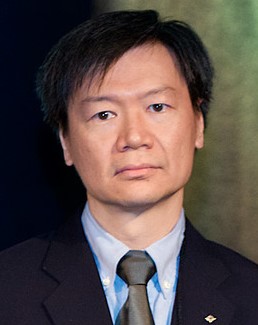 Hing Cheung So (蘇慶祥)合作论文数Department of Electrical Engineering, City University of Hong Kong9
 Minfen Shen合作论文数6
 Lisha Sun合作论文数4
 Y. T. Chan (陳耀棠)合作论文数Department of Electrical and Computer Engineering, Royal Military College of Canada3
 Chunqi Chang (常春起)合作论文数School of Biomedical Engineering, Shenzhen University Health Science Center;School of Computer Science & Technology, Beijing Institute of Technology3Kang Xiao-Yun (康晓云)合作论文数2
 Wing-Kwong (Ricky) Chan (陳榮光)合作论文数Department of Computer Science, College of Engineering, City University of Hong Kong2Ying Liu合作论文数1Guoliang Chang合作论文数1Xiao-yan LI (李小艳)合作论文数1
 Qiong Zhang合作论文数1
 Jialiang Chen (陈嘉良)合作论文数1
 Weize Sun (孙维泽)合作论文数College of Information Engineering, Shenzhen University1
 Dominic K. C. Ho合作论文数Computational Intelligence Signal Processing Laboratory, Department of Electrical Engineering & Computer Science, College of Engineering, University of Missouri1Chun-Hao Lin合作论文数1




