In this paper, an open transverse electromagnetic (TEM) cell for electro-optic (EO) probe calibration is designed. The simulated and measured $S$-parameter results are in good agreement, indicating an operational frequency range from DC to 1.9 GHz. Meanwhile, the performance of the TEM cell has been validated through probe calibration, including both frequency response and input/output performance. The results demonstrates that the proposed compact TEM cell is well suitable for the low-frequency characterization of EO probe.
With the growing complexity of space missions, achieving accurate three-dimensional (3D) reconstruction of space targets has become increasingly important for supporting perception, recognition, and on-orbit servicing. Conventional optical- or radar-based methods are limited by their sensing mechanisms, often producing incomplete geometries that lack cross-modal consistency and cannot generate geometry-consistent two-dimensional (2D) images from novel viewpoints. To address these limitations, a Shared-Geometry Neural Radiance Field (SG-NeRF) is proposed in this paper, which is a unified radar-optics joint 3D reconstruction framework that integrates inverse synthetic aperture radar (ISAR) and optical images. The core idea is to represent the target as a continuous volumetric density field parameterized by an implicit neural network, jointly constrained by physics-informed image formation models of both modalities. A dual-branch architecture is designed, where a shared backbone encodes the geometry and two modality-specific rendering heads synthesize optical and radar images. A modality-aware training strategy with non-uniform sampling is further adopted to achieve robust cross-modal supervision and closed-loop training. Simulation experiments demonstrate that SG-NeRF achieves high-fidelity reconstruction and novel-view synthesis under random and limited viewpoints and varying SNRs, which outperforms single-branch networks without fusion by effectively leveraging complementary information from optical and radar sensors.
An avionic weather radar antenna should be able to operate in multiple modes to cope with the change in resolution and elevation coverage as an aircraft approaches a storm cell that could expand 10 km in elevation. To solve this problem, we propose the addition of four auxiliary antenna (AuxAnt) arrays based on the phased-MIMO antenna structure to the existing avionic weather radar for future field data collection missions. Two types of signals are employed: the Type I signal transmitted by AuxAnt 1 and 2 is designed based on a non-overlapping subarray configuration, with Subarray 1 and 2 dedicated to the transmission of long and short pulses, respectively, so that the near-range blind zone is mitigated. Leveraging the waveform design and beamforming flexibility provided by the phased-MIMO antenna, pulse compressions based on frequency modulation and phase-coding are employed for wide and narrow main beams, respectively. To suppress the range sidelobes, adaptive pulse compression is used at the receiver end in substitute of the conventional matched filter. In contrast, the Type II signal transmitted by AuxAnt 3 and 4 is designed based on the contextual information so that the transmitted beampatterns have specific sidelobe levels at certain directions for interference suppression. The advantages of the proposed signaling strategy are verified with a series of ingeniously devised experiments based on real weather data.
The component-level line of sight (LOS) angle measurement of spacecraft is much desired during space rendezvous, especially for component-related operations, such as component status evaluation, component repair, etc. However, most existing methods rarely consider the component approaching scenario where a continuous, stable, real-time LOS angle measurement method for the component of interest is needed. In this paper, a continuous robust component-level LOS angle measurement method with high computational efficiency applicable to the approach of the key component is proposed. Firstly, an adaptive gamma correction method is introduced to enhance the image quality in complex and variable lighting environments. Secondly, optimized thresholding that exploits information entropy is proposed to identify the pixels that are supposed to be the target from the background. Region detection is subsequently performed to segment the target region into suspected component regions, which can account for target changes during the approach by seamless parameter adaptation. Then, solar panels are recognized and accurately segmented based on the prior knowledge of their spatial relationship with other components and unique shape features. Finally, the centers of solar panels are localized and their LOS angles are calculated. Extensive experiments are conducted to demonstrate the performance of our proposed method, including the verification of the superiority of the solar panel recognition and segmentation method using both simulated images generated by an image simulator and actual images taken by a camera in a dark-room considering the actual lighting in space, and the validation of the ability of supporting real-time component-level LOS angle measurement by ground semi-physical experiments with a guidance, navigation and control (GNC) system incorporated to simulate an on-line dynamic approach.
Can we directly visualize what we imagine in our brain together with what we describe? The inherent nature of human perception reveals that, when we think, our body can combine language description and build a vivid picture in our brain. Intuitively, generative models should also hold such versatility. In this paper, we introduce BrainDreamer, a novel end-to-end language-guided generative framework that can mimic human reasoning and generate high-quality images from electroencephalogram (EEG) brain signals. Our method is superior in its capacity to eliminate the noise introduced by non-invasive EEG data acquisition and meanwhile achieve a more precise mapping between the EEG and image modality, thus leading to significantly better-generated images. Specifically, BrainDreamer consists of two key learning stages: 1) modality alignment and 2) image generation. In the alignment stage, we propose a novel mask-based triple contrastive learning strategy to effectively align EEG, text, and image embeddings to learn a unified representation. In the generation stage, we inject the EEG embeddings into the pre-trained Stable Diffusion model by designing a learnable EEG adapter to generate high-quality reasoning-coherent images. Moreover, BrainDreamer can accept textual descriptions (e.g., color, position, etc.) to achieve controllable image generation. Extensive experiments show that our method significantly outperforms prior arts in terms of generating quality and quantitative performance.
Compressive sensing (CS) actively contributes to inverse synthetic aperture radar (ISAR) imaging with less raw data. The design of the measurement matrix and the development of reconstruction methods are critical processes in CS ISAR imaging. However, the existing CS ISAR imaging methods based on deep learning (DL) mainly focus on improving the performance of the reconstruction algorithm while ignoring the potential room for improvement given by the design of the measurement matrix. To take full advantage of the compression potential of the measurement matrix, we propose a CS ISAR imaging technique based on adaptive sampling, utilizing DL to learn a priori information about the target scene and designing an optimal sampling strategy that uses less data to achieve high-quality imaging. Furthermore, we integrate CS ISAR imaging into a composite network, in which the sampling and reconstruction stage is optimized globally, realizing deep adaptive sampling imaging with a high compression ratio. The CS ISAR imaging with adaptive sampling consists of sampling and reconstruction networks, where the sampling network compresses the radar data by a convolutional neural network, and the reconstruction network mainly performs the image reconstruction by convolutional dictionary learning. In addition, we adopt the block-based CS method in the sampling network to alleviate the computational burden caused by vectorizing and stacking the data and introduce a nonlocal self-similarity model into the reconstruction network to improve the imaging quality. The qualitative and quantitative analysis of the experiments on real data demonstrates that the novel method can achieve higher quality ISAR imaging than other nonadaptive sampling methods at a low sampling ratio, demonstrating its superiority.
Robust and accurate line segment matching remains a critical challenge in stereo vision, particularly in space-based applications where weak texture, structural symmetry, and strong illumination variations are common. This paper presents a multi-constraint progressive matching framework that integrates epipolar geometry, coplanarity verification, local homography, angular consistency, and distance-ratio invariance to establish reliable line correspondences. A unified cost matrix is constructed by quantitatively encoding these geometric residuals, enabling comprehensive candidate evaluation. To ensure global consistency and suppress mismatches, the final assignment is optimized using a Hungarian algorithm under one-to-one matching constraints. Extensive experiments on a wide range of stereo image pairs demonstrate that the proposed method consistently outperforms several advanced conventional approaches in terms of accuracy, robustness, and computational efficiency, as evidenced by both quantitative and qualitative evaluations.
Compressive sensing (CS) theory provides a positive contribution to ISAR imaging. However, the imaging performance of Compressive Sensing Inverse Synthetic Aperture Radar (CS ISAR) imaging methods is limited by the sparsity of the target scene. Dictionary learning (DicL) has been incorporated into CS ISAR imaging better to sparsify the target scene in a certain domain and improve imaging performance. However, the existing dictionary learning-based CS ISAR imaging methods are not adaptive enough and time-consuming. The algorithm parameters need to be manually adjusted for different targets. Their common iterative structure leads to relatively low computational efficiency. To improve the adaptive ability and computational efficiency of DicL-based CS ISAR imaging, we propose an enhanced convolutional DicL-based CS ISAR imaging method. Apart from exploiting the strong learning ability of the multi-layer network structure offered by the convolutional DicL, an attention mapping inferred in both spatial and channel dimensions and a multi-branch convolution are incorporated to enhance the sparsity in the latent space of the Convolutional DicL in CS ISAR imaging. The quantitative and qualitative analyses of the experimental results show that the proposed CS ISAR imaging method outperforms the existing DicL-based CS ISAR imaging methods and is also superior to the typical model-driven DL-based methods like ADMM-net.
With the popularization of high-end mobile devices, Ultra-high-definition (UHD) images have become ubiquitous in our lives. The restoration of UHD images is a highly challenging problem due to the exaggerated pixel count, which often leads to memory overflow during processing. Existing methods either downsample UHD images at a high rate before processing or split them into multiple patches for separate processing. However, high-rate downsampling leads to significant information loss, while patch-based approaches inevitably introduce boundary artifacts. In this paper, we propose a novel design paradigm to solve the UHD image restoration problem, called D2Net. D2Net enables direct full-resolution inference on UHD images without the need for high-rate downsampling or dividing the images into several patches. Specifically, we ingeniously utilize the characteristics of the frequency domain to establish long-range dependencies of features. Taking into account the richer local patterns in UHD images, we also design a multi-scale convolutional group to capture local features. Additionally, during the decoding stage, we dynamically incorporate features from the encoding stage to reduce the flow of irrelevant information. Extensive experiments on three UHD image restoration tasks, including low-light image enhancement, image dehazing, and image deblurring, show that our model achieves better quantitative and qualitative results than state-of-the-art methods.
The three-dimensional (3D) reconstruction of space targets is much helpful to space situational awareness. An improved Neural Radiance Fields(NeRF)-based dualbranch 3D reconstruction framework capable of integrating low-resolution ISAR and highresolution optical sensor data is proposed. By processing radar and optical images obtained from the same view angle, the dual-branch network outputs the volumetric density, amplitude and phase, and RGB values of the target, which are then rendered into ISAR and optical images. A combined loss of dual-branch between the rendered and input images supervises network training. Once trained, the network generates ISAR and optical images from arbitrary viewpoints and reconstructs the 3D structure of the target. Experimental results on synthetic datasets demonstrate that the accuracy of rendered images from novel viewpoints using the dual-branch network outperforms those obtained by the single-branch networks without fusion. The proposed 3D reconstruction framework also successfully reconstructs the complete structure of the target.
Accurate part segmentation of Space Target ISAR images is severely impeded by sidelobe striping interference. To address this, we propose a unified framework for striping suppression and semantic segmentation. Specifically, a Confidence-Guided Adaptive ADMM-Net employs pixel-wise dynamic thresholding to eliminate non-stationary noise while preserving weak structures such as solar panels. Subsequently, an Attention-Enhanced Segmentation network is designed to resolve boundary ambiguity by integrating multi-scale context aggregation and dense skip connections. Experimental results demonstrate that the proposed method significantly enhances both reconstruction fidelity (PSNR, SSIM) and segmentation accuracy (mIoU), effectively preventing component fracture under complex interference.
The Compressive Sensing Inverse Synthetic Aperture Radar (CS ISAR) imaging methods are extremely beneficial for system simplification and reducing the data processing burden in ISAR imaging. Dictionary learning (DicL)-based methods have somewhat extended the initial requirement of sparsity in a transformed domain to more general low-dimensional latent representations. However, the high computational complexity and manual tuning of parameters in the DicL-based method result in repetitive optimization operations needed when processing different data, which is time-intensive. To improve the efficiency and flexibility of CS ISAR imaging, we propose a deep dictionary learning method for CS ISAR imaging, which combines DicL with deep learning (DL) techniques to realize high-quality adaptive imaging with incomplete data. The proposed method unfolds the DicL process into a cascade network and optimizes a transform dictionary and sparse representation coefficients adaptively according to the prior information of the target. The qualitative and quantitative analyses of the experimental results show that the proposed method is superior to the traditional imaging method and can be effectively used for ISAR high-resolution imaging under incomplete data.
Localization and measurement of noncooperative spacecrafts in space are of great significance for on-orbit flight safety, rendezvous, and other operations. The multisensor fusion-based perception has gained much interest in existing space situational awareness systems, among which the radar-optical fusion is very typical. The all-day persistent detection and perception ability of the radar is complemented to the regular optical image perception. However, few methods have been explicitly reported on how to deeply fuse the radar and optical data to enhance the perception capability. This article presents a spaceborne radar-optical joint perception scheme to enhance the situation awareness ability of the on-orbit flying spacecraft, focusing on the accurate far-range localization of the approaching spacecraft and measurement of its key components by leveraging the orthogonal observation geometry provided by the radar and camera imaging. A "one-radar, three-camera" configuration is adopted to support single-platform, coplatform and cross-platform sensing with geometric flexibility. The localization stage combines radar slant range with optical azimuth and elevation angles through a spatiotemporal synchronization. Under a 5 dB signal-to-noise ratio, the method achieves an average relative localization error of 0.3%. For component measurement, three sensing modes are designed and fused using Dempster-Shafer theory to address illumination and range challenges: 1) radar-only, 2) coplatform radar-optical, and 3) cross-platform radar-optical. Experimental results show that under ideal conditions, the proposed system achieves length and orientation estimation errors within 3% and 2 degrees, respectively. Even in poor lighting or far-range scenarios, radar ensures measurement reliability and improves accuracy by over 10% compared to strategies involving optical sensing. Although optical-only experiments are not performed, the proposed framework is compatible with optical-only inputs due to its modular structure.
High-fidelity 3D reconstruction of non-cooperative space targets faces challenges due to single-modality limitations: optical images suffer from geometric collapse under sparse views, while Inverse Synthetic Aperture Radar (ISAR) images struggle with speckle noise. To address these conflicts, we propose IO-NeuS, a dual-stream heterogeneous fusion neural implicit framework designed for deep geometric consensus. Specifically, we introduce: (1) an asymmetric pose optimization module to correct ISAR misalignment via differentiable rendering; (2) a frequency-enhanced geometry learning strategy incorporating Gabor filters for time-frequency localization and DCT-based Fre-quency Channel Attention (FCA) to overcome spectral bias and capture high-frequency fine structures; and (3) an uncertainty-aware rendering mechanism to adaptively suppress radar speckle noise. Experiments demonstrate that IO-NeuS achieves high accuracy, outperforming state-of-the-art methods like IDR and NeuS.
When employing the 3D Inverse Synthetic Aperture Radar (ISAR) technique, the accuracy of the target reconstruction is significantly influenced by baseline length. In cases involving missile-borne radar, the baseline length is severely constrained by the size of the carrier platform, leading to a deterioration in imaging quality. Especially if the measurement is affected by the noise, a slight noise can cause great damage to the result. To solve this problem, we develop a squint Interferometric ISAR (InISAR) imaging method for compact multichannel radar system with short baselines under low Signal-to-Noise Ratio (SNR) environments. Firstly, subarray signals are synthesized to get radar echoes with higher SNR. At the same time, the baseline length also increases relative to the array element spacing. Cross-range scaling and peak extraction are then employed to acquire the initial range and azimuth information. Finally, the interferometric technique combined with coordinate transform (CT) and iterative operation is used to obtain the height information and correct image distortion. The proposed method can better the reconstruction result of the target for short baselines antenna configuration with the influence of noise. Numerous simulations have been conducted to verify the effectiveness of the proposed method.
Sparse Aperture (SA) ISAR imaging, which relies on sparse prior knowledge to solve optimization problems with missing data, has gained much attention in recent years. However, most sparse ISAR imaging methods that assume the target reflectivity is sparse in the spatial domain are insufficient to capture the surface-like features of the target if no sparse representations are found for it and well incorporated in the imaging process. In order to capture the continuous nature of real target surfaces while exploiting sparsity in a tailored latent space, we introduced a Total Deep Variation network (TDV) to improve the performance of ISAR imaging with sparse aperture. Firstly, we utilize prior knowledge on bounded Total Variation (TV) to constrain the optimization-based imaging. Secondly, convolutional layers and activation functions have been used to implement the TV regularization and expand the TV regularization-based ISAR imaging into a cascade network, which automatically adjusts the free parameters of the optimization problem. To verify the effectiveness and superiority of the proposed method, we compared the performance on measured data with different methods. The results show that the Total Deep Variation network can perform lower reconstruction errors and higher resolution than traditional methods.
Conventional Fourier transform-based Inverse Synthetic Aperture Radar (ISAR) imaging cannot deal with the cases of incomplete radar echoes, in which the data needs to be specially processed by Sparse Aperture (SA) imaging methods. Most current SA-ISAR imaging employs sparsity-driven optimization methods. However, the assumption that the target reflectivity is sparse in the spatial domain is insufficient to capture the surface and edge features of the target if no sparse representations are found for the target and well incorporated in the imaging process. In view of the edge-preserving capability of Total Variation (TV) and the strong learning ability of the Deep Neural Network (DNN), we propose a TV-driven network to improve the SA ISAR imaging performance. We first develop a fast TV regularization method to perform the imaging where the Gradient Descent (GD) along with the Momentum Acceleration (MA) are incorporated to increase the computational efficiency. Then, we unwrap the iterative fast TV regularization into a cascaded neural network to make the key imaging parameters learnable, leading to improved imaging performance, which we refer to as FGDTV-Net. Experiments under a variety of scenarios show that the proposed FGDTV-Net for SA-ISAR imaging is superior to existing SA imaging algorithms in preserving surface and edge features and is more robust in low signal-to-noise scenarios.
Being a crucial component of railway tracks, monitoring the health condition of fasteners stands as a critical aspect within the realm of railroad track management, ensuring the normal passage of trains. However, traditional track fastener detection methods mainly use artificial checks, giving rise to challenges encompassing reduced efficiency, safety hazards, and poor detection accuracy. Consequently, we introduce an innovative model for the detection of track fastener defects, termed YOLOv5-CGBD. In this study, we first imbue the backbone network with the CBAM attention mechanism, which elevates the network's emphasis on pertinent feature extraction within defective regions. Subsequently, we replace the standard convolutional blocks in the neck network with the GSConv convolutional module, achieving a delicate balance between the model's accuracy and computational speed. Augmenting our model's capacities for efficient feature map fusion and reorganization across diverse scales, we integrate the weighted bidirectional feature pyramid network (BiFPN). Ultimately, we manipulate a lightweight decoupled head structure, which improves both detection precision and model robustness. Concurrently, to enhance the model's performance, a data augmentation strategy is employed. The experimental findings testify to the YOLOv5-CGBD model's ability to conduct real-time detection, with mAP0.5 scores of 0.971 and 0.747 for mAP0.5:0.95, surpassing those of the original YOLOv5 model by 2.2% and 4.1%, respectively. Furthermore, we undertake a comparative assessment, contrasting the proposed methodology with alternative approaches. The experimental outcomes manifest that the YOLOv5-CGBD model exhibits the most exceptional comprehensive detection performance while concurrently maintaining a high processing speed.
Attitude and size estimation of spacecraft components is one of the main contents of space target awareness. In this paper, a radar-camera joint observation scheme applicable to multiple spaceborne platforms is developed to measure the orientation and length of the spacecraft solar panels, which benefits from the observation diversity jointly provided by radars and cameras. Firstly, an automatic keypoint detection network is trained to extract the endpoints of the solar panels in the radar and optical images with high accuracy. Then, the projected lengths of the solar panels calculated from the extracted endpoints along with the observation equations of the radars and cameras are jointly used to obtain the orientation and actual length of the solar panels by an optimization approach. Simulated experiments are conducted to demonstrate the performance of the proposed measuring methods, which achieves length estimation errors within 0.2 m and orientation estimation errors within 1°. The proposed method can be extended to the measurement of main body and other spacecraft components having regular features.
 Daiyin Zhu (朱岱寅)合作论文数College of Electronic and Information Engineering, Nanjing University of Aeronautics and Astronautics65
 Birsen Yazıcı合作论文数Department of Biomedical Engineering, Rensselaer Polytechnic Institute;Department of Electrical, Computer & Systems Engineering, Rensselaer Polytechnic Institute21
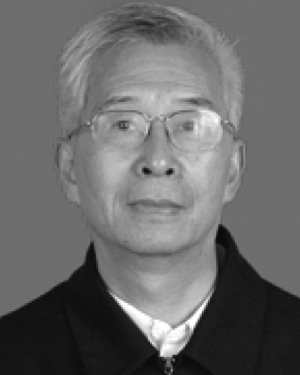 Zhaoda Zhu合作论文数16
 Changyu Hu合作论文数Key Laboratory of Radar Imaging and Microwave Photonics of the Ministry of Education, Nanjing University of Aeronautics and Astronautics, Nanjing, China14
 Otmar Loffeld合作论文数university of siegen11
 Rui Gong合作论文数9Jun Guo合作论文数Nanjing University of Aeronautics and Astronautics, People's Republic of China9
 Xiang Zhang (张翔)合作论文数南京理工大学机械工程学院9
 Hongyong Zhao (赵洪涌)合作论文数Nanjing University of Aeronautics and Astronautics9
 Miguel Heredia Conde合作论文数Center for Sensorsystems (ZESS),, Univ. of Siegen;c;Center for Sensorsystems (ZESS),, Univ. of Siegen9Gong Zhang (张弓)合作论文数南京航空航天大学电子信息工程学院9xingxing zhang (张兴星)合作论文数6Ronghua Du合作论文数6
 Ning Li (李宁)合作论文数School of Computer and Information Engineering, Henan University6
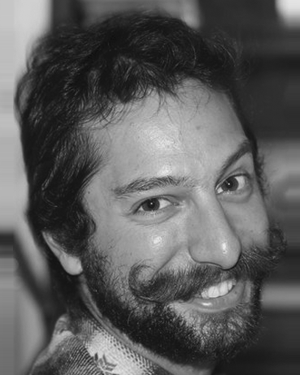 Can Evren Yarman合作论文数Department of Electrical;Computer and System Engineering;Rensselaer Polytechnic Institute;Department of Electrical|Computer and System Engineering, Rensselaer Polytechnic Institute6Dongqiang ZHU (朱栋强)合作论文数5
 Chenyan Xue合作论文数5Xusheng Zhuang (庄旭昇)合作论文数5Hanhan Liu合作论文数4
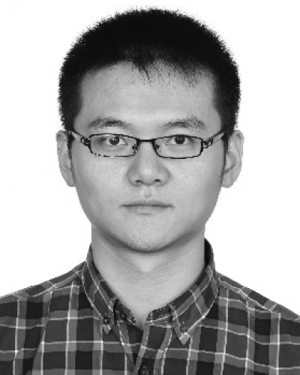 Ze Li合作论文数4
 He Yan (闫贺)合作论文数College of Electronic and Information Engineering, Nanjing University of Aeronautics and Astronautics4
 Di Wu (吴迪)合作论文数College of Electronic and Information Engineering, Nanjing University of Aeronautics and Astronautics4Hongqiao Wang合作论文数Xi’an Research Institute of Hi-Tech, Xi’an 710025, China4Chi Bing-qing合作论文数3Zd Zhu合作论文数3Mian Wang合作论文数3Shuo PANG (庞铄)合作论文数3Changyu HU (胡长雨)合作论文数3Bin Wu合作论文数3Xuan ZHANG (张璇)合作论文数3
 Xinhua Mao (毛新华)合作论文数College of Electronic and Information Engineering, Nanjing University of Aeronautics and Astronautics3
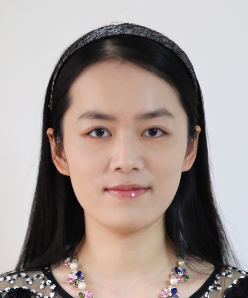 Zhe Geng (耿哲)合作论文数College of Electronic and Information Engineering, Nanjing University of Aeronautics and Astronautics3
 Jindong Zhang (张劲东)合作论文数College of Electronic and Information Engineering, Nanjing University of Aeronautics and Astronautics3Yong Li合作论文数3Ke Liu合作论文数2Xiaoya Jia合作论文数2Zhenxiao Cao合作论文数2
 Qianru Hou合作论文数2Fanwang Meng合作论文数2Chu XU (徐楚)合作论文数2
 h cagri yanik合作论文数Dept Elect Comp & Syst Engn, Rensselaer Polytech Inst2Jun QIAN (钱君)合作论文数2Shao-hua WU (伍少华)合作论文数2Yiran YUE (岳怡然)合作论文数2Feng Tian合作论文数Dept Nucl Sci & Technol, Nanjing Univ Aeronaut & Astronaut2Hao DENG (邓昊)合作论文数2Zhuo Xiao (肖卓)合作论文数2Liang Qin (秦亮)合作论文数2Ning Wang (王宁)合作论文数2




