Referring Expression Comprehension (REC) is commonly studied under dataset-specific fine-tuning, resulting in specialist models with limited cross-dataset generalization. In this work, we revisit REC from the perspective of unified open-vocabulary grounding and identify representation degeneration as a key obstacle to scaling a single generalist model. To preserve representation diversity, we propose a holistic data-model co-design framework. Architecturally, we introduce the Modulated Attention-Contrastive Head (mACH) for efficient token-level vision-language alignment and a text-conditioned JEPA auxiliary stream that provides complementary gradient support to preserve alignment-active representations without inference overhead. On the data side, we introduce Objects365-Caption, enriching Objects365 with context-aware referring expressions for large-scale language supervision. We further provide a theoretical analysis showing that complementary gradient subspaces preserve alignment capacity and thereby scale representation diversity. Extensive experiments demonstrate that our single-checkpoint framework achieves highly competitive performance on standard REC benchmarks while exhibiting strong generalization across heterogeneous grounding datasets without benchmark-specific adaptation.
Recent advancements in Speech Large Language Models have demonstrated remarkable capabilities in understanding complex audio tasks. Despite this progress, their long-context inference remains severely bottlenecked by prohibitive KV cache memory demands. Existing text-centric compression methods struggle here, often disrupting speech continuity or discarding crucial semantic cues. To address this, we propose VoxZip, a train-free, two-stage semantic-anchored KV cache compression framework. The first stage uses automatic speech recognition (ASR) transcriptions as explicit semantic anchors to temporally align, compress, and fuse audio tokens, significantly reducing the initial KV cache while elevating token information density. To further improve the compression ratio, the second stage employs a dynamic filtering strategy based on temporally decayed accumulated attention to evict non-essential tokens while mitigating early-token bias. Comprehensive evaluations on Qwen3-Omni across six diverse audio benchmarks demonstrate the superiority of our approach. VoxZip excels in long-audio reasoning and consistently maintains high-fidelity perception on short-form tasks. Notably, it sustains over 90% of the uncompressed baseline performance even under an aggressive 20x KV cache compression in long-context scenarios. Furthermore, at a 4x compression ratio, VoxZip yields a 1.9x increase in inference throughput alongside a 3.3x reduction in peak memory overhead. Code and models will be available at https://github.com/MM-Speech/VoxZip.
The rapid evolution of multimodal large models has revolutionized the simulation of diverse characters in speech dialogue systems, enabling a novel interactive paradigm. Character attributes are manifested not only in textual responses but also through vocal features, as speech conveys rich paralinguistic information that is challenging to quantify. This poses significant difficulties in evaluating the character alignment of role-playing agents. To address these challenges, we present RoleJudge, an evaluation framework that leverages audio large language models to systematically assess the alignment between speech and character across multiple modalities and dimensions. Furthermore, we introduce RoleChat, the first voice role-playing evaluation dataset enriched with chain-of-thought reasoning annotations, comprising a diverse set of authentic and LLM-generated speech samples. Utilizing this dataset, we implement a multi-stage training paradigm and incorporate Standard Alignment in reinforcement learning to mitigate reward misalignment during optimization. Experimental results in terms of accuracy and subjective assessment demonstrate that RoleJudge outperforms various baseline models, validating the effectiveness of our multidimensional evaluation framework.
Extensive research on LLM-based spoken dialogue systems has significantly advanced the development of intelligent voice assistants. However, the integration of role information within speech remains an underexplored area, limiting its application in real-world scenarios, particularly in multi-party dialogue settings. With the growing demand for personalization, voice assistants that can recognize and remember users establish a deeper connection with them. We focus on enabling LLMs with speaker-awareness capabilities and enhancing their understanding of character settings through synthetic data to generate contextually appropriate responses. We introduce Persona-Dialogue, the first large-scale multi-party spoken dialogue dataset that incorporates speaker profiles. Based on this dataset, we propose PAChat, an architecture that simultaneously models both linguistic content and speaker features, allowing LLMs to map character settings to speaker identities in speech. Through extensive experiments, we demonstrate that PAChat successfully achieves speaker-specific responses, character understanding, and the generation of targeted replies in multi-party dialogue scenarios, surpassing existing spoken dialogue systems.
With the rapid development of large language models, researchers have created increasingly advanced spoken dialogue systems that can naturally converse with humans. However, these systems still struggle to handle the full complexity of real-world conversations, including audio events, musical contexts, and emotional expressions, mainly because current dialogue datasets are constrained in both scale and scenario diversity. In this paper, we propose leveraging synthetic data to enhance the dialogue models across diverse scenarios. We introduce ShareChatX, the first comprehensive, large-scale dataset for spoken dialogue that spans diverse scenarios. Based on this dataset, we introduce OmniChat, a multi-turn dialogue system with a heterogeneous feature fusion module, designed to optimize feature selection in different dialogue contexts. In addition, we explored critical aspects of training dialogue systems using synthetic data. Through comprehensive experimentation, we determined the ideal balance between synthetic and real data, achieving state-of-the-art results on the real-world dialogue dataset DailyTalk. We also highlight the crucial importance of synthetic data in tackling diverse, complex dialogue scenarios, especially those involving audio and music. For more details, please visit our demo page at .
Transformer-based methods have gone main-stream in multimodal sequential learning. The intra and inter modality interactions are captured by the query-key associations of multi-head attention. In this way, the calculated multimodal contexts (attentional results) are expected to be relevant to the query modality. However, in existing literature, the alignment degree between different calculated attentional results of the same query are under-explored. Based on this concern, we propose a new constrained scheme called Multimodal Contextual Contrast (MCC), which could align the multiple attentional results from both local and global perspectives, making the information capture more efficient. Concretely, the calculated attentional results of different modalities are mapped into a common feature space, those attentional vectors with the same query are considered as a positive group and the remaining sets are negative. From local perspective, we sample the negative groups for a positive group by randomly changing the sequential step of one specific context and keeping the other stay the same. From coarse global perspective, we divide all the contextual groups into two sets (i.e., aligned and unaligned), making the total score of aligned group relatively large. We extend the vectorial inner product operation for more input and calculate the aligned score for each multimodal group. Considering that the computational complexity scales exponentially to the number of modalities, we adopt stochastic expectation approximation (SEA) for the real process. The extensive experimental results on several tasks reveal the effectiveness of our contributions.
Direct speech-to-speech translation achieves high-quality results through the introduction of discrete units obtained from self-supervised learning. This approach circumvents delays and cascading errors associated with model cascading. However, talking head translation, converting audio-visual speech (i.e., talking head video) from one language into another, still confronts several challenges compared to audio speech: (1) Existing methods invariably rely on cascading, synthesizing via both audio and text, resulting in delays and cascading errors. (2) Talking head translation has a limited set of reference frames. If the generated translation exceeds the length of the original speech, the video sequence needs to be supplemented by repeating frames, leading to jarring video transitions. In this work, we propose a model for talking head translation, \textbf{TransFace}, which can directly translate audio-visual speech into audio-visual speech in other languages. It consists of a speech-to-unit translation model to convert audio speech into discrete units and a unit-based audio-visual speech synthesizer, Unit2Lip, to re-synthesize synchronized audio-visual speech from discrete units in parallel. Furthermore, we introduce a Bounded Duration Predictor, ensuring isometric talking head translation and preventing duplicate reference frames. Experiments demonstrate that our proposed Unit2Lip model significantly improves synchronization (1.601 and 0.982 on LSE-C for the original and generated audio speech, respectively) and boosts inference speed by a factor of 4.35 on LRS2. Additionally, TransFace achieves impressive BLEU scores of 61.93 and 47.55 for Es-En and Fr-En on LRS3-T and 100% isochronous translations.
Generative retrieval has recently emerged as a promising approach to sequential recommendation, framing candidate item retrieval as an autoregressive sequence generation problem. However, existing generative methods typically focus solely on either behavioral or semantic aspects of item information, neglecting their complementary nature and thus resulting in limited effectiveness. To address this limitation, we introduce EAGER, a novel generative recommendation framework that seamlessly integrates both behavioral and semantic information. Specifically, we identify three key challenges in combining these two types of information: a unified generative architecture capable of handling two feature types, ensuring sufficient and independent learning for each type, and fostering subtle interactions that enhance collaborative information utilization. To achieve these goals, we propose (1) a two-stream generation architecture leveraging a shared encoder and two separate decoders to decode behavior tokens and semantic tokens with a confidence-based ranking strategy; (2) a global contrastive task with summary tokens to achieve discriminative decoding for each type of information; and (3) a semantic-guided transfer task designed to implicitly promote cross-interactions through reconstruction and estimation objectives. We validate the effectiveness of EAGER on four public benchmarks, demonstrating its superior performance compared to existing methods. Our source code will be publicly available on PapersWithCode.com.
Recent methods for video question answering (VideoQA), aiming to generate answers based on given questions and video content, have made significant progress in cross-modal interaction. From the perspective of video understating, these existing frameworks concentrate on the various levels of visual content, partially assisted by subtitles. However, audio information is also instrumental in helping get correct answers, especially in videos with real-life scenarios. Indeed, in some cases, both audio and visual contents are required and complement each other to answer questions, which is defined as audio-visual question answering (AVQA). In this paper, we focus on importing raw audio for AVQA and contribute in three ways. Firstly, due to no dataset annotating QA pairs for raw audio, we introduce E-AVQA, a manually annotated and large-scale dataset involving multiple modalities. E-AVQA consists of 34,033 QA pairs on 33,340 clips of 18,786 videos from the e-commerce scenarios. Secondly, we propose a multi-granularity relational attention method with contrastive constraints between audio and visual features after the interaction, named MGN, which captures local sequential representation by leveraging the pairwise potential attention mechanism and obtains global multi-modal representation via designing the novel ternary potential attention mechanism. Thirdly, our proposed MGN outperforms the baseline on dataset E-AVQA, achieving 20.73% on WUPS@0.0 and 19.81% on BLEU@1, demonstrating its superiority with at least 1.02 improvement on WUPS@0.0 and about 10% on timing complexity over the baseline.
3D visual grounding involves finding a target object in a 3D scene that corresponds to a given sentence query. Although many approaches have been proposed and achieved impressive performance, they all require dense object-sentence pair annotations in 3D point clouds, which are both time-consuming and expensive. To address the problem that fine-grained annotated data is difficult to obtain, we propose to leverage weakly supervised annotations to learn the 3D visual grounding model, i.e., only coarse scene-sentence correspondences are used to learn object-sentence links. To accomplish this, we design a novel semantic matching model that analyzes the semantic similarity between object proposals and sentences in a coarse-to-fine manner. Specifically, we first extract object proposals and coarsely select the top-K candidates based on feature and class similarity matrices. Next, we reconstruct the masked keywords of the sentence using each candidate one by one, and the reconstructed accuracy finely reflects the semantic similarity of each candidate to the query. Additionally, we distill the coarse-to-fine semantic matching knowledge into a typical two-stage 3D visual grounding model, which reduces inference costs and improves performance by taking full advantage of the well-studied structure of the existing architectures. We conduct extensive experiments on ScanRefer, Nr3D, and Sr3D, which demonstrate the effectiveness of our proposed method.
Audio-visual text generation aims to understand multi-modality contents and translate them into texts. Although various transfer learning techniques of text generation have been proposed, they focused on uni-modal analysis (e.g., text-to-text, visual-to-text) and lack consideration of multi-modal content and cross-modal relation. Motivated by the fact that humans can recognize the timbre of the same low-level concepts (e.g., footstep, rainfall, and laughing), even in different visual conditions, we aim to mitigate the domain discrepancies by audio-visual correlation. In this paper, we propose a novel Transferable Audio-Visual Text Generation framework, named TAVT, which consists of two key components: Audio-Visual Meta-Mapper (AVMM) and Dual Counterfactual Contrastive Learning (DCCL). (1) AVMM first introduces a universal auditory semantic space and drifts the domain-invariant low-level concepts into visual prefixes. Then the reconstructbased learning encourages the AVMM to learn "which pixels belong to the same sound" and achieve audio-enhanced visual prefix. The well-trained AVMM can be further applied to unimodal setting. (2) Furthermore, DCCL leverages the destructive counterfactual transformations to provide cross-modal constraints for AVMM from the perspective of feature distribution and text generation. (3) The experimental results show that TAVT outperforms the state-of-the-art methods across multiple domains (cross-datasets, cross-categories) and various modal settings (uni-modal, multi-modal).
Speech Recognition builds a bridge between the multimedia streaming (audio-only, visual-only or audio-visual) and the corresponding text transcription. However, when training the specific model of new domain, it often gets stuck in the lack of new-domain utterances, especially the labeled visual utterances. To break through this restriction, we attempt to achieve zero-shot modality transfer by maintaining the multi-modality alignment in phoneme space learned with unlabeled multimedia utterances in the high resource domain during the pre-training, and propose a training system Open-modality Speech Recognition (OpenSR) that enables the models trained on a single modality (e.g., audio-only) applicable to more modalities (e.g., visual-only and audio-visual). Furthermore, we employ a cluster-based prompt tuning strategy to handle the domain shift for the scenarios with only common words in the new domain utterances. We demonstrate that OpenSR enables modality transfer from one to any in three different settings (zero-, few- and full-shot), and achieves highly competitive zero-shot performance compared to the existing few-shot and full-shot lip-reading methods. To the best of our knowledge, OpenSR achieves the state-of-the-art performance of word error rate in LRS2 on audio-visual speech recognition and lip-reading with 2.7% and 25.0%, respectively.
3D visual grounding aims to localize the target object in a 3D point cloud by a free-form language description. Typically, the sentences describing the target object tend to provide information about its relative relation between other objects and its position within the whole scene. In this work, we propose a relation-aware one-stage framework, named 3D Relative Position-aware Network (3DRP-Net), which can effectively capture the relative spatial relationships between objects and enhance object attributes. Specifically, 1) we propose a 3D Relative Position Multi-head Attention (3DRP-MA) module to analyze relative relations from different directions in the context of object pairs, which helps the model to focus on the specific object relations mentioned in the sentence. 2) We designed a soft-labeling strategy to alleviate the spatial ambiguity caused by redundant points, which further stabilizes and enhances the learning process through a constant and discriminative distribution. Extensive experiments conducted on three benchmarks (i.e., ScanRefer and Nr3D/Sr3D) demonstrate that our method outperforms all the state-of-the-art methods in general. The source code will be released on GitHub.
Multi-media communications facilitate global interaction among people. However, despite researchers exploring cross-lingual translation techniques such as machine translation and audio speech translation to overcome language barriers, there is still a shortage of cross-lingual studies on visual speech. This lack of research is mainly due to the absence of datasets containing visual speech and translated text pairs. In this paper, we present AVMuST-TED, the first dataset for Audio-Visual Multilingual Speech Translation, derived from TED talks. Nonetheless, visual speech is not as distinguishable as audio speech, making it difficult to develop a mapping from source speech phonemes to the target language text. To address this issue, we propose MixSpeech, a cross-modality self-learning framework that utilizes audio speech to regularize the training of visual speech tasks. To further minimize the cross-modality gap and its impact on knowledge transfer, we suggest adopting mixed speech, which is created by interpolating audio and visual streams, along with a curriculum learning strategy to adjust the mixing ratio as needed. MixSpeech enhances speech translation in noisy environments, improving BLEU scores for four languages on AVMuST-TED by +1.4 to +4.2. Moreover, it achieves state-of-the-art performance in lip reading on CMLR (11.1%), LRS2 (25.5%), and LRS3 (28.0%).
Visual temporal-aligned translation aims to transform the visual sequence into natural words, including important applicable tasks such as lipreading and fingerspelling recognition. However, various performance habits of specific words by different speakers or signers can lead to visual ambiguity, which has become a major obstacle to the development of current methods. Considering the constraints above, the generalization ability of the translation system is supposed to be further explored through the evaluation results on unseen performers. In this paper, we develop a novel generalizable framework named Contrastive Token-Wise Meta-learning (CtoML), which strives to transfer recognition skills to unseen performers. To the best of our knowledge, employing meta-learning methods directly in the image domain poses two main challenges, and we propose corresponding strategies. First, sequence prediction in visual temporal-aligned translation, which aims to generate multiple words autoregressively, is different from the vanilla classification. Thus, we devise the token-wise diversity-aware weights for the meta-train stage, which encourages the model to make efforts on those ambiguously recognized tokens. Second, considering the consistency of word-visual prototypes across different domains, we develop two complementary global and local contrastive losses to maintain inter-class relationships and promote domain-independent. We conduct extensive experiments on the widely-used lipreading dataset GRID and the fingerspelling dataset ChicagoFSWild, and the experimental results show the effectiveness of our proposed CtoML over existing state-of-the-art methods.
Current video captioning efforts most focus on describing a single video while the need for captioning videos in groups has increased considerably. In this study, we propose a new task, group video captioning, which aims to infer the desired content among a group of target videos and describe it with another group of related reference videos. This task requires the model to effectively summarize the target videos and accurately describe the distinguishing content compared to the reference videos, and it becomes more difficult as the video length increases. To solve this problem, 1) First, we propose an efficient relational approximation (ERA) to identify the shared content among videos while the complexity is linearly related to the number of videos. 2) Then, we introduce a contextual feature refinery with intra-group self-supervision to capture the contextual information and further refine the common properties. 3) In addition, we construct two group video captioning datasets derived from the YouCook2 and the ActivityNet Captions. The experimental results demonstrate the effectiveness of our method on this new task.
The task of spoken video grounding aims to localize moments in videos that are relevant to descriptive spoken queries. However, extracting semantic information from speech and modeling the cross-modal correlation pose two critical challenges. Previous studies solve them by representing spoken queries based on the matched video frames, which require tremendous effort for frame-level labeling. In this work, we investigate weakly-supervised spoken video grounding, i.e., learning to localize moments without expensive temporal annotations. To effectively represent the cross-modal semantics, we propose Semantic Interaction Learning (SIL), a novel framework consisting of the acoustic-semantic pre-training (ASP) and acoustic-visual contrastive learning (AVCL). In ASP, we pre-train an effective encoder for the grounding task with three comprehensive tasks, where the robustness task enhances stability by explicitly capturing the invariance between time- and frequency-domain features, the conciseness task avoids over-smooth attention by compressing long sequence into segments, and the semantic task improves spoken language understanding by modeling the precise semantics. In AVCL, we mine pseudo labels with discriminative sampling strategies and directly strengthen the interaction between speech and video by maximizing their mutual information. Extensive experiments demonstrate the effectiveness and superiority of our method.
Multi-modal Contrastive Representation learning aims to encode different modalities into a semantically aligned shared space. This paradigm shows remarkable generalization ability on numerous downstream tasks across various modalities. However, the reliance on massive high-quality data pairs limits its further development on more modalities. This paper proposes a novel training-efficient method for learning MCR without paired data called Connecting Multi-modal Contrastive Representations (C-MCR). Specifically, given two existing MCRs pre-trained on (A, B) and (B, C) modality pairs, we project them to a new space and use the data from the overlapping modality B to aligning the two MCRs in the new space. Meanwhile, since the modality pairs (A, B) and (B, C) are already aligned within each MCR, the connection learned by overlapping modality can also be transferred to non-overlapping modality pair (A, C). To unleash the potential of C-MCR, we further introduce a semantic-enhanced inter- and intra-MCR connection method. We first enhance the semantic consistency and completion of embeddings across different modalities for more robust alignment. Then we utilize the inter-MCR alignment to establish the connection, and employ the intra-MCR alignment to better maintain the connection for inputs from non-overlapping modalities. To demonstrate the effectiveness of C-MCR, we connect CLIP and CLAP via texts to derive audio-visual representations, and integrate CLIP and ULIP via images for 3D-language representations. Remarkably, without using any paired data, C-MCR for audio-visual achieves state-of-the-art performance on audio-image retrieval, audio-visual source localization, and counterfactual audio-image recognition tasks. Furthermore, C-MCR for 3D-language also attains advanced zero-shot 3D point cloud classification accuracy on ModelNet40.
Direct speech-to-speech translation (S2ST) aims to convert speech from one language into another, and has demonstrated significant progress to date. Despite the recent success, current S2ST models still suffer from distinct degradation in noisy environments and fail to translate visual speech (i.e., the movement of lips and teeth). In this work, we present AV-TranSpeech, the first audio-visual speech-to-speech (AV-S2ST) translation model without relying on intermediate text. AV-TranSpeech complements the audio stream with visual information to promote system robustness and opens up a host of practical applications: dictation or dubbing archival films. To mitigate the data scarcity with limited parallel AV-S2ST data, we 1) explore self-supervised pre-training with unlabeled audio-visual data to learn contextual representation, and 2) introduce cross-modal distillation with S2ST models trained on the audio-only corpus to further reduce the requirements of visual data. Experimental results on two language pairs demonstrate that AV-TranSpeech outperforms audio-only models under all settings regardless of the type of noise. With low-resource audio-visual data (10h, 30h), cross-modal distillation yields an improvement of 7.6 BLEU on average compared with baselines. Audio samples are available at https://AV-TranSpeech.github.io
Visual segmentation from language queries has attracted significant research interest. Despite the effectiveness, existing works require expensive labeling and suffer severe degradation when deployed to an unseen domain. In this paper, we investigate a novel task Cross-domain Query-based Visual Segmentation (CQVS), aiming to adapt the segmentation model from a labeled domain to a new unlabeled domain. The challenges of CQVS stem from three domain discrepancies: (1) multi-modal content shift, (2) uni-modal feature gap and (3) cross-modal relation bias. Existing domain adaptation methods fail to address them comprehensively and precisely (e.g. at pixel level), thus being suboptimal for CQVS. To overcome this limitation, we propose Semantic-conditioned Dual Adaptation (SDA), a novel framework to achieve precise feature- and relation-invariant across domains via a universal semantic structure. The SDA consists of two key components: Content-aware Semantic Modeling (CSM) and Dual Adaptive Branches (DAB). First, CSM introduces a common semantic space across domains to provide uniform guidance. Then, DAB seamlessly leverages this semantic information to develop a contrastive feature branch for category-wise pixel alignment, and design a reciprocal relation branch for relation enhancement via two complementary masks. Extensive experiments on three video benchmarks and three image benchmarks evidence the superiority of our approach over the state-of-the-arts.
 Zhou Zhao (赵洲)合作论文数College of Computer Science and Technology, Zhejiang University;College of Artificial Intelligence, Zhejiang University19
 Xize Cheng (成曦泽)合作论文数School of Computer Science and Technology, Zhejiang University;Huawei Cloud18
 Tao Jin (金涛)合作论文数School of Software Technology, Zhejiang University15
 Wang Lin合作论文数Zhejiang University11
 Zehan Wang (王泽寒)合作论文数College of Computer Science, Zhejiang University6
 Aoxiong Yin (尹傲雄)合作论文数Moonshot AI5
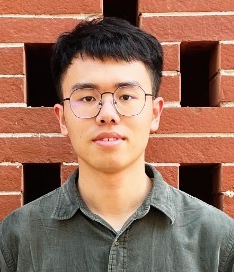 Rongjie Huang (黄融杰)合作论文数Meta5
 Dongjie Fu合作论文数School of Software Technology, Zhejiang University4Haifeng Huang合作论文数3
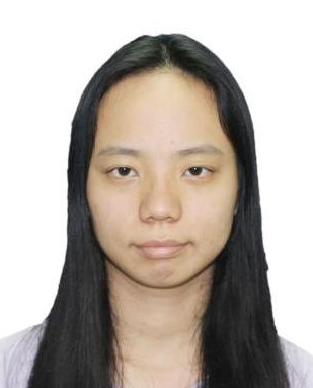 Wen-Wen Pan合作论文数Laboratory of Visual Intelligence and Pattern Analysis, Computer Science Department, Zhejiang University3
 Yang Zhao合作论文数Zhejiang University3Xiaoda Yang合作论文数2
 Huadai Liu (刘华岱)合作论文数Alibaba Group2
 Yichen Zhu (祝毅晨)合作论文数Midea Group2
 Duan Xinyu合作论文数Media Res. Inst., Anyang Normal Univ.;c2Yan Xia合作论文数Zhejiang University2Lujia Yang合作论文数1Jingyu Lu合作论文数1Minjie Hong合作论文数1Jiageng Liu合作论文数1Shengpeng Ji合作论文数School of Software Technology, Zhejiang University1Minghui Fang合作论文数1Weihao Jiang合作论文数1Yongqi Wang合作论文数1Li Tang合作论文数1Bai Jionghao合作论文数1Jiahao Xun合作论文数Zhejiang University1
 Changpeng Yang合作论文数1
 Yi ZHANG (张懿)合作论文数Department of Automation, Tsinghua University1Minglei Li合作论文数1
 Jinzheng He合作论文数zhejiang university1Haoyuan Li合作论文数1
 Ruofan Hu合作论文数1Lichao Zhang合作论文数1Hongyuan Du合作论文数University of California1
 Shuwen Xiao合作论文数1
 Jian Wang合作论文数School of Information Science and Engineering, Shandong Normal University, Jinan, 250358, China1
 Ziang Zhang合作论文数Zhejiang Univ, State Key Lab Ind Control Technol, Inst Cyber Syst & Control, Yuquan Campus, Hangzhou 310027, Peoples R China1Xiang Yin (殷翔)合作论文数1
 Zhenhui Ye (叶振辉)合作论文数College of Computer Science and Technology, Zhejiang University1
 Zhenming Peng (彭真明)合作论文数School of Information and Communication Engineering, University of Electronic Science and Technology of China1
 Hao Jiang (姜昊)合作论文数School of Mathematics, Renmin University of China1
 Yi Ren (任意)合作论文数TikTok1
 Ye Wang合作论文数Sound and Music Computing Lab, Department of Computer Science, School of Computing, National University of Singapore1
 Yingming Li (李英明)合作论文数College of Information Science & Electronic Engineering, Zhejiang University1
 Bo Liu合作论文数ByteDance1
 Jinglin Liu (刘静林)合作论文数ByteDance1




