Tomato fruit expansion is a key physiological process that determines fruit size, marketability, and yield, yet its quantitative and threshold-based response to microclimatic factors in smart greenhouses has been insufficiently studied. This study develops an IoT-driven sensing framework combined with explainable artificial intelligence (XAI) to interpret the environmental drivers of fruit expansion. A robust environmental monitoring system continuously captured key factors including air and soil temperature, humidity, light intensity, CO2 concentration, soil moisture, and soil electrical conductivity. These variables were fed into a Random Forest regression model enhanced with SHapley Additive exPlanations (SHAP) and Partial Dependence Plots (PDPs) for interpretability. Results revealed that soil temperature (~ 21.8 °C), light intensity, and soil electrical conductivity were the most influential drivers of fruit expansion, each exhibiting distinct threshold behaviors, and the proposed IoT-XAI framework achieved R2 = 0.82 with an MSE of 0.0046, confirming both predictive accuracy and interpretability. Our approach transforms raw sensor data into actionable insights for precision climate and fertigation management, supporting sustainable smart agriculture through interpretable machine learning.
Color change is the most obvious characteristic of the tomato ripening stage and an important indicator of the tomato ripening condition, which directly affects the commodity value of tomato. To visualize the color change of tomato fruit during the mature stage, this paper proposes a gated recurrent unit network with an encoder–decoder structure. This structure dynamically simulates the growth and development of tomatoes using time-dependent lines, incorporating real-time information such as tomato color and shape. Firstly, the .json file was converted into a mask.png file, the tomato mask was extracted, and the tomato was separated from the complex background environment, thus successfully constructing the tomato growth and development dataset. The experimental results showed that for the gated recurrent unit network with the encoder–decoder structure proposed, when the hidden layer number was 1 and hidden layer number was 512, a high consistency and similarity between the model predicted image sequence and the actual growth and development image sequence was realized, and the structural similarity index measure was 0.746. It was proved that when the average temperature was 24.93 °C, the average soil temperature was 24.06 °C, and the average light intensity was 11.26 Klux, the environment was the most suitable for tomato growth. The environmental data-driven tomato growth model was constructed to explore the growth status of tomato under different environmental conditions, and thus, to understand the growth status of tomato in time. This study provides a theoretical foundation for determining the optimal greenhouse environmental conditions to achieve tomato maturity and it offers recommendations for investigating the growth cycle of tomatoes, as well as technical assistance for standardized cultivation in solar greenhouses.
The accurate prediction of greenhouse environment variation based on the constructed prediction model is helpful to precisely regulate the crop environment, and promote the growth of fruits and vegetables. Due to the coexistence of multiple parameters, complex coupling with each other, temporality and nonlinearity of greenhouse microclimate environment, the accurate prediction model is difficult to establish. Based on above issues, a greenhouse environment prediction model was proposed based on the sparrow search algorithm(SSA) optimized-long short term memory(LSTM) neural network method, so as to realize the prediction of greenhouse environment data sequence with the Internet of things(IoT) collecting accurate multipoint environment data. The experimental results showed that the automatic parametric optimization process by SSA could deal with the time consuming problem of manual parameter selection for the LSTM model. The proposed SSA-LSTM method could lower the model training time, and the optimal parameters selection could make sure the model worked with the optimum capability. The trained SSA-LSTM model was used to predict six kinds of greenhouse environment data, including the air temperature, air humidity, soil temperature, soil humidity, CO 2 concentration, and the illumination intensity. The proposed SSA-LSTM could realize a 97.6% average prediction fit index, compared with the back-propagation network, the gated recurrent unit neural network and the LSTM, the prediction fit index was elevated by 8.1 percentage points, 4.1 percentage points and 4.3 percentage points. Therefore, the prediction accuracy of SSA-LSTM was obviously improved. The research result could provide reference for the development of greenhouse environment control strategy and deal with the lag problem of environment control.
Closed-loop deep brain stimulation (DBS) can apply on-demand stimulation based on the feedback signal (e.g. beta band oscillation), which is deemed to lower side effects of clinically used open-loop DBS. To facilitate the application of model-based closed-loop DBS in clinical, studies must consider state variations, e.g., variation of desired signal with different movement conditions and variation of model parameters with time. This paper proposes to use the controlled autoregressive (CAR)-fuzzy control algorithm to modulate the pathological beta band (13–35 Hz) oscillation of a basal ganglia-cortex-thalamus model. The CAR model is used to identify the relationship between DBS frequency parameter and beta oscillation power. Then the error between the one-step-ahead predicted beta power of CAR model and the desired value is innovatively used as the input of fuzzy controller to calculate the next step stimulation frequency. Compared with 130 Hz open-loop DBS, the proposed closed-loop DBS method could lower the mean stimulation frequency to 74.04 Hz with similar beta oscillation suppression performance. The Mamdani fuzzy controller is selected because which could establish fuzzy controller rules according to human operation experience. Adding prediction module to closed-loop control improves the accuracy of fuzzy control, compared with proportional-integral control and fuzzy control, the proposed CAR-fuzzy control algorithm has higher tracking reliability, response speed and robustness.
准确识别定位绿熟期番茄果实是实现其自动采摘的必要前提.由于绿熟期番茄的表面颜色仍为青色与叶片、枝干颜色接近,特别是存在叶片、枝干遮挡和果实重叠类型的图像,传统的图像检测处理方法不能准确进行定位.为解决此问题,采用改进的深度学习目标检测算法YOLO?v3进行番茄检测,将原算法的骨干网络DarkNet?53改为更轻量化的Mobilenet?v1.结果表明:轻量化YOLO?v3算法将模型大小缩小为原来的39.38%,训练速度提高3.88倍,验证集的平均精度均值达到98.69%,测试集的平均精度均值达到98.28%.所采用的轻量化YOLO?v3检测算法可实现对绿熟期番茄的实时目标检测,更适合在移动设备和嵌入式端进行部署,为更加高效的番茄自动采摘奠定基础.
This paper proposed a whole process tomato harvester with a nondestructive post-harvest collection operation mode, which was aimed to solve the high damage rate problem during the automatic greenhouse tomato harvesting process. The post-harvest device mainly included the net bag mechanism, the conveying and collecting mechanism, whose structure and materials were carefully designed to satisfy the nondestructive collection principle. Numerical simulation was done to evaluate the damage under three working conditions, which showed that the peak contact stress of tomatoes was 0.107 MPa, 0.098 MPa, and 0.11 MPa, respectively, all smaller than the damage stress of tomato peel tissue. In the postharvest prototype experiment, the degree of mechanical damage based on the shelf life of tomatoes during the color turning stage and red ripening stage was used as the evaluation index. Results showed that when tomatoes were dropped from the 60 mm higher position than the net bag mechanism, and the speed of the conveyor belt was 9 r min−1, the degree of mechanical damage at the color turning stage and red ripening stage was 1.9% and 9.5%, respectively. The harvest time of greenhouse tomatoes was always around the color turning stage, thus the proposed device can well meet the agricultural requirements.
The maturity level of tomato is a key factor of tomato picking, which directly determines the transportation distance, storage time, and market freshness of postharvest tomato. In view of the lack of studies on tomato maturity classification under nature greenhouse environment, this paper proposes a SE-YOLOv3-MobileNetV1 network to classify four kinds of tomato maturity. The proposed maturity classification model is improved in terms of speed and accuracy: (1) Speed: Depthwise separable convolution is used. (2) Accuracy: Mosaic data augmentation, K-means clustering algorithm, and the Squeeze-and-Excitation attention mechanism module are used. To verify the detection performance, the proposed model is compared with the current mainstream models, such as YOLOv3, YOLOv3-MobileNetV1, and YOLOv5 in terms of accuracy and speed. The SE-YOLOv3-MobileNetV1 model is able to distinguish tomatoes in four kinds of maturity, the mean average precision value of tomato reaches 97.5%. The detection speed of the proposed model is 278.6 and 236.8 ms faster than the YOLOv3 and YOLOv5 model. In addition, the proposed model is considerably lighter than YOLOv3 and YOLOv5, which meets the need of embedded development, and provides a reference for tomato maturity classification of tomato harvesting robot.
In this paper, we propose a tree trunk and obstacle detection method in a semistructured apple orchard environment based on improved YOLOv5s, with an aim to improve the real-time detection performance. The improvement includes using the K-means clustering algorithm to calculate anchor frame and adding the Squeeze-and-Excitation module and 10% pruning operation to ensure both detection accuracy and speed. Images of apple orchards in different seasons and under different light conditions are collected to better simulate the actual operating environment. The Gradient-weighted Class Activation Map technology is used to visualize the performance of YOLOv5s network with and without improvement to increase interpretability of improved network on detection accuracy. The detected tree trunk can then be used to calculate the traveling route of an orchard carrier platform, where the centroid coordinates of the identified trunk anchor are fitted by the least square method to obtain the endpoint of the next time traveling rout. The mean average precision values of the proposed model in spring, summer, autumn, and winter were 95.61%, 98.37%, 96.53%, and 89.61%, respectively. The model size of the improved model is reduced by 13.6 MB, and the accuracy and average accuracy on the test set are increased by 5.60% and 1.30%, respectively. The average detection time is 33 ms, which meets the requirements of real-time detection of an orchard carrier platform.
针对帕金森疾病(Parkinson's Disease,PD)开环深部脑刺激(Deep Brain Stimulation,DBS)疗法存在能耗过多而引起副作用的问题,提出根据患者临床状态变化实时调节刺激参数的自适应闭环DBS方案.选取与临床状态密切相关的内侧苍白球β频段(13~35 Hz)振荡功率作为反馈信号,定义随运动状态动态变化的β功率值作为参考信号;选取鲁棒性强的模糊控制算法实时求解DBS参数并与传统比例-积分算法的控制效果进行比较;应用皮层-基底核-丘脑网络生理模型验证所设计自适应闭环DBS方案的可行性.将开环130 Hz DBS产生的β功率作为期望值时,模糊控制器在成功跟踪期望功率的同时将平均刺激频率降为108.77 Hz,能够降低刺激能耗.在不改变刺激参数的情况下,改变期望的β功率值,均能实现成功跟踪,证明了模糊控制器的鲁棒性.设计的基于模糊控制的帕金森状态β频段振荡抑制的闭环DBS方案能够根据β频段振荡功率变化进行实时跟踪,通过降低开环刺激能耗减少副作用,为临床闭环DBS优化PD疗法提供方案参考.
Since the mature green tomatoes have color similar to branches and leaves, some are shaded by branches and leaves, and overlapped by other tomatoes, the accurate detection and location of these tomatoes is rather difficult. This paper proposes to use the Mask R-CNN algorithm for the detection and segmentation of mature green tomatoes. A mobile robot is designed to collect images round-the-clock and with different conditions in the whole greenhouse, thus, to make sure the captured dataset are not only objects with the interest of users. After the training process, RestNet50-FPN is selected as the backbone network. Then, the feature map is trained through the region proposal network to generate the region of interest (ROI), and the ROIAlign bilinear interpolation is used to calculate the target region, such that the corresponding region in the feature map is pooled to a fixed size based on the position coordinates of the preselection box. Finally, the detection and segmentation of mature green tomatoes is realized by the parallel actions of ROI target categories, bounding box regression and mask. When the Intersection over Union is equal to 0.5, the performance of the trained model is the best. The experimental results show that the F1-Score of bounding box and mask region all achieve 92.0%. The image acquisition processes are fully unobservable, without any user preselection, which are a highly heterogenic mix, the selected Mask R-CNN algorithm could also accurately detect mature green tomatoes. The performance of this proposed model in a real greenhouse harvesting environment is also evaluated, thus facilitating the direct application in a tomato harvesting robot.
针对受控自回归模型辨识精度不高的问题,采用自回归径向基函数(RBF)神经网络辨识基底核(BG)模型的输入刺激频率与输出β频段(13~35 Hz)振荡功率之间的关系.采用梯度下降法确定模型参数,提高模型预测精度.在相同刺激条件下,以BG模型输出与模型预测输出之间的均方根误差(RMSE)和相关系数作为PD状态的预测指标.受控自回归模型辨识相关系数为84.07%,RMSE为27.96;RBF预测模型辨识相关系数为92.78%,RMSE为17.89,结果表明RBF预测模型辨识精度更高.利用自回归RBF神经网络模型能够很好地辨识刺激频率与β功率之间的关系,为以后依据β功率的变化选择恰当的刺激频率参数提供了更好的方法,减轻PD患者的痛苦.
Excessive beta band (13-30 Hz) oscillations have been observed in the basal ganglia (BG) of patients with Parkinson's disease (PD). Understanding the origin and transmission of beta band oscillations are important to improve treatments of PD, such as closed-loop deep brain stimulation (DBS). This paper proposed a model-based closed-loop GPi stimulation system to suppress pathological beta band oscillations of BG. The feedback nucleus was selected through the analysis of GPi oscillations variation when different synaptic currents were blocked, mainly projections from globus pallidus external (GPe), the subthalamic nucleus (STN) and striatum. Since simulation results proved the important role of synaptic current from GPe in shaping the excessive GPi beta band oscillations, the local field potential (LFP) of GPe was chosen as the feedback signal. That is to say, the feedback nucleus was selected based on the origin analysis of the pathological GPi beta band oscillation. The closed-loop algorithm was the multiplication of linear delayed feedback of the filtered GPe-LFP and modeled synaptic dynamics from GPe to GPi. Thus, the formed stimulation waveform was synaptic current like shape, which was proved to be more energy efficient than open-loop continuous DBS in suppressing GPi beta band oscillation. With the development of DBS devices, the efficiency of this closed-loop stimulation could be testified in animal model and clinical.
为保障以电池组作为能源的可移动医疗设备可靠运行,设计了一种可移动医疗设备电池监控系统,对医院内所有急救类、生命支持类可移动医疗设备电池的放电状态与剩余电量进行实时监控.通过分析系统原理,对检测电路,通信电路以及监控分析软件进行了设计,基于WiFi通信技术实现了多设备电池运行数据的采集和传输.基于电池的电压、电流和温度信息,设计了径向基函数(RBF)神经网络对可移动医疗设备锂电池的荷电状态(SOC)进行实时估计,为可移动医疗设备电池的可靠运行提供保障.
为实现根据无人机作业位置改变中途补充能源或喷洒物的起降地点,增加无人机有效作业时间,提高无人机作业效率,设计了无人机移动补给平台.通过研究农用无人机自主降落过程,提出一种基于模糊逻辑和比例积分微分(Proportional-integral and derivative,PID)分段控制的农用无人机跟踪降落算法,该算法既拥有PID算法的高精度,又兼顾模糊控制算法响应速度快、超调量小、鲁棒性强的优点.目标轨迹跟踪预测由粒子滤波器跟踪算法和轨迹拟合算法相结合进行求解.仿真和现场试验表明,与单一的PID算法和模糊逻辑算法相比,分段控制算法能够把农用无人机对移动补给平台的跟踪误差缩小到6.7cm以内,在移动补给平台上的降落精度控制在7.2cm以内.
<span id="ChDivSummary" name="ChDivSummary" class="abstract-text">为提高农用无人机在作业时的定位精度,提出应用全球定位系统及惯性导航系统信息融合的方法实现无人机位姿状态的建模,得到导航系统测量信号与无人机状态间的非线性微分方程。对于系统中存在的非线性状态估计问题,创新性的提出采用适合于非线性系统的无迹卡尔曼滤波算法(Unscented Kalman Filter,UKF)进行处理,实现对基于多传感器信息融合的无人机姿态(翻滚角、俯仰角、偏航角)、速度和位置的准确而稳定的估计。现场试验采用改造升级后的极飞科技P10 2018植保无人机,配备改造升级后的机载电子和传感器系统。试验结果表明,与常见的扩展卡尔曼滤波器相比,UKF与多传感信息融合技术结合可实现对无人机位置信息(欧拉角)的高精度估计,其翻滚角、俯仰角和偏航角误差估算准确度分别提高30.3%、45.8%、70.2%,绝对值最大为0.57°。</span>
Deep brain stimulation (DBS) is an effective method to treat Parkinson’s disease (PD). However, continuous open-loop (OL) stimulation not only consumes a lot of energy but also easily brings other side effects to patients. Therefore, the main goal of this paper is to select the appropriate feedback signal and controller to construct the closed-loop (CL) control system. Many studies show that PD symptoms are related to the oscillation power in beta band (13-35Hz), so the beta power of globus pallidus internus (GPi) neurons is selected as the feedback signal. In the CL control system, we choose the fuzzy controller as the model controller to track the beta power according to the dynamic change of the reference signal. In the simulation experiment, we tested to track a constant beta power equal to that obtained by constant 115Hz OL DBS. The average frequency of the CL is 104.92Hz, with low energy consumption. Besides the robustness of the fuzzy controller was also proved to track the other beta band power without changing the parameters of the controller. The performance of tracking constant beta power by fuzzy controller and PI controller is compared. It is found that the average tracking error of fuzzy controller is small and the robustness is better than PI controller.
The real-time simulation of large-scale subthalamic nucleus (STN)-external globus pallidus (GPe) network model is of great significance for the mechanism analysis and performance improvement of deep brain stimulation (DBS) for Parkinson's states. This paper implements the real-time simulation of a large-scale STN-GPe network containing 512 single-compartment Hodgkin-Huxley type neurons on the Altera Stratix IV field programmable gate array (FPGA) hardware platform. At the single neuron level, some resource optimization schemes such as multiplier substitution, fixed-point operation, nonlinear function approximation and function recombination are adopted, which consists the foundation of the large-scale network realization. At the network level, the simulation scale of network is expanded using module reuse method at the cost of simulation time. The correlation coefficient between the neuron firing waveform of the FPGA platform and the MATLAB software simulation waveform is 0.9756. Under the same physiological time, the simulation speed of FPGA platform is 75 times faster than the Intel Core i7-8700K 3.70 GHz CPU 32GB RAM computer simulation speed. In addition, the established platform is used to analyze the effects of temporal pattern DBS on network firing activities. The proposed large-scale STN-GPe network meets the need of real time simulation, which would be rather helpful in designing closed-loop DBS improvement strategies.
As a good method to treat Parkinson's disease (PD), deep brain stimulation (DBS) is more and more widely used. Among them, the basal ganglia (BG) is selected as the target of stimulation. The adjustment of DBS parameters is helpful to improve side effects of DBS, especially the stimulation frequency and amplitude. Also, symptoms of PD are proved to be correlated with beta band power (13-35Hz). In the paper, we proposed the autoregressive radial basis function (RBF) neural network to identify the relationship between DBS frequency parameter and beta band power in a computational network model. The root mean square error (RMSE) and correlation coefficient between the actual beta power signal generated by the computational network model and the predicted value by the autoregressive RBF network were used as identification accuracy indexes. The highest accuracy of correlation coefficient can achieve 94.94%. This will help us to choose the appropriate stimulus parameters according to the beta power change in the future.
Thalamic neurons play an important role as a relay station for the transmission of sensorimotor signal to the cortex. In this study, a Hodgkin-Huxley (HH) type thalamic neuron model was designed and implemented on Field Programmable Gate Arrays (FPGA). In order to reduce hardware resources, the Finite State Machine (FSM) was proposed to control the data flow of Look-Up-Tables (LUTs) modeling nonlinear functions of the thalamic model. Besides, LUTs were controlled to seek different values in different clock periods. The simulation error between hardware and software implementation methods are analyzed. Compared to the original implementation that each nonlinear function is implemented with one LUT, the hardware implementation method proposed in this paper reduces memory resources by about 61 %, but increases the logical resources by 24%. It reduces the overall cost of resource, which lays the foundation for us to realize the large-scale neural network.
For the unmanned aerial vehicle battery state of healthy (SOH) diagnosis,a lithium-ion battery (LIB) SOH diagnosis method based on support vector regression (SVR-PF) was proposed.The battery SOH parameters were defined according to the recession mechanism of lithium ion battery impedance and the correlation of impedance and capacity.The impedance recession model and the SOH-impedance relationship model were established,and the two parameters were identified respectively.The identified battery health state variables were used to provide a novel SOH diagnosis method for the unmanned aerial vehicle.
 Fei Su (苏菲)合作论文数School of Artificial Intelligence, Beijing University of Posts and Telecommunications11
 Yanping Zhao合作论文数6
 Pingzeng Liu (柳平增)合作论文数山东农业大学信息科学与工程学院4Tianhua Li (李天华)合作论文数山东农业大学机械与电子工程学院4Hong Wang合作论文数3Jiang-hui ZHOU (周江辉)合作论文数2
 Siyuan Chang合作论文数2YueQing Zhou (周跃庆)合作论文数2
 Guanghui (Richard) Wang合作论文数Computer Vision and Intelligence Systems Laboratory, George Vari Engineering and Computing Centre, Department of Computer Science, Toronto Metropolitan University2Yinfa Yan (闫银发)合作论文数山东农业大学自动化系2Shigang Cui (崔世钢)合作论文数School of Automation and Electrical Engineering, Tianjin University Of Technology and Education2Yanxia Shi (史艳霞)合作论文数2Binfei Li (李斌飞)合作论文数2Yan Zhang (张艳)合作论文数1Shi Guoying合作论文数1Zhili ZHANG (张志利)合作论文数1HuiYan Li (李会艳)合作论文数1
 Dong Zhao (赵东)合作论文数Beijing Key Laboratory of Intelligent Telecommunications Software and Multimedia, School of Computer Science, Beijing University of Posts and Telecommunications1
 Chen Liu (刘晨)合作论文数School of Electrical and Information Engineering, Tianjin University1
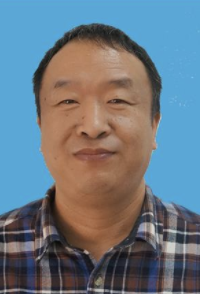 Jiang Wang (王江)合作论文数School of Electrical and Information Engineering, Tianjin University1
 Zexu Zhang (张泽旭)合作论文数School of Astronautics, Harbin Institute of Technology1
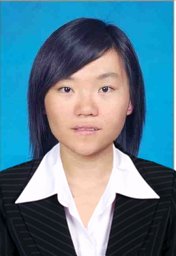 Shanshan Li合作论文数Department of Child and Maternal Health and Institute of Child and Adolescent Health, Peking University School of Public Health1Jialin Hou (侯加林)合作论文数College of Mechanical and Electronic Engineering, Shandong Agricultural University1




