This work-in-progress paper describes the development and evaluation of an innovative faculty development initiative that incorporates entrepreneurial mindset (EM) and entrepreneurship practices into the educational change process. In 2020, as a result of grant from KEEN and the Mentorship 360 Project at Arizona State University, a teaching and learning center housed in the College of Engineering at a large research-focused university launched a new initiative called the Entrepreneurial Mindset for Innovative Teaching (EMIT) Academy. The EMIT Academy makes parallels between principles associated with entrepreneurship and quality teaching to help faculty engage in a critical reflection of their course, conduct "customer" discovery in their courses, and revise their courses. As we begin, consider the processes and mindset associated with being an entrepreneur. A successful entrepreneur will develop a business plan and conduct customer discovery, then iterate and pivot in the face of failure. Entrepreneurs need to be curious and creative, to demonstrate the value of their product or service, and to make connections among multiple sources of information. Now consider the processes and mindset associated with teaching. Successful teachers will engage in a course planning process, periodically gather information from students on their learning and on their own teaching effectiveness, and adjust teaching strategies as appropriate. A good teacher develops instructional activities that are engaging to students, creates a valuable learning experience for students, and integrates many sources of information to provide a seamless instructional environment. The practices and mindset associated with quality teaching mirror practices of entrepreneurship and the entrepreneurial mindset. The EMIT Academy uses the metaphor of teaching as entrepreneurship to frame a faculty development program for engineering faculty. The EMIT Academy was modeled on the NSF-funded Innovation Corps (iCorps) experience. In iCorps, faculty work through a curriculum to help bring technology concepts to market. In the EMIT Academy, faculty applied similar entrepreneurial principles and processes as iCorps to teaching innovation and evaluation. After participating in the Academy, participants should be able to: 1) identify how entrepreneurial ideas and principles can be used to enhance a course, 2) critically reflect on a course by completing a teaching version of the business canvas model, identify areas of opportunity for change in their courses to better meet the needs of students, 4) collect and interpret data from a "customer discovery" process of their students' perceived needs for their course, and 5) redesign their course using the Entrepreneurial Teaching Model and information from the customer discovery process. In summer of 2020, nine faculty members participated in the EMIT Academy. Several guiding research questions were used to investigate impact and evaluate the Academy: 1) How do faculty conceptions of entrepreneurship and its application to teaching change as a result of participating in the Academy? 2) What are the perceived affordances and barriers to the adoption/adaption of innovative instructional practices and do these change as a result of participation? 3) How do faculty members' instructional practices change as a result of participation? 4) How can the EMIT Academy be improved for future cohorts? To answer these questions, all participants completed in a pre-workshop interview and an immediate post-workshop survey. In addition, they will also interviewed in late fall of 2020, after they have had a chance to teach their revised course. All interviews will be transcribed and coded using an iterative, deductive coding process. This work-in-progress paper will provide a detailed overview of the Academy and initial results of the interviews and survey.
Lessons Learned: Adapting to Aid Faculty for Teaching in a Pandemic This Lessons Learned paper outlines the post-COVID faculty development offerings from one engineering Teaching and Learning Center. As was likely the case for many Centers for Teaching and Learning in the Summer 2020, our center pivoted our intended summer programming to better address the needs of our faculty for teaching during a pandemic. Our Center is housed within the College of Engineering and provides pedagogical support to over 400 faculty. Our approach for the summer was to host multiple virtual workshop series that solicited the experiences of faculty, assessed their needs for teaching in different instructional modes, then provided both pedagogical and technological development opportunities by teaming up with our College's digital learning office (DLO). The first series we offered (May 2020) focused on faculty sharing their experiences and successes in the emergency transition to remote teaching in March of 2020. This series was broken into different workshops around different course contexts: Design classes, large classes, and labs. Forty-six faculty participated in this series (unique participants across all workshops). In June 2020, the University announced that the Fall 2020 would include in-person courses practicing social distancing, remote synchronous courses, remote asynchronous courses, and courses that used a mix of these modes (some students in-person and some joining remote asynchronously, for example). Following this announcement and in collaboration with DLO, we hosted a series of Townhalls where faculty could voice their concerns and highlight what they would like to receive additional development on. The Townhalls were separated into different course content types: Theory/analysis courses, Hands-on courses (like labs and design courses), and First-Year Seminars. Eighty-eight faculty attended the Townhall series (unique participants across all Townhalls). Using what we learned from the first two series, our Center and DLO offered a Summer workshop series in July 2020 that highlighted key elements for assisting faculty to prepare to teach in different modes in Fall 2020. The structure of the series was that our Center would host a workshop around the pedagogy of the topic on Tuesday, the DLO would follow-up with the digital tools needed for implementation on Thursday. The topics in the series were: student engagement, facilitating student teams, developing community, and assessment. DLO also offered an additional session on remote labs. At only our Center's session for this, 104 faculty members (unique participants across all sessions) attended. With this Lessons Learned paper and presentation, we hope to share our experience with the broader faculty development community. We will also share the resources generated from these sessions and our process for workshop development. We hope to be able to present our work as a lightning talk at the conference.
A self-perceived lack of training in ethical theories and related pedagogy has kept many engineering faculty members from teaching data ethics, an important aspect of engineering research that has become more salient in recent years. This paper describes the development of a module, which includes concepts, cases, policies, and best practices, to support the teaching of ethical data practice. Based on a user-oriented design approach and a moral literacy framework, the module was designed to be used in different courses and co-curricular activities for students of varying levels of competence to improve their ability to identify and analyze ethical problems associated with the handling of research data. This work seeks to encourage ethical reflection on researchers' data practice through the idea of an "ecology of data," which highlights the co-production of data by multiple, interconnected, and heterogeneous actors. This paper also presents online and in-class evidence about the impact and limitations of the module, which is now available for interested researchers and instructors to browse and use.
This work-in-progress paper will discuss the evolving response by an engineering education center to proposed changes in the ABET general criteria for accrediting engineering programs relating to diversity, equity, and inclusion (DEI). ABET is a "nonprofit, ISO 9001 certified organization that accredits programs in applied and natural science, computing, engineering and engineering technology." The paper will discuss the plan of the Leonhard Center for the Enhancement of Engineering Education located in the College of Engineering at Pennsylvania State University to help faculty and departments meet the proposed changes in ABET criteria relating to diversity, equity, and inclusion. In addition, the College’s strategic plan calls for the integration of DEI into the curriculum, leading to a changing emphasis in the work being done in the Center. This paper would likely be of interest to engineering educators and other faculty developers who will have to demonstrate that their engineering programs meet ABET accreditation requirements or have similar strategic goals. In addition, the paper will describe current and evolving efforts to date as well as discuss the challenges that occurred during the development of the DEI curricular integration and training plan.
Undergraduate STEM students majoring in various science sub-disciplines (e.g. chemistry, physics, engineering) must develop strong understandings of core foundational thermodynamics concepts. The ability for course instructors and researchers to effectively refine instruction and develop interventions to support students' learning hinges on their ability to accurately gauge students' knowledge through the use of established measures. The Thermodynamics Conceptual Reasoning Inventory (TCRI) is designed to gauge undergraduate students' understanding of introductory thermodynamics concepts. The present study extends the findings of a previous publication by positioning the TCRI within the broader international literature of thermodynamics concept inventories and generating an argument for the reliability and validity of TCRI scores in a broader context. Participants (n = 278) took the revised 36-item TCRI (available in the supplementary online materials). Findings revealed that TCRI scores are useful in the broader context (e.g. no evidence of floor or ceiling effects, evidence of high reliability, no differences for students across majors, and TCRI scores were moderately correlated with both course exam scores and GPA). No further revisions are recommended based on analysis of item properties. The cumulative body of evidence related to the TCRI suggests that scores are useful indicators of undergraduate students' conceptual understanding of introductory thermodynamics concepts.
Lucas Passmore, Pennsylvania State University-Altoona College Lucas Passmore is an Instructor in Engineering at Penn State Altoona. He completed his Ph.D. in Engineering Mechanics in 2009. He teaches introductory engineering courses and fundamental engineering mechanics courses. His primary research is in the semiconductor device physics field, and he is currently working on the incorporation of a design element to engineering technology strength of materials course.
Traditionally within engineering, the graduate school experience has focused on developing the research and technical skills of the graduate student. However, to successfully complete their graduate degree, there are broader skills that must be developed (Fischer & Zigmond, 1998). For example, students must make the critical transition from course-taker to independent scholar/researcher (Baker & Pifer, 2011; Lovitts, 2005). Developing these broader skills can be inconsistent across and challenging for individual faculty working with individual students. To address this challenge at the department level, our Engineering Science and Mechanics department is beginning to revolutionize the current graduate education being offered through a required first-semester, problem-based course for all new graduate students. The goals for the new course are: to prepare incoming Ph.D. students to quickly become independent researchers, to provide structured self-directed learning, to develop professional skills, to increase the number of PhD students in the program, and to develop reading and writing skills for conducting research. To achieve these goals, the new curriculum introduces students to a range of good research practices in Engineering. The planned content includes: 1) conducting research, including organizing research groups, problem identification and solution, connecting innovative ideas from disparate fields, laboratory safety and procedures, data management; 2) communicating research, including literature review, manuscript preparation, grant writing, or oral communication; and 3) other critical skills or considerations in conducting research, including collaborative skills, tool use, ethical and responsible conduct of research, the importance of diversity, equity and inclusion in research. With the newly created and implemented curriculum being piloted in the 2019 Fall semester, this study aims to investigate student expectations and experiences of this course to inform course improvement. The course evaluation will include a formative assessment survey roughly 3 weeks into the course as well as a summative survey and focus group at the end of the course. There are currently 14 students enrolled in the pilot course, 11 of which completed the formative feedback survey. The survey is designed to seek feedback from students asking about 1) student expectations, 2) the important lessons they have learned so far, 3) their feedback, and 4) an overall rating of the value of this course to them so far. At the end of the course, the students will be asked to complete the survey again to track any changes from throughout the semester. Following the survey, the evaluation team will conduct a focus group with the students to allow for them to provide more detailed feedback about the course. The feedback received from the students as well as from reflective interviews with the faculty will help to inform course improvements moving forward. Providing a first-semester course for graduate students to help them understand what it means to be successful in graduate school as well as what it means to be successful within their specific department can help students to set clear expectations and succeed.
NOTE: The first page of text has been automatically extracted and included below in lieu of an abstract Preparing Students to Compete in the Global Marketplace Abstract As globalization continues to relocate technical engineering jobs from the United States to overseas locations, it is critical that engineering programs in the U.S. consider the development of skills and abilities that will set their graduates apart and allow them to compete with their overseas counterparts. This paper describes a new course that is intended to provide this type of experience for undergraduates. The course makes use of e-learning technology and active learning techniques to develop graduates who will be comfortable communicating across cultures using technology to manage projects, team relationships, and collaborative design projects. The course was pilot-tested in the ‘04/’05 academic year, with results from the formative assessment incorporated as appropriate. Background The increasing migration of technical engineering functions from firms located in the continental United States to overseas competitors has created an environment that calls into question how engineering undergraduates should be trained and educated. While some companies are battered and turn to overseas labor for relief 1, engineering educators look to foster creativity and innovation to enhance the engineering student’s ability to compete 2. The Advisory Board for the Leonhard Center for the Enhancement of Engineering Education at Penn State recognizes this global challenge and advocates that engineers truly become “world class” 3. The Board has made recommendations to the College of Engineering regarding specific enhancements that are necessary for our graduates to compete globally. As a result of those recommendations, Penn State is offering a new course – Professional Skills and Core Leadership Competencies in the Global Environment – that is specifically designed to respond to the aforementioned global engineering challenges. This paper will describe the design and execution of the class and the results of the course assessment to date. Description of the Course The course is problem-based and technology supported, and seeks to create a learning environment that replicates the geographically dispersed, team-oriented practices of engineers in the field. Among the tasks that the students must complete are on-line training modules with associated assessment, role playing exercises, and preparation of an individual portfolio that includes a short video clip in which students “sell” themselves to a prospective employer. The first iteration of the course was implemented and evaluated as an Engineering Leadership elective, and is a foundational course for students preparing for leadership positions. Its purpose is to ensure that all students develop an adequate understanding of contemporary professional skills and core leadership competencies that are needed to function effectively in today’s global business environment. These skills include:
NOTE: The first page of text has been automatically extracted and included below in lieu of an abstract Session 3530 A Longitudinal and Cross-Sectional Study of Engineering Student Intellectual Development as Measured by the Perry Model Rose M. Marra, Betsy Palmer, Thomas A Litzinger The Pennsylvania State University Introduction Industry leaders tell us that today’s successful engineers need excellent communication, problem solving, and life-long learning skills in addition to the technical content engineering educators have traditionally focused on (Augustine, 1997; Barr & Tagg, 1995). In response, colleges are reforming their curricula to introduce more hands-on, active-learning techniques into many courses. Such experiences are intended to produce in our students the skills just described. While anecdotal evidence may exist to support the effectiveness of these types of changes, strong quantitative evidence is also needed. This study examines the effects of recent curricular changes in Penn State’s College of Engineering on first-year students’ intellectual development as measured by the Perry Model (Perry, 1970). These results are part of a larger study which is described in the Method section. The Perry model suggests that studentsí cognitive processes develop over time from simple black/white thinking to a more complex evaluation of alternatives. Students’ cognitive levels are assessed by a structured interview which asks them to reflect on the ways they think about ambiguous intellectual problems. This paper reports on the results of the initial phase of longitudinal and cross-sectional study of intellectual development of engineering students. In the first year of a four-year data collection plan (1996-97), semi-structured interviews were conducted with a randomly selected cohort of 53 entering first-year students. While results from the larger study will provide us with both longitudinal and cross-sectional data on the issues described, this paper reports only on the first round of interviews with the freshman cohort of 53 students. Thus, this paper examines the following research questions. • Where do first-year engineering students begin on a scale measuring intellectual development? • How do first-year students’ Perry ratings at our institution compare to freshman engineering student ratings at other institutions? • How do first-year studentsí comments about knowledge and learning vary based on student Perry ratings? • How do men and women engineering students score relative to one another on the Perry scheme? • What are the implications of the subjects’ Perry ratings for teaching? Literature Review This section provides the line of reasoning for the studyís research questions as well as for the tools chosen to address these questions. We begin with an overview of the trends in changes in engineering education and then examine the Perry Model of Intellectual Development as a means
NOTE: The first page of text has been automatically extracted and included below in lieu of an abstract Session ______ Measuring Cognitive Growth in Engineering Undergraduates: A Longitudinal Study John Wise, Sang Ha Lee, Thomas A. Litzinger, Rose M. Marra, Betsy Palmer The Pennsylvania State University / University of Missouri / The University of Iowa Abstract This paper builds on previously reported findings1,2 by describing the completion of a four-year longitudinal investigation into the cognitive development of engineering undergraduates as measured using the Perry Scheme of Intellectual Development.3 Fifty-four students were randomly selected during their first year and invited to participate in three hour-long interview sessions. During the interview, each student reflected on his or her view of knowledge, education, and learning. The interviews were transcribed and sent to a rater experienced in assigning positions relative to the Perry Scheme based on student responses to these types of questions. While it was hoped that students would progress from simple dualistic views (position 1 / 2) through complex dualism (position 3) and relativism (4 / 5) to commitment in relativism (position 6+), most students in this sample did not make it beyond position four. This paper will review the findings with an eye towards curricular activities that may or may not encourage this type of growth. I. Introduction The move towards more active learning in engineering education has brought with it a need to assess the higher-order thinking that such environments and activities are thought to promote.3 At Penn State, we have been looking at undergraduate student development using the Perry scheme of intellectual development as a way to identify factors that contribute to the cognitive growth of students during a four or five year engineering program. William Perry began asking undergraduates about their experiences at Harvard in the 1950s. 3 Using an open-content interview method, Perry was able to collect data reflecting the students’ epistemology. Common themes began to emerge, and he was able to identify what appeared to be a series of “positions” that change as the student experiences situations that are dissonant with their cognitive structures. The scheme begins with basic dualism (positions 1 and 2), proceeds through relativism (positions 3 through 5) and concludes with commitment within relativism (positions 6 through 9) [Table 1.] Proceedings of the 2001 American Society for Engineering Education Annual Conference & Exposition Copyright © 2001, American Society for Engineering Education
This paper describes the process that was used to review and improve the Mechanical Engineering curriculum at Penn State University.The improvement process applied design methodology to review the present curriculum, develop alternate curriculum models, and evaluate those models.The curriculum models that were developed and challenges in implementing this process are also described.
A number of teaching/learning reforms are underway in the College of Engineering at Penn State to enhance student learning with a special focus on providing opportunities for students to apply and integrate their knowledge and skills, and to develop lifelong learning skills. All of the reforms use problem-based, collaborative learning approaches to achieve the simultaneous development of professional and technical skills by requiring students to practice these skills in an integrated fashion, within a realistic context. In the reform effort underway in Mechanical Engineering, courses are being developed in an IDEALS format, where IDEALS refers to Integrated Design, Experimentation, Analysis, and Life Skills. Here “life skills” are professional skills such as communication skills, team skills, and lifelong learning. To date, two different approaches to the IDEALS courses have been piloted, a one-credit course, which links to core courses the students are taking concurrently, and an IDEALS version of a three-credit required course. In this paper, the two pilot courses are described along with student evaluations of the courses and faculty assessment of the effectiveness of the approaches.
NOTE: The first page of text has been automatically extracted and included below in lieu of an abstract Identifying and Remediating Difficulties with Problem-solving in Statics Abstract The work described in this paper is part of a multi-year study that seeks to enhance students’ ability to create ‘models’ successfully as they solve problems in Statics. The ultimate goal of the study is to understand the major difficulties that students encounter as they learn to model during problem-solving in Statics and to create interventions to help them more quickly overcome those difficulties. In the first phase of the study, more than 300 students completed three inventories: math skills, spatial reasoning and statics concepts. The results from the inventories were used to identify clusters of students with common characteristics, and therefore, presumably common deficiencies in their problem solving in Statics. Students from each cluster were then invited to participate in think-aloud problem solving sessions to identify the weaknesses in their problem solving. Analysis of the think-aloud sessions identified a number of common issues in students’ knowledge and ability to create models, which are summarized in the paper. Based on these findings, the research team identified possible interventions to address the common issues. Two of these interventions were developed through a design experiments process in which they were tested with groups of up to 30 students, refined to enhance their effectiveness, and then re-tested. The interventions and the development process are described, and results from the final round of the design experiments are presented. Introduction The work described in this paper is part of an on-going study of problem solving in Statics. 1,2 The work is being done in Statics classes because it is one of the first places that engineering students encounter the engineering problem-solving process. In this study we are paying particular attention to the early steps in problem-solving when students ‘model’ the system being studied to create a set of equations describing the system. In Statics students typically read a problem statement and then create a model of the system, the free-body diagram, which contains all of the salient forces on the body. Then, based on the free-body diagram, they create a mathematical model of the system. The current phase of the work is aimed at answering two main questions about the modeling processes: What are the major difficulties that students encounter when they perform modeling during problem-solving? What instructional interventions will address these problems and improve engineering students’ modeling during problem-solving? In the current phase of the work, interventions that are developed will be tested in a full-scale experimental design. Clearly there are many different ways in which students can go wrong as they solve problems in Statics. They may, for example, have inadequate knowledge of the forces and moments for particular types of connections, an inability to visualize forces, or inadequate math skills. Our working hypothesis is that students will cluster into different groups based on their abilities and knowledge, and that these groups will demonstrate differing abilities to solve Statics problems.
NOTE: The first page of text has been automatically extracted and included below in lieu of an abstract Session 1330 Assessing Readiness for Self-directed Learning Thomas Litzinger, John Wise, SangHa Lee, and Stefani Bjorklund Penn State University Introduction The ABET engineering accreditation criteria bring lifelong learning to the forefront for all engineering educators. In the past, our role in lifelong learning was primarily offering courses and degree programs for practicing engineers through continuing education and on our campuses. Now the accreditation criteria demand that we prepare engineering students to engage in lifelong learning. While this level of emphasis on preparing students for lifelong learning is new, the significance attached to lifelong learning, and in particular continuing education, within the engineering profession is not. Lifelong learning in engineering has been recognized as critical for decades. The Final Report of the Goals Committee on Engineering Education, written in 1968, contained a discussion of the importance of lifelong learning.1 In 1978, the theme of the ASEE Annual Conference was “Career Management – Lifelong Learning.” Over the years there have been a number of studies to investigate the types of activities involved in lifelong learning, their frequency of use, the types of support systems required for lifelong learning, barriers to lifelong learning, and impact of lifelong learning for individual engineers. Many of these studies are summarized in a 1985 report by an NRC panel. 2 Lifelong learning is an issue of importance for engineers around the world. UNESCO sponsored several significant studies including “Advances in the continuing education of engineers.”3 The report resulting from this study summarizes practices in continuing education in a number of countries, both developed and developing, and also the delivery systems used. UNESCO played a central role in the formation of the International Society for Continuing Engineering Education in 1986. Clearly, however, lifelong learning occurs through more channels than just continuing education. In 1986, Cervero et al. interviewed nearly 500 engineers by telephone in the area of Rockport, IL.4 Seventy-two percent of the engineers surveyed were at the BS level and more than one half were under the age of 35. Due to the nature of the businesses in the area, the sample contained predominantly mechanical engineers, 53%, with electrical engineers accounting for an additional 22%. The survey was structured to investigate the participation of the engineers in the three modes of learning proposed by Houle5: instruction, inquiry, and performance. Cervero et al. summarize these three modes of learning as follows: Proceedings of the 2003 American Society for Engineering Education Annual Conference & Exposition Copyright © 2003, American Society for Engineering Education
NOTE: The first page of text has been automatically extracted and included below in lieu of an abstract Session #1630 Educational Objectives and Expectations for Post-Graduation Achievement Kimberly A. Barron, Robert N. Pangborn, Sang Ha Lee, Thomas A. Litzinger and John C. Wise College of Engineering, Penn State University Abstract This paper describes the evaluation of survey data collected from almost 1,300 Penn State engineering alumni who graduated in the years 1995 to 2000. Analyses were conducted to determine if there are differences in the respondents’ perceptions of their education based on the initial career path chosen, namely, full-time employment versus entry directly into graduate study; and within these two categories, whether perceptions vary depending on graduates’ decisions to pursue primarily technical or business/management tracks. Examination of the data provides evidence to suggest that their impression of the importance of various competencies and abilities is related to their choice of post-graduation activities. Depending on the selected career path, they rate the importance of these abilities differently, but tend to rate their preparedness in these areas similarly. These findings are particularly relevant and valuable, given the definition of program educational objectives proposed by the Engineering Accreditation Commission of ABET, Inc., for the 2004- 05 Engineering Criteria.1 This proposal defines the educational objectives as “statements that describe the expected accomplishments of graduates during the first few years after graduation.” The survey responses for Penn State alumni two to three years following graduation show that different kinds of achievement and measures of accomplishment apply to the different early- career paths. This raises questions that may need to be considered for curriculum design. For instance: What actions should we be taking to prepare our students for the broader aspects of their professional careers? What competencies and abilities should we emphasize in a curriculum constrained by a limited time frame? Examining the data from our surveys of recent graduates, which include information on the tasks they are actually performing in various roles, offers insights into these questions and gives us a starting point to begin to make decisions on how to prioritize the implementation of potential curricular improvements. Data collected over several years also allow us to examine patterns over time to make reasonable interpretations about the effectiveness of our programs and trends in graduates’ perceptions of their education as the move into the workplace or pursue advanced degrees. I. Origins of the Alumni Survey For many years, the College of Engineering at Penn State has been surveying students and graduates concerning their perceptions of their undergraduate education, their early work Proceedings of the 2004 American Society for Engineering Education Annual Conference & Exposition Copyright© 2004, American Society for Engineering Education
NOTE: The first page of text has been automatically extracted and included below in lieu of an abstract Main Menu Session 2430 From Intellectual Development to Expertise Thomas Litzinger, Stefani Bjorklund, and John Wise Penn State Introduction Over the past five years we have conducted a longitudinal study of undergraduate engineering students based on the Perry scheme of intellectual development. [1,2] (For readers not familiar with the Perry scheme, a summary is provided in the Appendix of this paper.) One of the major goals of that study was to determine how our students were developing in their ability to undertake complex problem solving as indicated by their descriptions of the general strategies that they used in attacking ill-defined problems. We are now analyzing the transcripts of the student interviews to search for evidence of their development specifically related to complex problem solving along with the expert knowledge and skills required to support it. Our focus on solving complex problems is driven by the fact that we take this ability as the defining ability of an expert engineer. Thus, in this analysis of the Perry data, we are seeking an indication of the progression of our students towards expert status within their chosen engineering field. The analysis presented in this paper is the beginning of the development of a refined interview protocol to elicit information on how students progress towards expertise and about their process for solving complex engineering problems. This work is motivated by the desire to answer questions such as the following: - Can our educational processes be restructured to allow students to focus more effort on the development of higher levels of engineering expertise than most achieve in the current system? - Given that the expertise literature suggests that the development of expert performance in any field requires roughly ten years, what are realistic expectations of student performance after a four-year undergraduate program? A valid and reliable protocol related to engineering expertise must be developed, along with an appropriate experimental design, if questions such as these are to be answered. The work presented here is a small first step along this path. In developing the initial protocol for the work described here, literature on expertise, domain learning, and complex problem-solving was explored. The literature on expertise in the U.S. has focused to a large extent on defining differences between experts and novices. The recent National Research Council book, “How People Learn,” [3] provides a good summary of the major findings, some of which are: Proceedings of the 2002 American Society for Engineering Education Annual Conference & Exposition Copyright © 2002, American Society for Engineering Education Main Menu
NOTE: The first page of text has been automatically extracted and included below in lieu of an abstract Session 3530 Engineering Students’ Readiness for Self-directed Learning Thomas Litzinger, Sang Ha Lee, and John Wise Penn State University Abstract The study summarized in this paper extends the previous work of the authors that attempted to determine whether capstone engineering courses have an effect on readiness for self-directed learning. The previous study suffered from a poor participation rate and several other potential problems. A new experimental design eliminated these problems. Pre-test and post-test data were collected in two sections of a capstone course in Mechanical Engineering. Results show no statistically significant change in the average pre-test and post-test scores; however, a fraction of the students were found to experience significant increases and decreases. A regression analysis was conducted in an attempt to understand the effect of the characteristics of the students such as gender and grade point average as well as project and section; however, no statistically significant correlation between the change in SDLRS score and any of these factors were found. Interviews with instructors were also conducted and suggested that the decreases in the scores for one project were likely due to the nature of the interactions of the project mentor with the students. Implications of the results of this study for curricular design are discussed. Introduction The ABET engineering accreditation criteria bring lifelong learning to the forefront for all engineering educators. In the past, our role in lifelong learning was primarily offering courses and degree programs for practicing engineers through continuing education and on our campuses. Now the accreditation criteria demand that we prepare engineering students to engage in lifelong learning. While this level of emphasis on preparing students for lifelong learning is new, the significance attached to lifelong learning, and in particular continuing education, within the engineering profession is not. Lifelong learning in engineering has been recognized as critical for decades. The Final Report of the Goals Committee on Engineering Education, written in 1968, contained a discussion of the importance of lifelong learning.1 In 1978, the theme of the ASEE Annual Conference was “Career Management – Lifelong Learning.” Over the years there have been a number of studies to investigate the types of activities involved in lifelong learning, their frequency of use, the types of support systems required for lifelong learning, barriers to lifelong learning, and impact of lifelong learning for individual engineers. Many of these studies are summarized in a 1985 report by an NRC panel.2 Lifelong learning is an issue of importance for engineers around the world. UNESCO sponsored several significant studies including “Advances in the continuing education of engineers.”3 The Proceedings of the 2004 American Society for Engineering Education Annual Conference & Exposition Copyright © 2004, American Society for Engineering Education
NOTE: The first page of text has been automatically extracted and included below in lieu of an abstract Section 3575 Learning to Juggle: A Model for New Engineering Faculty Development Rose M. Marra, Thomas A. Litzinger The Pennsylvania State University Introduction New faculty are faced with many challenges, not the least of which is learning to juggle the many aspects of their new careers. While many universities and colleges offer new faculty orientations, many such activities feature an endless array of “talking heads” from administrators, or perhaps “how to” lectures on the mechanics of pedagogy. Having discussed such workshops with other new faculty (and, we admit, even having delivered portions of them – guilty!) we have anecdotal data that indicate such workshops are generally tedious and not useful. New faculty, of course, need many things to be successful but there is strong evidence to suggest that many of these needs are not met by a traditional faculty orientation. Austin and Sorcinelli [1] tell us that the biggest gaps are related to needing to develop teaching skills, finding colleagues and learning to juggle the multiple demands of their new positions. At Penn State’s college of engineering, we have modified our new faculty development activity away from the “talking head” model to a streamlined set of discussions amongst the new faculty and selected college faculty. This format allows for both the new faculty and the experienced faculty to share useful tactics regarding all aspects of their new careers (not only teaching, but with an emphasis on teaching), as well as providing the new faculty a leg up on establishing colleagues in their new work environment. This paper describes the faculty development model we have developed at PSU, including detailed descriptions of each workshop segment. We will also discuss several of the guiding philosophies for the workshop; namely, use the workshop as a way to introduce resources rather than provide endless details on “how to” do this and that; keep it stre amlined and “leave them wanting” more; and follow up with activities sprinkled throughout the academic year. Guiding Assumptions
The IEEE Education Society, the IEEE Computer Society, and the American Society for Engineering Education Educational Research and Methods Division (ASEE ERM) sponsored the 46th Frontiers in Education (FIE) Conference in Erie, PA, USA, held October 12–15, 2016. James Sluss, President of the Society, Russell Meier, President of the ASEE ECE Division, and Elizabeth Eschenbach, Chair, FIE Steering Committee, presented awards sponsored by HP Enterprise, the FIE Conference, the Education Society of IEEE, and the ECE Division of ASEE to the 2016 recipients of these awards.
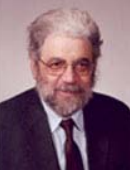 Robert Santoro合作论文数Department of Mechanical Engineering, College of Engineering, Pennsylvania State University39
 Sarah E. Zappe合作论文数31
 suresh iyer合作论文数21milton linevsky合作论文数17Peggy Van Meter合作论文数Pennsylvania State University12
 Seong-Young Lee合作论文数The Pennsylvania State University12venkatesh iyer合作论文数ClearSign Combust Corp10
 Anand Makwana合作论文数10Stefan T. Thynell合作论文数10r santoro合作论文数9Irene Mena合作论文数9
 Frederick L. Dryer合作论文数Department of Mechanical Engineering, College of Engineering and Computing, University of South Carolina9John Wise合作论文数8Youngjoo Lee合作论文数8
 Rose M. Marra合作论文数University of Missouri;Pennsylvania State University;University of Missouri, Pennsylvania State University8
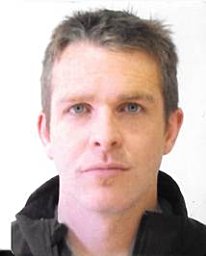 Stephen Dooley合作论文数Department of Mechanical and Aerospace Engineering, Princeton University8m linevsky合作论文数7
 Stephanie Cutler合作论文数7
 Carla Firetto合作论文数Pennsylvania State University7Viswanath R. Katta合作论文数7Stephen R. Turns合作论文数7Sang Ha Lee合作论文数7Ching-Jen Tang合作论文数7
 Meredith B. Colket合作论文数United Technologies Research Center6Ki Hoon Song合作论文数6arvind menon合作论文数6Jianquan Li合作论文数Freedom AI6Domenic A. Santavicca合作论文数6
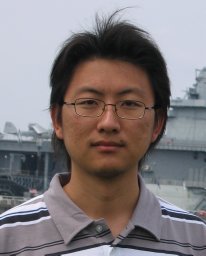 Yefu Wang合作论文数Kanopy6Christine B. Masters合作论文数6
 John Pinson合作论文数5
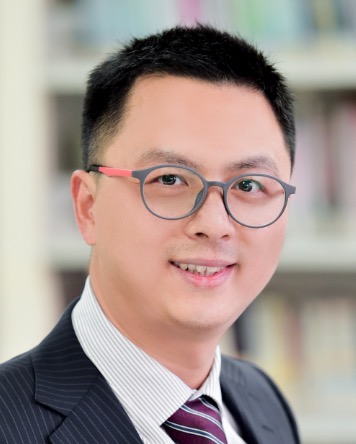 Xiaofeng Tang (唐潇风)合作论文数Division of Engineering Education Research, School of Education, Tsinghua University5
 Lisa Lattuca合作论文数Integrative Systems + Design, College of Engineering, University of Michigan5
 Malay Das合作论文数5
 Kenneth Brezinsky合作论文数Department of Mechanical and Industrial Engineering, College of Engineering, University of Illinois, Chicago5christopher j mordaunt合作论文数4Juntao Wu (吴俊涛)合作论文数4Kevin L. Mcnesby合作论文数Department of Chemistry, Georgetown University4Gautam N. Kudva合作论文数4Roxanne Toto合作论文数4
 Henry Curran合作论文数School of Biological and Chemical Sciences, Sustainable World Ryan Institute, University of Galway4M. Kahandawala合作论文数4B.L Fetherolf合作论文数4Betsy Palmer合作论文数4Kelli Higley合作论文数3mj linevsky合作论文数3
 Francesco Costanzo合作论文数3rj santoro合作论文数3
 Vigor Yang (杨威迦)合作论文数School of Aerospace Engineering, Georgia Institute of Technology3




