In this paper two different convolutional neural network (CNN) architectures are investigated for the purpose of real-time on-edge domestic acoustic event classification.For training and evaluation of the models, a real-life acoustical dataset was recorded in 72 different home environments.A quantization-aware training scheme was applied that takes into account that the models need to run on 8-bit fixed-point processing hardware.Once trained, the models were successfully deployed on an ARM cortex-M7 microcontroller unit (i.MX RT1064).This study indicates that the used procedure can lead to an efficient and real-time embedded on-edge implementation of a domestic sound event classifier that does not sacrifice classification performance compared to its floating-point counterpart.
This paper validates a machine learning framework that enables processing on resource limited devices. The discussed framework allows both inference and learning to be executed on the edge. More specifically, a Least-Squares Support Vector Machine (LS-SVM) framework with a time-recursive learning algorithm is evaluated in an application where person presence is estimated based on acoustic signals only. For this purpose, a real-life acoustical dataset of 555 hours was collected in an office environment for the evaluation of the on-edge machine learning framework.
Automated analysis of complex scenes of everyday sounds might help us navigate within the enormous amount of data and help us make better decisions based on the sounds around us.For this purpose classification models are required that translate raw audio to meaningful event labels.The specific task that this paper targets is that of learning sound event classifier models by a set of example sound segments that contain multiple potentially overlapping sound events and that are labeled with multiple weak sound event class names.This involves a combination of both multi-label and multi-instance learning.This paper investigates two state-of-theart methodologies that allow this type of learning, low-resolution multi-label non-negative matrix deconvolution (LRM-NMD) and CNN.Besides comparing the accuracy in terms of correct sound event classifications, also the robustness to missing labels and to overlap of the sound events in the sound segments is evaluated.For small training set sizes LRM-NMD clearly outperforms CNN with an accuracy that is 40 to 50% higher.LRM-NMD does only minorly suffer from overlapping sound events during training while CNN suffers a substantial drop in classification accuracy, in the order of 10 to 20%, when sound events have a 100% overlap.Both methods show good robustness to missing labels.No matter how many labels are missing in a single segment (that contains multiple sound events) CNN converges to 97% accuracy when enough training data is available.LRM-NMD on the other hand shows a slight performance drop when the amount of missing labels increases.
Acoustic event classification for monitoring applications is becoming feasible thanks to the increasing number of connected devices with a built-in microphone. The sound event classes are defined by annotating training data, which is a laborious process. Attempts have been made to reduce the workload on annotating the vast amounts of training data and are referred to as semi-supervised learning and active learning. In this paper we propose a non-negative matrix deconvolution (NMD) based approach, capable of modeling acoustic events from data labeled on a low-resolution and multi-label level and thereby reducing the annotation workload. We further show that the proposed extension of NMD is successfully applied for the classification of acoustic events, even in noisy conditions and with overlapping events.
The DCASE 2018 Challenge consists of five tasks related to automatic classification and detection of sound events and scenes. This paper presents the setup of Task 5 which includes the description of the task, dataset and the baseline system. In this task, it is investigated to which extent multi-channel acoustic recordings are beneficial for the purpose of classifying domestic activities. The goal is to exploit spectral and spatial cues independent of sensor location using multi-channel audio. For this purpose we provided a development and evaluation dataset which are derivatives of the SINS database and contain domestic activities recorded by multiple microphone arrays. The baseline system, based on a Neural Network architecture using convolutional and dense layer(s), is intended to lower the hurdle to participate the challenge and to provide a reference performance.
This work examines the use of a Wireless Acoustic Sensor Network (WASN) for the classification of clinically relevant activities of daily living (ADL) from elderly people. The aim of this research is to automatically compile a summary report about the performed ADLs which can be easily interpreted by caregivers. In this work the classification performance of the WASN will be evaluated in both clean and noisy conditions. Moreover, the computational complexity of the WASN and solutions to reduce the required computational costs are examined as well. The obtained classification results indicate that the computational cost can be reduced by a factor of 2.43 without a significant loss in accuracy. In addition, the WASN yields a 1.4% to 4.8% increase in classification accuracy in noisy conditions compared to single microphone solutions.
This work examines the use of a Wireless Acoustic Sensor Network (WASN) for the classification of clinically relevant activities of daily living (ADL) of elderly people. The aim of this research is to automatically compile a summary report about the performed ADLs which can be easily interpreted by caregivers. In this work, the classification performance of the WASN will be evaluated in both clean and noisy conditions. Results indicate that the classification performance of the WASN is 75.3±4.3% on clean acoustic data selected from the node receiving with the highest SNR. By incorporating spatial information extracted by the WASN, the classification accuracy further increases to 78.6±1.4%. In addition, the classification performance of the WASN in noisy conditions is in absolute average 8.1% to 9.0% more accurate compared to highest obtained single microphone results.
This abstract explores Gaussian Mixture Models (GMM) estimated from Mel Frequency Cepstral Coefficients (MFCCs) for acoustic event detection and classification. To limit the impact of silence, a shared background model is used. An average Fscore of 48% for the office life subtask is obtained. However, the analysis reveals that the proposed method has difficulties to cope with the large intra-class variations (e.g. time durations, dynamic range, characteristic sounds) in the provided dataset.
This work examines the use of a low-power Wireless Acoustic Sensor Network (WASN) for the observation of clinically relevant activities of daily living (ADL) (e.g. eating, personal hygiene, toilet usage, etc.) from elderly. The sensors used in the WASN are both audio and ultrasound receivers. To the best of our knowledge, the combination of audio and ultrasound as a basis for ADL monitoring has not been investigated yet. This paper describes a baseline approach for ADL classification based on Gaussian mixture models. Preliminary results in this work indicate that classification accuracies up to 85.0 % ± 14.6 for audio and 61.7%± 11.3 for ultrasound are already achievable on realistic real-life recorded data. Index Terms: acoustic scene analysis, audio, ultrasound, acoustic scene classification, activities of daily living, automatic monitoring
We present a novel, exemplar-based method for audio event detection based on non-negative matrix factorisation. Building on recent work in noise robust automatic speech recognition, we model events as a linear combination of dictionary atoms, and mixtures as a linear combination of overlapping events. The weights of activated atoms in an observation serve directly as evidence for the underlying event classes. The atoms in the dictionary span multiple frames and are created by extracting all possible fixed-length exemplars from the training data. To combat data scarcity of small training datasets, we propose to artificially augment the amount of training data by linear time warping in the feature domain at multiple rates. The method is evaluated on the Office Live and Office Synthetic datasets released by the AASP Challenge on Detection and Classification of Acoustic Scenes and Events.
This paper gives an overview of research within the ALADIN project, which aims to develop an assistive vocal interface for people with a physical impairment. In contrast to existing approaches, the vocal interface is trained by the end-user himself, which means it can be used with any vocabulary and grammar, and that it is maximally adapted to the — possibly dysarthric — speech of the user. This paper describes the overall learning framework, the user-centred design and evaluation aspects, database collection and approaches taken to combat problems such as noise and erroneous input.
This contribution describes a system able to detect footstep locations. through acoustic information retrieved from a wireless sensor network with small and cheap microphone arrays. Results of this system show that a best median errors of 31cm is achievable.
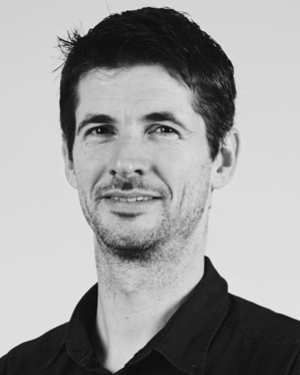 Peter Karsmakers合作论文数Katholieke Universiteit Leuven12
 Bart Vanrumste合作论文数Department of Electrical Engineering, KU Leuven;Faculteit Industriële Ingenieurswetenschappen, KU Leuven8
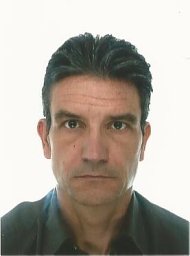 Hugo Van Hamme合作论文数Center for Processing Speech and Images, KU Leuven;Faculty of Engineering Science, KU Leuven8
 Bert Van Den Broeck合作论文数4
 Jort Florent Gemmeke合作论文数Meta3
 Gert Dekkers合作论文数2netsanet tessema合作论文数1Maarten Meire合作论文数1
 David Ruttens合作论文数1
 Stijn Luca合作论文数Department of Data Analysis and Mathematical Modelling, Faculty of Bioscience Engineering, Ghent University1
 Guy De Pauw合作论文数Textgain;Intelligence.Travel1
 Jan Derboven合作论文数Centre for User Experience Research (CUO),, IBBT-K.U. Leuven Future Health Department1
 Toon Van Waterschoot合作论文数ESAT Stadius Center for Dynamical Systems Signal Processing and Data Analytics, KU1
 Walter Daelemans合作论文数Department of Linguistics, University of Antwerp;Centre for Computational Linguistics, Psycholinguistics, and Sociolinguistics, University of Antwerp;Textgain1
 Jonathan Huyghe合作论文数iMinds, KU Leuven1Bart Ons合作论文数1




