Mirror descent uses the mirror function to encode geometry and constraints, improving convergence while preserving feasibility. Accelerated Mirror Descent Methods (Acc-MD) are derived from a discretization of an accelerated mirror ODE system using a variable–operator splitting framework. A geometric assumption, termed the Generalized Cauchy-Schwarz (GCS) condition, is introduced to quantify the compatibility between the objective and the mirror geometry, under which the first accelerated linear convergence for Acc-MD on a broad class of problems is established. Numerical experiments on smooth and composite optimization tasks demonstrate that Acc-MD consistently outperforms existing accelerated variants, both theoretically and empirically.
The exact-sequence structure behind the Arnold–Douglas–Gupta family of higher-order mixed finite elements for plane elasticity on barycentric refinements is made explicit. On each macro triangle, the symmetric stress space is obtained by enriching polynomial stresses with three locally supported functions. We derive closed-form formulas for these enrichments and identify explicit Airy potentials that generate them. This leads to a concrete Hsieh–Clough–Tocher type C^1 potential space whose Airy image is exactly the Arnold–Douglas–Gupta stress space. By enforcing single-valued degrees of freedom, we obtain global spaces and a fully explicit finite element elasticity complex on simply connected domains. As a consequence, we construct a new family of C^1 finite elements on barycentric refinements, including quadratic, cubic, quartic, and higher-order elements.
We propose Adaptive Accelerated Mirror Descent (AAMD), a flow-based method that combines nonlinear preconditioning, acceleration, and adaptivity in mirror geometry. The key ingredient is an accumulated Lyapunov perturbation budget: local descent failures are allowed as long as the total budget remains nonpositive, so line search is used only when stability is at risk. We prove accelerated convergence under dual relative smoothness/convexity and a mirror-geometry compatibility condition, and obtain an O(1/k^2) rate for convex objectives by homotopy under a bounded-sublevel-set assumption. Experiments on relative-smoothness problems show that combining preconditioning, acceleration, and adaptivity gives substantial gains over methods using only part of this structure.
We propose Acc-Sinkhorn, a simple accelerated variant of Sinkhorn for entropy-regularized optimal transport (EOT). The method is derived from a bilevel optimization view: Sinkhorn row scaling solves the inner variable u exactly and defines the reduced dual objective f(v)=min_u F(u,v), while the remaining column scaling is a unit-step dual mirror descent step in v. This structure yields a Hessian-driven Nesterov acceleration that keeps Sinkhorn's scaling form and per-iteration cost, using only extrapolated combinations of Sinkhorn iterates. We prove an 𝒪(1/k^2) rate under a verifiable stability condition. For an ε-approximation of unregularized OT, the resulting complexity is 𝒪(n^2/ε), improved from 𝒪(n^2/ε^2) for Sinkhorn. On synthetic problems, color transfer, and word alignment, Acc-Sinkhorn gives a 10×–30× speedup over Sinkhorn at small regularization.
Under the multiplicative noise scaling (MNS) condition, original Nesterov acceleration is provably sensitive to noise and may diverge when gradient noise overwhelms the signal. In this paper, we develop two accelerated stochastic gradient descent methods by discretizing the Hessian-driven Nesterov accelerated gradient flow. We first derive SHANG, a direct semi-implicit discretization that already improves stability under MNS. We then introduce SHANG++, which adds a damping correction and achieves faster convergence with greater noise robustness. We establish convergence guarantees for both convex and strongly convex objectives under MNS, together with explicit parameter choices. In our experiments, SHANG++ performs consistently well across convex problems and applications in deep learning. In a dedicated noise experiment on ResNet-34, a single hyperparameter configuration maintains accuracy within one percentage point of the noise-free setting. Across all experiments, SHANG++ outperforms existing accelerated methods in robustness and efficiency, with minimal parameter sensitivity.
We propose Adam-SHANG, a Lyapunov-guided Adam-type method that couples momentum, adaptive preconditioning, and a curvature-aware correction through a more stable lagged-preconditioner update. For stochastic smooth convex optimization, we prove convergence in expectation under an admissible stepsize condition that can always be satisfied by a conservative spectral bound, without imposing global monotonicity on the second-moment sequence. To obtain a less conservative practical rule, we introduce a computable trace-ratio stepsize, motivated by a local coordinatewise alignment condition. The same structural update is also tested beyond the convex setting with simplified parameters. Experiments validate the predicted stochastic decay and show competitive training performance against Adam and AdamW on deep learning tasks.
This paper develops a novel staggered discontinuous Galerkin (SDG) method for linear elasticity based on the Hellinger-Reissner variational principle. We construct symmetric stress spaces with normal continuity across element boundaries on arbitrary polytopal meshes, while approximating the displacement field using piecewise polynomial functions defined on the same meshes. The method is locking-free and satisfies a local balance of linear momentum and angular momentum. We present a comprehensive theoretical analysis, including proofs of stability and error estimates. The formulation admits a hybridizable structure, which significantly simplifies the numerical implementation. Numerical experiments validate the theoretical results and demonstrate the effectiveness of the proposed approach.
This paper introduces a unified framework for accelerated gradient methods through the variable and operator splitting (VOS). The operator splitting decouples the optimization process into simpler subproblems, and more importantly, the variable splitting leads to acceleration. The key contributions include the development of strong Lyapunov functions to analyze stability and convergence rates, as well as advanced discretization techniques like Accelerated Over-Relaxation (AOR) and extrapolation by the predictor-corrector methods (EPC). For convex case, we introduce a dynamic updating parameter and a perturbed VOS flow. The framework effectively handles a wide range of optimization problems, including convex optimization, composite convex optimization, and saddle point systems with bilinear coupling.
A DualTPD method is proposed for solving nonlinear partial differential equations. The method is characterized by three main features. First, decoupling via Fenchel–Rockafellar duality is achieved, so that nonlinear terms are discretized by discontinuous finite element spaces, yielding block-diagonal mass matrices and closed-form updates. Second, improved convergence is obtained by applying transformed primal–dual (TPD) dynamics to the nonlinear saddle-point system, which yields strongly monotone behavior. Third, efficient preconditioners are designed for the elliptic-type Schur complement arising from the separated differential operators, and multigrid solvers are applied effectively. Extensive numerical experiments on elliptic p-Laplacian and nonlinear H() problems are presented, showing significant efficiency gains with global, mesh-independent convergence.
The paper addresses the challenge of constructing conforming finite element spaces for high-order differential operators in high dimensions, with a focus on the curl div operator in three dimensions. Tangential-normal continuity is introduced in order to develop distributional finite element curl div complexes. The spaces constructed are applied to discretize a quad curl problem, demonstrating optimal order of convergence. Furthermore, a hybridization technique is proposed, demonstrating its equivalence to nonconforming finite elements and weak Galerkin methods.
Two accelerated first-order methods, HNAG^+ and HNAG^++, are presented for smooth strongly convex optimization. By optimizing the coercivity constant of the HNAG flow and using a refined Lyapunov analysis, it is shown that HNAG^+ achieves the optimal global rate 1-2/, matching the information-theoretic lower bound for strongly convex optimization. For functions with Local Asymptotic Symmetry at the minimizer, HNAG^++ is shown to achieve the asymptotic rate 1-2√(2/κ), matching the best known asymptotic rate under 𝒞^2 regularity, while applying to a broader local function class. Numerical experiments on linear and nonlinear examples show that the proposed methods are competitive with existing accelerated schemes.
The construction of C^m conforming finite elements on simplicial meshes has recently advanced through the groundbreaking work of Hu, Lin, and Wu (Found. Comput. Math. 24, 2024). Their framework characterizes smoothness via moments of normal derivatives over subsimplices, leading to explicit degrees of freedom and unisolvence, unifying earlier constructions. However, the absence of explicit basis functions has left these spaces largely inaccessible for practical computation. In parallel, multivariate spline theory (Chui and Lai, J. Approx. Theory 60, 1990) enforces C^m smoothness through linear constraints on Bernstein–Bézier coefficients, but stable, locally supported bases remain elusive beyond low dimensions. Building on the geometric decomposition of the simplicial lattice proposed by Chen and Huang (Math. Comp. 93, 2024), this work develops an explicit, computable framework for smooth finite elements. The degrees of freedom defined by moments of normal derivatives are modified to align with the dual basis of the Bernstein polynomials, yielding structured local bases on each simplex. Explicit basis construction is essential not merely for completeness, but for enabling efficient matrix assembly, global continuity, and scalable solution of high-order elliptic partial differential equations. This development closes the gap between theoretical existence and practical realization, making smooth finite element methods accessible to broad computational applications.
This paper introduces a novel staggered discontinuous Galerkin (SDG) method tailored for solving elliptic equations on polytopal meshes. Our approach utilizes a primal-dual grid framework to ensure local conservation of fluxes, significantly improving stability and accuracy. The method is hybridizable and reduces the degrees of freedom compared to existing approaches. It also bridges connections to other numerical methods on polytopal meshes. In particular, it can be interpreted as a stabilization-free weak Galerkin method or stabilization-free non-conforming virtual element method. Numerical experiments validate the method’s optimal convergence rates, computational efficiency, and local conservation property.
. Hybridizable H(div)-conforming finite elements for symmetric tensors on simplices with barycentric refinement are developed in this work for arbitrary dimensions and any polynomial order. By employing barycentric refinement and an intrinsic tangential-normal decomposition, novel basis functions are constructed to redistribute degrees of freedom while preserving H(div)conformity and symmetry, and ensuring inf-sup stability. These hybridizable elements enhance computational flexibility and efficiency, with applications to mixed finite element methods for linear elasticity.
This paper develops divergence-free mixed finite element methods for the Stokes equation. Using H(div)-conforming velocities and discontinuous pressures ensures the inf-sup condition for the velocity–pressure pair and yields pointwise divergence-free velocities. However, this choice makes the vector Laplacian difficult to discretize. Inspired by mass-conserving mixed formulations with stresses, tangential–normal continuous traceless tensor elements are introduced to discretize the vector Laplacian. An inf-sup condition for the weak div operator between the stress and velocity spaces is then proved. Two key properties characterize the scheme. First, the stress–velocity inf-sup stability gives a stable discretization of the vector Laplacian without additional stabilization, unlike discontinuous Galerkin or virtual element methods. Second, the scheme has the property that if a stress field is weakly divergence-free, then it is also strongly divergence-free. This decouples the stress and velocity errors and leads to superconvergence. As a result, optimal-order error estimates are obtained for the stress, while the velocity and pressure converge at rates higher than the approximation orders of the chosen spaces. Numerical experiments confirm the theoretical results.
In the realm of solving partial differential equations (PDEs), Hilbert complexes have gained paramount importance, and recent progress revolves around devising new complexes using the Bernstein-Gelfand-Gelfand (BGG) framework, as demonstrated by Arnold and Hu [Complexes from complexes. {\em Found. Comput. Math.}, 2021]. This paper significantly extends this methodology to three-dimensional finite element complexes, surmounting challenges posed by disparate degrees of smoothness and continuity mismatches. By incorporating techniques such as smooth finite element de Rham complexes, the $t-n$ decomposition, and trace complexes with corresponding two-dimensional finite element analogs, we systematically derive finite element Hessian, elasticity, and divdiv complexes. Notably, the construction entails the incorporation of reduction operators to handle continuity disparities in the BGG diagram at the continuous level, ultimately culminating in a comprehensive and robust framework for constructing finite element complexes with diverse applications in PDE solving.
This manuscript develops edge-averaged virtual element (EAVE) methodologies to address convection-diffusion problems effectively in the convection-dominated regime. It introduces a variant of EAVE that ensures monotonicity (producing an M-matrix) on Voronoi polygonal meshes, provided their duals are Delaunay triangulations with acute angles. Furthermore, the study outlines a comprehensive framework for EAVE methodologies, introducing another variant that integrates with the stiffness matrix derived from the lowest-order virtual element method for the Poisson equation. Numerical experiments confirm the theoretical advantages of the monotonicity property and demonstrate an optimal convergence rate across various mesh configurations.
The heavy-ball momentum method accelerates gradient descent with a momentum term but lacks accelerated convergence for general smooth strongly convex problems. This work introduces the Accelerated Over-Relaxation Heavy-Ball (AOR-HB) method, the first variant with provable global and accelerated convergence for such problems. AOR-HB closes a long-standing theoretical gap, extends to composite convex optimization and min-max problems, and achieves optimal complexity bounds. It offers three key advantages: (1) broad generalization ability, (2) potential to reshape acceleration techniques, and (3) conceptual clarity and elegance compared to existing methods.
This study investigates high-order face and edge elements in finite element methods, with a focus on their geometric attributes, indexing management, and practical application. The exposition begins by a geometric decomposition of Lagrange finite elements, setting the foundation for further analysis. The discussion then extends to H(div)-conforming and H(curl)-conforming finite element spaces, adopting variable frames across differing sub-simplices. The imposition of tangential or normal continuity is achieved through the strategic selection of corresponding bases. The paper concludes with a focus on efficient indexing management strategies for degrees of freedom, offering practical guidance to researchers and engineers. It serves as a comprehensive resource that bridges the gap between theory and practice.
This paper introduces a novel tangential-normal (t-n) decomposition for the second family of finite element differential forms, presenting a new framework for constructing bases in finite element exterior calculus. The main contribution is the development of a t-n basis in which degrees of freedom and shape functions are explicitly dual, a property that streamlines stiffness matrix assembly and enhances the efficiency of interpolation and numerical integration. Additionally, the integration of the well-documented Lagrange element basis supports practical implementation of finite element differential forms in applications.
 Xuehai Huang合作论文数23
 Jinchao Xu (许进超)合作论文数Center for Computational Mathematics and Applications, Pennsylvania State University;Department of Mathematics, Eberly College of Science, Penn State University;King Abdullah University of Science and Technology16
 Shuhao Cao合作论文数Division of Computing, Analytics, and Mathematics, School of Science and Engineering, University of Missouri-Kansas City10
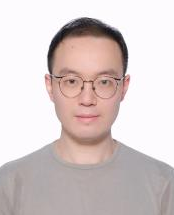 Ruchi Guo (郭汝驰)合作论文数School of Mathematics, Sichuan University8
 Huayi Wei合作论文数School of Mathematics and Computational Science, Xiangtan Uinversity6
 Ricardo Horacio Nochetto合作论文数Department of Mathematics, College of Computer, Mathematical & Natural Sciences, University of Maryland;Institutefor Physicalscience & Technology, College of Computer, Mathematical & Natural Sciences, University of Maryland6
 Jun Hu (胡俊)合作论文数School of Mathematical Sciences, Peking University;National Engineering Laboratory for Big Data Analysis and Applications, Peking University5
 Xiaozhe Hu合作论文数Department of Mathematics, School of Arts and Sciences, Tufts University5
 Michael Holst合作论文数Department of Mathematics, School of Physical Sciences, University of California, San Diego;Center for Computational Mathematics, University of California, San Diego4
 Hao Luo合作论文数Sch Math Sci, Peking Univ4
 Yongke Wu (吴永科)合作论文数School of Mathematical Sciences, University of Eectronic Science and Technology of China4
 Jingrong Wei合作论文数3
 Jie Zhou合作论文数3
 Liuqiang Zhong (钟柳强)合作论文数华南师范大学数学科学学院3
 Pengtao Sun合作论文数Pennsylvania State University;Department of Mathematics;Department of Mathematics, Pennsylvania State University3Lin Zhong合作论文数2
 Ruishu Wang (王瑞姝)合作论文数School of Mathematics, Jilin University2
 Huiwen Wu合作论文数2
 Enrique Otarola合作论文数Department of Mathematical Sciences, George Mason University2
 Jack Xin合作论文数Department of Mathematics, School of Physical Sciences, University of California, Irvine2Bin Zheng合作论文数2
 Minfu Feng (冯民富)合作论文数School of Mathematics, Sichuan University2
 Xiaoping Xie (谢小平)合作论文数School of Mathematics, Sichuan University2
 Yunqing Huang (黄云清)合作论文数School of Mathematics and Computational Science, Xiangtan University2
 Shi Shu (舒适)合作论文数School of Mathematics and Computational Science,Xiangtan University2
 Jun Zou合作论文数Department of Mathematics, The Chinese University of Hong Kong2
 Abner J. Salgado合作论文数Department of Math, College of Arts and Sciences, The University of Tennessee2Chunyu Chen合作论文数1J. Huang合作论文数1Chao Zhang合作论文数1
 Justin Baker合作论文数1Akil Narayan合作论文数1penghe zu合作论文数1Seulip Lee合作论文数1Yingying Xie合作论文数1Hedi Xia合作论文数UCLA1Steven Wise合作论文数School of Medicine Sciences, Faculty of Medicine and Health, The University of Sydney1
 Ming Wang (王鸣)合作论文数School of Environmental Science and Engineering, Nanjing University of Information Science & Technology1
 Luoping Chen (陈罗平)合作论文数School of Mathematics, Southwest Jiaotong University1
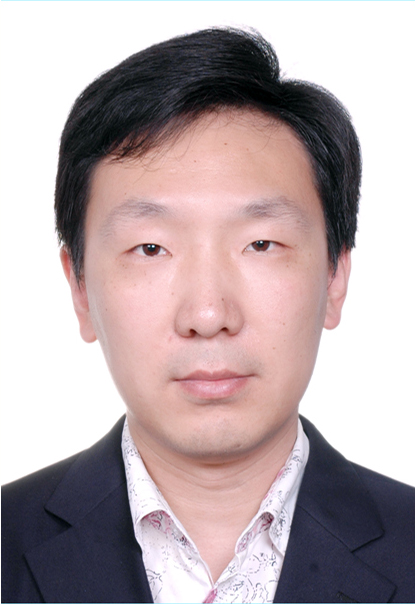 Chensong Zhang (张晨松)合作论文数Institute of Computational Mathematics and Scientific/Engineering Computing, Academy of Mathematics and Systems Science, Chinese Academy of Sciences;University of Chinese Academy of Sciences1
 Wansheng Wang (王晚生)合作论文数School of Mathematics and Statistics, Changsha University of Science & Technology1James C. Hateley合作论文数1
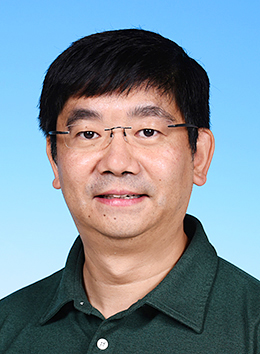 Yuan Yao (姚遠)合作论文数Department of Mathematics, School of Science, Hong Kong University of Science and Technology1
 Bao Wang合作论文数University of Science and Technology Beijing(University of Science and Technology Beijing),Beijing,China1
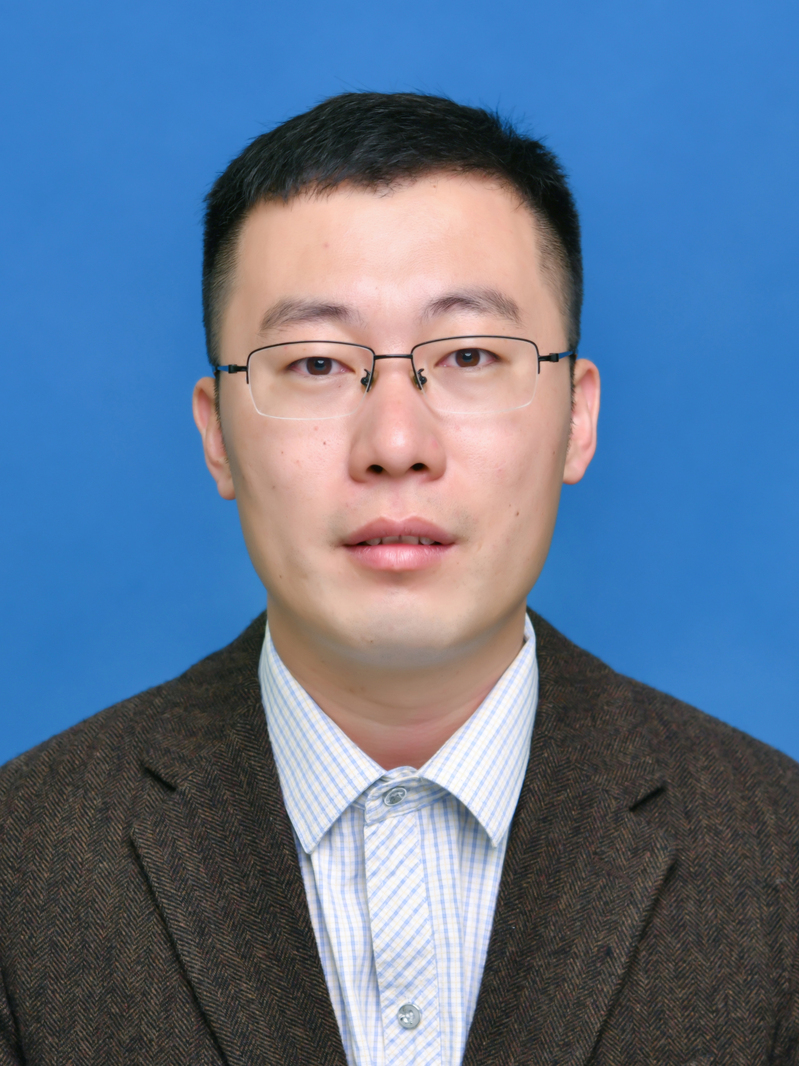 Xiyao Li (李玺瑶)合作论文数College of Marine Geosciences, Ocean University of China1
 Guangzeng Wang (王光增)合作论文数Key Lab of Submarine Geosciences and Prospecting Techniques, MOE, Ocean University of China1




