BACKGROUND:Paid family and medical leave (PFML) is increasingly recognized as an important component of physician well-being, recruitment, and retention. However, the implementation, utilization, and clarity of PFML policies within academic radiology and radiation oncology departments remain incompletely characterized. METHODS:We conducted a national, anonymous, novel web-based survey of department chairs from academic radiology and radiation oncology programs across the United States. The survey was developed through iterative refinement and cognitive testing and distributed via email to members of the Society of Chairs of Academic Radiology Departments and the Society of Chairs of Academic Radiation Oncology Programs from June to July 2025. Survey items assessed PFML policy availability, leave duration, compensation during leave, promotion clock extension, noncontiguous leave options, utilization in the prior year, and perceptions of departmental culture and coverage challenges. Responses were summarized using descriptive statistics. RESULTS:Of 233 department chairs contacted, 91 responded (39.1% response rate), including 49 radiology and 42 radiation oncology departments. PFML policies were widely available across specialties, regions, and department sizes. Respondents consistently endorsed a supportive departmental culture and identified PFML as an important recruitment and retention tool. PFML utilization remained modest, with most respondents reporting that fewer than 10% of faculty utilized leave in the prior year, although nearly all departments reported at least some utilization. Over half of respondents reported concerns regarding clinical coverage during PFML, regardless of department size. Uncertainty was commonly reported regarding promotion clock extension and noncontiguous leave options. No significant differences were observed between radiology and radiation oncology across key PFML characteristics. CONCLUSION:PFML policies are widely supported and available within academic radiology and radiation oncology departments. However, a significant proportion require vacation or sick time with variable allowance for noncontiguous leave or promotion clock extension, and substantial concerns remain regarding clinical coverage. These findings highlight an important gap between PFML policy availability and real-world implementation, underscoring opportunities for enhanced communication and advocacy.
The Radiological Society of North America (RSNA) established its Gold Medal in 1919 and the American College of Radiology (ACR) followed in 1931, yet, these highest honors in radiology have overwhelmingly gone to men. Of the 211 ACR Gold Medalists, only 18 have been women; of the 221 RSNA Gold Medalists, only 23 have been women. Among the small fraction of women recipients, just nine women have earned both. These dual awardees, Marie Sklodowska-Curie, Edith Quimby, Alice Ettinger, Rosalyn Yalow, Kay Vydareny, Sarah Donaldson, Valerie Jackson, Anne Roberts, and Beverly Coleman, are true academic “unicorns.” Their careers span the physics of radioactivity and to sonography of an unborn child. We profiled them through virtual interviews with the five living awardees, published interviews, research contributions, and institutional records. Three themes surfaced, unprompted, across every conversation: leadership carried as an intentional responsibility, mentorship as a full cycle of being sponsored and then sponsoring others, and an enduring commitment to clinical excellence as the grounds of their academic and administrative authority. These nine women offer practical lessons and lasting inspiration for emerging leaders.
Historically, women in radiology are underrepresented in radiology and face disproportionate barriers to career advancement related to work-life integration, gender bias, and relative lack of female role models. Given these challenges, women must be proactive and seek out mentorship and sponsorship to help navigate career obstacles and to guide career direction. At times of inflection, coaching can play a role in helping to clarify next steps through self-discovery of one's strengths, limitations, and desired goals. In this manuscript, we provide practical tips for women on how to successfully navigate mentorship, sponsorship and coaching during a career in radiology.
The field of radiology is experiencing profound shifts driven by technological advancements, evolving workplace structures, and changing generational expectations, contributing to increased rates of burnout, professional isolation, and diminished purpose among radiologists. To address these challenges and promote workforce sustainability, we propose the C.A.R.E. framework—encompassing Community, Advocacy, Recognition, and Empowerment—as a comprehensive, human-centered model to foster belonging and well-being in radiology. This framework emphasizes intentional strategies to build meaningful professional relationships in hybrid and remote environments; offers pathways to engage in advocacy at personal, interpersonal, and systemic levels; underscores the importance of recognition and appreciation in cultivating engagement and combating burnout; and highlights mentorship, coaching, and sponsorship as pivotal tools for professional and personal growth. By implementing the C.A.R.E. framework, radiology departments and organizations can create inclusive, supportive environments that enhance individual fulfillment, professional resilience, and organizational success. Future initiatives should focus on operationalizing and evaluating these practices to ensure sustained improvements in workforce well-being and patient care outcomes.
The ABR is reintroducing the oral board examination for diagnostic radiology, set to replace the current computer-based certifying examination in 2028. This article will review the historical perspective of the oral board examination including the rationale behind the new examination and offer strategies for success tailored to individuals (trainees) and radiology training programs (departments), as well professional considerations and challenges in transitioning to this new examination format. Individual strategies include developing tailored study plans, engaging in daily clinical practice, and managing examination-related stress. Program-level strategies emphasize shifting toward case-based learning, incorporating oral board preparation into teaching conferences, and fostering resident autonomy. The role of professional societies and equitable access to resources is also discussed. The transition to the oral board format offers an opportunity to enhance radiology education by reinforcing the importance of clinical reasoning, professionalism, and communication skills.
Rationale and Objectives: With the shifting needs of radiologists due to escalating healthcare demands, the impetus for an increased focus on wellness and the benefits of the humanities in medicine inspired a novel approach to curricular planning of the 2023 Association of University Radiologists (AUR) annual meeting. In this manuscript, we describe the creative process behind planning and executing this innovative meeting format. Materials and Methods: Reimagining the annual meeting was a collaborative effort centered around the development of an innovative Arts and Wellness Program, with the goal of integrating opportunities for artistic expression and experiential wellness throughout the meeting. Results: Of the 1313 meeting attendees, 423 (32.2%) completed the annual meeting evaluation, of which 244 were in -person and 61 attended virtually. 178 of 423 respondents (42.1%) participated in the arts and wellness programming. 160 of 203 respondents (78.9%) reported that the arts and wellness programming enhanced the overall meeting experience. 164 of 197 respondents (83.2%) gained greater appreciation for the talents of radiology colleagues. 97 of 195 respondents (49.7%) stated that the programming gave them ideas as to how to cope effectively with stress. Conclusion: The incorporation of art, music, and other wellness activities into a national radiology meeting was well -received by meeting attendees. For many radiologists who participated in the various musical and artistic offerings at the AUR 2023 meeting, sharing artistic talents with the radiology community and colleagues represented the most fundamental way to be fully seen, express authenticity, and connect with others. (c) 2023 The Association of University Radiologists. Published by Elsevier Inc. All rights reserved.
It is well-established that mentorship plays a critical role in career advancement. Effective mentors provide guidance and wisdom at key junctures in a career and often serve as role models. Mentors actively advocate on behalf of mentees and help mentees build their network. But not every mentor-mentee relationship is positive. Antimentors, described as people of influence "whose life choices—personal or professional—have led them to circumstances in their lives that you definitely do not wish to experience in your life" [ 1 Sanni A. Why you need an anti-mentor in your life (and how to pick one). Available at: https://anthonysanni.com/blog/why-you-need-anti-mentor. Accessed 3 July 2023. Google Scholar ], can also provide useful life lessons that can impact a career by influencing key decisions. Seeing the dark side of what can happen if an antimentor is too greedy, arrogant, or self-centered provides insight into potential career paths or outcomes that may be less desirable. Such interactions with an antimentor serve as learning opportunities and can better inform choices leading a mentee to seek out other opportunities in the hopes of finding a more rewarding and satisfying career.
Moral distress is a term used to describe the cognitive-emotional dissonance that is experienced when one is compelled to act contrary to one’s moral requirements. This occurs as a result of systemic constraints that prevent an individual from taking actions that they perceive as morally right, resulting in a perceived violation of one’s core values and duties. There has been a growing interest in the prevalence of moral distress in healthcare, particularly as a root cause of burnout. A recent national survey on moral distress in radiology found that 98% of respondents experienced at least some degree of moral distress with 18% of respondents having left a position due to moral distress. One of the scenarios associated with the highest degree of moral distress related to the conflict that arises when one feels unable to fulfill teaching responsibilities due to high clinical demands. Now more than ever, clinician-educators are asked to do more with less time, fewer resources, and in an increasingly demanding work environment that is often discordant with providing quality education to their learners. In this manuscript, we aim to discuss the factors contributing to moral distress in radiologist clinician-educators as a framework to better understand the implications of these drivers, and to offer our perspective on potential mitigating measures.
Background: The American College of Radiology (ACR) passed a historic paid family/medical leave (PFML) resolution at its April 2022 meeting, resolving that "diagnostic radiology, interventional radiology, radiation oncology, medical physics, and nuclear medicine practices, departments and training programs strive to provide 12 weeks of paid family/medical leave in a 12-month period for its attending physicians, medical physicists, and members in training as needed." The purpose of this article is to share this policy beyond radiology so that it may serve as a call to action for other medical specialties.Principal Findings: Such a PFML policy (1) supports physician well-being, which in turn supports patient care; (2) is widely needed across American medical specialties; and (3) should not take nearly a decade to achieve, as it did in radiology, especially given increasing physician burnout and the ongoing COVID-19 pandemic.Contribution: Supported by information on the step-by-step approach used to achieve radiology-specific leave policies and considering current and normative policies at the national level, this article concludes by reviewing specific strategies that could be applied toward achieving a 12-week PFML policy for all medical specialties.
Physician burnout is a global healthcare crisis which has been compounded by the recent coronavirus disease 2019 (COVID-19) pandemic. Drivers of physician burnout include excessive workloads, inefficient work environments, lack of autonomy, work-home conflicts, and lack of organizational support. The consequences of physician burnout are great, with impact on patient care, physician health and engagement, and healthcare systems and organizations (1). Radiologists report higher levels of burnout than physicians in many other specialties (2,3).
The coronavirus pandemic forced radiology fellow-ships to shift to virtual interviews, a practice that con-tinues for the 2022 application season. There are multiple publications pertaining to virtual radiology residency recruitment, but perspectives on the parallel process for fel-lowships are lacking even though this affects the vast majority of United States (US) radiology residents (1-24). In this com-mentary, we highlight some benefits, challenges, and solu-tions related to virtual radiology fellowship recruitment in order to stimulate discussion and planning for future cycles. The following discussion is not intended to be an authorita-tive guide, but rather a means to spur discussion on the pros and cons of virtual recruitment, with the aim to enhance the process for both applicants and programs.
Transitioning from parental leave during radiology residency training can be a time of stress and uncertainty. However, there are ways that program directors can help make the transition smoother and less overwhelming. Trainees report numerous stressors upon returning from leave involving childcare, lactation concerns and logistics, and discrimination. Program directors can help alleveate these stressors by counseling trainees returning from parental leave and providing reseources and a supportive enviroment. This article provides a structured frame work with tool for programs directors to ensure the transition from parental leave back to training is a smooth one.
Rationale and Objectives: The coronavirus disease 2019 (COVID-19) pandemic has resulted in significant changes to medical student education by disrupting clinical rotations, licensing exams, and residency applications. To evaluate the pandemic's impact and required modifications of radiology medical student courses, the authors developed and administered surveys to Alliance of Medical Student Edu-cators in Radiology (AMSER) faculty and enrolled medical students. The surveys requested feedback and insight about respondents' experiences and innovations. Materials and Methods: Anonymous twenty-question and seventeen-question surveys about the pandemic's impact on medical student education were distributed via email to AMSER members and medical students. The surveys consisted of multiple choice, ranking, Likert scale, and open-ended questions. Differences in the Likert score agreement was performed using one-sided Wilcoxon-Mann-Whitney tests. Survey data were collected using SurveyMonkey (San Mateo, California). This study was IRB exempt. Results: The AMSER survey indicated 96% of institutions cancelled medical student courses and 92% resumed with virtual courses, typi-cally general radiology. A total of 64% of faculty enjoyed online teaching, although 82% preferred on-site courses. A total of 62% of stu-dents felt an online radiology course was an excellent alternative to an on-site rotation, although 27% disagreed. A total of 69% of students who completed both on-site and online courses preferred the on-site format. Survey-reported innovations and free response comments have been collated as educational resources. Conclusion: Faculty were able to adapt radiology courses to the online environment utilizing interactive lectures, self-directed learning, flipped classroom sessions, and virtual readouts, which were effective for student respondents. Hybrid rotations with on-site and online elements may offer the best of both worlds.
 Slanetz Priscilla J合作论文数Beth Israel Deaconess Medical Center, Harvard Medical School23
 Mark J Rice合作论文数8
 Mark Edward Mullins合作论文数8
 Sheryl Jordan合作论文数7
 Reed A. Omary合作论文数Department of Biomedical Engineering, Vanderbilt University;Department of Radiology, Vanderbilt University Medical Center;School of Medicine, Vanderbilt University7
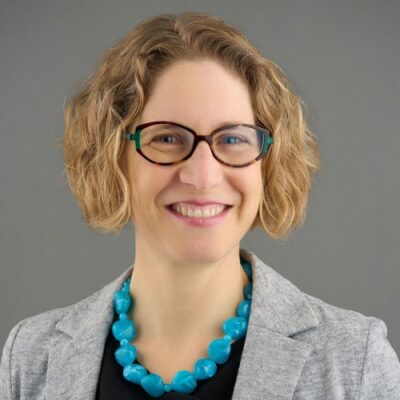 Jessica B Robbins合作论文数Department of Radiology, School of Medicine and Public Health, University of Wisconsin7Catanzano Tara M合作论文数6Cheri L. Canon合作论文数6
 Carolynn M. DeBenedectis合作论文数Warren Alpert School of Medicine, Brown University6Ann K Jay合作论文数5N Gravenstein合作论文数5
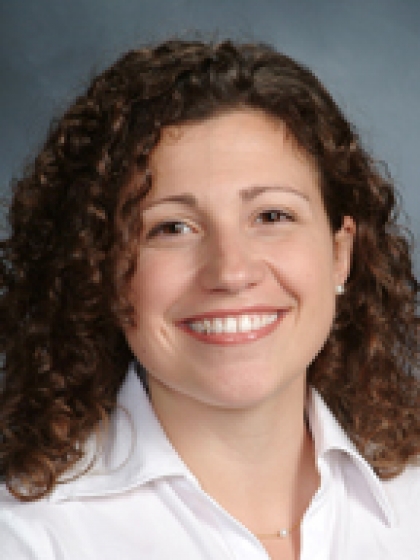 Lily Belfi合作论文数Department of Radiology, Weill Cornell Medicine, Cornell University5
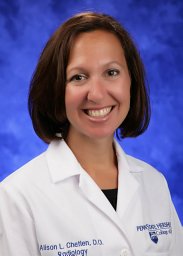 Chetlen Alison L合作论文数Department of Radiology, Penn State Milton S. Hershey Medical Center5Sosamma T. Methratta合作论文数4
 Erin Cooke合作论文数4
 Pamela T Johnson合作论文数Department of Otolaryngology-Head and Neck Surgery, School of Medicine, Johns Hopkins University4
 Geraldine B. McGinty合作论文数Department of Radiology, Weill Cornell Medicine, Cornell University4
 David M Naeger合作论文数4Richard B. Gunderman合作论文数Department of Radiology School of Medicine Indiana University4Theresa C. Mcloud合作论文数4Pedro J Diaz-Marchan合作论文数3
 Kirti Magudia合作论文数Department of Radiology, Duke University School of Medicine3
 Lucy Spalluto合作论文数Warren Alpert Medical School, Brown University3
 Darel E Heitkamp合作论文数Department of Radiology, Indiana University School of Medicine3Retrouvey Michele合作论文数3Arleo Elizabeth Kagan合作论文数3Timothy E. Morey合作论文数Dept Anesthesiol, Univ Florida3
 Petra J. Lewis合作论文数Dartmouth-Hitchcock Medical Center, Norris Cotton Cancer Center3Thad Benefield合作论文数3W. Brit Smith合作论文数2Philip S Cook合作论文数2Gregory M Janelle合作论文数2Courtney P Raybon合作论文数2Amy K Patel合作论文数2Rishi Modh合作论文数2Huong T. Le合作论文数2Robert Timmerman合作论文数2Anna Mench合作论文数2
 r lamoureux合作论文数2
 L. Alexandre Frigini合作论文数2Carl Henriksen合作论文数2
 Kristen Destigter合作论文数2
 Reni Butler合作论文数Breast Imaging, Radiology & Biomedical Imaging, Yale School of Medicine, Yale University2
 Francis Deng合作论文数Department of Stem Cell and Regenerative Biology, Harvard Stem Cell Institute and2Sistrom Christopher L合作论文数2Bartolotta Roger合作论文数Diagnostic Radiology, New York Presbyterian-Weill Cornell Medical Center2Meltzer Carolyn C合作论文数2
 Andrea Borondy Kitts合作论文数2
 David Sarkany合作论文数2




