: Ten years ago, the quantum search algorithm was designed to provide a way of searching a space of N items in only N steps. In the last ten years, it has been used as a building block for numerous applications, both physical and algorithmic -- these are as diverse as precision measurement and communication complexity. It has been generalized to the amplitude amplification principle in which form it can be used.
Quantum search/amplitude amplification algorithms are designed to be able to amplify the amplitude in the target state linearly with the number of operations. Since the probability is the square of the amplitude, this results in the success probability rising quadratically with the number of operations. This paper presents a new kind of quantum search algorithm in which the amplitude of the target state, itself increases quadratically with the number of operations. However, the domain of applications of this is much more limited than standard amplitude amplification.
We construct an algorithm for suppressing the transitions of a quantum mechanical system, initially prepared in a subspace P of the full Hilbert space of the system, to outside this subspace by subjecting it to a sequence of unequally spaced short-duration pulses. Each pulse multiplies the amplitude of the vectors in the subspace by -1. The number of pulses required by the algorithm to limit the leakage probability to epsilon in time increases as T exp[square root log(T(2)/epsilon)], compared to T(2)epsilon(-1) in the standard quantum Zeno effect.
Quite often in database search, we only need to extract portionof the information about the satisfying item. We consider thisproblem in the following form: the database of N items is separatedinto K blocks of size b = N / K elements each and an algorithm hasjust to find the block containing the item of interest. The queriesare exactly the same as in the standard database search problem. Wepresent a quantum algorithm for this problem of partial search thattakes about 0.34 √b fewer iterations than thequantum search algorithm.
The standard quantum search lacks a feature, enjoyed by many classical algorithms, of having a fixed point, i.e. monotonic convergence towards the solution. Recently a fixed point quantum search algorithm has been discovered, referred to as the Phase-π/3 search algorithm, which gets around this limitation. While searching a database for a target state, this algorithm reduces the error probability from ε to ε 2 q +1 using q oracle queries, which has since been proved to be asymptotically optimal. A different algorithm is presented here, which has the same worst-case behavior as the Phase-π/3 search algorithm but much better average-case behavior. Furthermore the new algorithm gives ε 2 q +1 convergence for all integral q , whereas the Phase-π/3 search algorithm requires q to be (3 n -1)/2 with n a positive integer. In the new algorithm, the operations are controlled by two ancilla qubits, and fixed point behavior is achieved by irreversible measurement operations applied to these ancillas. It is an example of how measurement can allow us to bypass some restrictions imposed by unitarity on quantum computing.
Consider a database most of whose entries are marked but the precise fraction of marked entries is not known. What is known is that the fraction of marked entries is 1–ε, where ε is a random variable that is uniformly distributed in the range (0,ε 0).The problem is to try to select a marked item from the database in a single query. If the algorithm selects a marked item, it succeeds, else if it selects an unmarked item, it makes an error.
Quantum searching requires precise knowledge of problem parameters (such as the fraction of target states) for efficient operation. Recently an algorithm has been discovered, referred to as the Phase-π/3 search algorithm, which gets around this limitation. This algorithm can search a database with the fraction of target states equal to 1 − ǫ so that in q queries it produces a probability of error equal to ǫ 2q+1 which has since been proved to be optimal. This paper gives a different algorithm which has the same worst-case behavior as the Phaseπ/3 search algorithm but much better average-case behavior. Furthermore the new algorithm gives ǫ 2q+1 convergence for all integral q, the Phase-π/3 search algorithm, requires q to be (3 n − 1)/2, with n a positive integer. In the new algorithm, the operations are controlled in a special way by two ancilla qubits, and fixed point behavior is achieved by irreversible measurement operations.
The quantum search algorithm consists of an alternating sequence of selective inversions and diffusion type operations, as a result of which it can find a target state in an unsorted database of size N in only sqrt(N) queries. This paper shows that by replacing the selective inversions by selective phase shifts of Pi/3, the algorithm gets transformed into something similar to a classical search algorithm. Just like classical search algorithms this algorithm has a fixed point in state-space toward which it preferentially converges. In contrast, the original quantum search algorithm moves uniformly in a two-dimensional state space. This feature leads to robust search algorithms and also to conceptually new schemes for error correction.
Composite pulses are a quantum control technique for canceling out systematic control errors. We present a different composite pulse sequence inspired by quantum search. Our technique can correct a wider variety of systematic errors---including, for example, nonlinear over-rotational errors---than previous techniques. Concatenation of the pulse sequence can reduce a systematic error to an arbitrarily small level.
We consider the partial database search problem where given a quantum database f : {0,1}n→{0,1} such that f(x) =1 for a unique x ∈ {0,1}n, we are required to determine only the first k bits of the address x. We present an algorithm and derive a lower bound for this problem. Let q(k,n) be the minimum number of queries needed to find the first k bits of the required address x with certainty (or with very high probability, say 1--O(N--¼)). We show that there exist constants ck (corresponding to the algorithm) and dk (corresponding to the lower bound) such that πover4 (1--dkover√K) √N ≤ q(k,n) ≤ πover4 (1--ckover√K) √N, where K=2k and N=2n. Our algorithm returns the correct answer with probability 1--O(N--½), and can be easily modified to give the correct answer with certainty. The lower bound for algorithms that return the correct answer with certainty is proved by reducing the usual database search problem to this partial search problem, and invoking Zalka's lower bound showing that Grovers algorithm is optimal for the usual database search problem. We then derive a lower bound that is applicable for database search algorithms that err with small probability, and use it to show that our lower bound also applies to partial search algorithms that return the correct answer with probability at least 1--O(N--¼).
Quantum searching requires precise knowledge of problem parameters (such as the fraction of target states) for efficient operation. Recently an algorithm has been discovered, referred to as the Phase-π/3 search algorithm, which gets around this limitation. This algorithm can search a database with the fraction of target states equal to 1 − ǫ so that in q queries it produces a probability of error equal to ǫ 2q+1 which has since been proved to be optimal. This paper gives a different algorithm which has the same worst-case behavior as the Phaseπ/3 search algorithm but much better average-case behavior. Furthermore the new algorithm gives ǫ 2q+1 convergence for all integral q, the Phase-π/3 search algorithm, requires q to be (3 n − 1)/2, with n a positive integer. In the new algorithm, the operations are controlled in a special way by two ancilla qubits, and fixed point behavior is achieved by irreversible measurement operations.
Quantum search is a quantum mechanical technique for searching N possibilities in only [Formula: see text] steps. This has been proved to be the best possible algorithm for the exhaustive search problem in the sense that the number of queries it requires cannot be reduced. However, as this paper shows, the number of non-query operations can be reduced by a third without a single increase in the number of queries.
In the quantum database search problem we are required to search for an item in a database. In this paper, we consider a generalization of this problem, where we are provided d identical copes of a database each with N items which we can query in parallel. Then, given k items, we are required to determine the locations where these items are stored. We show that any quantum algorithm for this task must perform Omega(sqrt{Nk/d min{d,k}}) parallel queries. We also design an algorithm whose performance comes within a factor O(log d) of this lower bound.
We discuss the aligning of spatial reference frames from a quantum communication complexity perspective. This enables us to analyze multiple rounds of communication and give several simple examples demonstrating tradeoffs between the number of rounds and the type of communication. Using a distributed variant of a quantum computational algorithm, we give an explicit protocol for aligning spatial axes via the exchange of spin-1/2 particles which makes no use of either exchanged entangled states, or of joint measurements. This protocol achieves a worst-case fidelity for the problem of "direction finding" that is asymptotically equivalent to the optimal average case fidelity achievable via a single forward communication of entangled states.
The scheduling problem consists of finding a common 1 in two remotely located N bit strings. Denote the number of 1s in the string with the fewer 1s by epsilon*N. Classically, it needs at least O(epsilon*N) bits of communication to find the common 1 (ignoring logarithmic factors). The best known quantum algorithm would require O(sqrt(N)) qubits of communication. This paper gives a modified quantum algorithm to find the common 1 with only O(sqrt(epsilon*N)) qubits of communication.
 Terry Rudolph合作论文数Department of Physics, Imperial College London5
 Apoorva Patel合作论文数Indian Institute of Science5
 Tathagat Tulsi合作论文数4
 Vladimir Korepin合作论文数Department of Physics and Astronomy, College of Arts and Sciences, Stony Brook University2
 Jaikumar Radhakrishnan合作论文数Tata Inst Fundamental Res2
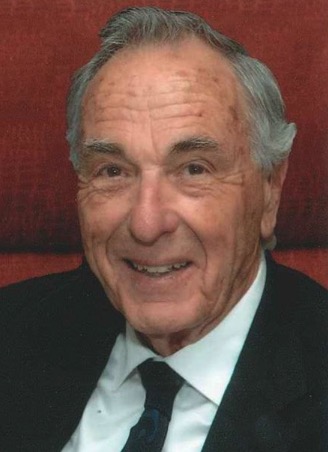 Richard Harris Pantell合作论文数Department of Electrical Engineering, Stanford University2
 Anirvan M Sengupta合作论文数Rutgers University2J. Feinstein合作论文数1Pantell, R.H.合作论文数1
 Deepak Dhar合作论文数International Centre for Theoretical Sciences, Tata Institute of Fundamental Research1
 Isaac Chuang合作论文数Department of Electrical Engineering and Computer Science, Massachusetts Institute of Technology1
 Michael A. Nielsen合作论文数School of Physical Sciences;University of Queensland;School of Physical Sciences, University of Queensland1
 Ben Reichardt合作论文数Department of Electrical Engineering, University of Southern California1
 Shasanka Mohan Roy合作论文数Department of Atomic Energy, School of Physical Sciences, Jawaharlal Nehru University1Dr合作论文数1




