Captive breeding and reintroduction programs remain a powerful but divisive tool for management of threatened species, with a proven potential to avoid extinction, but low long-term success rates and high resource requirements. Monitoring the results of reintroductions is critical to be able to assess short- and long-term success, adjusting management decisions as new information becomes available. In this study, we assessed the first 15years of the captive breeding and restocking program for the European pond turtle Emys orbicularis in Liguria, northern Italy. We estimated survival of released turtles by modelling mark-recapture monitoring data. We then used those estimates to update our prior expectations about long-term outcomes, and to adjust management decisions about the age of individuals to release. Modelling results suggest released turtles had sufficiently high survival, matching prior expectations, such that local extinction has been averted in the short-term. Survival was similar among candidate age classes for releases, suggesting the release of younger individuals can provide positive outcomes while reducing management costs. On the other hand, survival varied among sites, indicating the need for ongoing in-situ habitat management to ensure long-term persistence. Moreover, the late onset of sexual maturity in the species means reproduction of released animals cannot yet be determined with certainty. Captive breeding and reintroduction programs normally require long-term efforts; therefore, focused monitoring that is clearly linked to decision-making is necessary to continually refine and adjust management strategies.
The ecological status of 203 amphibian aquatic breeding sites, selected from the national database of the Societas Herpetologica Italica (SHI), was surveyed in the period 2008-2009 to assess their ecological status. Sites were randomly extracted, after stratification by the three biogeographical regions present in Italy, besides Sardinia and Sicily. The field surveys, conducted by professionals, amateurs and volunteers, showed that since 1979 about 11% of the sites were destroyed or no more suitable for the reproduction of amphibians that bred in the same site in the past. The percentage of destroyed or altered sites was 8%, both in the Mediterranean and Alpine biogeographical regions, and 15% in the Continental one. However, there were no statistical significant differences among the regions, suggesting that the rate of amphibian site loss was similar in different parts of Italy. This nation-wide monitoring project demonstrated that in Italy, during the last thirty years, a relevant proportion of amphibian breeding habitats has been destroyed or altered. The main cause of site alteration were land reclamation and water extraction.
La lucertola ocellata Timon lepidus (Daudin, 1802) è diffuso nella penisola iberica, nel sud della Francia e nella Liguria occidentale e centrale (Mateo e Cheylan, 1997), regione che costituisce il limite orientale della sua distribuzione (Camerano, 1885; Bruno, 1982; Ferri et al., 1991). In Italia, l’areale della specie è frammentato (doria e Salvidio, 1994) con popolazioni isolate, spesso minacciate dalla continua alterazione degli habitat idonei e in particolare dagli incendi e dalla continua edificazione delle aree costiere (Salvidio et al., 2004). L’interesse biogeografico e conservazionistico di queste popolazioni al limite di areale è pertanto evidente, ma i dati sulla biologia di questo lacertide in Italia sono ancora scarsi e le informazioni riportate da Corti e Lo Cascio (1999) si riferiscono solo alle popolazioni spagnole e francesi.
In Italy, the parsley frog (Pelodytes punctatus) readies the eastern limit of its distribution range along the Mediterranean coast in Liguria and in southern Piedmont. The status of the Italian populations was analysed on the basis of a complete survey of known breeding sites. Since 1993. the reproduction of P. punctatus has been observed in only 15 sites, several of which were discovered during the monitoring project. Spawning sites were mainly small temporary pools, small streams and artificial tanks in Mediterranean habitats. The number of breeding females was estimated indirectly counting egg strings both in spring and autumn, from 2000 to 2002. Populations appeared isolated and made up of an extremely low number of reproductive females (range 2–19. mean 9). In Italy, P. punctatus populations show a fragmented distribution and appear threatened mainly by the drying up of pools or habitat destruction. For each reproductive site, the conservation status was evaluated, and a general conservation strategy was proposed. Active management of breeding sites, with the maintenance and/or creation of small temporary water bodies should be planned. The collaboration of private landowners and local administrations was requested, and in one case, active management of a relevant breeding site obtained.
The ocellated lizard (Timon lepidus), which reaches its eastern range limit in Italy, is distributed along the coastal areas of Liguria. A field survey from 1999 to 2002, verified the status of the Italian populations. The observation of this species is very difficult in Liguria because of the scattered populations and their scarce density. Some new localities were discovered both in the Imperia and Savona provinces, and others were confirmed. An analysis of previous known records was also carried out. T. lepidus is distributed in this area from sea level to about 670 m a.s.l. in several primary or derived Mediterranean habitats such as maquis, pine open woodland and olive groves. The species has a wide phenology, and sightings have been recorded from January to November, though it is particularly active from April to September. The conservation status of the sites and their ecological suitability for the species were evaluated, and a general conservation strategy proposed.
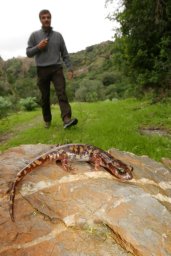 Sebastiano Salvidio合作论文数Dipartimento;Università di Genova;Università di Genova7
 Ottonello Dario合作论文数5R Jesu合作论文数4Fabrizio Oneto合作论文数4
 Marco Alberto Bologna合作论文数Department of Science, Universita Degli Studi Roma Tre2
 Stefano Canessa合作论文数School of BioSciences, University of Melbourne2
 Guido Gnone合作论文数2
 Pierluigi Bombi合作论文数SPACE Environment2B. Valettini合作论文数1C Gili合作论文数1G. Giacalone合作论文数1Stefano Vanni合作论文数1Lara Bassu合作论文数1Angelo Vaccaro合作论文数1cristina grieco合作论文数1Emanuele Biggi合作论文数1Elisa Riservato合作论文数1
 Anna Rita Di Cerbo合作论文数1marco carafa合作论文数1paolo eusebio bergo合作论文数1Jacopo Richard合作论文数1Fabrizio Silvano合作论文数1
 Andrea Mosini合作论文数1Egidio Fulco合作论文数1Luciano Di Tizio合作论文数1Giuliano Doria合作论文数1Francesca Montioni合作论文数1michele cassol合作论文数1
 Claudia Corti合作论文数1
 Antonio Romano合作论文数1Arianna Spada合作论文数1
 Francesco Lillo合作论文数1
 Franco Andreone合作论文数Museo Regionale di Scienze Naturali1Mezzasalma Marcello合作论文数1
 Luca Cornetti合作论文数Department of Biodiversity and Molecular Ecology - Centre for Research and Innovation, Fondazione Edmund Mach;Department of Life Sciences and Biotechnology, Università di Ferrara;Department of Biodiversity and Molecular Ecology - Centre for Research and Innovation, Università di Ferrara1
 Gaetano Odierna合作论文数1Franco Bernini合作论文数1
 Cristiano Spilinga合作论文数1Livio Emanueli合作论文数1
 Francesco Paolo Faraone合作论文数Dipartimento di Biologia Animale “G. Reverberi”,, Università di Palermo1
 Stefano Mazzotti合作论文数Dipartimento di Biologia Evolutiva e Comparata Via Mezzocannone, Università degli Studi Federico II1
 Marco A.L. zuffi合作论文数University of Pisa1Luigi Sala合作论文数1
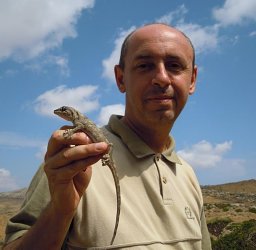 Edoardo Razzetti合作论文数Museo di Storia Naturale, Università degli Studi di Pavia1
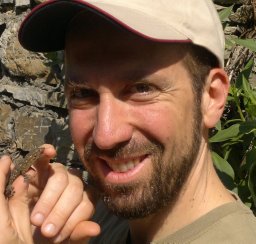 Daniele Pellitteri-Rosa合作论文数Laboratorio di Eco-Etologia, Università degli Studi di Pavia1Sandro Piazzini合作论文数Dipartimento di Scienze Ambientali, Università di Siena1
 Fabio Maria Guarino合作论文数Dipartimento di Biologia Evolutiva e Comparata Via Mezzocannone, Università degli Studi Federico II1
 Vincenzo Ferri合作论文数1
 Stefano Scali合作论文数1




