We propose a compact, portable, and low-cost holographic microscope designed for the characterization of micrometric particles suspended in a liquid. This system is built around a commercial optical microscope by substituting its illumination source (a light-emitting diode) with a collimated laser beam. Similarly, a quartz flow cell replaces the microscope glass slide using a 3D-printed custom mount. With the hardware presented in this paper, the holographic imaging of the electromagnetic fields emitted by the particles that intercept the laser beam achieves a resolution close to that of optical microscopes but with a greater depth of field. Several morphological and optical features can be extracted from the holograms, including particle projected section, aspect ratio, and extinction cross-section. Additionally, we introduce a remote system control that enables users to process the acquired holograms on a remote computational device. This work provides a comprehensive description of the methodology of image processing in holographic microscopy and a series of validation measurements conducted using calibrated particles. This technique is suitable for the characterization of airborne particles found in snow, firn, and ice; here we report experimental results obtained from Alpine ice cores.
[This corrects the article DOI: 10.1016/j.ohx.2024.e00569.].
Abstract. Sunlight penetration in the snowpack plays a fundamental role in many environmental processes, including the local radiative energy balance, snow hydrology and snow microbiology and can potentially contribute to climate change. In addition, many photochemical reactions typically occur in the snowpack driven by solar radiation. Although a few measurements have been attempted in the past decades with several approaches, light penetration through the snowpack is currently almost only modelled numerically, frequently using severe assumptions and several parameters not always easy to be fixed. The lack of experimental data and dedicated studies leave a remarkable scientific gap in the snow research. In this paper, we propose a novel sensor, specifically designed and custom-made, to assess sunlight propagation through the snowpack in three different spectral bands. The probe has been designed to be very compact and lightweight and therefore easily transportable. We measure at different depths in the snowpack the scattered light propagating horizontally with respect to the surface with high spatial resolution (3 mm). Measurements were performed over the past two years across multiple sites with different altitudes and geographic exposure, different illumination conditions and snowpack characteristics. Data are compared to numerical simulations from the “Snow, Ice and Aerosol Radiative” (SNICAR) code, exploited here to extract the information about the light propagation at different depths. This approach provides important constraints to properly model the snowpack characteristics, allowing us to extrapolate this information to the UV radiation range. Nevertheless, in some cases the comparison between our measurement and model run suggest a more complex light penetration depending on the snowpack peculiar characteristics that SNICAR numerical simulations cannot capture. We believe that our tight experimental approach will strongly contribute to a better understanding of the radiative transfer process inside the snow layers, as well as to a quantitative description of all those chemical, physical and biological processes that occur in the uppermost layers of the snowpack.
Solaris is a scientific and technological project aimed at the development of a smart Solar monitoring system at high radio frequencies, based on single-dish imaging techniques. It combines the implementation of dedicated and interchangeable high-frequency receivers on existing small single-dish radio telescope systems (1.5/2.6m class) available in our laboratories and in Antarctica, to be adapted for Solar observations. Solaris can perform Solar imaging observations nearly 20h/day during Antarctic summer with optimal sky opacity, and it will be the only Solar facility offering continuous monitoring at 100GHz. In perspective, our system could be implemented also in the Northern hemisphere to offer unprecedented Solar radio monitoring and imaging for the whole year.
<p>Mineral dust aerosol plays an important role in climate and biogeochemical processes by providing nutrients to marine and terrestrial ecosystems and by influencing the radiation balance of the atmosphere. In turn, mineral dust responds to natural and anthropogenic alterations of land cover and land use resulting from several environmental changes that occurred on different timescales. Contamination by aerosols is a very tangible threat to the cryosphere in the European Alps due to its proximity to highly urbanized areas, cultivated landscapes, and the largest hot desert in the world. We recently developed and assembled a continuous flow analysis system for studying the solid content of ice cores with a high time resolution, focusing on optical characterization methods based on light scattering. The line is designed to provide an integrated measurement of dust particles with Single-Particle Extinction and Scattering (SPES), digital holography, and an optical particle sizer (Abakus). Many of the particles found in ice are efficient scatterers and absorbers close to the size range of the visible light wavelength. We report some preliminary results from ice cores drilled during the ADA270 project, aiming at an in-depth characterization of the samples that provide essential information on the fast climate evolution, which is causing a severe degeneration of glaciers, among other consequences. </p>
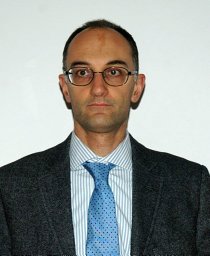 Marco A.C. Potenza合作论文数Department of Physics, University of Milan;Centre for Interfaces and Nanostructured Materials, University of Milan5
 C. RAVASIO合作论文数3
 Llorenç Cremonesi合作论文数Department of Physics, CIMaINaUniversità degli Studi di Milano3M Siano合作论文数2Claudio Artoni合作论文数2Paroli Bruno合作论文数2B. Paroli合作论文数1Lorenzo Scalcinati合作论文数1
 Sara Mulas合作论文数1A. Limonta合作论文数1A. Pellizzoni合作论文数1Francesco Cavaliere合作论文数1
 M. Buttu合作论文数IPEV, PNRA1F. Pezzotta合作论文数1
 Pierluigi Ortu合作论文数1
 A. Ritacco合作论文数CNRS, Inst Astrophys Spatiale IAS1C. Tiburzi合作论文数1
 E. Egron合作论文数1
 Spolaor Andrea合作论文数Institute of Polar Science, ISP-CNR/Department of Environmental Sciences, Informatics and Statistics, Ca’ Foscari University of Venice1
 Giuseppe Valente合作论文数1
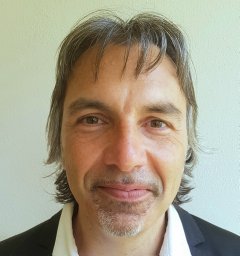 Alessandro Navarrini合作论文数1Della Torre S合作论文数INFN Sezione di Milano-Bicocca1M. Sandri合作论文数1Fabrizio Villa合作论文数1
 Antonio Miriametro合作论文数1
 Massimo Gervasi合作论文数Dipartimento di Fisica G. Occhialini, University of Milano Bicocca1
 Barbara Delmonte合作论文数Department of Earth and Environmental Sciences, Università degli Studi di Milano-Bicocca1
 Giampaolo Serra合作论文数1
 M. Zannoni合作论文数National Institute for Astrophysics1
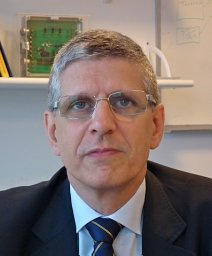 Mauro Messerotti合作论文数Department of Physics, University of Trieste1
 Francesco Cuttaia合作论文数INAF-IASF1
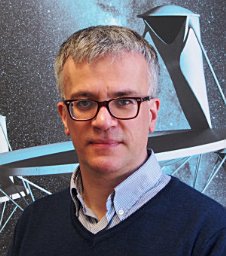 Luca Stringhetti合作论文数INAF IASF Bologna1
 Marco De Petris合作论文数Department of Physics;University " La Sapienza ";Department of Physics, University " La Sapienza "1
 M. N. Iacolina合作论文数1
 Andrea Saba合作论文数1
 Simona Righini合作论文数1
 Valter Maggi合作论文数Dipart. di Scienze della Terra, Via Mangiagalli 34, Milano 20133, Italy1
 Tonino Pisanu合作论文数1




