The problem of recovering planted community structure in random graphs has received a lot of attention in the literature on the stochastic block model, where the input is a random graph in which edges crossing between different communities appear with smaller probability than edges induced by communities. The communities themselves form a collection of vertex-disjoint sparse cuts in the expected graph, and can be recovered, often exactly, from a sample as long as a separation condition on the intra- and inter-community edge probabilities is satisfied. In this paper, we ask whether the presence of a large number of overlapping sparsest cuts in the expected graph still allows recovery. For example, the d-dimensional hypercube graph admits d distinct (balanced) sparsest cuts, one for every coordinate. Can these cuts be identified given a random sample of the edges of the hypercube where each edge is present independently with some probability p is an element of(0, 1)? We show that this is the case, in a very strong sense: the sparsest balanced cut in a sample of the hypercube at rate p = C log d/d for a sufficiently large constant C is 1/poly(d)-close to a coordinate cut with high probability. This is asymptotically optimal and allows approximate recovery of all d cuts simultaneously. Furthermore, for an appropriate sample of hypercube-like graphs recovery can be made exact. The proof is essentially a strong hypercube cut sparsification bound that combines a theorem of Friedgut, Kalai and Naor on boolean functions whose Fourier transform concentrates on the first level of the Fourier spectrum with Karger's cut counting argument. 2012 ACM Subject Classification Theory of computation -> Graph algorithms analysis; Mathematics of computing -> Random graphs
\emph{Full-bond percolation} with parameter $p$ is the process in which, given a graph, for every edge independently, we delete the edge with probability $1-p$. Bond percolation is motivated by problems in mathematical physics and it is studied in parallel computing and network science to understand the resilience of distributed systems to random link failure and the spread of information in networks through unreliable links. Full-bond percolation is also equivalent to the \emph{Reed-Frost process}, a network version of \emph{SIR} epidemic spreading, in which the graph represents contacts among people and $p$ corresponds to the probability that a contact between an infected person and a susceptible one causes a transmission of the infection. We consider \emph{one-dimensional power-law small-world graphs} with parameter $\alpha$ obtained as the union of a cycle with additional long-range random edges: each pair of nodes $(u,v)$ at distance $L$ on the cycle is connected by a long-range edge $(u,v)$, with probability proportional to $1/L^\alpha$. Our analysis determines three phases for the percolation subgraph $G_p$ of the small-world graph, depending on the value of $\alpha$. 1) If $\alpha < 1$, there is a $p<1$ such that, with high probability, there are $\Omega(n)$ nodes that are reachable in $G_p$ from one another in $O(\log n)$ hops; 2) If $1 < \alpha < 2$, there is a $p<1$ such that, with high probability, there are $\Omega(n)$ nodes that are reachable in $G_p$ from one another in $\log^{O(1)}(n)$ hops; 3) If $\alpha > 2$, for every $p<1$, with high probability all connected components of $G_p$ have size $O(\log n)$. The setting of full-bond percolation in finite graphs studied in this paper, which is the one that corresponds to the network SIR model of epidemic spreading, had not been analyzed before.
We give new rounding schemes for SDP relaxations for the problems of maximizing cubic polynomials over the unit sphere and the $n$-dimensional hypercube. In both cases, the resulting algorithms yield a $O(\sqrt{n/k})$ multiplicative approximation in $2^{O(k)} \text{poly}(n)$ time. In particular, we obtain a $O(\sqrt{n/\log n})$ approximation in polynomial time. For the unit sphere, this improves on the rounding algorithms of Bhattiprolu et. al. [BGG+17] that need quasi-polynomial time to obtain a similar approximation guarantee. Over the $n$-dimensional hypercube, our results match the guarantee of a search algorithm of Khot and Naor [KN08] that obtains a similar approximation ratio via techniques from convex geometry. Unlike their method, our algorithm obtains an upper bound on the integrality gap of SDP relaxations for the problem and as a result, also yields a certificate on the optimum value of the input instance. Our results naturally generalize to homogeneous polynomials of higher degree and imply improved algorithms for approximating satisfiable instances of Max-3SAT. Our main motivation is the stark lack of rounding techniques for SDP relaxations of higher degree polynomial optimization in sharp contrast to a rich theory of SDP roundings for the quadratic case. Our rounding algorithms introduce two new ideas: 1) a new polynomial reweighting based method to round sum-of-squares relaxations of higher degree polynomial maximization problems, and 2) a general technique to compress such relaxations down to substantially smaller SDPs by relying on an explicit construction of certain hitting sets. We hope that our work will inspire improved rounding algorithms for polynomial optimization and related problems.
We study expansion and information diffusion in dynamic networks, that is in networks in which nodes and edges are continuously created and destroyed. We consider information diffusion by {\em flooding}, the process by which, once a node is informed, it broadcasts its information to all its neighbors. We study models in which the network is {\em sparse}, meaning that it has $\mathcal{O}(n)$ edges, where $n$ is the number of nodes, and in which edges are created randomly, rather than according to a carefully designed distributed algorithm. In our models, when a node is "born", it connects to $d=\mathcal{O}(1)$ random other nodes. An edge remains alive as long as both its endpoints do. If no further edge creation takes place, we show that, although the network will have $\Omega_d(n)$ isolated nodes, it is possible, with large constant probability, to inform a $1-exp(-\Omega(d))$ fraction of nodes in $\mathcal{O}(\log n)$ time. Furthermore, the graph exhibits, at any given time, a "large-set expansion" property. We also consider models with {\em edge regeneration}, in which if an edge $(v,w)$ chosen by $v$ at birth goes down because of the death of $w$, the edge is replaced by a fresh random edge $(v,z)$. In models with edge regeneration, we prove that the network is, with high probability, a vertex expander at any given time, and flooding takes $\mathcal{O}(\log n)$ time. The above results hold both for a simple but artificial streaming model of node churn, in which at each time step one node is born and the oldest node dies, and in a more realistic continuous-time model in which the time between births is Poisson and the lifetime of each node follows an exponential distribution.
We define a novel notion of ``non-backtracking'' matrix associated to any symmetric matrix, and we prove a ``Ihara-Bass'' type formula for it. We use this theory to prove new results on polynomial-time strong refutations of random constraint satisfaction problems with $k$ variables per constraints (k-CSPs). For a random k-CSP instance constructed out of a constraint that is satisfied by a $p$ fraction of assignments, if the instance contains $n$ variables and $n^{k/2} / \epsilon^2$ constraints, we can efficiently compute a certificate that the optimum satisfies at most a $p+O_k(\epsilon)$ fraction of constraints. Previously, this was known for even $k$, but for odd $k$ one needed $n^{k/2} (\log n)^{O(1)} / \epsilon^2$ random constraints to achieve the same conclusion. Although the improvement is only polylogarithmic, it overcomes a significant barrier to these types of results. Strong refutation results based on current approaches construct a certificate that a certain matrix associated to the k-CSP instance is quasirandom. Such certificate can come from a Feige-Ofek type argument, from an application of Grothendieck's inequality, or from a spectral bound obtained with a trace argument. The first two approaches require a union bound that cannot work when the number of constraints is $o(n^{\lceil k/2 \rceil})$ and the third one cannot work when the number of constraints is $o(n^{k/2} \sqrt{\log n})$. We further apply our techniques to obtain a new PTAS finding assignments for $k$-CSP instances with $n^{k/2} / \epsilon^2$ constraints in the semi-random settings where the constraints are random, but the sign patterns are adversarial.
We investigate opinion dynamics in a fully-connected system, consisting of n agents, where one of the opinions, called correct, represents a piece of information to disseminate. One source agent initially holds the correct opinion and remains with this opinion throughout the execution. The goal of the remaining agents is to quickly agree on this correct opinion. At each round, one agent chosen uniformly at random is activated: unless it is the source, the agent pulls the opinions of l random agents and then updates its opinion according to some rule. We consider a restricted setting, in which agents have no memory and they only revise their opinions on the basis of those of the agents they currently sample. This setting encompasses very popular opinion dynamics, such as the voter model and best-of-k majority rules. Qualitatively speaking, we show that lack of memory prevents efficient convergence. Specifically, we prove that any dynamics requires Omega(n^2) expected time, even under a strong version of the model in which activated agents have complete access to the current configuration of the entire system, i.e., the case l=n. Conversely, we prove that the simple voter model (in which l=1) correctly solves the problem, while almost matching the aforementioned lower bound. These results suggest that, in contrast to symmetric consensus problems (that do not involve a notion of correct opinion), fast convergence on the correct opinion using stochastic opinion dynamics may require the use of memory.
In the Random Subset Sum Problem, given $n$ i.i.d. random variables $X_1, ..., X_n$, we wish to approximate any point $z \in [-1,1]$ as the sum of a suitable subset $X_{i_1(z)}, ..., X_{i_s(z)}$ of them, up to error $\varepsilon$. Despite its simple statement, this problem is of fundamental interest to both theoretical computer science and statistical mechanics. More recently, it gained renewed attention for its implications in the theory of Artificial Neural Networks. An obvious multidimensional generalisation of the problem is to consider $n$ i.i.d. $d$-dimensional random vectors, with the objective of approximating every point $\mathbf{z} \in [-1,1]^d$. In 1998, G. S. Lueker showed that, in the one-dimensional setting, $n=\mathcal{O}(\log \frac 1\varepsilon)$ samples guarantee the approximation property with high probability.In this work, we prove that, in $d$ dimensions, $n = \mathcal{O}(d^3\log \frac 1\varepsilon \cdot (\log \frac 1\varepsilon + \log d))$ samples suffice for the approximation property to hold with high probability. As an application highlighting the potential interest of this result, we prove that a recently proposed neural network model exhibits universality: with high probability, the model can approximate any neural network within a polynomial overhead in the number of parameters.
We obtain tight thresholds for bond percolation on one-dimensional small-world graphs, and apply such results to obtain tight thresholds for the \emph{Independent Cascade} process and the \emph{Reed-Frost} process in such graphs. These are the first fully rigorous results establishing a phase transition for bond percolation and SIR epidemic processes in small-world graphs. Although one-dimensional small-world graphs are an idealized and unrealistic network model, a number of realistic qualitative epidemiological phenomena emerge from our analysis, including the epidemic spread through a sequence of local outbreaks, the danger posed by random connections, and the effect of super-spreader events.
We demonstrate that the problems of finding stable or metastable vacua in a low energy effective field theory requires solving nested NP-hard and co-NP-hard problems, while the problem of finding near-vacua is in P. Multiple problems relevant for computing effective potential contributions from string theory are shown to be instances of NP-hard problems. If P $\neq$ NP, the hardness of finding string vacua is exponential in the number of scalar fields. Cosmological implications, including for rolling solutions, are discussed in light of a recently proposed measure.
We prove that a random $d$-regular graph, with high probability, is a cut sparsifier of the clique with approximation error at most $\left(2\sqrt{\frac 2 \pi} + o_{n,d}(1)\right)/\sqrt d$, where $2\sqrt{\frac 2 \pi} = 1.595\ldots$ and $o_{n,d}(1)$ denotes an error term that depends on $n$ and $d$ and goes to zero if we first take the limit $n\rightarrow \infty$ and then the limit $d \rightarrow \infty$. This is established by analyzing linear-size cuts using techniques of Jagannath and Sen derived from ideas in statistical physics, and analyzing small cuts via martingale inequalities. We also prove new lower bounds on spectral sparsification of the clique. If $G$ is a spectral sparsifier of the clique and $G$ has average degree $d$, we prove that the approximation error is at least the "Ramanujan bound'' $(2-o_{n,d}(1))/\sqrt d$, which is met by $d$-regular Ramanujan graphs, provided that either the weighted adjacency matrix of $G$ is a (multiple of) a doubly stochastic matrix, or that $G$ satisfies a certain high "odd pseudo-girth" property. The first case can be seen as an "Alon-Boppana theorem for symmetric doubly stochastic matrices," showing that a symmetric doubly stochastic matrix with $dn$ non-zero entries has a non-trivial eigenvalue of magnitude at least $(2-o_{n,d}(1))/\sqrt d$; the second case generalizes a lower bound of Srivastava and Trevisan, which requires a large girth assumption. Together, these results imply a separation between spectral sparsification and cut sparsification. If $G$ is a random $\log n$-regular graph on $n$ vertices, we show that, with high probability, $G$ admits a (weighted subgraph) cut sparsifier of average degree $d$ and approximation error at most $(1.595\ldots + o_{n,d}(1))/\sqrt d$, while every (weighted subgraph) spectral sparsifier of $G$ having average degree $d$ has approximation error at least $(2-o_{n,d}(1))/\sqrt d$.
Correlation Clustering is an important clustering problem with many applications. We study the reconstruction version of this problem, in which one seeks to reconstruct a latent clustering that has been corrupted by random noise and adversarial modifications. Concerning the latter, there is a standard "post-adversarial" model in the literature, in which adversarial modifications come after the noise. Here, we introduce and analyse a "pre-adversarial" model, in which adversarial modifications come before the noise. Given an input coming from such a semi-adversarial generative model, the goal is to approximately reconstruct with high probability the latent clustering. We focus on the case where the hidden clusters have nearly equal size and show the following. In the pre-adversarial setting, spectral algorithms are optimal, in the sense that they reconstruct all the way to the information-theoretic threshold beyond which no reconstruction is possible. This is in contrast to the post-adversarial setting, in which their ability to restore the hidden clusters stops before the threshold, but the gap is optimally filled by SDP-based algorithms. These results highlight a heretofore unknown robustness of spectral algorithms, showing them less brittle than previously thought.
We prove almost optimal hardness for MAX k-CSPR. In MAX k-CSPR, we are given a set of constraints, each of which depends on at most k variables. Each variable can take any value from 1, 2,. .., R. The goal is to find an assignment to variables that maximizes the number of satisfied constraints. We show that, for any k >= 2 and R >= 16, it is NP-hard to approximate MAX k- CSPR to within factor k(O(k))(logR)(k/2) =Rk-1. In the regime where 3 <= k = o(logR= log logR), this ratio improves upon Chan's O(k/Rk-2) factor NP-hardness of approximation of MAX k-CSPR (J. ACM 2016). Moreover, when k = 2, our result matches the best known hardness result of Khot, Kindler, Mossel and O'Donnell (SIAM J. Comp. 2007). We remark here that NPhardness of an approximation factor of 2(O(k)) log(kR)/Rk-1 is implicit in the (independent) work of Khot and Saket (ICALP 2015), which is better than our ratio for all k >= 3. In addition to the above hardness result, by extending an algorithm for MAX 2- CSPR by Kindler, Kolla and Trevisan (SODA 2016), we provide an Omega(logR/Rk-1)-approximation algorithm for MAX k-CSPR. Thanks to Khot and Saket's result, this algorithm is tight up to a factor of O(k(2)) when k <= R-O(1). In comparison, when 3 <= k is a constant, the previously best known algorithm achieves an O(k/Rk-1)-approximation for the problem, which is a factor of O(k logR) from the inapproximability ratio in contrast to our gap of O(k(2)).
We study epidemic spreading according to a Susceptible-Infectious-Recovered (for short, SIR) network model known as the Reed-Frost model, and we establish sharp thresholds for two generative models of one-dimensional small-world graphs, in which graphs are obtained by adding random edges to a cycle. In 3-regular graphs obtained as the union of a cycle and a random perfect matching, we show that there is a sharp threshold at .5 for the contagion probability along edges. In graphs obtained as the union of a cycle and of a Gn,c/n Erdős-Rényi random graph with edge probability c/n, we show that there is a sharp threshold pc for the contagion probability: the value of pc turns out to be √ 2− 1 ≈ .41 for the sparse case c = 1 yielding an expected node degree similar to the random 3-regular graphs above. In both models, below the threshold we prove that the infection only affects O(log n) nodes, and that above the threshold it affects Ω(n) nodes. These are the first fully rigorous results establishing a phase transition for SIR models (and equivalent percolation problems) in small-world graphs. Although one-dimensional small-world graphs are an idealized and unrealistic network model, a number of realistic qualitative phenomena emerge from our analysis, including the spread of the disease through a sequence of local outbreaks, the danger posed by random connections, and the effect of super-spreader events.
In this paper, we study a general semi-random version of the planted independent set problem in a model initially proposed by Feige and Kilian, which has a large proportion of adversarial edges. We give a new deterministic algorithm that finds a list of independent sets, one of which, with high probability, is the planted one, provided that the planted set has size $k=\Omega(n^{2/3})$. This improves on Feige and Kilian's original randomized algorithm, which with high probability recovers an independent set of size at least $k$ when $k=\alpha n$ where $\alpha$ is a constant.
We show that for every ε > 0, the degree-n ε Sherali-Adams linear program (with exp(Õ(n ε )) variables and constraints) approximates the maximum cut problem within a factor of ([1/2]+ε ' ), for some ε ' (ε)>0. Our result provides a surprising converse to known lower bounds against all linear programming relaxations of Max-Cut [1], [2], and hence resolves the extension complexity of approximate Max-Cut for approximation factors close to [1/2] (up to the function ε ' (ε)). Previously, only semidefinite programs and spectral methods were known to yield approximation factors better than [1/2] for Max-Cut in time 2 o(n) . We also show that constant-degree Sherali-Adams linear programs (with poly(n) variables and constraints) can solve Max-Cut with approximation factor close to 1 on graphs of small threshold rank: this is the first connection of which we are aware between threshold rank and linear programming-based algorithms. Our results separate the power of Sherali-Adams versus Lovász-Schrijver hierarchies for approximating Max-Cut, since it is known [3] that ([1/2]+ε) approximation of Max Cut requires Ω ε (n) rounds in the Lovász-Schrijver hierarchy. We also provide a subexponential time approximation for Khot's Unique Games problem [4]: we show that for every ε>0 the degree-(n ε log q) Sherali-Adams linear program distinguishes instances of Unique Games of value ≥ 1-ε ' from instances of value ≤ ε ' , for some ε ' (ε)>0, where q is the alphabet size. Such guarantees are qualitatively similar to those of previous subexponential-time algorithms for Unique Games but our algorithm does not rely on semidefinite programming or subspace enumeration techniques [5]-[6]-[7].
It follows from the Marcus-Spielman-Srivastava proof of the Kadison-Singer conjecture that if $G=(V,E)$ is a $\Delta$-regular dense expander then there is an edge-induced subgraph $H=(V,E_H)$ of $G$ of constant maximum degree which is also an expander. As with other consequences of the MSS theorem, it is not clear how one would explicitly construct such a subgraph. We show that such a subgraph (although with quantitatively weaker expansion and near-regularity properties than those predicted by MSS) can be constructed with high probability in linear time, via a simple algorithm. Our algorithm allows a distributed implementation that runs in $\mathcal O(\log n)$ rounds and does $\mathcal O(n)$ total work with high probability. The analysis of the algorithm is complicated by the complex dependencies that arise between edges and between choices made in different rounds. We sidestep these difficulties by following the combinatorial approach of counting the number of possible random choices of the algorithm which lead to failure. We do so by a compression argument showing that such random choices can be encoded with a non-trivial compression. Our algorithm bears some similarity to the way agents construct a communication graph in a peer-to-peer network, and, in the bipartite case, to the way agents select servers in blockchain protocols.
We consider questions that arise from the intersection between the areas of polynomial-time approximation algorithms, subexponential-time algorithms, and fixed-parameter tractable (FPT) algorithms. The questions, which have been asked several times, are whether there is a nontrivial FPT-approximation algorithm for the Maximum Clique $({\sf Clique})$ and Minimum Dominating Set $({\sf DomSet})$ problems parameterized by the size of the optimal solution. In particular, letting ${\sf OPT}$ be the optimum and $N$ be the size of the input, is there an algorithm that runs in $t({\sf OPT}){\operatorname{poly}}(N)$ time and outputs a solution of size $f({\sf OPT})$ for any computable functions $t$ and $f$ that are independent of $N$ (for ${\sf Clique}$, we want $f({\sf OPT})=\omega(1)$)? In this paper, we show that both ${\sf Clique}$ and ${\sf DomSet}$ admit no nontrivial FPT-approximation algorithm, i.e., there is no $o({\sf OPT})$-FPT-approximation algorithm for ${\sf Clique}$ and no $f({\sf OPT})$-FPT-approximation algorithm for ${\sf DomSet}$ for any function $f$. In fact, our results imply something even stronger: The best way to solve ${\sf Clique}$ and ${\sf DomSet}$, even approximately, is to essentially enumerate all possibilities. Our results hold under the Gap Exponential Time Hypothesis [I. Dinur. ECCC, TR16-128, 2016; P. Manurangsi and P. Raghavendra, preprint, arXiv:1607.02986, 2016], which states that no $2^{o(n)}$-time algorithm can distinguish between a satisfiable 3 \sf SAT formula and one which is not even $(1 - \varepsilon)$-satisfiable for some constant $\varepsilon > 0$. Besides ${\sf Clique}$ and ${\sf DomSet}$, we also rule out nontrivial FPT-approximation for the Maximum Biclique problem, the problem of finding maximum subgraphs with hereditary properties (e.g., Maximum Induced Planar Subgraph), and Maximum Induced Matching in bipartite graphs, and we rule out the $k^{o(1)}$-FPT-approximation algorithm for the Densest $k$-Subgraph problem.
Consensus and Broadcast are two fundamental problems in distributed computing, whose solutions have several applications. Intuitively, Consensus should be no harder than Broadcast , and this can be rigorously established in several models. Can Consensus be easier than Broadcast? In models that allow noiseless communication, we prove a reduction of (a suitable variant of) Broadcast to binary Consensus, that preserves the communication model and all complexity parameters such as randomness, number of rounds, communication per round, etc., while there is a loss in the success probability of the protocol. Using this reduction, we get, among other applications, the first logarithmic lower bound on the number of rounds needed to achieve Consensus in the uniform GOSSIP model on the complete graph. The lower bound is tight and, in this model, Consensus and Broadcast are equivalent. We then turn to distributed models with noisy communication channels that have been studied in the context of some bio-inspired systems. In such models, only one noisy bit is exchanged when a communication channel is established between two nodes, and so one cannot easily simulate a noiseless protocol by using error-correcting codes. An Ω(e −2 n) lower bound on the number of rounds needed for Broadcast is proved by Boczkowski et al. [PLOS Comp. Bio. 2018] in one such model (noisy uniform PULL, where e is a parameter that measures the amount of noise). We prove an O(e −2 log n) upper bound for binary Consensus in such model, thus establishing an exponential gap between the number of rounds necessary for Consensus versus Broadcast. We also prove a new O(e −2 n log n) upper bound for Broadcast in this model.
We study the space complexity of sketching cuts and Laplacian quadratic forms of graphs. We show that any data structure which approximately stores the sizes of all cuts in an undirected graph on n vertices up to a 1 + ϵ error must use Ω(n log n/ϵ2) bits of space in the worst case, improving the Ω(n/ϵ2) bound of [ACK+16] and matching the best known upper bound achieved by spectral sparsifiers [BSS12]. Our proof is based on a rigidity phenomenon for cut (and spectral) approximation which may be of independent interest: any two d-regular graphs which approximate each other's cuts significantly better than a random graph approximates the complete graph must overlap in a constant fraction of their edges.
 Salil Vadhan合作论文数John A. Paulson School of Engineering and Applied Sciences, Harvard University18
 Francesco Pasquale合作论文数Dipartimento di Ingegneria dell'Impresa "M. Lucertini", Università di Roma "Tor Vergata"14
 Madhur Tulsiani合作论文数Department of Computer Science, The University of Chicago13
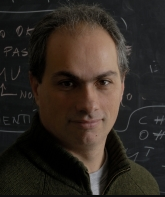 Luca Becchetti合作论文数Dipartimento di Ingegneria Informatica, Automatica e Gestionale, Università degli Studi di Roma "La Sapienza";Dipartimento di Informatica e Sistemistica, Sapienza, University of Rome13
 Omer Reingold合作论文数Department of Computer Science, Stanford University13
 Pierluigi Crescenzi合作论文数Gran Sasso Science Institute13
 Emanuele Natale合作论文数Max Planck Inst Informat10Andrea Clementi合作论文数Universita' degli Studi di Roma "La Sapienza";Dipartimento di Scienze dell'Informazione10
 Shayan Oveis Gharan合作论文数Department of Computer Science and Engineering, University of Washington9
 Andrej Bogdanov合作论文数School of Electrical Engineering and Computer Science, University of Ottawa9
 Riccardo Silvestri合作论文数8
 Pasin Manurangsi合作论文数Google7
 Madhu Sudan合作论文数John A. Paulson School of Engineering and Applied Sciences, Harvard University6
 Alexandra Kolla合作论文数Department of Computer Science, University of Illinois Urbana-Champaign;Siebel School of Computing and Data Science, The Grainger College of Engineering, University of Illinois Urbana-Champaign6
 Viggo Kann合作论文数Division of Theoretical Computer Science, Department of Computer Science, School of Electrical Engineering and Computer Science, KTH Royal Institute of Technology5
 Anindya De合作论文数Department of Computer and Information Science, School of Engineering and Applied Science, University of Pennsylvania5Isabella Ziccardi合作论文数Università degli Studi dell’Aquila4
 Amir Shpilka合作论文数Department of Computer Science, Tel-Aviv University4
 Klaus Jansen合作论文数Institut fur Informatik, Technische Fakultat, Christian-Albrechts-Universitat zu Kiel4
 José D. P. Rolim合作论文数Theoretical Computer Science and Sensor Laboratory, Computer Science Department, University of Geneva4
 Oded Goldreich合作论文数Faculty of Mathematics and Computer Science, The Weizmann Institute of Science4
 Prasad Raghavendra合作论文数Department of Electrical Engineering and Computer Sciences, University of California, Berkeley4
 Andrea Eduardo Filippo Clementi合作论文数Dipartimento di Scienze dell'Informazione, Universita' degli Studi di Roma "La Sapienza"4
 Elchanan Mossel合作论文数Department of Mathematics, Massachusetts Institute of Technology4Omid Etesami合作论文数Computer Science Division, U.C. Berkeley,4Andrea E.F. Clementi合作论文数Universita' degli Studi di Roma "La Sapienza";Dipartimento di Scienze dell'Informazione4Charles Carlson合作论文数C.U. Boulder3
 Chandra Chekuri合作论文数Department of Computer Science, The Grainger College of Engineering, University of Illinois, Urbana-Champaign3
 Lance Jeremy Fortnow合作论文数Department of Computer Science, College of Computing, Illinois Institute of Technology3
 Maria Serna合作论文数Departament de Ciencies de la Computacio, Universitat Politecnica de Catalunya, Barcelona Tech3
 Lap Chi Lau合作论文数Cheriton School of Computer Science, University of Waterloo;Department of Combinatorics and Optimization, University of Waterloo;Department of Computer Science and Engineering, Chinese University of Hong Kong3JDP Rolim合作论文数2Rachel Miller合作论文数2Riccardo Denni合作论文数2Giacomo Scornavacca合作论文数2
 Ronen Shaltiel合作论文数Department of Computer Science. University of Haifa2
 Preetum Nakkiran合作论文数Apple Inc.2
 Hoeteck Wee合作论文数NTT Research;École Normale Supérieure, Paris2
 David Paul Williamson合作论文数Department of Information Science, Cornell University;School of Operations Research and Industrial Engineering, Cornell University2
 Rahul Santhanam合作论文数Department of Computer Science, University of Oxford2Alex Samorodnitsky合作论文数2
 Jordi Petit合作论文数Universitat Politecnica de Catalunya, Barcelona, Spain2
 James Cook合作论文数2
 David Zuckerman合作论文数Department of Computer Science, The University of Texas at Austin2
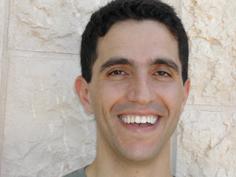 Ziv Bar-Yossef合作论文数Google2
 Venkatesan Guruswami合作论文数Department of Electrical Engineering & Computer Sciences, University of California, Berkeley;Department of Mathematics, University of California, Berkeley2
 Danupon Nanongkai合作论文数Max Planck Institute for Informatics2Luciano Gualà合作论文数Dipartimento di Matematica, Università di Tor Vergata2