This paper describes a doctoral seminar in visual and arts -based inquiry (V/ABR) to champion the generativity of such approaches for advancing doctoral research. We first describe the social and institutional context of the course and its design to situate the projects and the need for creating institutional spaces to amplify creative inquiry approaches in doctoral education. Then, five researchers reflect on their research approaches, including comics, collaging, critical visual analysis, a virtual walkography, and photo -elicitation. The projects focused on contemporary issues including researcher identity, racial justice, mothering crises, and Christian summer camps, collectively underscoring the productivity of V/ABR inquiry for amplifying researchers' imaginaries and processes of becoming. We underscore the necessity of exploring qualitative diversity in doctoral education to unsettle fixed inquiry approaches that Bailey (2018) calls "methodological taxidermy." Collectively, we demonstrate the vitality of advancing doctoral research using creative methods in relational, socially responsive, and critical, visionary ways (Finley, 2003).
This review engages with the powerful critical and evocative autoethnography, Unraveling: An Autoethnography of Suicide and Renewal (2024). Written by M. F. Alvarez, Assistant Professor of Communication Studies at the University of New Hampshire, this book narrates the embodied experiences of a young Filipino gay man named Mike whose suffering from childhood trauma slowly escalates into relentless delusions and self-harm that eventually propel him to seek professional help. Alvarez's beautifully sculpted book captures Mike's multidimensional psychological life as he lives, observes, and narrates it within structures that medicalize people's mental health experiences. Dividing his text into story and analysis, Alvarez brings a critical gaze to normative medical and psychiatric accounts of mental health and highlights the agency of people navigating their embodied landscapes, trauma, suicidality, and recovery.
Analysis of the John Hope Franklin Reconciliation Park in the USA identifies its value for peace education. This park centers African-American history in Oklahoma and marks the losses from the 1921 Tulsa Race Massacre that occurred when a mass of White Tulsans set fire to a vibrant all-Black neighborhood, burned it to the ground, and injured and killed hundreds of Black citizens. Using site visits, material analysis, observations, and embodied walkography, we consider how memorials and museums such as this park can mark, acknowledge, and heighten awareness of historical violence, foster spaces to bear witness, nourish community, and invite healing and reconciliation vital for transforming a troubled world. As so much of our learning and teaching practices occur outside of formal schools, we must imagine and develop peace pedagogies and sites for peace education alongside those in formal education. Emphasizing agency, resilience, and hope, this park commemorates locally grounded violences while connecting to a broader history of direct and structural violences against African-American people. We conclude with pedagogical activities and questions that visitors to memorials elsewhere can apply in their contexts.
Jim Crow era laws, though meant to cement Black people as inferior in society, raised the standard of education in segregated schools. This chapter highlights one such school, Douglass High School, located in Oklahoma City, Oklahoma. Douglass, named after the abolitionist Frederick Douglass, has been serving Black students on the “east side” since 1891, 16 years before Oklahoma statehood, and is still active today. Using oral histories from Douglass alumni and select archival documents spanning decades, this chapter explores the relationship between Douglass High School and the communities it served. Through key aspects of Tara J. Yosso’s (2005) conceptual framework of community cultural wealth, we foreground how Douglass both served—and continues to serve—as a site of racial equality, economic growth, resistance, aspiration, and political empowerment for Black youth, teachers, and administrators.
This methodological essay describes the generativity of collaborative collaging in a qualitative inquiry project with American Sign Language (ASL) interpreters who serve D/deaf students within a public university. Sign language interpreting is a demanding profession requiring physical endurance, creativity, and quick mental processing to switch between spoken and sign language. Interpreters' visual communicative culture aligns conceptually with the embodied arts-based, visual, and tactile research technique of collaging. We first introduce collaging scholarship to ground our discussion of using collaging as a method within this case study of ASL interpreters. We then provide an overview of ASL interpreter research and our case study to situate the collaging method used alongside other approaches, asking, "How was collaging a productive method for exploring interpreters' understanding of their work experiences?" We describe the use of the method and the productivity of interpreters' collaging for surfacing embodied experiences, fueling collaborative meaning-making, and showing rather than telling aspects of interpreters' labor in another expressive language. We conclude by identifying the value of collaborative collaging in this case study and for other researchers, issues, and contexts.
This manuscript draws from a naturalistic participant-observation study, focused on Midwestern United States men’s experiences in a short-term study abroad (STSA) programme in Spain, exploring gendered performances during the course. As global student engagement in study abroad programming continues to increase, gender demographics remains relatively unchanged with women participating at higher rates than men. Little research on men’s experiences in STSA has been conducted. We argue that men’s consciousness of temporality fostered through STSA discourse saturates their experience, including their feelings of vulnerability, efforts to bond quickly, the gendered roles they adopt during a short trip, and the sense of how this time would serve their future.
The scholarship on the formidable Italian educational visionary, Maria Montessori (1870–1952), has explored various facets of her life, work, and educational methods for young children that are sti...
The increasing volume of information and the intense pace of its circulation are changing the ways universities access, use, analyze, and provide data. Many have championed the use of large-scale databases to track student admissions and retention, faculty productivity, student wellness, and other phenomena that shape our understandings of higher education. These changes have had major effects on analytics as well. This chapter outlines how analytics can assist the academic side of colleges and universities to best serve all academic stakeholders, including administrators, faculty, and staff. It also addresses the evolving roles of Institutional Research Offices in helping set institutional strategies, collaborating across university offices to develop analytics, and cultivating an institutional culture of informed decision making. IR Offices should consider various facets of the process of collecting, analyzing, and communicating information to serve academic departments. One priority is determining which software, tools, and approaches best align with institutional priorities and needs. Another is creating specific analytics that serve the academic missions of and strategic planning for the institution and representing data in accessible ways to serve academic administration's diverse purposes and roles. Finally, cultivating buy-in and support from administration and other stakeholders is essential. IR offices can be instrumental in fostering academic colleagues' use, interpretation, and valuing of data and in developing collaborative relationships with academic leadership, colleges and departments. The new data analytics landscape requires expanding the roles and institutional reach of IR offices, thus creating opportunities for IR involvement in strategic planning and vision at high levels of their institutions.
Women accompanying their husbands to pursue graduate degrees abroad inhabit complex social locations that have economic, social, and personal implications. This paper draws from a broader study of literacy practices in an informal university centre to focus on the gendered structural constraints and experiences of sojourners to the United States, who as 'good spouses' accompany their husbands to pursue the educational promise of the Global North, leaving their native languages, cultures, social networks, and occupations behind. Some spouses experience a psychic, temporal, and geographic state of 'idleness' as they wait for their husbands to fulfil educational and professional commitments. Informal educational centres serve as vital generative spaces of possibility and comfort to cultivate agency and community through social interaction and language learning. Yet such potential operates only within constraints, as sojourners' mobility and hopes remain linked to their position as dependents and their lack of social capital in the host country.
The purpose of this study was to examine the roles of paraeducators in educational teams who supported young children with complex communication needs (CCNs). Participants included members of three teams which included general and special education teachers, paraeducators, speech and language pathologists (SLPs), and parents. An instrumental, multiple case study, qualitative research design was used to better understand paraeducators’ distinct roles and their varying levels of participation as members of their educational teams. Emergent cross-case themes included, first, the varying degrees to which teams worked collaboratively with the paraeducator and, second, the different roles the paraeducators fulfilled based on team members’ expectations. Findings indicated that the degree to which the three teams included the paraeducator as an integral team member varied from minimal to fully integrated. The fully integrated team worked collaboratively to best support the child. The paraeducator’s role and experience on each team was based on the educational team member’s expectations and the support the paraeducator received from the team.
In this essay, we explore an embodied walking engagement with the grounds of the Oklahoma City bombing memorial site that commemorates a bombing that killed 168 people in 1995. We consider our engagement as an existential pilgrimage with implications for peace education curriculum and pedagogy. Returning with intention again and again to a place that marks profound violence and loss-as well as peace and hope-invites attention, contemplation, and learning. Through entangled sensory engagement in place, in walking, being, and gathering with others, we bear witness to echoes of loss in the wake of the unthinkable. We first describe conceptual anchors of our inquiry, which we call 'pilgrimage as inquiry', as a form of walking methodology integral to place-based investigations. We describe insights resulting from our engagement at the memorial. Finally, we conclude with lessons for peace education that stretches beyond the memorial site itself.
This edited collection expands anthropological scholarship on sexuality as an aspect of the complexity of conducting ethnography. It is a rich, compelling collection. The 13 chapters focus on diverse inquiries around the world that surface nuanced aspects of intimacy shaping field encounters. The fieldwork ranges from the sexual economies of Brazil, to gendered power dynamics in a NeoPagan community in the United States, to connections between celibacy and vegetarianism in a religious pilgrimage in India. The contributors, most of whom are anthropolo-gists, explore how intimacy is informed by culture, local and global forces, struc-tures, relationships, and individual agency (xiii). Whether sexuality is central to the research, such as BDSM subcultures in Paris (Chapter 5) or the research animates sexual contours of studies with other foci, such as an NGO in Greece (Chapter 3), the essays collectively convey that sexuality is a vital experiential and analytic site through which to explore socio-cultural processes. The robust analyses advance ethnographic theorizing and practice. The text consists of four sections with alliterative titles—Institutions, Interpellations, Intimacies, Incommensurabilities—that reflect thematic traffic across essays. The first section, “Institutions,” provides a fitting opening to the text through analyzing how disciplinary norms for generating knowledge can seriously constrain the productivity of sexuality a site meaning making. Hall researchers’ risky,
 Strunk Kamden K合作论文数Evangel University3
 Melanie C. Page合作论文数3
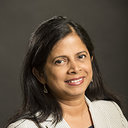 Raji Swaminathan合作论文数3
 Thalia M. Mulvihill合作论文数Ball State University;University of Wisconsin-Milwaukee;Ball State University, University of Wisconsin-Milwaukee3karen graves合作论文数2Yu-Ling Hsiao合作论文数2
 Aesha John合作论文数Department of History, Philosophy, and Social Sciences, Pittsburg State University2Jean Van Delinder合作论文数2
 Alexandra Holter合作论文数1Karen Neurohr合作论文数1Joshua K. Taylor合作论文数1
 Gretchen Cole-Lade合作论文数1
 Garrett Hutson合作论文数Environm Sustainahil Res Ctr, Brock Univ1
 Benjamin J. Bindewald合作论文数Social Fdn Educ, Oklahoma State Univ1
 Jennifer L Jones合作论文数Department of Human Development and Family Science, Oklahoma State University1
 Brent Hill合作论文数University of Utah Salt Lake City1Jinfeng Li (李金凤)合作论文数1Upton Shimp合作论文数1Stacy Otto合作论文数1Cindy Blackwell合作论文数1
 Mary Margaret Fonow合作论文数1
 Jennifer T. Williams合作论文数Health Care for the Homeless Pittsburgh Pa1
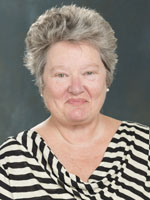 Patti Lather合作论文数Department of Educational Studies, College of Education and Human Ecology, The Ohio State University1Virginia Worley合作论文数1Jeff Simpson合作论文数1




