We consider arbitrary polarized variations of Hodge structure of weight two and h^2,0=1 over a non–singular complex algebraic curve S and analyze the boundary behaviour of the associated Kudla–Millson theta series using Schmid's theorems on degenerations of Hodge structure. This allows us to prove that this theta series is always integrable over S and to describe explicitly the non-holomorphic part of the Kudla–Millson generating series in terms of the mixed Hodge structures at infinity.
We propose a conjecture extending the classical construction of elliptic units to complex cubic number fields $K$. The conjecture concerns special values of the elliptic gamma function, a holomorphic function of three complex variables arising in mathematical physics whose transformation properties under $\mathrm{SL}_3(\mathbf{Z})$ were studied by Felder and Varchenko in the early 2000s. Using this function we construct complex numbers that we conjecture to be units in narrow ray class fields of $K$. We also propose a reciprocity law for the action of the Galois group on these units in the style of Shimura. To support our conjecture we offer numerical evidence and also prove a new type of Kronecker limit formula relating the logarithm of the modulus of these complex numbers to the derivatives at $s = 0$ of partial zeta functions of $K$. Our constructions unveil the role played by the elliptic gamma function in Hilbert's twelfth problem for complex cubic fields.
Abstract We study the arithmetic of degree N - 1 {N-1} Eisenstein cohomology classes for the locally symmetric spaces attached to GL N {\mathrm{GL}_{N}} over an imaginary quadratic field k. Under natural conditions we evaluate these classes on ( N - 1 ) {(N-1)} -cycles associated to degree N extensions L / k {L/k} as linear combinations of generalized Dedekind sums. As a consequence we prove a remarkable conjecture of Sczech and Colmez expressing critical values of L-functions attached to Hecke characters of L as polynomials in Kronecker–Eisenstein series evaluated at torsion points on elliptic curves with complex multiplication by k. We recover in particular the algebraicity of these critical values.
Let $[X,\lambda]$ be a principally polarized abelian variety over a finite field with commutative endomorphism ring; further suppose that either $X$ is ordinary or the field is prime. Motivated by an equidistribution heuristic, we introduce a factor $\nu_v([X,\lambda])$ for each place $v$ of $\mathbb Q$, and show that the product of these factors essentially computes the size of the isogeny class of $[X,\lambda]$. The derivation of this mass formula depends on a formula of Kottwitz and on analysis of measures on the group of symplectic similitudes, and in particular does not rely on a calculation of class numbers.
These notes were written to be distributed to the audience of the first author’s Takagi Lectures delivered June 23, 2018. These are based on a work-in-progress that is part of a collaborative project that also involves Akshay Venkatesh. In this work-in-progress we give a new construction of some Eisenstein classes for GL N ( Z ) that were first considered by Nori [41] and Sczech [44]. The starting point of this construction is a theorem of Sullivan on the vanishing of the Euler class of SL N ( Z ) vector bundles and the explicit transgression of this Euler class by Bismut and Cheeger. Their proof indeed produces a universal form that can be thought of as a kernel for a regularized theta lift for the reductive dual pair (GL N , GL 1 ). This suggests looking to reductive dual pairs (GL N , GL k ) with k ≥ 1 for possible generalizations of the Eisenstein cocycle. This leads to fascinating lifts that relate the geometry/topology world of real arithmetic locally symmetric spaces to the arithmetic world of modular forms. In these notes we do not deal with the most general cases and put a lot of emphasis on various examples that are often classical.
We construct natural Green forms for special cycles in orthogonal and unitary Shimura varieties, in all codimensions, and, for compact Shimura varieties of type O(p,2) and U(p,1) , we show that the resulting local archimedean height pairings are related to special values of derivatives of Siegel Eisentein series. A conjecture put forward by Kudla relates these derivatives to arithmetic intersections of special cycles, and our results settle the part of his conjecture involving local archimedean heights.
We use superconnections to define and study some natural differential forms on the period domain D that parametrizes polarized Hodge structures of given type on a rational quadratic vector space V. These forms depend on a choice of vectors v1,…,vr∈V and have a Gaussian shape that peaks on the locus where v1,…,vr become Hodge classes. We show that they can be rescaled so that one can form theta series by summing over a lattice Lr⊂Vr. These series define differential forms on arithmetic quotients Γ\D. We compute their cohomology class explicitly in terms of the cohomology classes of Hodge loci in Γ\D. When the period domain is a hermitian symmetric domain of type IV, we show that the components of our forms of appropriate degree recover the forms introduced by Kudla and Millson. In particular, our results provide another way to establish the main properties of these forms.
We introduce a regularized theta lift for reductive dual pairs of the form $(Sp_4,O(V))$ with $V$ a quadratic vector space over a totally real number field $F$. The lift takes values in the space of $(1,1)$-currents on the Shimura variety attached to $GSpin(V)$, and we prove that its values are cohomologous to currents given by integration on special divisors against automorphic Green functions. In the second part to this paper, we will show how to evaluate the regularized theta lift on differential forms obtained as usual (non-regularized) theta lifts.
In a previous paper (arXiv:1409.7353), we introduced a regularized theta lift for reductive dual pairs of the form $(Sp_4,O(V))$ with $V$ a quadratic vector space over a totally real number field $F$. The lift takes values in the space of $(1,1)$-currents on the Shimura variety attached to $GSpin(V)$, and we proved that its values are cohomologous to currents given by integration on special divisors against automorphic Green functions. In this paper, we will evaluate the regularized theta lift on differential forms obtained as usual (non-regularized) theta lifts. Using the Siegel-Weil formula and ideas of Piatetskii-Shapiro and Rallis, we show that the result involves near central special values of standard $L$-functions for $Sp_{4,F}$. An example concerning products of Shimura curves will be given at the end of the paper.
 Nicolas Bergeron合作论文数3Pierre Charollois合作论文数3S. Ali Altug合作论文数1Siddarth Sankaran合作论文数1
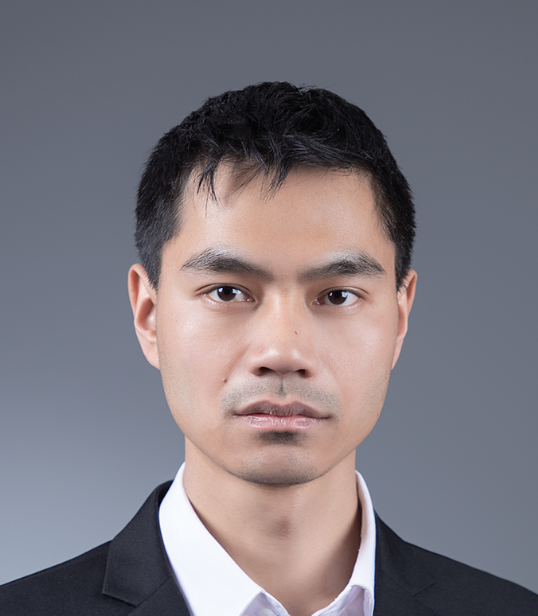 Wen-Wei Li (李文威)合作论文数School of Mathematical Sciences, Peking University;Beijing International Center for Mathematical Research, Peking University1
 Julia Gordon合作论文数Mathematics, College of Arts and Sciences, Cornell University1Jeffrey D. Achter合作论文数Department of Mathematics, Colorado State University1




