Substitution of disulfide bonds with a diselenide bonds in peptides and proteins is an often-used strategy to increase the stability of naturally occurring peptides and proteins. In this paper, diselenide metathesis between model diselenide dimer peptides, as well as that in diselenide(s)-substituted biologically active peptides, were analyzed. Surprisingly, depending on the tertiary structure of the peptides, we observed that the metathesis reaction occurs under physiological conditions even in the absence of reducing agents, light and heating.
Human seleno-epidermal growth factor (seleno-EGF), a 53-residue peptide where all six cysteine residues of the parent human EGF sequence were replaced by selenocysteines, was synthesized and the oxidative folding of a polypeptide containing three diselenide bonds was compared to that of the parent cysteine peptide. The crude high performance liquid chromatography (HPLC) profiles clearly showed that both the native EGF and its selenocysteine-analogue fold smoothly, yielding a single sharp peak, proving that even in the case of three disulfide-bonded polypeptides the disulfide-to-diselenide bond substitution is highly isomorphous, as confirmed by conformational circular dichroism measurements and particularly by the biological assays.
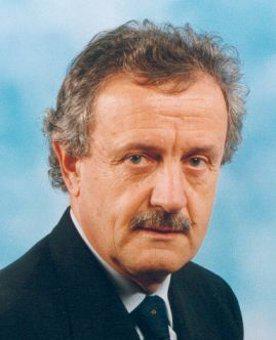
“For he was our own! … Fruitful both in counsel and deed; this we experienced and appreciated.” With the death of Ulf Diederichsen on November 11, 2021, after a short but severe illness, we lost a great scientist in chemical biology and good friend. He was a generous and extremely gifted man whose strength was to tackle essential biological problems at a molecular level with simple model systems and to draw insightful conclusions realizing a hallmark of chemical biology by addressing biological challenges with chemical approaches derived from simple principles. Ulf Diederichsen was born on October 7, 1963, in Munich and grew up in Göttingen, enjoying excellent scholar education at the Max-Planck Gymnasium. He moved to Freiburg im Breisgau in 1983 to study Chemistry at the Albert-Ludwigs-University. For his doctorate he moved to Zurich in 1988 to work with Prof. Eschenmoser at the ETH on the question why Nature chose pentose—but not hexose nucleic acids. He received the Dr. rer. nat. in 1993 on the Base pairing of hypoxanthine in HOMO DNA oligonucleotides and the question of the pairing behavior of glucopyranosyl oligonucleotides. He then joined the group of Prof. Dennis P. Curran at the University of Pennsylvania (Pittsburgh/USA) as postdoctoral researcher (1993–1994) investigating radical chemistry. Back to Europe he started his habilitation on “Linear nucleic acid analogues with peptidic backbones” under the mentorship of Prof. Horst Kessler at the Technical University of Munich, which was finished in 1999. He then joined the University of Würzburg as Professor of Organic Chemistry, and finally, in 2001, the University of Göttingen. He served as Dean (2005 to 2007) and Vice President for Research (2015 to 2021). In addition, he was Guest Professor at the Ludwig-Maximilians-University in Munich (1998–1999) and Goering Visiting Professor at the University of Wisconsin, USA (2000). He was elected member of the Academy of Sciences in Göttingen in 2012 and became its president in 2020. His scientific interest was mainly centered on the non-covalent interaction of peptide helices with respect to the incorporation, organization, and dynamics in lipid membranes. He successfully employed spin-labeled peptides for distance measurements. Similarly, he addressed the membrane attachment and fusion processes of SNARE proteins with model systems (conjugates of transmembrane peptides with coiled coil peptides or peptide nucleic acids). He was interested in functionalized β-peptides as artificial matrices for aggregation and modification of model membranes. The excellent results of this outstanding research were summarized in largely over 100 publications in highly renowned international journals. Besides his exceptional scientific achievements and admirable mentorship for a large number of doctoral students and postdocs, he deserves high recognition for his excellent research management particularly as Vice President of the University of Göttingen. He also served as a highly esteemed reviewer in various panels, including the German Research Foundation. The large experience collected in this important activity, particularly also for the German peptide community, he adapted in a very successful manner also in his editorial engagement as Deputy Editor of the Journal of Peptide Science since 2012, where he was supposed to take over the full responsibility as the Editor-in-Chief from 2022. Those of us who knew him are saddened by his sudden passing away and mourn the great loss of a dear friend and colleague. He will always be remembered as an inspiring teacher and mentor, as an enthusiastic scientist, but first and foremost as a warm and sincere human being, as a “feiner Kerl.”
The chalcogen elements oxygen, sulfur, and selenium are essential constituents of side chain functions of natural amino acids. Conversely, no structural and biological function has been discovered so far for the heavier and more metallic tellurium element. In the methionine series, only the sulfur-containing methionine is a proteinogenic amino acid, while selenomethionine and telluromethionine are natural amino acids that are incorporated into proteins most probably because of the tolerance of the methionyl-tRNA synthetase; so far, methoxinine the oxygen analogue has not been discovered in natural compounds. Similarly, the chalcogen analogues of tryptophan and phenylalanine in which the benzene ring has been replaced by the largely isosteric thiophene, selenophene, and more recently, even tellurophene are fully synthetic mimics that are incorporated with more or less efficiency into proteins via the related tryptophanyl- and phenylalanyl-tRNA synthetases, respectively. In the serine/cysteine series, also selenocysteine is a proteinogenic amino acid that is inserted into proteins by a special translation mechanism, while the tellurocysteine is again most probably incorporated into proteins by the tolerance of the cysteinyl-tRNA synthetase. For research purposes, all of these natural and synthetic chalcogen amino acids have been extensively applied in peptide and protein research to exploit their different physicochemical properties for modulating structural and functional properties in synthetic peptides and rDNA expressed proteins as discussed in the following review.
Until recently the total synthesis of insulin, with its characteristic heterodimeric structure crosslinked by two interchain and one intrachain disulfide (SS) bridge, remained largely an unsolved challenge. By optimizing the synthesis and directed disulfide crosslinking of the two chains, and by applying biomimetic monocomponent proinsulin approaches, efficient insulin syntheses have been realized. Here we report the optimization and characterisation of an alternative strategy, oxidative native chain assembly. In this method unprotected A- and B-chains assemble oxidatively under thermodynamic control to afford bovine pancreatic insulin in 39% yield. Folding is found to proceed predominantly via structured 1SS* and 2SS* intermediates with a common interchain Cys A20 ‒Cys B19 disulfide. These results suggest that native chain assembly, long considered inefficient, may represent a reasonable strategy to access insulin variants. This is supported by the synthesis of human insulin and human type-II relaxin in yields of up to 49 and 47%, respectively, although the application to human insulin Val A16 variant is unsuccessful.
The light triggered unfolding reaction of the azobenzene peptide AzoTrpZip2 is investigated from 1 ps to 100 mu s. Absorption changes show that the unfolding is a multistep process with the initial breaking of the hydrogen bonds in the vicinity of the AMPP chromophore on the 1 ns time scale followed by the disappearance of the remaining interstrand hydrogen bonds of the native hairpin structure with a 1.9 mu s process. Subsequently, the hydrophobic core structure still stabilising a hairpin-like pattern rearranges in a 17 mu s process. The strong slowing down of this reaction at lower temperature points to a barrier height in the range of 60 kJ/mol. (C) 2018 Published by Elsevier B.V.
After the discovery of insulin as a drug for diabetes, the pharmaceutical companies were faced with the challenge to meet the demand for insulin with the highest possible degree of purity in the required quantities from animal sources. The observation of an immune reaction of patients to insulin from animal pancreatic extracts made the availability of human insulin of highest priority. Only the enzyme-catalyzed semisynthesis at the C-terminus of the insulin B-chain led to a commercial process, but it depended on porcine insulin and was aggravated by supply concerns. The advent of rDNA technology allowed the commercial preparation of human insulin by biosynthesis in virtually unlimited quantities. An increased chemical diversity was only envisaged through chemical synthesis, which was simplified by advances in solid-phase peptide synthesis and chemical ligation. Single-chain insulin precursors are now being synthesized that should enable fast screening of insulin analogues for improved biophysical, biological, and thus promising new therapeutic properties, as well as for the industrial manufacture of insulin analogues not accessible by biosynthesis.
AbstractNach der Entdeckung des Insulins als Medikament gegen Diabetes stand die pharmazeutische Industrie vor der Aufgabe, den Bedarf an Insulin aus tierischen Quellen in möglichst hoher Reinheit und in den benötigten Mengen zu decken. Infolge der Immunreaktion vieler Patienten auf Insulin aus tierischem Pankreasextrakt erlangte der Zugang zu Human‐Insulin höchste Priorität. Nur die enzymkatalysierte Semisynthese am C‐Terminus der Insulin‐B‐Kette ermöglichte eine kommerzielle Herstellung, die jedoch von der Bereitstellung von Schweine‐Insulin abhängig war und zu Versorgungsengpässen führte. Erst die Entwicklung der rDNA‐Technologie ermöglichte die kommerzielle Herstellung von Human‐Insulin über Biosynthese in nahezu unbegrenzten Mengen. Eine erhöhte chemische Diversität war nur durch chemische Synthese erreichbar, vereinfacht durch Fortschritte bei der Festphasenpeptidsynthese und der chemischen Ligation. So wurden Synthesen einkettiger Insulin‐Vorstufen entwickelt, die schnelle Screenings von Insulin‐Analoga mit verbesserten biophysikalischen, biologischen und damit auch neuen therapeutischen Eigenschaften sowie die industrielle Herstellung biosynthetisch nicht zugänglicher Insulin‐Analoga ermöglichten.
Synthetic insulin analogues with a long lifetime are current drug targets for the therapy of diabetic patients. The replacement of the interchain disulfide with a diselenide bridge, which is more resistant to reduction and internal bond rotation, can enhance the lifetime of insulin in the presence of the insulin-degrading enzyme (IDE) without impairing the hormonal function. The [C7UA ,C7UB ] variant of bovine pancreatic insulin (BPIns) was successfully prepared by using two selenocysteine peptides (i.e., the C7U analogues of A- and B-chains, respectively). In a buffer solution at pH 10 they spontaneously assembled under thermodynamic control to the correct insulin fold. The selenoinsulin (Se-Ins) exhibited a bioactivity comparable to that of BPIns. Interestingly, degradation of Se-Ins with IDE was significantly decelerated (τ1/2 ≈8 h vs. ≈1 h for BPIns). The lifetime enhancement could be due to both the intrinsic stability of the diselenide bond and local conformational changes induced by the substitution.
The triple-helical structure of a model collagen peptide possessing azobenzene-derived clamps integrated in all three strands as side-chain-to-side-chain crosslinks is analyzed by IR spectroscopy in comparative thermal excursion experiments with the triple helix of a typical reference collagen peptide consisting of only glycine-proline-hydroxyproline repeats. By exploiting the known stabilizing effects of aqueous alcoholic solvents on the unique collagen fold, deuterated ethylene glycol/water (1:1) is used as a solvent to investigate the effect of the light-switchable trans/cis-azobenzene clamp on the stability of the triple helix in terms of H/D exchange rates and thermal unfolding. Results of this comparative analysis clearly reveal only a minor destabilization of the triple helix by the hydrophobic azobenzene moieties compared to the reference collagen peptide as reflected by a lower midpoint of the thermal unfolding and higher rates of H/D exchange. However, it also reveals that the driving force exerted by the trans-to-cis photoisomerization of the azobenzene moieties is insufficient for unfolding of the compact triple-helical collagen fold. Only temperature-dependent untightening of this fold with heating results in a reversible photomodulated unfolding and refolding of the azo-collagen peptide into the original triple helix.
Conformational changes in proteins and peptides can be initiated by diverse processes. This raises the question how the variation of initiation mechanisms is connected to differences in folding or unfolding processes. In this work structural dynamics of a photoswitchable β-hairpin model peptide were initiated by two different mechanisms: temperature jump (T-jump) and isomerization of a backbone element. In both experiments the structural changes were followed by time-resolved IR spectroscopy in the nanosecond to microsecond range. When the photoisomerization of the azobenzene backbone switch initiated the folding reaction, pronounced absorption changes related to folding into the hairpin structure were found with a time constant of about 16 μs. In the T-jump experiment kinetics with the same time constant were observed. For both initiation processes the reaction dynamics revealed the same strong dependence of the reaction time on temperature. The highly similar transients in the microsecond range show that the peptide dynamics induced by T-jump and isomerization are both determined by the same mechanism and exclude a downhill-folding process. Furthermore, the combination of the two techniques allows a detailed model for folding and unfolding to be presented: The isomerization-induced folding process ends in a transition-state reaction scheme, in which a high energetic barrier of 48 kJ mol(-1) separates unfolded and folded structures.
Collagen as the most abundant protein in mammals consists of three chains that are built up of repeating Xaa-YaaGly units with all peptide bonds in trans conformation and most often with proline in Xaa and (4R)-hydroxyproline in the Yaa position. This type of sequence favors a lefthanded poly-Pro-II helix conformation and the intertwining of the three chains into the unique right-handed triple helix. The X-ray structure analysis of collagen mimetic peptides (CMPs) of repeating Xaa-Yaa-Gly triplets show Cendo puckers of the Pro residues in Xaa and C-exo puckers of the Hyp residues in Yaa position. Studies on structural factors that stabilize the triple helical fold with proline derivatives led to the conclusion that besides the interchain hydrogen bond between the NH group of Gly of one strand and the CO group of Pro of the adjacent strand, stereoelectronic effects that favor the all trans-peptide bond conformation and the correct puckering are decisively affecting the structural stability. Recent studies by Erdman and Wennemers with proline derivatives in the Yaa position that exhibit preferences for the C-endo puckering, but a trans amide conformer, contradict this conclusion showing that the ring puckering is less important for the stability of collagen if the trans/cis amide conformer ratio favors formation of the triple helix. The aim of the present study was to investigate whether electron spin resonance spectroscopy (ESR) could yield new information on the dynamics of triple helix folding/unfolding as a useful alternative to the other spectroscopic techniques applied so far. Indeed this type of spectroscopy has become popular for studying conformational changes and unfolding processes of proteins as many ESR spectral parameters, such as peak-to-peak height, peak-to-peak width and rotational correlation time can accurately reflect relative mobility and environmental changes of spin labels (Figure 1). For the design and synthesis of a suitable spin-labeled CMP, the results of a recent detailed study on the equilibrium constants of acetyl-(4R)-Pro(X)-OMe (X=ammonium or acetylamide) by NMR spectroscopy were taken into account. Although for the ammonium derivative a significantly reduced preference for the trans conformation was observed, a trans conformer preference similar to that of (4R)hydroxyproline was recovered upon acetylation of the gamino group. Correspondingly, Ac-(Gly-Pro-Hyp)7-Gly-GlyNH2 [7] was selected as the CMP in which the Hyp residue of the central triplet was replaced by (2S,4R)-aminoproline [a] J. Jiang, Q. Jin, W. Ma, Prof. Dr. S. Dong School of Life Sciences, Lanzhou University 222 Tianshui South Road, Lanzhou 730000 (China) E-mail : dongsl@lzu.edu.cn [b] L. Yang Department of Medical Laboratory and Research Center Tangdu Hospital, Fourth Military Medical University Xi’an 710038 (China) [c] Prof. Dr. L. Moroder Bioorganic Chemistry, Max Planck Institute of Biochemistry Am Klopferspitz 18, 82152 Martinsried (Germany) [d] Prof. Dr. S. Dong Key Laboratory of Preclinical Study for New Drugs of Gansu Province, Lanzhou University, 222 Tianshui South Road Lanzhou 730000 (China) [] These authors contributed equally to this work. Supporting information for this article is available on the WWW under http://dx.doi.org/10.1002/chem.201303290. Figure 1. The relative mobility and environmental changes of spin labels with collagen folded/unfolded states.
The intramolecular and intermolecular vibrational energy flow in a polyproline peptide with a total number of nine amino acids in the solvent dimethyl sulfoxide is investigated using time-resolved infrared (IR) spectroscopy. Azobenzene covalently bound to a proline sequence containing nitrophenylalanine as a local sensor for vibrational excess energy serves as a heat source. Information on through-space distances in the polyproline peptides is obtained by independent Förster resonance energy transfer measurements. Photoexcitation of the azobenzene and subsequent internal conversion yield strong vibrational excitation of the molecule acting as a local heat source. The relaxation of excess heat, its transfer along the peptide and to the solvent is monitored by the response of the nitro-group in nitrophenylalanine acting as internal thermometer. After optical excitation, vibrational excess energy is observed via changes in the IR absorption spectra of the peptide. The nitrophenylalanine bands reveal that the vibrational excess energy flows in the peptide over distances of more than 20 Å and arrives delayed by up to 7 ps at the outer positions of the peptide. The vibrational excess energy is transferred to the surrounding solvent on a time scale of 10-20 ps. The experimental observations are analyzed by different heat conduction models. Isotropic heat conduction in three dimensions away from the azobenzene heat source is not able to describe the observations. One-dimensional heat dissipation along the polyproline peptide combined with a slower transversal heat transfer to the solvent surrounding well reproduces the observations.
The light-driven disassembly process of amyloid-like structures formed by azobenzene model peptides is studied by time-resolved mid-IR spectroscopy from nanoseconds to minutes. The investigated peptide consists of two amino acid strands connected by the azobenzene switch. The peptides aggregate to amyloid-like structures when the azobenzene chromophore is in the trans-conformation. Illumination, resulting in a trans- to cis-isomerization of the azobenzene, leads to disaggregation of the aggregated structures. After optical excitation and isomerization of the azobenzene, one finds absorption changes which recover to a large extent on the time scale of few nanoseconds. These early absorption transients are assigned to the relaxation of vibrational excess energy (heat) or to structural rearrangements of isomerized azobenzene and the aggregated surroundings. It is only on the time scale of minutes that spectral signatures appear which are characteristic for the disassembly of the aggregated structure.
 Christian Renner合作论文数83E Wünsch合作论文数70Gianfranco Borin合作论文数54H J Musiol合作论文数53
 Robert Huber合作论文数Technical University of Munich;Max Planck Institute of Biochemistry52
 Claudio Toniolo合作论文数Dipartimento di Scienze Chimiche, Universita degli Studi di Padova51Ernesto Scoffone合作论文数47
 Daniel Fourmy合作论文数Inserm34Arthur Félix合作论文数33Milbradt Alexander G合作论文数26Fernando Marchiori合作论文数26W Göhring合作论文数25Paul Thamm合作论文数25Pradayrol Lucien合作论文数23
 Dieter Oesterhelt合作论文数Max Planck Institute of Biochemistry23
 Josef Wachtveitl合作论文数Goethe University Frankfurt23
 Michael Groll合作论文数Fakultat Fur Chemie, Technische Universitat Munchen22Erich Wünsch合作论文数22Wolfgang Zinth合作论文数22Manfred Gemeiner合作论文数22S RUDOLPHBOHNER合作论文数22Nicole Vaysse合作论文数20R Scharf合作论文数20F Marchiori合作论文数19Elisabeth Weyher合作论文数19Chantal Escrieut合作论文数19Stella Fiori合作论文数19E Jaeger合作论文数18Norbert Schaschke合作论文数17
 Nediljko Budisa (Ned)合作论文数Department of Chemistry, Faculty of Science, University of Manitoba16Irmgard Assfalg-Machleidt合作论文数16
 Markus Kaiser合作论文数Max-Planck-Institut für Biochemie, Am Klopferspitz 18a, D-82152 Planegg-Martinsried, Germany16Stefan Sperl合作论文数15Stefano Pegoraro合作论文数15Murray Goodman合作论文数14Tobias E. Schrader合作论文数Munich-Centre for Advanced Photonics (MAP),, Ludwig-Maximilians-Universität München14Marchior.F合作论文数13W Bode合作论文数13
 Frank Siedler合作论文数13Ulrike Kusebauch合作论文数13Raniero Rocchi合作论文数13HANS-JÜRGEN MUSIOL合作论文数12Evaristo Peggion合作论文数12Marlène Dufresne合作论文数12Raymond Behrendt合作论文数12E. WUENSCH合作论文数11G Bovermann合作论文数11Werner Machleidt合作论文数11
 Shouliang Dong (董守良)合作论文数School of Life Sciences, Lanzhou University11




