The breathing system of an oil-immersed transformer is of vital importance for maintaining equilibrium between internal and external pressures, with any malfunction potentially disrupting the transformer’s stable operation. This study develops a thermal-fluid-structure interaction (TFSI) model to simulate the breathing phenomenon in a 110 kV oil-immersed transformer, addressing the limitations of current manual inspection methods. This model analyses key breathing parameters such as breathing volume and maximum breathing rate, along with their dynamic characteristics under various load factors and ambient temperatures, revealing nonlinear and linear relationships, respectively. To validate the model, the breathing parameters of a 110 kV oil-immersed transformer were monitored over a 7-day period using a breather equipped with a breathing monitoring functionality. Comparison between simulation results and monitoring data for the period from 7 p.m. March 7 to 7 p.m. March 8 revealed discrepancies of 6.93% for the maximum daily breathing rate, and 6.73% for maximum daily breathing volume. This study contributes to the field by providing a more accurate and efficient method for analysing transformer breathing dynamics, potentially enhancing early detection of breathing system malfunctions, optimising breather maintenance schedules, and improving diagnosis of pressure-related faults in oil-immersed transformers.
When the inlet flow velocity in the disc-type winding region of an oil-immersed transformer operates within a high Reynolds number range, it leads to an uneven distribution of oil flow. This phenomenon results in the abnormal occurrence of reverse oil flow in the bottom oil ducts, causing the hotspot temperature to rise instead of decrease. To address this issue, a three-node flow resistance module was introduced at the intersection of T-shaped oil ducts based on the flow paths of oil in the main and branch ducts within the disc-type winding region. A flow network model for the transformer winding region was subsequently constructed. The accuracy of the model was validated through CFD simulations and experiments conducted on a transformer winding region test platform, with a maximum relative error of 4.02%. The model successfully predicted the flow distribution of the cooling oil within the winding region. Furthermore, by considering the structural characteristics of the winding region and the principles of heat transfer, particular attention was given to variations in local Nusselt number correlations. This led to the development of a thermal network model tailored to the winding region experiencing reverse oil flow. Comparative analysis of the model’s calculation results yielded a maximum relative error of only 1.12%, demonstrating its ability to rapidly and accurately elucidate the reverse oil flow effect. This study provides a theoretical foundation for the identification and mitigation of reverse oil flow in future applications.
During the manufacturing process of oil-immersed current transformers, metallic particles may become embedded in the insulation wrapping, and the resulting electric field distortion is one of the primary causes of failure. Historically, the shape of metallic particles has often been simplified to a standard sphere, whereas in practice, these particles are predominantly irregular. In this study, ellipsoidal and flaky particles were selected to represent smooth and angular surfaces, respectively. Using COMSOL Multiphysics® (version 6.2) software, a three-dimensional simulation model of an oil-immersed inverted current transformer was developed, and the influence of defect position and size on electric field characteristics was analyzed. The results indicate that both types of defects cause electric field distortion, with longer particles exerting a greater influence on the electric field distribution. Under the voltage of a 220 kV system, elliptical particles (9 mm half shaft) lead to the maximum electric field intensity of main insulation of up to 45.1 × 10⁶ V/m, while the maximum field strength of flaky particles (length 30 mm) is 28.9 × 10⁶ V/m. Additionally, the closer the particles are to the inner side of the main insulation, the more significant their influence on the electric field distribution becomes. The findings provide a foundation for fault analysis and propagation studies related to the main insulation of current transformers.
Quickly and accurately obtaining the internal temperature distribution of a transformer plays a key role in predicting its operating conditions and simplifying the maintenance process. A reasonable equivalent thermal circuit model is a relatively reliable method of obtaining the internal temperature distribution. However, thermal circuit models without targeted consideration of operating conditions and parameter corrections usually limit the accuracy of the results. This paper proposed a five-node transient thermal circuit model with the introduction of nonlinear thermal resistance, which considered the internal structure and winding layout of the core-type high-frequency transformer. The Nusselt number, a crucial variable in heat convection calculations and directly related to the accuracy of thermal resistance parameters, was calibrated on the basis of the distribution of external cooling air. After parameter calibration, the maximum computational error of the hotspot temperature is reduced by 5.48% compared with that of the uncalibrated model. Finally, an experimental platform for temperature monitoring was established to validate the five-node model and its ability to track the temperature change at each reference point after calibrating the Nusselt number.
Radiator cooling configurations need to account for both efficient heat dissipation and energy conservation requirements. Rapid and rational determination of cooling system configurations constitutes a critical aspect of transformer design, enhancing electrical power energy utilization efficiency. Computational fluid dynamics (CFD) is widely recognized as a well-established technique for simulating and optimizing heat dissipation systems. However, this approach is time-consuming because of pre-processing procedures, such as meshing. This paper proposes a fast iterative optimization model for calculating the outlet oil temperature and airflow distribution. Based on the analytical model results, this paper identifies the optimal energy-saving range for radiator cooling configurations, incorporating the cooperative effects of cooling efficiency, air pressure drop during heat transfer, and inlet-outlet temperature difference. The analytical model demonstrated errors in energy dissipation and temperature difference calculations within an acceptable range. The calculation time was reduced by more than 99%. Radiator configurations within the optimal range effectively minimize energy waste while meeting the target temperature difference and enhancing cooling efficiency. Finally, the PC2600-22/520 radiator was utilized to validate the accuracy of the analytical model and the rationality of the co-optimal intervals.
Oil-immersed current transformers are prone to oilpaper insulation aging under long-term electro-thermalmechanical multi-field coupling, which may eventually lead to flammability or even explosion accidents. Accurate geometric modeling of the triangular region in the main insulation recognized as a high-risk fault initiation zone-is essential for establishing the correlation between insulation performance and flammability risk. To obtain a more precise FDS computational model of oil-immersed inverted current transformers, this paper employs an arc-curve method to characterize the geometric contour of the triangular insulation region. Based on the X-model, the complex capacitance of the main insulation is derived, and the proposed model is validated using measured data from transformers of different manufacturers. The results demonstrate that introducing the arc-curve geometry significantly improves the accuracy of complex capacitance calculation, and the obtained FDS characteristic parameters can effectively reflect the degradation behavior of the insulation and the variation trend of flammability risk. This study provides an accurate FDS modeling foundation for condition assessment and safety early-warning of oil-immersed current transformers.
This study develops and analyzes a simulation model for the breathing phenomenon in a 110 kV oil-immersed transformer, utilizing a thermal-fluid-structure interaction (TFSI) physical mechanism. This model provides key parameters such as breathing volume and maximum breathing rate, as well as their dynamic characteristics under different operating conditions, which can provide data support for breathing system fault identification, and also can provide a new feature quantity for the multidimensional monitoring of the trans-former.
The aging of oil-impregnated paper (OIP) insulation is one of the key factors influencing the service life of oil-immersed current transformers. Frequency domain spectroscopy (FDS), supported by mathematical models or simulation methods, is commonly used to evaluate insulation conditions. However, traditional aging models typically ignored significant aging differences between the transformer OIP head and straight sections caused by the axial temperature gradient. To address this limitation, an accelerated thermal aging experiment was performed on a full-scale oil-immersed inverted current transformer prototype. Based on the analysis of its internal temperature field, the axial temperature gradient boundary of the main insulation was identified. By applying region-specific aging control strategies to different axial segments, a FEM model incorporating axial aging variation was developed to analyze its influence on FDS. The simulation results closely matched experimental data, with a maximum deviation below 9.22%. The model’s applicability was further confirmed through the aging prediction of an in-service transformer. The proposed model is expected to provide a more accurate basis for predicting the FDS characteristics of OIP insulation in current transformers.
Accurately generating ground truth (GT) trajectories is essential for simultaneous localization and mapping (SLAM) evaluation, particularly under varying environmental conditions. This study presents PALoc, a systematic approach that leverages a prior map-assisted framework for the first-time generation of dense six-degree-of-freedom GT poses, significantly enhancing the fidelity of SLAM benchmarks across both indoor and outdoor environments. Our method excels in handling degenerate and stationary conditions frequently encountered in SLAM datasets, thereby increasing robustness and precision. A critical feature of PALoc is the detailed derivation of covariance within the factor graph, enabling an in-depth analysis of pose uncertainty propagation. This analysis plays a pivotal role in illustrating specific pose uncertainty and in elevating trajectory reliability from both theoretical and practical perspectives. In addition, we provide an open-source toolbox for the criteria of map evaluation, facilitating the indirect assessment of overall trajectory precision. Experimental results show at least a 30% improvement in map accuracy and a 20% increase in direct trajectory accuracy compared to the iterative closest point algorithm across diverse environments, with substantially enhanced robustness Our publicly available solution, PALoc, extensively applied in the FusionPortable dataset, is geared toward SLAM benchmark augmentation and represents a significant advancement in SLAM evaluation.
The creation of a metric-semantic map, which encodes human-prior knowledge, represents a high-level abstraction of environments. However, constructing such a map poses challenges related to the fusion of multi-modal sensor data, the attainment of real-time mapping performance, and the preservation of structural and semantic information consistency. In this paper, we introduce an online metric-semantic mapping system that utilizes LiDAR-Visual-Inertial sensing to generate a global metric-semantic mesh map of large-scale outdoor environments. Leveraging GPU acceleration, our mapping process achieves exceptional speed, with frame processing taking less than 7ms, regardless of scenario scale. Furthermore, we seamlessly integrate the resultant map into a real-world navigation system, enabling metric-semantic-based terrain assessment and autonomous point-to-point navigation within a campus environment. Through extensive experiments conducted on both publicly available and self-collected datasets comprising 24 sequences, we demonstrate the effectiveness of our mapping and navigation methodologies. Note to Practitioners-This paper tackles the challenge of autonomous navigation for mobile robots in complex, unstructured environments with rich semantic elements. Traditional navigation relies on geometric analysis and manual annotations, struggling to differentiate similar structures like roads and sidewalks. We propose an online mapping system that creates a global metric-semantic mesh map for large-scale outdoor environments, utilizing GPU acceleration for speed and overcoming the limitations of existing real-time semantic mapping methods, which are generally confined to indoor settings. Our map integrates into a real-world navigation system, proven effective in localization and terrain assessment through experiments with both public and proprietary datasets. Future work will focus on integrating kernel-based methods to improve the map's semantic accuracy.
With the expansion of the scale of robotics applications, the multi-goal multi-agent pathfinding (MG-MAPF) problem began to gain widespread attention. This problem requires each agent to visit pre-assigned multiple goal points at least once without conflict. Some previous methods have been proposed to solve the MG-MAPF problem based on Decoupling the goal Vertex visiting order search and the Single-agent pathfinding (DVS). However, this paper demonstrates that the methods based on DVS cannot always obtain the optimal solution. To obtain the optimal result, we propose the Multi-Goal Conflict-Based Search (MGCBS), which is based on Decoupling the goal Safe interval visiting order search and the Single-agent pathfinding (DSS). Additionally, we present the Time-Interval-Space Forest (TIS Forest) to enhance the efficiency of MGCBS by maintaining the shortest paths from any start point at any start time step to each safe interval at the goal points. The experiment demonstrates that our method can consistently obtain optimal results and execute up to 7 times faster than the state-of-the-art method in our evaluation.
Simultaneous Localization and Mapping (SLAM) has been widely applied in various robotic missions, from rescue operations to autonomous driving. However, the generalization of SLAM algorithms remains a significant challenge, as current datasets often lack scalability in terms of platforms and environments. To address this limitation, we present FusionPortableV2, a multi-sensor SLAM dataset featuring sensor diversity, varied motion patterns, and a wide range of environmental scenarios. Our dataset comprises 27 sequences, spanning over 2.5 hours and collected from four distinct platforms: a handheld suite, a legged robot, an unmanned ground vehicle (UGV), and a vehicle. These sequences cover diverse settings, including buildings, campuses, and urban areas, with a total length of 38.7 km. Additionally, the dataset includes ground truth (GT) trajectories and RGB point cloud maps covering approximately 0.3 km2. To validate the utility of our dataset in advancing SLAM research, we assess several state-of-the-art (SOTA) SLAM algorithms. Furthermore, we demonstrate the dataset’s broad application beyond traditional SLAM tasks by investigating its potential for monocular depth estimation. The complete dataset, including sensor data, GT, and calibration details, is accessible at https://fusionportable.github.io/dataset/fusionportable_v2 .
The rapid evolution of autonomous vehicles (AVs) has significantly influenced global transportation systems. In this context, we present ``Snow Lion'', an autonomous shuttle meticulously designed to revolutionize on-campus transportation, offering a safer and more efficient mobility solution for students, faculty, and visitors. The primary objective of this research is to enhance campus mobility by providing a reliable, efficient, and eco-friendly transportation solution that seamlessly integrates with existing infrastructure and meets the diverse needs of a university setting. To achieve this goal, we delve into the intricacies of the system design, encompassing sensing, perception, localization, planning, and control aspects. We evaluate the autonomous shuttle's performance in real-world scenarios, involving a 1146-kilometer road haul and the transportation of 442 passengers over a two-month period. These experiments demonstrate the effectiveness of our system and offer valuable insights into the intricate process of integrating an autonomous vehicle within campus shuttle operations. Furthermore, a thorough analysis of the lessons derived from this experience furnishes a valuable real-world case study, accompanied by recommendations for future research and development in the field of autonomous driving.
Deep neural networks (DNNs) are increasingly utilized in robotic tasks. However, resource-constrained mobile robots often do not have sufficient onboard computing resources or power reserves to run the most accurate and state-of-the-art DNNs. Cloud robotics has the benefit of enabling robots to offload DNNs to cloud servers, which is considered a promising technology to address the issue. However, comprehensive issues exist, including flexibility, convenience, offloading policy, and especially network robustness in its implementations and deployments. Although it is essential to promote cloud robotics to be practical, a cloud robotic system that addresses these issues comprehensively has never been proposed. Accordingly, in this work, we present RoboEC2, a novel cloud robotic system with dynamic network offloading implemented assisted by Amazon EC2. To realize the goal, we present a cloud-edge cooperation framework based on ROS and Amazon Web Services (AWS) and a network offloading approach with a dynamic splitting way. RoboEC2 is capable of executing its network offloading program in any conditions, including disconnected. We model the DNN offloading problem in RoboEC2 to a specific multi-objective optimization problem and address it by proposing the Spotlight Criteria Algorithm (SCA). RoboEC2 is flexible, convenient, and robust. It is the first cloud robotic system with no constraints on time, location, or computing power. Finally, We demonstrate RoboEC2 with analyses and experiments that it performs better in comprehensive metrics compared with the state-of-the-art approach. We open-source the system at https://github.com/RoboEC2/RoboEC2. Note to Practitioners —RoboEC2 is a work that combines cloud computing and robotics. As the deep learning models are becoming larger, robots are becoming more and more difficult to run the state-of-the-art models locally. It has become one of the major problems in robotics. RoboEC2 was proposed to address this problem. It enables more robotics researchers to equip their robots with the power of cloud computing. To be honest, it is very difficult for us to complete this work that is a robotic system with cloud computing. We need to address a lot of difficulties such as network, the cloud platform, algorithms, robot platforms, and conduct various robotic tasks. We have spent more than one year on this system and overcome countless difficulties to complete it. All of what we do is to make robotics developer easier strengthen their robots with cloud. Whether you are an autonomous driving engineer, robotic arm developer, SLAM researcher, mobile robotics researcher, or any other developer working on robotics applications based on ROS and deep learning models, you can use RoboEC2 to make them perform better. You don’t need to worry about networking, because RoboEC2 has solved it perfectly. You don’t need to worry about the serious algorithms in the system, because we provide easily used interact files for you to configure. You just need to tell RoboEC2 which metrics your robotics application needs to focus on. With RoboEC2, all the robotic researchers/developers are capable of enhancing their robotic applications with cloud computing in just a few simple steps and executing them in any network conditions. So, why not?
Predicting accurate depth with monocular images is important for low-cost robotic applications and autonomous driving. This study proposes a comprehensive self-supervised framework for accurate scale-aware depth prediction on autonomous driving scenes utilizing inter-frame poses obtained from inertial measurements. In particular, we introduce a Full-Scale depth prediction network named FSNet. FSNet contains four important improvements over existing self-supervised models: (1) a multichannel output representation for stable training of depth prediction in driving scenarios, (2) an optical-flow-based mask designed for dynamic object removal, (3) a self-distillation training strategy to augment the training process, and (4) an optimization-based post-processing algorithm in test time, fusing the results from visual odometry. With this framework, robots and vehicles with only one well-calibrated camera can collect sequences of training image frames and camera poses, and infer accurate 3D depths of the environment without extra labeling work or 3D data. Extensive experiments on the KITTI dataset, KITTI-360 dataset and the nuScenes dataset demonstrate the potential of FSNet. More visualizations are presented in url{https://sites.google.com/view/fsnet/home}
The rotation orthonormalization on the special orthogonal group $\text{SO}(n)$ , also known as the high dimensional nearest rotation problem, has been revisited. A new generalized simple iterative formula has been proposed that solves this problem in a completely rational manner. Rational operations allow for efficient implementation on various platforms and also significantly simplify the synthesis of large-scale circuitization. The developed scheme is also capable of designing efficient fundamental rational algorithms, for example, quaternion normalization, which outperforms long-exisiting solvers. Furthermore, an $\text{SO}(n)$ neural network has been developed for further learning purpose on the rotation group. Simulation results verify the effectiveness of the proposed scheme and show the superiority against existing representatives. Applications show that the proposed orthonormalizer is of potential in robotic pose estimation problems, e.g., hand-eye calibration.
Thermal characteristic is one of the key performances of dry-type on-board traction transformer(D-OBTT),which directly affects the operation safety of the new generation electric multiple units.However,due to the particularity of train-induced wind cooling mode of D-OBTT,the existing efficient thermal modelling methods cannot be used under fluctuating air velocity and load.A time-saving transient thermal model for D-OBTT is proposed.First,the framework of the transient thermal network model(TTNM)is proposed considering the coexistence of non-fully and fully developed state of the train-induced wind and the addition heat flow in the solid domain.Then,a novel formula for calculating the length of non-fully developed section considering the geo-metric dimensions and heat flux density is proposed based on computational fluid dy-namics(CFD)parametric sweeps for the first time.The accuracy of TTNM is validated by a D-OBTT experimental setup,and the time consumption is significantly reduced compared with CFD.
In recent years, there are many accidents of gas protection misoperation caused by normal switching of on-load tap changer. In order to explore the cause of misoperation, an experimental platform for the study of gas relay action characteristics was built based on 2XCMDI-1000/126C-10193W on-load tap changer. Different working conditions were made inside the tank by means of pressure injection by air compressor, and the operation characteristics of different types of gas relay under various pressure and oil flow conditions were tested. By comparing and analyzing the experimental results, it was found that with the increase of the pressure value of the pressure source, the oil flow velocity corresponding to the action time of the baffle-type gas relay used in the on-load tap changer had a gradually decreasing trend, while the oil flow acceleration increased gradually. Based on the theory of fluid mechanics, it is considered that the action of baffle in gas relay is the result of the combined action of "dynamic pressure" corresponding to oil velocity and "static pressure" in insulating oil liquid. This also partly explains that the gas protection of on-load tap changer misoperates when the oil flow velocity does not reach the setting value.
Traffic lights are important components of traffic systems, and perceptual tasks on traffic lights are crucial for intelligent agents on the road. Auxiliary countdown timers, providing the remaining time of the current traffic phase, improve the safety and smoothness of the entire traffic system. This work proposes a state estimation framework for countdown timer traffic lights. Time-domain information is adequately integrated into a variable transition Hidden Markov Model (VT-HMM), and our system provides optimal estimates of traffic light colors and countdown numbers based on noisy detection inputs. A dynamic state transition matrix is designed based on a 1-step transition logic and a probability of the number of transitions related to the current state sojourn duration. A recursive decoding method based on the Viterbi algorithm is proposed to update all the state candidates and select the optimal state chain. Extensive experiments evaluate the robustness and effectiveness of the proposed work. The performance boundaries of this system are also found under various input noise levels. The source code is available here: https://github.com/ShuyangUni/countdown-timer-traffic-light-estimation
Having good knowledge of terrain information is essential for improving the performance of various downstream tasks on complex terrains, especially for the locomotion and navigation of legged robots. We present a novel framework for neural urban terrain reconstruction with uncertainty estimations. It generates dense robot-centric elevation maps online from sparse LiDAR observations. We design a novel pre-processing and point features representation approach that ensures high robustness and computational efficiency when integrating multiple point cloud frames. A generative Bayesian model then recovers the detailed terrain structures while simultaneously providing the pixel-wise reconstruction uncertainty. We evaluate the proposed pipeline through both simulation and real-world experiments. Our approach achieves high-quality terrain reconstruction with real-time performance on a mobile platform, and the uncertainty estimates may further benefit the downstream tasks of legged robots.
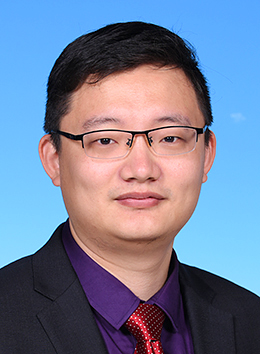 Ming Liu (刘明)合作论文数Shenzhen Unity-Drive Innovation Technology Co., Ltd.52
 Lijun Zhou (周利军)合作论文数School of Electrical Engineering, Southwest Jiaotong University14
 Wang Dongyang合作论文数13
 Jianhao Jiao合作论文数Robot Perception and Learning Lab, Department of Computer Science, University College London13
 Cheng-Zhong Xu (须成忠)合作论文数Faculty of Science and Technology, University of Macau13
 Yuxiang Sun (孙宇翔)合作论文数Department of Mechanical Engineering, City University of Hong Kong11
 Max Q.-H. Meng (孟慶虎)合作论文数Department of Electronic Engineering, The Chinese University of Hong Kong;Department of Electronic and Electrical Engineering, Southern University of Science and Technology10
 Lei Guo (郭蕾)合作论文数School of Electrical Engineering, Southwest Jiaotong University9
 Huaiyang Huang (黄淮扬)合作论文数Department of Computer Science and Engineering, Hong Kong University of Science and Technology;RAM-Lab, Robotics Institute, Hong Kong University of Science and Technology8
 Zhenhua Xu (许振华)合作论文数School of Vehicle and Mobility, Tsinghua University7
 Jin Wu合作论文数7
 Ruoyu Geng合作论文数Hong Kong University of Science and Technology, Hong Kong SAR, China7
 Yilong Zhu合作论文数Hong Kong Univ Sci & Technol, Dept Elect & Comp Engn, Hong Kong, Peoples R China6
 Andrew (YuXuan) Liu合作论文数OpenAI6
 Yibo Liu合作论文数State Key Laboratory of Advanced Displays and Optoelectronics Technologies, Hong Kong University of Science and Technology6
 Xiangcheng Hu合作论文数5
 Qing Liang合作论文数Hong Kong Univ Sci & Technol, Dept ECE, Hong Kong, Peoples R China5
 Dong Han合作论文数5Yandong Liu合作论文数5
 Yi Cui合作论文数School of Information Technology and Electrical Engineering, Faculty of Engineering, Architecture and Information Technology, University of Queensland;University of Southern Queensland5
 Rui Fan (范睿)合作论文数College of Electronics & Information Engineering, Tongji University5
 Mingkai Tang合作论文数Robotics Institute, Hong Kong University of Science and Technology4
 Xupeng Xie合作论文数4
 Yingbing Chen合作论文数4
 Ren Xin合作论文数4
 Sukai Wang合作论文数The Hong Kong University of Science and Technology4
 Shuai Yuan合作论文数4
 Peide Cai合作论文数Hong Kong Univ Sci & Technol, Hong Kong, Peoples R China4
 Haoyang Ye (叶昊阳)合作论文数ByteDance Ltd4Yuanhang Li合作论文数3Hongji Liu合作论文数3
 Qingwen Zhang (张清文)合作论文数Division of Robotics, Perception and Learning, School of Electrical Engineering and Computer Science, KTH Royal Institute of Technology3Jie Cheng合作论文数Cheng Kar-Shun Robotics Institute, The Hong Kong University of Science and Technology3Bowen Yang合作论文数3
 Feiyi Chen合作论文数College of Computer Science and Technology, Zhejiang University3
 Xiang Zhang合作论文数Dept Elect & Elect Engn, Univ Manchester3
 Qinghai Liao合作论文数Robotics and Multi-Perception Lab (RAM-LAB), Robotics Institute, The Hong Kong University of Science and Technology3
 He-xiang WEI合作论文数3
 Jian Wang (王健)合作论文数3
 Wei Liao合作论文数3HaoLong Tang (唐昊龙)合作论文数3
 Shuyang Zhang (张抒扬)合作论文数School of Transportation and Logistics Engineering, Wuhan University of Technology3
 Jianwen Zhang (张建文)合作论文数School of Electrical Engineering, China University of Mining and Technology3
 Yang Wang (王洋)合作论文数中国科学院深圳先进技术研究院3
 He Zhijian合作论文数3
 Roland Siegwart合作论文数Autonomous Systems Lab, ETH Zurich;Department of Mechanical and Process Engineering, ETH Zurich3
 Fuji Ren (任福继)合作论文数Department of Information Science & Intelligent Systems, Faculty of Engineering, Tokushima University;University of Electronic Science and Technology of China3Haitao Yang (杨海涛)合作论文数China Electric Power Research Institute3Longqiang Tian合作论文数3




