We investigate the application of tensor-train (TT) algorithms to multigroup thermal radiation transport (i.e., photon radiation transport). The TT framework enables simulations at discretizations that might otherwise be computationally infeasible on conventional hardware. We show that solutions to certain multigroup problems possess an intrinsic low-rank structure, which the TT representation leverages effectively. This enables us to solve problems where the discretized solution size exceeds a trillion parameters on a single node. The solver is evaluated on a range of test problems with varying levels of complexity, consistently achieving compression factors greater than 100 & times; and speedups exceeding 2 & times;. We also investigate alternative TT topologies by analyzing the low-rank structure of the merged spatio-spectral core to assess the potential for greater compression. This analysis suggests that compression gains could increase by factors as large as 7. Our results indicate that the low-rank structure of the merged spatio-spectral core captures the spatio-spectral complexity of the solution, largely driven by the opacity structure of the medium. Beyond identifying opportunities for improved compression, this analysis highlights the types of errors that may arise in angle-integrated quantities when exploiting this low-rank structure.
We present a novel tensor network algorithm to solve the time-dependent, gray thermal radiation transport equation. The method invokes a tensor train (TT) decomposition for the specific intensity. The efficiency of this approach is dictated by the rank of the decomposition. When the solution is “low rank,” the memory footprint of the specific intensity solution vector may be significantly compressed. The algorithm, following a step-then-truncate approach of a traditional discrete ordinates method, operates directly on the compressed state vector, thereby enabling large speedups for low-rank solutions. To achieve these speedups, we rely on a recently developed rounding approach based on the Gram-SVD. We detail how familiar S _N algorithms for (gray) thermal transport can be mapped to this TT framework and present several numerical examples testing both the optically thick and thin regimes. The TT framework finds low-rank structure and supplies up to ≃60× speedups and ≃1000× compressions for problems demanding large angle counts, thereby enabling previously intractable S _N calculations and supplying a promising avenue to mitigate ray effects.
The next Milky Way supernova will be an epochal event in multi-messenger astronomy, critical to tests of supernovae, neutrinos, and new physics. Realizing this potential depends on having realistic simulations of core collapse. We investigate the neutrino predictions of nearly all modern models (1-, 2-, and 3-d) over the first $\simeq$1 s, making the first detailed comparisons of these models to each other and to the SN 1987A neutrino data. Even with different methods and inputs, the models generally agree with each other. However, even considering the low neutrino counts, the models generally disagree with data. What can cause this? We show that neither neutrino oscillations nor different progenitor masses appear to be a sufficient solution. We outline urgently needed work.
The neutrino-driven wind from proto-neutron stars is a proposed site for r-process nucleosynthesis, although most previous work has found that a wind heated only by neutrinos cannot produce the third r-process peak. However, several groups have noted that introducing a secondary heating source within the wind can change the hydrodynamic conditions sufficiently for a strong r-process to proceed. One possible secondary heating source is gravito-acoustic waves, generated by convection inside the proto-neutron star. As these waves propagate into the wind, they can both accelerate the wind and shock and deposit energy into the wind. Additionally, the acceleration of the wind by these waves can reduce the total number of neutrino captures and thereby reduce the final electron fraction of the wind. In neutron rich conditions, all of these effects can make conditions more favorable for r-process nucleosynthesis. Here, we present a systematic investigation of the impact of these convection-generated gravito-acoustic waves within the wind on potential nucleosynthesis. We find that wave effects in the wind can generate conditions favorable for a strong r-process, even when the energy flux in the waves is a factor of 10^-4 smaller than the total neutrino energy flux and the wind is marginally neutron-rich. Nevertheless, this depends strongly on the radius at which the wave become non-linear and form shocks. We also find that both entropy production after shock formation and the acceleration of the wind due to stresses produced by the waves prior to shock formation impact the structure and nucleosynthesis of these waves.
We investigate $r$-process nucleosynthesis and kilonova emission resulting from binary neutron star (BNS) mergers based on a three-dimensional (3D) general-relativistic magnetohydrodynamic (GRMHD) simulation of a hypermassive neutron star (HMNS) remnant. The simulation includes a microphysical finite-temperature equation of state (EOS) and neutrino emission and absorption effects via a leakage scheme. We track the thermodynamic properties of the ejecta using Lagrangian tracer particles and determine its composition using the nuclear reaction network $\texttt{SkyNet}$. We investigate the impact of neutrinos on the nucleosynthetic yields by varying the neutrino luminosities during post-processing. The ejecta show a broad distribution with respect to their electron fraction $Y_e$, peaking between $\sim$0.25-0.4 depending on the neutrino luminosity employed. We find that the resulting $r$-process abundance patterns differ from solar, with no significant production of material beyond the second $r$-process peak when using luminosities recorded by the tracer particles. We also map the HMNS outflows to the radiation hydrodynamics code $\texttt{SNEC}$ and predict the evolution of the bolometric luminosity as well as broadband light curves of the kilonova. The bolometric light curve peaks on the timescale of a day and the brightest emission is seen in the infrared bands. This is the first direct calculation of the $r$-process yields and kilonova signal expected from HMNS winds based on 3D GRMHD simulations. For longer-lived remnants, these winds may be the dominant ejecta component producing the kilonova emission.
In this paper, we take a data-driven approach and apply machine learning to the moment closure problem for radiative transfer equation in slab geometry. Instead of learning the unclosed high order moment, we propose to directly learn the gradient of the high order moment using neural networks. This new approach is consistent with the exact closure we derive for the free streaming limit and also provides a natural output normalization. A variety of benchmark tests, including the variable scattering problem, the Gaussian source problem with both periodic and reflecting boundaries, and the two-material problem, show both good accuracy and generalizability of our machine learning closure model.
On the path to exascale the landscape of computer device architectures and corresponding programming models has become much more diverse. While various low-level performance portable programming models are available, support at the application level lacks behind. To address this issue, we present the performance portable block-structured adaptive mesh refinement (AMR) framework P arthenon , derived from the well-tested and widely used A thena++ astrophysical magnetohydrodynamics code, but generalized to serve as the foundation for a variety of downstream multi-physics codes. P arthenon adopts the K okkos programming model, and provides various levels of abstractions from multidimensional variables, to packages defining and separating components, to launching of parallel compute kernels. P arthenon allocates all data in device memory to reduce data movement, supports the logical packing of variables and mesh blocks to reduce kernel launch overhead, and employs one-sided, asynchronous MPI calls to reduce communication overhead in multi-node simulations. Using a hydrodynamics miniapp, we demonstrate weak and strong scaling on various architectures including AMD and NVIDIA GPUs, Intel and AMD x86 CPUs, IBM Power9 CPUs, as well as Fujitsu A64FX CPUs. At the largest scale on Frontier (the first TOP500 exascale machine), the miniapp reaches a total of 1.7 × 10 13 zone-cycles/s on 9216 nodes (73,728 logical GPUs) at ≈ 92 % weak scaling parallel efficiency (starting from a single node). In combination with being an open, collaborative project, this makes Parthenon an ideal framework to target exascale simulations in which the downstream developers can focus on their specific application rather than on the complexity of handling massively-parallel, device-accelerated AMR.
This is the third paper in a series in which we develop machine learning (ML) moment closure models for the radiative transfer equation. In our previous work (Huang et al. in J Comput Phys 453:110941, 2022), we proposed an approach to learn the gradient of the unclosed high order moment, which performs much better than learning the moment itself and the conventional $$P_N$$ closure. However, while the ML moment closure has better accuracy, it is not able to guarantee hyperbolicity and has issues with long time stability. In our second paper (Huang et al., in: Machine learning moment closure models for the radiative transfer equation II: enforcing global hyperbolicity in gradient based closures, 2021. arXiv:2105.14410 ), we identified a symmetrizer which leads to conditions that enforce that the gradient based ML closure is symmetrizable hyperbolic and stable over long time. The limitation of this approach is that in practice the highest moment can only be related to four, or fewer, lower moments. In this paper, we propose a new method to enforce the hyperbolicity of the ML closure model. Motivated by the observation that the coefficient matrix of the closure system is a lower Hessenberg matrix, we relate its eigenvalues to the roots of an associated polynomial. We design two new neural network architectures based on this relation. The ML closure model resulting from the first neural network is weakly hyperbolic and guarantees the physical characteristic speeds, i.e., the eigenvalues are bounded by the speed of light. The second model is strictly hyperbolic and does not guarantee the boundedness of the eigenvalues. Several benchmark tests including the Gaussian source problem and the two-material problem show the good accuracy, stability and generalizability of our hyperbolic ML closure model.
Both the core collapse of rotating massive stars, and the coalescence of neutron star (NS) binaries result in the formation of a hot, differentially rotating NS remnant. The timescales over which differential rotation is removed by internal angular-momentum transport processes ( viscosity ) have key implications for the remnant’s long-term stability and the NS equation of state (EOS). Guided by a nonrotating model of a cooling proto-NS, we estimate the dominant sources of viscosity using an externally imposed angular-velocity profile Ω( r ). Although the magneto-rotational instability provides the dominant source of effective viscosity at large radii, convection and/or the Tayler–Spruit dynamo dominate in the core of merger remnants where d Ω/ dr ≥ 0. Furthermore, the viscous timescale in the remnant core is sufficiently short that solid-body rotation will be enforced faster than matter is accreted from rotationally supported outer layers. Guided by these results, we develop a toy model for how the merger remnant core grows in mass and angular momentum due to accretion. We find that merger remnants with sufficiently massive and slowly rotating initial cores may collapse to black holes via envelope accretion, even when the total remnant mass is less than the usually considered threshold ≈1.2 M TOV for forming a stable solid-body rotating NS remnant (where M TOV is the maximum nonrotating NS mass supported by the EOS). This qualitatively new picture of the post-merger remnant evolution and stability criterion has important implications for the expected electromagnetic counterparts from binary NS mergers and for multimessenger constraints on the NS EOS.
Nuclear astrophysics is a field at the intersection of nuclear physics and astrophysics, which seeks to understand the nuclear engines of astronomical objects and the origin of the chemical elements. This white paper summarizes progress and status of the field, the new open questions that have emerged, and the tremendous scientific opportunities that have opened up with major advances in capabilities across an ever growing number of disciplines and subfields that need to be integrated. We take a holistic view of the field discussing the unique challenges and opportunities in nuclear astrophysics in regards to science, diversity, education, and the interdisciplinarity and breadth of the field. Clearly nuclear astrophysics is a dynamic field with a bright future that is entering a new era of discovery opportunities.
The first binary neutron star merger has already been detected in gravitational waves. The signal was accompanied by an electromagnetic counterpart including a kilonova component powered by the decay of radioactive nuclei, as well as a short γ-ray burst. In order to understand the radioactively powered signal, it is necessary to simulate the outflows and their nucleosynthesis from the post-merger disk. Simulating the disk and predicting the composition of the outflows requires general relativistic magnetohydrodynamical (GRMHD) simulations that include a realistic, finite-temperature equation of state (EOS) and self-consistently calculating the impact of neutrinos. In this work, we detail the implementation of a finite-temperature EOS and the treatment of neutrinos in the GRMHD code HARM3D+NUC, based on HARM3D. We include formal tests of both the finite-temperature EOS and the neutrino-leakage scheme. We further test the code by showing that, given conditions similar to those of published remnant disks following neutron star mergers, it reproduces both recombination of free nucleons to a neutron-rich composition and excitation of a thermal wind.
In this theoretical study of successful core-collapse supernovae, the authors provide a detailed model of neutrino emission from the different phases of the transition - explosion to proto-neutron star cooling to late-time formation of either neutron star or black hole. They show that for a supernova in the Milky Way, these copiously produced neutrinos can be detected by current neutrino-detection experiments and used to extract information about the course of the event. The study offers a highly promising program to make full use of a rare core-collapse supernova event to extract as much physics as possible.
ABSTRACT Our understanding of the core-collapse supernova explosion mechanism is incomplete. While the favoured scenario is delayed revival of the stalled shock by neutrino heating, it is difficult to reliably compute explosion outcomes and energies, which depend sensitively on the complex radiation hydrodynamics of the post-shock region. The dynamics of the (non-)explosion depend sensitively on how energy is transported from inside and near the proto-neutron star (PNS) to material just behind the supernova shock. Although most of the PNS energy is lost in the form of neutrinos, hydrodynamic and hydromagnetic waves can also carry energy from the PNS to the shock. We show that gravity waves excited by core PNS convection can couple with outgoing acoustic waves that present an appreciable source of energy and pressure in the post-shock region. Using one-dimensional simulations, we estimate the gravity wave energy flux excited by PNS convection and the fraction of this energy transmitted upwards to the post-shock region as acoustic waves. We find wave energy fluxes near $10^{51}\, \mathrm{erg}\, \mathrm{s}^{-1}\,$ are likely to persist for $\sim \! 1\, \mathrm{s}$ post-bounce. The wave pressure on the shock may exceed $10{{\ \rm per\ cent}}$ of the thermal pressure, potentially contributing to shock revival and, subsequently, a successful and energetic explosion. We also discuss how future simulations can better capture the effects of waves, and more accurately quantify wave heating rates.
Radioactive isotopes produced in core-collapse supernovae (CCSNe) provide useful insights into the underlying processes driving the collapse mechanism and the origins of elemental abundances. Their study generates a confluence of major physics research, including experimental measurements of nuclear reaction rates, astrophysical modeling, and γ -ray observations. Here we identify the key nuclear reaction rates to the nucleosynthesis of observable radioactive isotopes in explosive silicon burning during CCSNe. Using the nuclear reaction network calculator SkyNet and current REACLIB reaction rates, we evolve temperature–density–time profiles of the innermost 0.45 M ⊙ ejecta from the core collapse and explosion of a 12 M ⊙ star. Individually varying 3403 reaction rates by factors of 100, we identify 141 reactions that cause significant differences in the isotopes of interest, namely, 43 K, 47 Ca, 44,47 Sc, 44 Ti, 48,51 Cr, 48,49 V, 52,53 Mn, 55,59 Fe, 56,57 Co, and 56,57,59 Ni. For each of these reactions, we present a novel method to extract the temperature range pertinent to the nucleosynthesis of the relevant isotope; the resulting temperatures lie within the range T = 0.47–6.15 GK. Limiting the variations to within 1 σ of STARLIB reaction rate uncertainties further reduces the identified reactions to 48 key rates, which can be used to guide future experimental research. Complete results are presented in tabular form.
AbstractOn August 17, 2017, the LIGO/VIRGO collaboration detected the first gravitational wave signal coming from the merger of two neutron stars. This groundbreaking discovery, referred to as GW170817, revealed to us how heavy elements, such as gold and platinum, are synthesized through a mechanism known as rapid neutron capture (r-process). In order to fully understand these signals, we need to simulate the resulting accretion disk around a black hole, and its outflows. This task requires efficient computing codes that include general relativity magnetohydrodynamics (GRMHD), neutrino physics, and a model for matter at high densities. We present the implementation of a tabulated equation of state that takes care of matter at high densities and a neutrino leakage scheme that considers the impact of neutrinos into HARM3D, a GRMHD parallelized code. We also apply the tools to a magnetized torus.
The rate of the triple-α reaction that forms 12 C affects 1 , 2 the synthesis of heavy elements in the Ga–Cd range in proton-rich neutrino-driven outflows of core-collapse supernovae 3 – 5 . Initially, these outflows contain only protons and neutrons; these later combine to form α particles, then 12 C nuclei via the triple-α reaction, and eventually heavier nuclei as the material expands and cools. Previous experimental work 6 , 7 demonstrated that despite the high temperatures encountered in these environments, the reaction is dominated by the well characterized Hoyle state resonance in 12 C nuclei. At sufficiently high nucleon densities, however, proton- and neutron-scattering processes may alter the effective width of the Hoyle state 8 , 9 . This raises the questions of what the reaction rate in supernova outflows is, and how changes affect nucleosynthesis predictions. Here we report that in proton-rich core-collapse supernova outflows, these hitherto neglected processes enhance the triple-α reaction rate by up to an order of magnitude. The larger reaction rate suppresses the production of heavy proton-rich isotopes that are formed by the νp process 3 – 5 (where ν is the neutrino and p is the proton) in the innermost ejected material of supernovae 10 – 13 . Previous work on the rate enhancement mechanism 9 did not anticipate the importance of this enhancement for proton-rich nucleosynthesis. Because the in-medium contribution to the triple-α reaction rate must be present at high densities, this effect needs to be included in supernova nucleosynthesis models. This enhancement also differs from earlier sensitivity studies that explored variations of the unenhanced rate by a constant factor 1 , 2 , because the enhancement depends on the evolving thermodynamic conditions. The resulting suppression of heavy-element nucleosynthesis for realistic conditions casts doubt on the νp process being the explanation for the anomalously high abundances of 92,94 Mo and 96,98 Ru isotopes in the Solar System 1 , 3 , 14 and for the signatures of early Universe element synthesis in the Ga–Cd range found in the spectra of ancient metal-poor stars 15 – 20 .
Gravitational waves from coalescing neutron stars encode information about nuclear matter at extreme densities, inaccessible by laboratory experiments. The late inspiral is influenced by the presence of tides, which depend on the neutron star equation of state. Neutron star mergers are expected to often produce rapidly-rotating remnant neutron stars that emit gravitational waves. These will provide clues to the extremely hot post-merger environment. This signature of nuclear matter in gravitational waves contains most information in the 2-4 kHz frequency band, which is outside of the most sensitive band of current detectors. We present the design concept and science case for a neutron star extreme matter observatory (NEMO): a gravitational-wave interferometer optimized to study nuclear physics with merging neutron stars. The concept uses high circulating laser power, quantum squeezing and a detector topology specifically designed to achieve the high-frequency sensitivity necessary to probe nuclear matter using gravitational waves. Above one kHz, the proposed strain sensitivity is comparable to full third-generation detectors at a fraction of the cost. Such sensitivity changes expected event rates for detection of post-merger remnants from approximately one per few decades with two A+ detectors to a few per year, and potentially allows for the first gravitational-wave observations of supernovae, isolated neutron stars, and other exotica.
Gamma-ray astronomy explores the most energetic photons in nature to address some of the most pressing puzzles in contemporary astrophysics. It encompasses a wide range of objects and phenomena: stars, supernovae, novae, neutron stars, stellar-mass black holes, nucleosynthesis, the interstellar medium, cosmic rays and relativistic-particle acceleration, and the evolution of galaxies. MeV gamma-rays provide a unique probe of nuclear processes in astronomy, directly measuring radioactive decay, nuclear de-excitation, and positron annihilation. The substantial information carried by gamma-ray photons allows us to see deeper into these objects, the bulk of the power is often emitted at gamma-ray energies, and radioactivity provides a natural physical clock that adds unique information. New science will be driven by time-domain population studies at gamma-ray energies. This science is enabled by next-generation gamma-ray instruments with one to two orders of magnitude better sensitivity, larger sky coverage, and faster cadence than all previous gamma-ray instruments. This transformative capability permits: (a) the accurate identification of the gamma-ray emitting objects and correlations with observations taken at other wavelengths and with other messengers; (b) construction of new gamma-ray maps of the Milky Way and other nearby galaxies where extended regions are distinguished from point sources; and (c) considerable serendipitous science of scarce events -- nearby neutron star mergers, for example. Advances in technology push the performance of new gamma-ray instruments to address a wide set of astrophysical questions.
Uncertainties in our knowledge of the properties of dense matter near and above nuclear saturation density are among the main sources of variations in multimessenger signatures predicted for core-collapse supernovae (CCSNe) and the properties of neutron stars (NSs). We construct 97 new finite-temperature equations of state (EOSs) of dense matter that obey current experimental, observational, and theoretical constraints and discuss how systematic variations in the EOS parameters affect the properties of cold nonrotating NSs and the core collapse of a 20-M-circle dot progenitor star. The core collapse of the 20-M-circle dot progenitor star is simulated in spherical symmetry using the general-relativistic radiation-hydrodynamics code GRID where neutrino interactions are computed for each EOS using the NULIB library. We conclude that the effective mass of nucleons at densities above nuclear saturation density is the largest source of uncertainty in the CCSN neutrino signal and dynamics even though it plays a subdominant role in most properties of cold NS matter. Meanwhile, changes in other observables affect the properties of cold NSs, while having little effect in CCSNe. To strengthen our conclusions, we perform six octant three-dimensional CCSN simulations varying the effective mass of nucleons at nuclear saturation density. We conclude that neutrino heating and, thus, the likelihood of explosion is significantly increased for EOSs where the effective mass of nucleons at nuclear saturation density is large.
 Christian Ott合作论文数University of Turku19
 Jonas Lippuner合作论文数16
 David Radice合作论文数Department of Physics, Eberly College of Science, The Pennsylvania State University;Department of Astronomy and Astrophysics, Eberly College of Science, The Pennsylvania State University;Institute for Gravitation and the Cosmos, The Pennsylvania State University10
 Evan O'Connor合作论文数TAPIR, Caltech9
 Francois Foucart合作论文数Center for Space Research;Department of Astronomy;Cornell University;Center for Space Research, Cornell University9
 Sanjay Reddy合作论文数Institute for Nuclear Theory, University of Washington;Department of Physics, College of Arts & Sciences, University of Washington8
 W Raphael Hix合作论文数Physics Division, Oak Ridge National Laboratory8
 Michael Smith合作论文数Stellar Science Solutions8
 Roland Haas合作论文数7
 Brian Metzger合作论文数Department of Physics, Columbia University;Department of Astronomy, Columbia University;Center for Computational Astrophysics, Flatiron Institute6
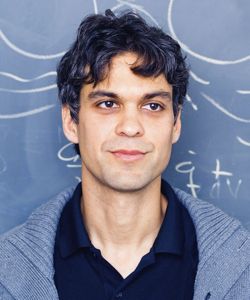 Enrico Ramirez-Ruiz合作论文数Astronomy & Astrophysics Department, Physical & Biological Sciences Division, University of California, Santa Cruz;Niels Bohr Institute5
 Albino Perego合作论文数5
 George Fuller合作论文数Department of Physics, University of California, San Diego5
 Jeffery Blackmon合作论文数Department of Physics & Astronomy, College of Science, Louisiana State University5
 Erik Schnetter合作论文数Perimeter Institute for Theoretical Physics5
 Sean M. Couch合作论文数5Philipp Mosta合作论文数5
 Matthew Duez合作论文数Department of Physics and Astronomy, Washington State University5
 Daniel Bardayan合作论文数Department of Physics & Astronomy, College of Science, University of Notre Dame5
 Caroline Nesaraja合作论文数4
 Alexander Heger合作论文数Monash Centre for Astrophysics, School of Physics and Astronomy, Monash University4
 Daniel Kasen合作论文数Department of Astronomy, University of California, Berkeley;Department of Physics, University of California, Berkeley4Fitzgerald R合作论文数Physical Measurements Laboratory, National Institute of Standards and Technology4
 Stanford E. Woosley合作论文数Department of Astronomy and Astrophysics, Science Division, University of California at Santa Cruz;Lawrence Livermore National Laboratory4
 André da Silva Schneider合作论文数Departamento de Física, Universidade Federal de Santa Catarina4Jeffrey S Thomas合作论文数4
 Rodrigo Fernández合作论文数University of Toronto4
 Sebastiano Bernuzzi合作论文数Theoretisch-Physikalisches Institut, Friedrich-Schiller-Universität Jena4
 Almudena Arcones合作论文数Institut fur Kernphysik;Technische Universitat Darmstadt;Institut fur Kernphysik, Technische Universitat Darmstadt4
 Hendrik Schatz合作论文数Department of Physics and Astronomy, Michigan State University;National Superconducting Cyclotron Laboratory, Michigan State University4
 Raymond L. Kozub合作论文数4Trevor M. Sprouse合作论文数Theoret Div, Los Alamos Natl Lab3
 Matthew Mumpower合作论文数Ctr Theoret Astrophys, Los Alamos Natl Lab3S. D. Pain合作论文数3gang shen合作论文数Inst Nucl Theory, Univ Washington3Eric J. Lingerfelt合作论文数3
 Matt Caplan合作论文数Department of Physics, Illinois State University3Zhanwen Ma合作论文数3
 Harald Pfeiffer合作论文数Astrophysical and Cosmological Relativity Division, Max Planck Institute for Gravitational Physics3
 Artemis Spyrou合作论文数National Superconducting Cyclotron Laboratory, Michigan State University3
 Chuck Horowitz合作论文数Center for Exploration of Energy & Matter, Department of Physics, College of Arts & Sciences, Indiana University Bloomington3
 John F. Beacom合作论文数Department of Physics, Ohio State University;Center for Cosmology and AstroParticle Physics3
 Vincenzo Cirigliano合作论文数Theoretical Division, Los Alamos National Laboratory;Department of Physics, College of Arts & Sciences, University of Washington3David Tytler合作论文数3
 Kelly Chipps合作论文数Oak Ridge National Laboratory3Joshua C. Dolence合作论文数Astronomy Department;University of Illinois;Astronomy Department, University of Illinois3
 Mark Scheel合作论文数The Division of Physics, Mathematics and Astronomy, California Institute of Technology3
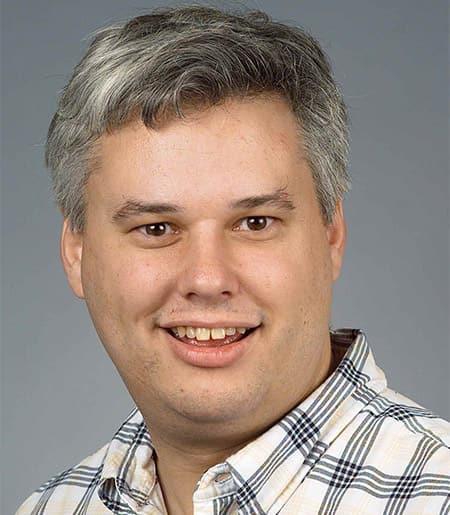 Lawrence Kidder合作论文数Cornell Center for Astrophysics and Planetary Science, Department of Astronomy, College of Arts & Sciences, Cornell University3R. J. Livesay合作论文数3




