DARk matter WImp search with liquid xenoN (DARWIN1) will be an experiment for the direct detection of dark matter using a multi-ton liquid xenon time projection chamber at its core. Its primary goal will be to explore the experimentally accessible parameter space for Weakly Interacting Massive Particles (WIMPs) in a wide mass-range, until neutrino interactions with the target become an irreducible background. The prompt scintillation light and the charge signals induced by particle interactions in the xenon will be observed by VUV sensitive, ultra-low background photosensors. Besides its excellent sensitivity to WIMPs above a mass of 5GeV/c2, such a detector with its large mass, low-energy threshold and ultra-low background level will also be sensitive to other rare interactions. It will search for solar axions, galactic axion-like particles and the neutrinoless double-beta decay of 136Xe, as well as measure the low-energy solar neutrino flux with <1% precision, observe coherent neutrino-nucleus interactions, and detect galactic supernovae. We present the concept of the DARWIN detector and discuss its physics reach, the main sources of backgrounds and the ongoing detector design and R&D efforts.
Background: Patients do not often discuss anal symptoms, resulting in late diagnosis of proctological disorders and impacting health. Poor epidemiological knowledge is a contributing factor to this, which can be a significant problem in general medicine. Authors evaluated the role of family doctors in proctological disorders by assessing how many of these are spontaneously diagnosed and how many are diagnosed after questioning the patient.Methods: Thirty-nine general practitioners completed a targeted questionnaire to assess all patients seen prospectively over 2.5 days of consultations.Results: A total of 1079 questionnaires were completed, 621 (58%) for females and 458 (42%) for males with a median age of 54. Twenty-two patients (2%) were seen primarily for anal symptoms. Following questioning, an anal symptom was found in 153 patients (14%). Symptoms reported were: bleeding (32%), pain (31%), pruritus ani (22%), swelling (22%), oozing (14%), and anal discharge (14%). Physicians' diagnoses were: haemorrhoids, anal fissure, anal discharge, dermatology disease, and functional disorder. In 35% of patients, questioning alone was used to make these diagnoses. Anal incontinence was the only factor associated with referral to a specialist (OR = 5; 95% CI: 1.4-17.8).Conclusion : The role of proctology in the general population appears to be significant. In five out of six cases, patients conceal anal symptoms. The high proportion of unexamined patients with anal symptoms is probably multifactorial. Further studies are needed to identify these and put in place the improvement of diagnosis and treatment of anal disorder.
 P. Gigan合作论文数1Hagar Yael Landsman合作论文数1Guillaume Plante合作论文数1Julie Philip合作论文数1
 Andrea Molinario合作论文数1M. Murra合作论文数1M. Scheibelhut合作论文数1Dan Pospait合作论文数1Eric Morteau合作论文数1K. Micheneau合作论文数1Claude Amsler合作论文数1Luca Grandi合作论文数1Gabriella Sartorelli合作论文数1Sara Diglio合作论文数1Hardy Simgen合作论文数1M-C Piro合作论文数1F. D. Amaro合作论文数1Preeti Barrow合作论文数1
 João Cardoso合作论文数1
 Andrea Gallo Rosso合作论文数1Pelssers B.合作论文数1C. Hasterok合作论文数Fraunhofer Inst Optron Syst Technol & Image Explo1J. Wulf合作论文数1E. Hogenbirk合作论文数1
 Ludwig Rauch合作论文数1
 Giacomo Bruno合作论文数Institut de Recherche en Mathématique et Physique, Ecole de Physique, Faculté des Sciences, Université Catholique de Louvain;Centre for Cosmology, Particle Physics and Phenomenology, Université Catholique de Louvain1D Coderre合作论文数1P. Pakarha合作论文数Phys Inst, Univ Zurich1
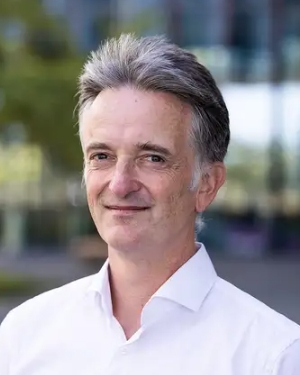 A. P. (Auke Pieter) Colijn合作论文数Institute of Physics, University of Amsterdam;Faculty of Science, University of Amsterdam1A. Tiseni合作论文数1C. Geis合作论文数1V. Hannen合作论文数1A. Fieguth合作论文数Dept Phys, Stanford Univ1S. Lindemann合作论文数1M Vargas合作论文数1C. Tunnell合作论文数Rice University1G. Eurin合作论文数1M. Messina合作论文数Laboratori Nazionali del Gran Sasso1
 Cussonneau Jean-Pierre合作论文数1
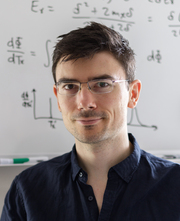 Jayden Newstead合作论文数School of Physics, Faculty of Science, The University of Melbourne1
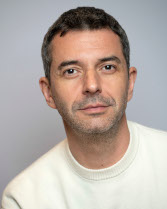 Cédric Laouénan合作论文数Département d'Epidémiologie Biostatistique et Recherche Clinique, Université Paris Cité;Unit of Infection Antimicrobials Modelling Evolution, French Institute of Health and Medical Research1Dominique Thers合作论文数1Linde F合作论文数1
 Ethan W Brown合作论文数1Luca Scotto Lavina合作论文数1
 Francesco Piastra合作论文数University of Z��rich, Universit?t Z��rich1M. Alfonsi合作论文数University of Amsterdam, University of Amsterdam1Patrick De Perio合作论文数University of Toronto, University of Toronto1
 Amos Breskin合作论文数Department of Astrophysics & Particle Physics, Weizmann Institute of Science1




