We compute the inclusive D 0 production cross section in ultraperipheral Pb-Pb collisions at the LHC as a function of the D 0 transverse momentum and rapidity. These calculations are carried out within the new generalized photon-nucleus FONLL ( G γ A − FONLL ) framework, which can predict photonuclear cross sections for charm and beauty hadrons in electron-proton, electron-nucleus, and ultraperipheral heavy-ion collisions. The framework relies on fixed-order next-to-leading logarithm (FONLL) to model heavy-quark production in photonuclear collisions and employs a photon-flux reweighting procedure to describe the production cross sections in ultraperipheral heavy-ion collisions. The G γ A calculations are first validated against the photoproduction cross sections of D * in electron-proton collisions at HERA. The predictions for the D 0 production cross section in ultraperipheral Pb-Pb collisions at the LHC are then presented and compared to the first experimental results obtained by CMS at s NN = 5.36 TeV . The predictions are benchmarked against different choices of nuclear parton distribution functions, fragmentation functions, and renormalization and factorization scales.
We compute the inclusive D^0 production cross section in ultraperipheral Pb-Pb collisions at the LHC as a function of the D^0 transverse momentum and rapidity. These calculations are carried out within the new GγA-FONLL (Generalized Photon-Nucleus FONLL) framework, which can predict photonuclear cross sections for charm and beauty hadrons in electron-proton, electron-nucleus, and ultraperipheral heavy-ion collisions. The framework relies on FONLL (Fixed-Order Next-to-Leading Logarithm) to model heavy-quark production in photonuclear collisions and employs a photon-flux reweighting procedure to describe the production cross sections in ultraperipheral heavy-ion collisions. The GγA calculations are first validated against the photoproduction cross sections of D^* in electron-proton collisions at HERA. The predictions for the D^0 production cross section in ultraperipheral Pb-Pb collisions at the LHC are then presented and compared to the first experimental results obtained by CMS at √( s_NN)=5.36 TeV. The predictions are benchmarked against different choices of nuclear parton distribution functions, fragmentation functions, and renormalization and factorization scales.
Fragmentation of heavy quarks into heavy-flavoured hadrons receives both perturbative and non-perturbative contributions. We consider perturbative QCD corrections to heavy quark production in e (+) e ( -) collisions to next-to-next-to-leading order accuracy in QCD with next-to-next-to-leading-logarithmic resummation of quasi-collinear and soft emissions. We study multiple matching schemes, and multiple regularisations of the soft resummation, and observe a significant dependence of the perturbative results on these ingredients, suggesting that NNLO+NNLL perturbative accuracy may not lead to real gains unless the interface with non-perturbative physics is properly analysed. We confirm previous evidence that D (*+) experimental data from CLEO/BELLE and from LEP are not reconcilable with perturbative predictions employing standard DGLAP evolution. We extract non-perturbative contributions from e (+) e ( -) experimental data for both D and B meson fragmentation. Such contributions can be used to predict heavy-quark fragmentation in other processes, e.g. DIS and proton-proton collisions.
We consider the fragmentation of heavy quarks into heavy-flavoured hadrons, specifically the production of charmed mesons in e^+e^- collisions, at different centre-of-mass energies. We focus our attention on the ratio of moments of the D^*+ energy spectrum measured by ALEPH and CLEO. This ratio is believed to provide us with a direct test of perturbative QCD evolution because hadronisation effects should cancel between the numerator and denominator. However, state-of-the-art calculations based on standard (final-state) collinear factorisation fail to describe the experimental data. We show that this discrepancy is considerably reduced if heavy-quark threshold effects are accounted for not only in DGLAP evolution, as it is usually done, but also in the resummed coefficient functions.
In this contribution, we make use of the QCD perturbative fragmentation function formalism to describe the one-particle inclusive fragmentation of a heavy quark produced in $e^+e^-$ annihilation at $\mathcal{O}(\alpha_S^2)$. We perform the computation analytically in Mellin-space. We resum soft-gluons effects in initial conditions and coefficient functions and perform evolution up to NNLL accuracy, obtaining the first NNLO + NNLL prediction for charm quark production. We study the impact of different matching schemes and Landau pole prescriptions in soft-gluon resummation, finding significant differences. We extract simple non-perturbative fragmentation functions for $B$ and $D^*$ mesons by comparing the perturbative prediction with the data from CLEO, BELLE and LEP experiments. We find that for charm mesons the experimental results from CLEO/BELLE and from LEP are not reconcilable with the standard DGLAP evolution.
A bstract We illustrate how electron Parton Distribution Functions (PDFs) with next-to-leading collinear logarithmic accuracy must be employed in the context of perturbative predictions for high-energy e + e − -collision processes. In particular, we discuss how the renormalisation group equation evolution of such PDFs is affected by the presence of multiple fermion families and their respective mass thresholds, and by the dependences on the choices of the factorisation and renormalisation schemes. We study the impact of the uncertainties associated with the PDFs on physical cross sections, in order to arrive at realistic precision estimates for observables computed with collinear-factorisation formulae. We do so by presenting results for the production of a heavy neutral object as well as for $$ t\overline{t} $$ t t ¯ and W + W − pairs, including next-to-leading-order effects of electroweak origin.
Studies of fully-reconstructed jets in heavy-ion collisions aim at extracting thermodynamical and transport properties of hot and dense QCD matter. Recently, a plethora of new jet substructure observables have been theoretically and experimentally developed that provide novel precise insights on the modifications of the parton radiation pattern induced by a QCD medium. This report, summarizing the main lines of discussion at the 5th Heavy Ion Jet Workshop and CERN TH institute "Novel tools and observables for jet physics in heavy-ion collisions" in 2017, presents a first attempt at outlining a strategy for isolating and identifying the relevant physical processes that are responsible for the observed medium-induced jet modifications. These studies combine theory insights, based on the Lund parton splitting map, with sophisticated jet reconstruction techniques, including grooming and background subtraction algorithms.
Common and community software packages, such as ROOT, Geant4 and event generators have been a key part of the LHC's success so far and continued development and optimisation will be critical in the future. The challenges are driven by an ambitious physics programme, notably the LHC accelerator upgrade to high-luminosity, HL-LHC, and the corresponding detector upgrades of ATLAS and CMS. In this document we address the issues for software that is used in multiple experiments (usually even more widely than ATLAS and CMS) and maintained by teams of developers who are either not linked to a particular experiment or who contribute to common software within the context of their experiment activity. We also give space to general considerations for future software and projects that tackle upcoming challenges, no matter who writes it, which is an area where community convergence on best practice is extremely useful.
We investigate some well-known problematic aspects of the single-jet inclusive cross-section, specifically its non-unitarity and the possibly related issue of apparent perturbative instability at low orders. We study and clarify their origin by introducing possible alternative weighted definitions of the observable which restore unitarity. We show that the perturbative instability of the standard definition is an accidental artefact of the smallness of the NLO $K$ factor which only manifests itself for values of the jet radius in the range $R\sim 0.3-0.6$, and that its non-unitarity is necessary in order to ensure cancellation of logs of the momentum cutoff used in the jet definition. We also show that alternative unitary definitions do not have better perturbative properties compared to the conventional non-unitary definition, while suffering from lack of cancellation of large logs.
This document summarises the talks and discussions happened during the VBSCan Split17 workshop, the first general meeting of the VBSCan COST Action network. This collaboration is aiming at a consistent and coordinated study of vector-boson scattering from the phenomenological and experimental point of view, for the best exploitation of the data that will be delivered by existing and future particle colliders.
Using elementary considerations of Lorentz invariance, Bose symmetry and BRST invariance, we argue why the decay of a massive color-octet vector state into a pair of on-shell massless gluons is possible in a non-Abelian SU(N) Yang–Mills theory, we constrain the form of the amplitude of the process and offer a simple understanding of these results in terms of effective-action operators.
To present knowledge, all the physics at the Large Hadron Collider (LHC) can be described in the framework of the Standard Model (SM) of particle physics. Indeed the newly discovered Higgs boson with a mass close to 125 GeV seems to confirm the predictions of the SM. Thus, besides looking for direct manifestations of the physics beyond the SM, one of the primary missions of the LHC is to perform ever more stringent tests of the SM. This requires not only improved theoretical developments to produce testable predictions and provide experiments with reliable event generators, but also sophisticated analyses techniques to overcome the formidable experimental environment of the LHC and perform precision measurements. The present article proposes an overview of the present theoretical tools and of the experimental results in the field of strong and electroweak interactions. (C) 2015 Academie des sciences. Published by Elsevier Masson SAS. All rights reserved.
We consider two approaches to estimate and characterise the theoretical uncertainties stemming from the missing higher orders in perturbative calculations in Quantum Chromodynamics: the traditional one based on renormalisation and factorisation scale variation, and the Bayesian framework proposed by Cacciari and Houdeau. We estimate uncertainties with these two methods for a comprehensive set of more than thirty different observables computed in perturbative Quantum Chromodynamics, and we discuss their performance in properly estimating the size of the higher order terms that are known. We find that scale variation with the conventional choice of varying scales within a factor of two of a central scale gives uncertainty intervals that tend to be somewhat too small to be interpretable as 68% confidence-level-heuristic ones. We propose a modified version of the Bayesian approach of Cacciari and Houdeau which performs well for non-hadronic observables and, after an appropriate choice of the relevant expansion parameter for the perturbative series, for hadronic ones too.
We discuss production of charm and bottom quarks at forward rapidity in pp collisions at the LHC, updating the QCD predictions for the run at \(\sqrt{S}=13\) TeV. We show that, while the absolute rates suffer from large theoretical systematics, dominated by scale uncertainties, the increase relative to the rates precisely measured at 7 TeV can be predicted with an accuracy of a few percent, sufficient to highlight the sensitivity to the gluon distribution function.
We discuss production of charm and bottom quarks at forward rapidity in pp collisions at the LHC, updating the QCD predictions for the run at √(S)=13 TeV. We show that, while the absolute rates suffer from large theoretical systematics, dominated by scale uncertainties, the increase relative to the rates precisely measured at 7 TeV can be predicted with an accuracy of a few percent, sufficient to highlight the sensitivity to the gluon distribution function.
Existing widely used pileup removal approaches correct the momenta of individual jets. In this article we introduce an event-level, particle-based pileup correction procedure, SoftKiller. It removes the softest particles in an event, up to a transverse momentum threshold that is determined dynamically on an event-by-event basis. In simulations, this simple procedure appears to be reasonably robust and brings superior jet resolution performance compared to existing jet-based approaches. It is also nearly two orders of magnitude faster than methods based on jet areas.
We discuss production of charm and bottom quarks at forward rapidity in pp collisions at the LHC, updating the QCD predictions for the run at [Formula: see text] TeV. We show that, while the absolute rates suffer from large theoretical systematics, dominated by scale uncertainties, the increase relative to the rates precisely measured at 7 TeV can be predicted with an accuracy of a few percent, sufficient to highlight the sensitivity to the gluon distribution function.
The first data on bottom quark production in pp̄ collisions at 1.96 TeV have recently been obtained by the CDF collaboration. These data probe the region of pT ∼ 0, providing a new invaluable input on the issue of the compatibility between next-to-leadingorder (NLO) QCD and data. We reconsider the evaluation of the b cross section, in view of recent theoretical developments, and of the latest inputs on structure function fits. We show that the new CDF measurements are in good agreement with NLO QCD. If CDF preliminary data are confirmed, a long-standing discrepancy between NLO QCD predictions and hadron-collider data can be settled.
This report of the BOOST2012 workshop presents the results of four working groups that studied key aspects of jet substructure. We discuss the potential of first-principle QCD calculations to yield a precise description of the substructure of jets and study the accuracy of state-of-the-art Monte Carlo tools. Limitations of the experiments' ability to resolve substructure are evaluated, with a focus on the impact of additional (pile-up) proton proton collisions on jet substructure performance in future LHC operating scenarios. A final section summarizes the lessons learnt from jet substructure analyses in searches for new physics in the production of boosted top quarks.
We present predictions for a variety of single-inclusive observables that stem from the production of charm and bottom quark pairs at the 7 TeV LHC. They are obtained within the FONLL semi-analytical framework, and with two “Monte Carlo + NLO” approaches, MC@NLO and POWHEG. Results are given for final states and acceptance cuts that are as close as possible to those used by experimental collaborations and, where feasible, are compared to LHC data.
 Paolo Nason合作论文数Department of Physics "Giuseppe Occhialini", University of Milano-Bicocca18
 Stefano Frixione合作论文数15
 Michelangelo Mangano合作论文数Department of Theoretical Physics, European Organization for Nuclear Research12
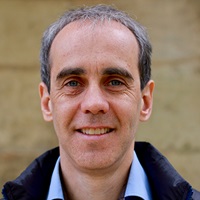 Gavin Salam合作论文数Clarendon Laboratory, Rudolf Peierls Centre for Theoretical Physics, University of Oxford;Department of Physics, University of Oxford11
 Gregory Soyez合作论文数IPhT10
 Carlos Alberto Salgado Lopez合作论文数Department of Particle Physics, Universidade de Santiago de Compostela;Galician Institute of High Energy Physics, Universidade de Santiago de Compostela7
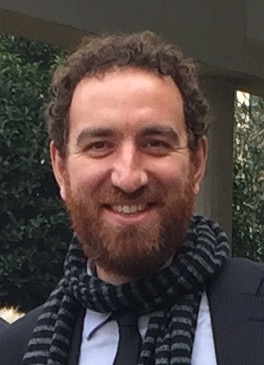 Andrea Dainese合作论文数Istituto Nazionale di Fisica Nucleare6
 Trocsanyi Z L合作论文数University of Debrecen6
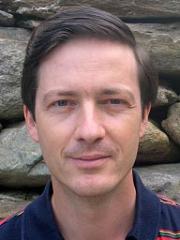 Urs Achim Wiedemann合作论文数Department of Theoretical Physics, European Organization for Nuclear Research6
 Néstor Armesto合作论文数Department of Particle Physics, IGFAE Facultade de Física, Universidade de Santiago de Compostela6Guido Montagna合作论文数Dipartimento di Fisica;Nucleare e Teorica;Universita di Pavia;Dipartimento di Fisica|Nucleare e Teorica, Universita di Pavia6Oreste Nicrosini合作论文数Sezione di Pavia6
 Fabio Maltoni合作论文数Centre for Cosmology, Particle Physics and Phenomenology, Universite Catholique de Louvain5Luca Trentadue合作论文数Parma U. & INFN5Giovanni Stagnitto合作论文数4
 David d'Enterria合作论文数Physics Department, European Organization for Nuclear Research4
 Hannes Jung合作论文数University of Antwerp;Deutsches Elektronen-Synchrotron DESY;Institut für Theoretische Physik, University of Hamburg4Fulvio Piccinini合作论文数Sezione di Pavia4
 Ramona Vogt合作论文数Department of Physics and Astronomy, University of California, Davis;Lawrence Livermore National Laboratory4
 Giovanni Ridolfi合作论文数Theoretical Physics Division4
 Massimo Greco合作论文数UNIVERSITA' DEGLI STUDI DI NAPOLI FEDERICO II4Mario Greco合作论文数3N. P. Zotov合作论文数3
 Albert De Roeck合作论文数Department of Physics, University of Antwerp;CERN3A. V. Lipatov合作论文数3
 Stanislaw Jadach合作论文数Department of Particle Theory Institute of Nuclear Physics3
 Bernd A. Kniehl合作论文数II. Institut für Theoretische Physik Universität Hamburg3
 Frank Krauss合作论文数Institute for Data Science;Institute for Particle Physics Phenomenology, University of Durham;Department of Physics, University of Durham3
 Vittorio Del Duca合作论文数Istituto Nazionale di Fisica Nucleare;Physik-Institute, University of Zuerich;Institute for Theoretical Physics, ETH Zuerich3H. Burkhardt合作论文数3
 Jonathan Butterworth合作论文数Department of Physics and Astronomy, Faculty of Mathematical & Physical Sciences, University College London;CERN3
 Andrej Borisovich Arbuzov合作论文数Bogoliubov Laboratory of Theoretical Physics, Joint Institute for Nuclear Research;Department of Fundamental Problems of Microworld Physics, Dubna State University3
 I. Schienbein合作论文数3Sebastian Sapeta合作论文数3
 Krzysztof Kutak合作论文数Department of the Theoretical Particle Physics, Institute of Nuclear Physics, Polish Academy of Sciences3Sergei Pavlovich Baranov合作论文数P. N. Lebedev Physical Institute of the Russian Academy of Sciences3Carlo Oleari合作论文数3
 O. I. Piskounova合作论文数3
 Torbjorn Sjostrand合作论文数Department of Astronomy and Theoretical Physics, University of Lund3
 Michael Krämer合作论文数Institut fur Theoretische Teilchenphysik und Kosmologie, RWTH Aachen University3
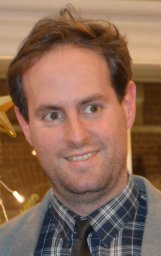 Juan Rojo合作论文数Dipartimento di Fisica;Universita di Milano;Sezione di Milano;Sezione di Milano, Universita di Milano3G. Rodrigo合作论文数2S. Diglio合作论文数2Leonardo Bonino合作论文数2E. Laenen合作论文数2M. Bigi合作论文数2
 Guilherme Milhano合作论文数2Gian Michele Innocenti合作论文数2nicolas houdeau合作论文数2




