We demonstrate the feasibility of digital subcarrier multiplexing (DSCM) coherent pluggables in mobile fronthaul Point-to-Point (P2P) and Point-to-Multipoint (P2MP) systems showing interoperation between different vendors' equipment in an open architecture.
This paper describes some challenges that an operator must face when setting up the environment to evaluate end-to-end 5G mobile networks, with a specific focus on the RAN segment implemented by disaggregated Open RAN solutions.
In this paper we propose a centralized SDN platform devised to control indoor femto-cells for supporting multiple network-wide optimizations and applications. In particular, we focus on an example localization application in order to enlighten the main functionalities and potentialities of the approach. First, we demonstrate that the platform can be exploited for reconfiguring some operational procedures, based on standard signalling mechanisms, at the programmable femto-cells; these procedures enable customized logics for collecting measurements reports from mobile terminals. Second, assuming that high-density devices such as smart objects are disseminated in the controlled indoor space, we experimentally validate the measurement collection mechanism and the possibility to build indoor radio-maps. Finally, we propose a comparison between a k-nearest neighbors classifier and a trained neural network for supporting fingerprint-based localization. Experimental tests show that the approach can lead to accurate positioning results if the fingerprint maps are updated at regular time intervals (able to capture the dynamic variations of the environment).
This paper presents a framework to activate and deactivate micronodes in a heterogeneous multicell LTE network, based on load and energy efficiency consideration. The framework exploits historical data (i.e., per-macro-cell load curves) to select a set of candidate switch-on/switch-off instants of microcells, assuming a limited number of state changes is allowed in a day. The switching instants are instead determined online, by taking into account the actual traffic as well as the load curves. Moreover, intercell interference is fully accounted for. Our simulations show that this framework allows a multicell network to sustain peak-hour load when necessary and to reconfigure to a minimum coverage baseline whenever feasible, thus saving power (up to 25% in our scenarios). Moreover, the framework is robust, meaning that deviations of the actual traffic with respect to the prediction offered by the load curves can easily be handled.
Almost blank subframes (ABSs) have been defined in LTE as a means to coordinate transmissions in heterogeneous networks (HetNets), composed of macro and micro eNodeBs: the macro issues ABS periods, and refrains from transmitting during ABSs, thus creating interference-free subframes for the micros. Micros report their capacity demands to the macro via the X2 interface, and the latter provisions th...
This paper describes the software architecture and the implementation of a fully operational testbed that demonstrates the benefits of flexible, dynamic resource allocation with virtualized LTE-A nodes. The testbed embodies and specializes the general software architecture devised within the Flex5Gware EU project, and focuses on two intelligent programs: the first one is a Global Scheduler, that coordinates radio resource allocation among interfering nodes; the second one is a Global Power Manager, which switches on/off nodes based on their expected and measured load over a period of minutes. The software framework is written using open-source software, and includes fast, scalable optimization algorithms at both components. Moreover, it supports virtualized BaseBand Units, implemented using OpenAir-Interface, that can run on physical and virtual machines. We present the results obtained via on-field measurements, that demonstrate the feasibility and benefits of our approach.
Using Coordinated Scheduling (CS), eNodeBs in a cellular network dynamically agree on which Resource Blocks (not) to use, so as to reduce the interference, especially for cell-edge users. This paper describes a software framework that allows dynamic CS to occur among a relatively large number of nodes, as part of a more general framework of network management devised within the Flex5Gware project. The benefits of dynamic CS, in terms of spectrum efficiency and resource saving, are illustrated by means of simulation and with live measurements on a prototype implementation using virtualized eNodeBs.
Network-controlled device-to-device (D2D) communication allows cellular users to communicate directly, i.e., without passing through the eNodeB, while the latter retains control over resource allocation. This allows the same time–frequency resources to be allocated to spatially separated D2D flows simultaneously, thus increasing the cell throughput. This paper presents a framework for: (1) selecting which communications should use the D2D mode, and when, and (2) allocating resources to D2D and non-D2D users, exploiting reuse for the former. We show that the two problems, although apparently similar, should be kept separate and solved at different timescales in order to avoid problems, such as excessive packet loss. We model both as optimization problems, and propose a heuristic solution to the second, which must be solved at millisecond timescales. Simulation results show that our framework is practically viable, it avoids the problem of packet losses, increases throughput and reduces delays.
—The advent of a new generation of wireless cellular communication networks (5G) is currently being discussed both in research and standardization, while 4G is continuously evolving. Within the overall 5GPPP framework, FANTASTIC-5G is the project dealing with the design of the multi-service air interface for below 6 GHz. Ultimate target of the project is to allow the system to adapt to any means arising from diverse service requirements and device capabilities, various deployment and environment settings and mobility levels. Additionally, the ambition of the project is to have an impact to standardization. Therefore, we focus on technologies being relevant for standardization instead of proprietary elements. This paper provides some insights on the project itself and on the concepts being worked on.
In LTE-Advanced, the same spectrum can be re-used in neighboring cells, hence coordinated scheduling is employed to improve the overall network performance (cell throughput, fairness, and energy efficiency) by reducing inter-cell interference. In this paper, we advocate that large-scale coordination can be obtained through a layered solution: a cluster of few (i.e., three) cells is coordinated at the first level, and clusters of coordinated cells are then coordinated at a larger scale (e.g., tens of cells). We model both small-scale coordination and large-scale coordination as optimization problems, show that solving them at optimality is prohibitive, and propose two efficient heuristics that achieve good results, and yet are simple enough to be run at every transmission time interval. Detailed packet-level simulations show that our layered approach outperforms the existing ones, both static and dynamic.
Direct (or D2D) communications allow two UEs to communicate without passing through the eNodeB. However, the two UEs may still need to relay their communication through the eNB from time to time, hence should be able to switch from the direct to the re-layed mode seamlessly, without this affecting the QoS. In this paper we show that in conventional systems a mode switching may cause relevant losses, and propose two architectures to miti-gate or solve this problem. Our proposals do not require extra signaling or additional functionalities to be added to the network, hence are scalable and inexpensive. We assess their effectiveness through detailed system-level simulations.
5th generation mobile networks will have to cope with a high degree of heterogeneity in terms of services, mobility, number of devices and so on. Thus, diverse and often contradicting key performance indicators need to be supported, but having multiple radio access technologies for multi-service support below 6GHz will be too costly. FANTASTIC-5G will develop a new multi-service air interface through a modular design. To allow the system to adapt to the anticipated heterogeneity, some properties need to be pursued, like simplicity, flexibility, scalability, versatility, efficiency and future proofness. Based on these properties, a selected set of use cases and link and network design will be presented. The paper will also comprise validation and system level simulations through some indicative results and will conclude with the overall impact to 5G standardisation. Copyright (c) 2016 John Wiley & Sons, Ltd.
In an LTE-Advanced network, network-controlled Device-to-Device (D2D) communications can be combined in a multihop fashion to distribute broadcasts over user-defined (and possibly large) areas, with small latencies and occupying few resources. Such a service may be exploited for several purposes, (e.g. Internet of Things, Vehicular communications). Engineering a multihop D2D-based broadcast service requires working at both the application level on the User Equipment (UE) and at the resource-allocation level within the eNodeBs. This paper describes the necessary modifications at both the UE and the eNodeB, what the main issues are, and how to solve them efficiently. We evaluate the performance of the above service using system-level simulations, and demonstrate its advantages over standard broadcasting techniques.
 Dario Sabella合作论文数Telecom Italia S.p.A.27
 Giovanni Stea合作论文数Dipartimento di Ingegneria della Informazione16
 bruno melis合作论文数12
 Roberto Fantini合作论文数10
 Giovanni Nardini合作论文数9
 Antonio Virdis合作论文数Dipartimento di Ingegneria dell'Informazione, University of Pisa;c;Dipartimento di Ingegneria dell'Informazione, University of Pisa8Mikael Sternad合作论文数4f lenkeit合作论文数4k ratajczak合作论文数4ivano salvatore collotta合作论文数4
 Jose F. Monserrat合作论文数4
 Keeth Jayasinghe合作论文数Nokia Networks, Finland4
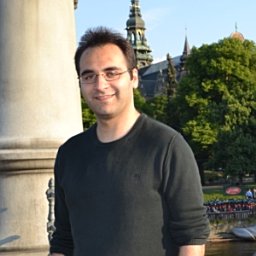 Hadi G. Ghauch合作论文数Sch. of Electr. Eng. & the ACCESS Linnaeus Center, KTH;c;Sch. of Electr. Eng. & the ACCESS Linnaeus Center, KTH4Paweł Sroka合作论文数4
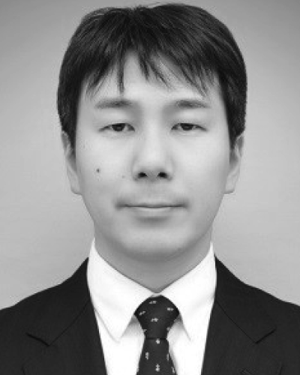 Satoshi Suyama合作论文数4
 Nandana Rajatheva合作论文数Faculty of Information Technology and Electrical Engineering, University of Oulu;Centre for Wireless ommunications, University of Oulu;6G Flagship4
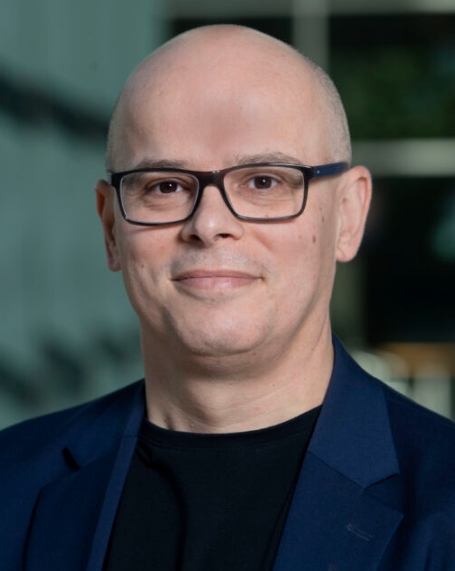 Petar Popovski合作论文数Department of Electronic Systems, The Technical Faculty of IT and Design, Aalborg University4
 Raphaël Visoz合作论文数Telecom Research and Development;Department of Telecommunications;Department of Telecommunications, Telecom Research and Development4
 Martin Kurras合作论文数4
 Ahmed Saadani合作论文数4
 Carsten Bockelmann合作论文数Department of Communications Engineering;University of Bremen;Department of Communications Engineering, University of Bremen4Daniele Migliorini合作论文数University of Pisa4
 Tilak Rajesh Lakshmana合作论文数4
 Anass Benjebbour合作论文数DOCOMO INC, NTT4
 Mikael Skoglund合作论文数Division of Information Science and Engineering, School of Electrical Engineering and Computer Science, KTH Royal Institute of Technology4
 Wolfgang Zirwas合作论文数Siemens AG4
 Mats Bengtsson合作论文数Division of Information Science and Engineering, KTH Royal Institute of Technology4
 Krzysztof Bakowski合作论文数4
 Danish Aziz合作论文数Bell Labs, Alcatel-Lucent4
 Matteo Maria Andreozzi合作论文数University of Pisa4
 Hajer Khanfir合作论文数4
 Tommy Svensson合作论文数Chalmers University of Technology4
 Paolo Baracca合作论文数University of Padua4
 Nikola Vucic合作论文数Lab for Mobile Communications4richard abrahamsson合作论文数3daniele franceschini合作论文数3Tomoaki Ohtsuki合作论文数3gian michele dellaera合作论文数3
 Jakob Hoydis合作论文数NVIDIA Corporation3
 Gabor Fodor合作论文数KTH Royal Institute of Technology;Ericsson Research3
 Abdulaziz Mohamad合作论文数3
 Phan-Huy Dinh-Thuy合作论文数Orange3
 Agostino Virdis合作论文数Department of Clinical and Experimental Medicine, Università di Pisa3Tero Ihalainen合作论文数Varjo3Oussama Souihli合作论文数3
 Federico Boccardi合作论文数Amazon Web Services;University of Bristol3
 Antti Tolli合作论文数3
 Yutao Sui合作论文数2
 Gian Michele Dell'Aera合作论文数Telecom Italia, Turin, Italy2




