Before playing, gamers must wait for the game to load. While the effects of waiting on user quality of experience is well-studied for some domains, the effects of wait times on game players is not known, nor is the impact of computer system components, such as the processor or graphics card, on game loading times. We present results from a user study that evaluates the impact of game loading time on quality of experience using a custom tool that simulates game loading and collects player ratings. Analysis of the results shows game loading time has a pronounced effect on player quality of experience, but differs based on the individual game time and game load content. Results from our subsequent measurement experiment show the potential to reduce game load times through hardware upgrades - type of processor and graphics card have significant effects on game load times, but type of storage device less so.
Computer games have evolved alongside technologies such as personal computers, touchscreens, and virtual reality (VR). The devices have different interaction modes with distinct affordances, including direct physical control with tablets and immersive experiences in VR. Moreover, games are now easily accessible across devices due to cloud-based streaming. Despite this benefit, the challenge of delay persists and continues to affect both performance and quality of experience in games. The negative impact of delay is well-documented, but less is known about how its effect may interplay with a device’s interaction mode. This study applies a cross-platform game with controlled levels of delay, where players use different interaction modes to select moving targets. The findings highlight how the detrimental effect of delay on player performance degradation varies across devices (worst on a PC compared to VR and a tablet, and best on the tablet) even while the interaction mode mediates the effects of delay (quality of experience is fairly stable across all conditions and devices, with VR the most immersive).
QUIC is increasingly being deployed on the Internet as an alternative to TCP. However, QUIC over satellite links faces particular challenges as high and variable round-trip times (RTTs) make it difficult to determine and then reach link capacity. Standard slow start algorithms to detect link capacity can perform poorly over satellite links, often exiting slow start too early and limiting throughput or exiting too late and causing unnecessary packet loss. The Slow start Exit At Right CHokepoint (SEARCH) algorithm aims to exit slow start after reaching link capacity but before incurring packet loss by tracking delivery rates and exiting when rates have not increased by the expected amount. SEARCH has shown benefits over traditional slow start for TCP connections but has yet to be implemented and evaluated in QUIC. This paper presents the design and implementation of SEARCH in an open-source QUIC library, with the code publicly available as a contribution. Evaluation of SEARCH over a geostationary satellite link show SEARCH successfully exits slow start before loss in the majority of cases, Improving goodput compared to the baseline.
The initial TCP slow start phase seeks to ramp up data transmission rates quickly to meet available capacity but also to exit the slow start phase before causing undue congestion. Unfortunately, the typical default TCP implementation often exits slow start too early, before capacity has been reached, causing underutilization, particularly detrimental to networks with large capacities and high delays. This study introduces a novel enhancement to TCP slow start - Slow start Exit At Right CHokepoint (SEARCH) - where the link capacity is inferred at the server based on bytes delivered compared to the expected bytes delivered, smoothed to account for link latency variation and normalized to accommodate link capacities. Empirical evaluation over geosynchronous satellite links, low-orbit satellite links, and 4G LTE links shows our approach is a substantial improvement over default TCP implementations by not exiting slow start too early, but better than traditional TCP, too, by exiting slow start before encountering packet loss.
Computer games are often rendered with inconsistent frame timing (frame jitter), particularly in cloud-based game streaming where frames traverse network bottlenecks before being rendered. While previous studies have helped understand the Quality of Experience (QoE) with frame jitter, derived models have tended to be limited in their prediction ability for conditions not yet tested. This paper combines results from four different user studies that assess QoE based on frame jitter, the studies differing in games, game systems, and methods of induced frame time variation. Analysis of the results shows the degree to which frame jitter degrades QoE, and that playout interruption sizes matter while interrupt frequencies do not. The rich user study-based data set provides the basis for models for predicting game player QoE with frame jitter - models which should be predictive for both cloud-based game streaming and traditional games, and for a wide range of player actions and game genres.
Many young adults do not exercise enough, choosing instead to spend time on electronic media (e.g., smartphone, Internet). Exergames, which gamify physical activity, have been shown to be effective at increasing physical activity in an enjoyable way. For exergames to remain effective, sustained user engagement is key. However, sustaining long-term engagement in games (including exergames) is a challenging research problem – 95% of all new game players stop playing within 3 months, and 85% of new players stop after just one day. We posit that if detected early, waning player exergame enjoyment can be countered by recommending new, more enjoyable games before the player quits playing. In this paper, we investigate machine learning to predict user enjoyment of the Just Dance exergame by analyzing data gathered from the player’s smartphone. Specifically, "ground truth" scores for the players’ enjoyment obtained from the Immersive Experience Questionnaire (IEQ) E-scores are inferred from user behaviors such as increased excitement and gameplay frequency. These, in turn, are predicted by data gathered by the phone’s sensors – accelerometer, gyroscope and game features. Analysis of data from a user study shows the Naive Bayes classification algorithm achieves the best results, achieving 75% accuracy for binary classification (enjoying vs. not enjoying the exergame) of enjoyment E-scores. The most predictive features were the energy in the 0.5 to 3 GHz range, windowed energy in the 0.5 to 3 Hz range and radio spectral peak using a Discrete Cosine Transform (DCT). Our results are preliminary but encouraging and we plan to improve on our results by collecting more data and utilizing state-of-the-art neural networks approaches.
Technological advancement has decreased network latencies while simultaneously increasing local latencies. This may impact exergames—video games that incorporate exercise—the most since exergames tend to have complicated platforms to capture player actions. This article presents a study using a custom desktop-based exergame that controls for local latency and measures player performance and quality of experience (QoE). Analysis of the results from a 37-person user study shows that while player performance and QoE degrade with latency, exergame actions are fairly tolerant of even hundreds of milliseconds of latency. Our data point toward a crucial tipping point at latency values of approximately 400 ms.
Computer games, one of the most popular forms of entertainment in the world, are increasingly online multiplayer, connecting geographically dispersed players in the same virtual world over a network. Network latency between players and the server can decrease responsiveness and increase inconsistency across players, degrading player performance and quality of experience. Latency compensation techniques are software-based solutions that seek to ameliorate the negative effects of network latency by manipulating player input and/or game states in response to network delays. We search, find, and survey more than 80 papers on latency compensation, organizing their latency compensation techniques into a novel taxonomy. Our hierarchical taxonomy has 11 base technique types organized into four main groups. Illustrative examples of each technique are provided, as well as demonstrated use of the techniques in commercial games.
While there have been network studies of traditional network games and streaming video, there is less work measuring cloud-based game streaming traffic and none on Google's Stadia. This paper presents experiments that provide a first look - measuring Stadia game traffic for several games, analyzing the bitrates, packet sizes and inter-packet times, and comparing the results to other applications. Results indicate Stadia, unlike traditional network game systems, rapidly sends large packets downstream and small packets upstream, similar to but still significantly different than video and at much higher rates than previous cloud-based game systems or video.
TCP slow start is designed to begin at a conservative bitrate, but quickly ramp up to the available bandwidth. To avoid overshooting, TCP slow start has a HyStart mode (on by default in Linux) that may exit slow start before packets are lost. Unfortunately, HyStart may also exit slow start prematurely, making it take longer for TCP to reach intended bitrates. This is especially problematic for links with high bandwidth and high la- tency, such as an satellite Internet connection. This paper eval-uates TCP HyStart performance over a commercial satellite Internet link, first evaluating how sender and receiver buffer size settings might limit throughput and subsequently assess- ing TCP with HyStart on versus TCP with HyStart off for both isolated and simultaneous flows. Analysis shows HyStart on (the default) significantly degrades TCP start-up performance, with average throughputs about half that of HyStart off during starting performance.
Despite the dominance of YouTube streaming traffic, there have been few studies focusing on characterizing YouTube videos over time. Given the sheer volume of YouTube videos, we created a custom crawler which took snapshots of popular YouTube channels and ran the crawler daily for the past 3 years. This provides YouTube video trends from 2018-2020 for over 160k videos, considering media type, duration, bit rate, resolution, codec, encoding format, and popularity. Analysis of the data shows YouTube videos have increased frame rates, resolutions and durations over this time, with the biggest clips consuming over 200 Mb/s and being over 3 hours long, accompanied by corresponding changes in encoding rates and codecs. Our analysis and the resulting dataset we make public should be beneficial for traffic shaping or CDN deployment strategies.
All real-time computer games, particularly networked computer games, have a delay from when a player starts an action (e.g., clicking the mouse) until the game renders the result (e.g., firing a projectile). This delay can degrade both player performance (e.g., reduced game score) and quality of experience (e.g., the game is less fun). While previous work has studied the effects of delay on commercial games and individual game actions, a more detailed understanding is needed of the effects of delay on moving target selection with realistic target motion, a common scenario in many games. This paper presents an in-depth study of the effects of delay on the fundamental game action of selecting a moving target with a mouse while varying two parameters for the target motion – turn frequency and turn angle. We design and implement a custom game where players select moving targets using a mouse, while the game controls both the target motion and input delay. Analysis of data gathered in a 56-person user study shows both target selection time and accuracy degrade with delay. However, both selection time and accuracy increase with the frequency and angle of changes in the target’s movement, because turning slows targets down even while making them less predictable. We set these results in the context of other studies of delay and target selection by comparing our findings to those in seven other previously published papers that investigated the effects of delay on target selection.
Streaming video clients use playout buffers to smooth out variations in network bitrates, especially important for mobile devices. The playout buffer sizes trade-off: the time delay before a video starts playing with interrupts when a video stops playing in the middle. The best buffer size a client should choose for the video and network conditions depends upon the relative impacts of buffering delays and interrupts on the user quality of experience (QoE). We design user study experiments that isolate buffering delays and interrupts, allowing for direct, quantitative comparisons of the impact on QoE for buffering delays versus interrupts. In our user study, over thirty users watched and rated 17 videos with a broad range of content, encoded with varying amounts of buffering delays and interrupts. Analysis of the data reveals interrupts more costly to QoE than the corresponding amount of buffering by a factor of about 2 to 1. The data is used to construct an analytic model of QoE which incorporates the impacts of buffering delays and interrupts, a model that can be a tool for assessing and improving how streaming video clients pick buffer sizes to maximize user QoE.
All real-time computer games, particularly networked computer games, have a delay from when a player starts an action (e.g., clicking the mouse) until the game renders the result (e.g., firing a projectile). This delay can degrade both player performance (e.g., lower game score) and quality of experience (e.g., less fun). While previous work has studied the effects of delay on commercial games and individual game actions, a more detailed understanding is needed of the effects of delay on moving target selection with realistic target motion. This paper presents an in-depth study of the effects of delay on the fundamental game action of selecting a moving target with a mouse with parameters for the target motion - turn frequency and turn angle. We design and implement a custom game where players select moving targets using a mouse, while the game controls both the target motion and input delay. Analysis of data gathered in a 56-person user study shows both user time and accuracy in selecting the moving target degrade with delay. Target turn frequency and turn angle can make a target easier to select (i.e., selection accuracy increases), but take longer to do so (i.e., selection time increases), because turning slows targets down while making them less predictable.
Delays are ever-present in interactive tasks, such as controlling a cursor with a mouse. Unfortunately, perceptible delays are likely to affect both quality of experience and task performance, and even imperceptible delays can potentially be harmful to performance. This paper presents a controlled behavioural experiment that explores the impact of delay on interactions with motor inputs and visual outputs. Because system and network delays interact and overlap, we address total interface delay, focusing on the effect rather than the cause. In the experiment, 51 participants played a simple game of chase-and -catch, using the mouse to intercept a bouncing target. The game includes three levels of difficulty, defined by the speed of the target, with controlled interface delay added between the mouse and the corresponding cursor. The delay values ranged from the system's minimum processing time of 40 ms up to a total of 440 ms. We evaluated participants' game performance, as well as perceived game responsiveness. In line with predictions, our analyses show a negative relation between delay and quality of experience, along with deteriorating performance. In contrast, performance does not co-vary with self-reported game skill. Moreover, an individual's experience with other time-dependent activities has no significant effect on neither performance nor experience, with one exception - musical practice appears to benefit performance for this type of interaction.
The increase in radio link capacities has brought significant growth in number and variety of mobile applications. To support these applications, network providers and researchers need an up-to- date, thorough understanding of the composition of 4G LTE traffic. In this paper, we conduct a deep study over a tier-1 U.S. wireless carrier to measure and analyze 4G LTE traffic. We collect data on 2.5+ million flows from 5000+ user devices, analyzing cross-layer characteristics for IPv4/6, HTTP/S and newly emerging Quick UDP Internet Connection (QUIC) traffic, with analysis extracted for the most prolific domains. To the best of our knowledge, our QUIC traffic analysis is the first published from a carrier's perspective. Results show data from multimedia sources (audio, video and images) dominate link capacities, with video, in particular, being the "king of the hill". Detailed analysis suggests methods for identifying encrypted video traffic, potentially leading to improved services that can provide network treatments for video.
The dominant Internet protocol, TCP, does not work as well as it could over the wide-variety of networks facing today's applications. Bottleneck Bandwidth and Round-trip time (BBR) congestion control has been proposed as an improvement, with the promise of higher throughputs and lower delays as compared to other TCP congestion control algorithms. While BBR has been implemented for Linux, unfortunately, there is not yet an implementation for ns-3, a powerful, flexible and popular simulator used for network research. This paper presents BBR', an implementation of BBR for ns-3. BBR' extends ns-3 in a fashion similar to other TCP congestion control algorithms, re-using existing interconnection mechanisms and making BBR' extensible. Preliminary validation shows BBR' behaves and performs similarly to BBR, and preliminary performance evaluation shows BBR' has similar throughputs but significantly lower round-trip times than CUBIC in some wired and 4G LTE wireless scenarios.
 Robert Kinicki合作论文数Worcester Polytechnic Institute;Division of Academic Affairs 40
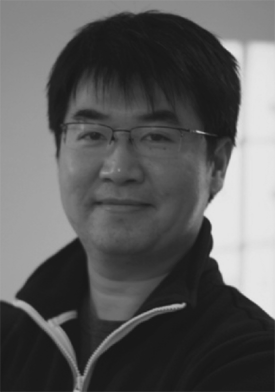 Mingzhe Li合作论文数18Jae Chung合作论文数14
 Grenville Armitage合作论文数Netflix12Feng Li合作论文数Viasat Inc.11
 Philip Branch合作论文数Centre for Advanced Internet Architectures;Swinburne University of Technology Melbourne;Centre for Advanced Internet Architectures, Swinburne University of Technology Melbourne11Huahui Wu合作论文数10Robert E. Kinicki合作论文数Worcester Polytechnic Institute;Division of Academic Affairs 6
 Kajal T. Claypool合作论文数Department of Computer Science;Worcester Polytechnic Institute;Department of Computer Science, Worcester Polytechnic Institute6
 David Finkel合作论文数Worcester Polytechnic Institute (WPI)6
 Emmanuel O. Agu合作论文数Department of Computer Science, Worcester Polytechnic Institute6
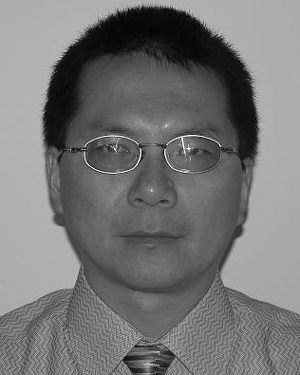 Yubing Wang合作论文数6
 Celia E Wills合作论文数Computer Science Department
Worcester Polytechnic Institute5James Nichols合作论文数4Jae Won Chung合作论文数4
Celia E Wills合作论文数Computer Science Department
Worcester Polytechnic Institute5James Nichols合作论文数4Jae Won Chung合作论文数4 Ragnhild Eg合作论文数4Phong Le合作论文数3Xiaokun Xu合作论文数3Benjamin Peters合作论文数3
 Zhe Zhou合作论文数Peking University, Peking University3
 Carl Gutwin合作论文数Department of Computer Science, University of Saskatchewan3
 Choong-Soo Lee合作论文数Worcester Polytechnic Institute3
 Kjetil Raaen合作论文数University of Oslo3
 Andy Cockburn合作论文数Department of Computer Science and Software Engineering, Faculty of Engineering, University of Canterbury;Human Interface Technology Lab, University of Canterbury3Tom Paolillo合作论文数2Michael Solano合作论文数2Alexander Grant合作论文数2Artian Kica合作论文数2dean odonnell合作论文数2Kenneth French合作论文数2
 Shengmei Liu合作论文数Google2patrick quinn合作论文数2Zeljkovic, M.合作论文数2Kaplan, M.合作论文数2Brett Levasseur合作论文数2Rui Lu合作论文数2
 David C. Brown合作论文数Advanced Photonic Sciences2Vishal Phirke合作论文数2
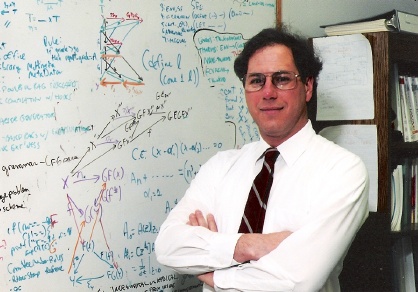 Michael A. Gennert合作论文数Groups2Thangam Seenivasan合作论文数2
 Mikhail Mikhailov合作论文数1
 Mathias Maes合作论文数1Federico Galbiati合作论文数1Andrew Roskuski合作论文数1bob kinicki合作论文数1
 Aleksandra Zheleva合作论文数Imec Mict UGent1Aritra Kundu合作论文数Worcester Polytechnic Institute Worcester1Pinhan Zhao合作论文数1Atsuo Kuwahara合作论文数Intel Corp. (United States)1




