Addressing global challenges and advancing knowledge in the Earth and space sciences requires an equitable, diverse, and inclusive scholarly community where researchers must be freely able to conduct, collaborate on, share, review, and discuss their research on important economic and societal topics such as climate change. The current Executive Orders in the United States focus on censoring research and researchers by banning specific words, removing access to data sets, or by restricting what type of research can be funded or published, therefore compromising the knowledge that researchers are able to produce. As Editors‐in‐Chief of AGU publications we stand by our mission to support the publication of evidence‐based, rigorously vetted research without political pressure. Collectively, our peer‐reviewed journals and books provide inclusive publication outlets for the global research community to advance Earth and space sciences and to strengthen the public's trust in scientific evidence.
We are very grateful for the reviews done in 2024 to support the published articles of Perspectives of Earth and Space Sciences. This year we had 40 reviews. As a relatively young journal, Perspectives is still defining its role withing AGU. Perspectives has added several new article formats in order to help support intra‐AGU communication. These new formats included Commentaries, Opinions, News Items, and Memorials, which means additional challenges for reviewers, as the review criteria for these new formats vary from each other. This year also saw an increase in the diversity of styles and authorships of Perspectives Articles, which are the primary format of the journal, but the bulk of these Articles still took a large‐scale big‐picture view of a particular scientific perspective, across the full range of Earth and space sciences. Once again this year, we are very grateful for the wisdom and flexibility shown by our reviewers, and the entire editorial board of Perspectives would like to express our deep appreciation for all the work they have done. Thank you!
AbstractWe are very grateful for the reviews done in 2023 to support the published articles of Perspectives of Earth and Space Sciences. Last year we had 56 reviews and this year it was 49. As a relatively young journal, Perspectives is still defining its role withing AGU. This year Perspectives added several new article formats in order to help support intra‐AGU communication. These new formats included Commentaries, Opinions, News Items, and Memorials, which means additional challenges for reviewers, as the review criteria for these new formats vary from each other. This year also saw an increase in the diversity of styles and authorships of Perspectives Articles, which are the primary format of the journal, but the bulk of these Articles still took a large‐scale big‐picture view of a particular scientific perspective, across the full range of Earth and space sciences. Once again this year, we are very grateful for the wisdom and flexibility shown by our reviewers, and the entire editorial board of Perspectives would like to express our deep appreciation for all the work they have done. Thank you!
AbstractThe journal Perspectives of Earth and Space Scientists has expanded both its aims and its scope to better serve the community of Earth and space scientists and represent its diverse range. Perspectives is now adding several new article formats to better meet the needs of the Earth and space science community. These include memorials, commentaries, debates, opinion pieces, and news updates. The journal remains fully open access with publication costs borne by the American Geophysical Union, but is no longer by‐invitation‐only and welcomes submissions from all segments of the geophysical community to better represent the diversity in nationality, ethnicity, culture, gender, and career stage of Earth and space scientists.
AbstractPerspectives articles pose a unique challenge for reviewers, compared to other AGU journals. Most scientific journals follow a fairly standard format and style, but this is not the case with Perspectives, where articles can take many different forms. Most scientific journals also discourage the incorporation of an author's personality, but for Perspectives it is requested. This means that reviewers have to evaluate Perspectives articles not only on the accuracy and validity of their scientific content but also on the quality of the storytelling involved, with an eye toward their usefulness in both documenting the history of our fields and in inspiring the future scientists of tomorrow. Perspectives is a relatively new and expanding journal. Last year we had 17 reviewers to thank; this year the number is up to 56. We are very grateful for the wisdom and flexibility shown by our reviewers, and the entire editorial board of Perspectives would like to express our deep appreciation for all the work they have done. Thank you!
Broadband seismograms from the EarthScope Transportable Array and Superior Province Rifting EarthScope Experiment (SPREE) deployments are used to map the crust and uppermost mantle structures beneath the failed Midcontinent Rift (MCR) of Minnesota/Wisconsin, USA. The results suggest the existence of a variable zone of mafic underplating that is up to 20 km thick (40-60 deep). We jointly invert receiver functions and Rayleigh wave dispersion curves to quantify the region's crustal and mantle shear-wave velocity structure. Basin sediment thicknesses are mildly asymmetric about the rift axis, with thickest regions immediately beneath the rift. 3-D modeling shows anomalous lower crust and crust-mantle transitions beneath the MCR. Sub-MCR crustal thicknesses are generally >50 km with lower crust Vs of 4.0-4.2 km/s. Away from the MCR, the crust is typically similar to 40 km thick. Strong variations in apparent crustal thickness are found along the MCR, increasing significantly in places. An additional layer of shear velocities intermediate between typical lower crust and upper mantle velocities (4.1-4.6 km/s) exists beneath most of the MCR which is thickest beneath the rift axis and pinches out away from the rift. This structure corroborates previous proposals of the presence of an underplated layer near the Moho. Results cannot distinguish between different mechanisms of emplacement (e.g., mafic interfingering within a subsequently down-dropped lower crust vs. development of a high-density pyroxenitic residuum at the top of the mantle). Also observed are anomalously high (>4.7 km/s) sub-rift shear-wave velocities at similar to 70-90-km depths, suggesting the presence of cold, depleted upper mantle material.
Abstract The Next Generation Science Standards (NGSS), which have now been adopted or adapted by 45 states and Washington, D.C., as their public K‐12 science education standards, are not only revolutionizing the way science is taught but are providing significant opportunities for an increased presence of Earth and space science (ESS) in public high schools in many states across the U.S. The NGSS, which grew out of the National Research Council’s Framework for K‐12 Science Education, are the latest in a > 150‐year history of attempts to shape the science education standards within U.S. states. NGSS‐designed curricula, which focus on the practices of science and allow students to explore science through following storylines developed around student‐relevant phenomena, are engaging and effective, and are reshaping K‐12 science courses at a surprisingly rapid pace. In the process, large numbers of U.S. high schools that have never included substantial ESS are now doing so for the first time, providing a significant opportunity to make substantial improvements in general U.S. geoscience literacy. There is still far to go and a successful integration of ESS into the K‐12 education across all states will require substantial service work on the part of geoscientists.
The AGU journal Perspectives of Earth and Space Scientists is changing its aims and scope, removing its by-invitation requirement and adding several new community-serving article formats.
Key Points The editors thank the 2021 reviewers
 G. I. Aleqabi合作论文数20
 Douglas Wiens合作论文数Department of Earth and Planetary Sciences, Washington University15
 Andrew Nyblade合作论文数School of Geosciences, The University of the Witwatersrand;Department of Geosciences, College of Earth and Mineral Sciences, Pennsylvania State University10
 Seth Stein合作论文数Department of Earth and Planetary Sciences, Weinberg College of Arts & Sciences, Northwestern University;Institute for Policy Research, Northwestern University9
 Suzan van der Lee合作论文数Department of Earth and Planetary Sciences, Weinberg College of Arts and Sciences, Northwestern University8
 Martin J. Pratt合作论文数Department of Earth and Planetary Sciences, Washington University in St. Louis7
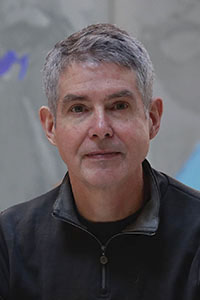 Justin Revenaugh合作论文数Department of Earth and Environmental Sciences, N.H. Winchell School of Earth & Environmental Sciences, College of Science and Engineering, University of Minnesota7
 Andrew Frederiksen合作论文数Department of Geological Sciences, University of Manitoba7F.A Darbyshire合作论文数Ctr Rech GEOTOP, Univ Quebec7G. Rambolamanana合作论文数6P. Shore合作论文数6
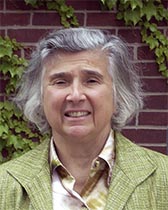 Donna Jurdy合作论文数Weinberg College of Arts and Sciences, Northwestern University6
 Eileen Hofmann合作论文数Center Coastal Physical Oceanography, Old Dominion University6T. A. Bollmann合作论文数5
 Nancy Grimm合作论文数School of Life Sciences, Global Change Biology Faculty, Arizona State University;Center for Biodiversity Outcomes, Arizona State University5Patrick J. Shore合作论文数5
 Heather M Macdonald合作论文数4g g euler合作论文数4
 Emily Wolin合作论文数US Geol Survey, Albuquerque Seismol Lab4G. D. Mulibo合作论文数3
 Hafidh Ghalib合作论文数3
 David A. Mcconnell合作论文数3
 Georg Rumpker合作论文数Inst Geosci, Goethe Univ Frankfurt3
 Karen M. Fischer合作论文数Department of Earth, Environmental and Planetary Sciences, Brown University3Rachel J. Beane合作论文数Department of Geology, Williams College3
 Cathy Manduca合作论文数Science Education Resource Center, Carleton College3Ellen M. Syracuse合作论文数Department of Geoscience, University of Wisconsin at Madison3Ellen R. Iverson合作论文数3
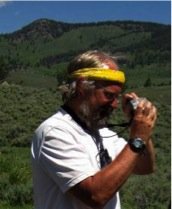 David W. Mogk合作论文数Department of Earth Science, Montana State University3
 Barbara Tewksbury合作论文数3
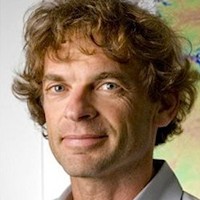 Eric Rignot合作论文数Department of Earth System Science, School of Physical Sciences, University of California, Irvine3
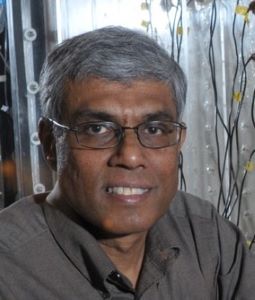 Tissa H. Illangasekare合作论文数Center for Experimental Study of Subsurface Environmental Processes, Colorado School of Mines3F. Tugume合作论文数2Renyi Zhang合作论文数2
 Elisa J. Rindraharisaona合作论文数Deutsch GeoForschungsZentrum GFZ2Jennifer Dreiling合作论文数Deutsch GeoForschungsZentrum GFZ2Cristo Ramirez合作论文数2
 Rakotondraibe Tsiriandrimanana合作论文数2Scott French合作论文数Berkeley Seismological Laboratory2
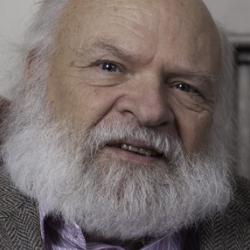 Keith Priestley合作论文数Department of Earth Sciences, University of Cambridge2
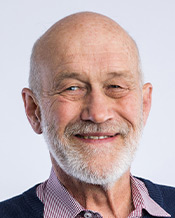 Raymond Durrheim合作论文数School of Geosciences, Faculty of Science, University of the Witwatersrand2Weisen Shen合作论文数Department of Physics, University of Colorado at Boulder2
 Brian Bagley合作论文数2
 Sean Fox合作论文数Qualcomm2
 Antje Boetius合作论文数Max Planck Institute for Marine Microbiology;Alfred Wegener Institute, Helmholtz Centre for Polar and Marine Research;MARUM Cluster of Excellence, University of Bremen1Tsitsi Madziwa-Nussinov合作论文数1Marsella Kachingwe合作论文数1Karin Kirk合作论文数1Monica Bruckner合作论文数1




