The sociolinguistic concept of ‘community’ has undergone profound changes since it was first introduced in the middle of the twentieth century. Originally conceived to describe groups of individuals and families with shared traditions and a long history of living and working closely together (think of a village or an urban neighbourhood), the concept has now expanded to include a variety of ways in which people can connect with each other: attachments which are often longdistance, transitory, mobile, multiple. As we shall see, developments in sociolinguistic ideas about community to some extent parallel perceived changes in the real world, given the quickening pace of globalisation, the shake-up of traditional structures and sources of authority, the greater possibility for mobility, and people’s increasing ability to use digital communications to establish networks beyond their immediate vicinity. If we look at how …
In Aramis, or The Love of Technology, Bruno Latour renders clear much of what has been traced throughout the work. Latour continues, describing how the iterability of signatures lends permanence to the players, but "That will never be enough, for signed documents can turn back into scraps of paper". Similarly while patents appear to stabilise the identity of the technology itself, an identity that is now "a plan protected by law", they say nothing of what the technology is to become, suggesting the potential transformations through its use and re-use, and the "innovation" and collaboration of its users. A signature on a contract, an endorsement, an agreement stabilizes the relative size of the actors by lending to the provisional definition of alliances the assistance of the law, a law whose weight is enormous because it is entirely formal and because it applies equally to everyone.
Research Article| September 01 1993 The Last European: Erich Auerbach as Precursor in the History of Cultural Criticism Michael Holquist Michael Holquist Search for other works by this author on: This Site Google Modern Language Quarterly (1993) 54 (3): 371–391. https://doi.org/10.1215/00267929-54-3-371 Cite Icon Cite Share Icon Share Twitter Permissions Search Site Citation Michael Holquist; The Last European: Erich Auerbach as Precursor in the History of Cultural Criticism. Modern Language Quarterly 1 September 1993; 54 (3): 371–391. doi: https://doi.org/10.1215/00267929-54-3-371 Download citation file: Zotero Reference Manager EasyBib Bookends Mendeley Papers EndNote RefWorks BibTex toolbar search Search Dropdown Menu toolbar search search input Search input auto suggest filter your search Books & JournalsAll JournalsModern Language Quarterly Search Advanced Search The text of this article is only available as a PDF. Copyright © 1993 by Duke University Press1993 Article PDF first page preview Close Modal You do not currently have access to this content.
 Y Benkler合作论文数2Perin Emerson C合作论文数2J Androutsopoulos合作论文数1J Braithwaite合作论文数1H Zohn合作论文数1R Krauss合作论文数1J Derrida合作论文数1A Barry合作论文数1Ya Bois合作论文数1U Beck合作论文数1P Muysken合作论文数1a goumi合作论文数1M Bakhtin合作论文数1R Barthes合作论文数1E Chiapello合作论文数1A Acquisti合作论文数1H Bergson合作论文数1P. Greenwood合作论文数1R. Nice合作论文数1G Burchell合作论文数1L. Bently合作论文数1F Guattari合作论文数1Re Evenson合作论文数1MF Moens合作论文数1M. Ince合作论文数1H Foster合作论文数1J Clifford合作论文数1W Benjamin合作论文数1M Foucault合作论文数1P Bourdieu合作论文数1M Castells合作论文数1Strasak Alexander M合作论文数1
 Jacqueline Boyle合作论文数Monash Centre for Health Research and Implementation, Monash University;School of Public Health and Preventive Medicine, Monash University;Menzies School of Health Research;Jean Hailes for Women's Health1Bailey Clare合作论文数1Cain Bradley合作论文数Division of Biology and Conservation Ecology, Manchester Metropolitan University1
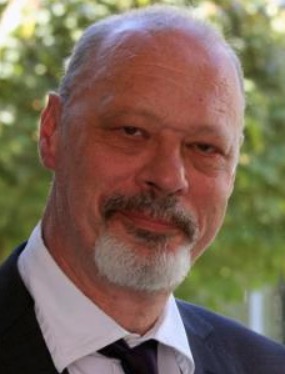 Jan Blommaert合作论文数Babylon Center, Tilburg University1
 James Walkerdine合作论文数Lancaster University1
 Mari Ostendorf合作论文数Department of Electrical & Computer Engineering, University of Washington1Ad Backus合作论文数1
 Adrian Blackledge合作论文数1Olga Volckaert-Legrier合作论文数UMR 6234 CeRCA, University of Poitiers and CNRS1
 Leopoldina Fortunati合作论文数Department of Humanities and Cultural Heritage, University of Udine1V. Santaniello合作论文数1
 Brian Hutchinson合作论文数University of Washington1
 John R. Suler合作论文数Department of Psychology, Rider University1Josie Bernicot合作论文数Laboratoire Langage et Cognition;Université de Poitiers;Laboratoire Langage et Cognition, Université de Poitiers1Lesley Milroy合作论文数1Luc Boltanski合作论文数1Mikhail Bakhtin合作论文数1




