The cubic C15 CaAl2 Laves phase is an important brittle intermetallic precipitate in ternary Mg–Al–Ca structural alloys. Although knowledge of the mechanical properties of the co-existing phases is essential for the design of improved alloys, the fracture toughness of the C15 CaAl2 intermetallic has not yet been studied experimentally due to limitations posed by macroscale testing of defect-free specimens. Here, miniaturised testing techniques like micropillar splitting and microcantilever bending methods are used to experimentally determine the fracture toughness of the CaAl2 Laves phase. It is found that the toughness value of 1 MPa·√m obtained from pillar splitting with a sharp cube corner geometry is largely insensitive to sample heat treatment, the ion beam used during fabrication, micropillar diameter, and surface orientation. From correlative nanoindentation and electron channelling contrast imaging supported by electron backscatter diffraction, fracture is observed to take place mostly on 011 planes. Atomistic fracture simulations on a model C15 NbCr2 Laves phase showed that the preference of 011 cleavage planes over the more energetically favourable 111 planes is due to lattice trapping and kinetics controlling fracture planes in complex crystal structures, which may provide insights into the experimental results for CaAl2. Using rectangular microcantilever bending tests where the notch plane was misoriented to the closest possible 112 cleavage plane by 8° and the closest 001, 011, and 111 planes by > 20°, a toughness of 2 MPa·√m was determined along with the electron microscopy observation of significant deviations of the crack path, demonstrating that preferential crystallographic cleavage planes determine the toughness in this material. Further investigation using pentagonal microcantilevers with precise alignment of the notch with the cleavage planes revealed similar fracture toughness values for different low-index planes. The results presented here are the first detailed experimental study of fracture toughness of the C15 CaAl2 Laves phase and can be understood in terms of crack plane and crack front-dependent fracture toughness.
Micropillar compression was used to investigate whether Ag segregation to an asymmetric & sigma;5[001] grain boundary will lead to measurable strength differences compared to the pure copper bicrystal. Ag segregation was accomplished by deposition and subsequent annealing of an Ag thin-film applied on the surface of the Cu bicrystal. Atom probe tomography analysis indicated Ag segregation at the grain boundary with a peak concentration of 2.3 at.%. While the pristine & sigma;5 grain boundary shows a yield strength of 288 & PLUSMN; 18 MPa when compressing 1 & mu;m diameter pillars along 001, micropillars containing an Ag-segregated & sigma;5 grain boundary demonstrated an increased yield strength of 318 & PLUSMN; 17 MPa. In addition, post-deformation electron microscopy was carried out to examine the active slip systems and slip transmission across Ag-free and Ag-containing bicrystals. The results are compared to reference measurements of the adjacent single crystal grains. The 1 & mu;m pillar diameter promoted deformation governed by dislocation-grain boundary interactions for the bicrystalline pillars. This is the first time that changes in flow stress associated with grain boundary segregation have been quantified locally without interference from other mechanisms such as solid solution strengthening, formation of precipitates or changes in stacking fault energy. The results clearly indicate that purely geometrical models for slip transmission are not sufficient as the local atomic structure and composition influence dislocation transmission through grain boundaries.
The cubic C15 CaAl2 Laves phase is an important intermetallic precipitate in Al and Mg alloys for structural applications. However, although knowledge of the mechanical properties of the coexisting phases is essential for the design of improved alloys, the fracture toughness has not yet been studied experimentally due to the required application of miniaturised mechanical testing methods for such kinds of usually brittle material. Here, a micropillar splitting method is used to investigate the fracture toughness of the CaAl2 Laves phase. It is found that the extracted toughness value of ~1 MPa·√m from pillar splitting with a sharp cube corner geometry is largely insensitive to sample heat treatment, the ion beam used during fabrication, micropillar diameter, and surface orientation. From correlative nanoindentation and electron channelling contrast imaging supported by electron backscatter diffraction, fracture is observed to be promoted mostly on {011} planes. Using microcantilever bending tests where the notch plane was misoriented to the closest potential {112} cleavage plane by ~8°, and the closest {001}, {011} and {111} plane by >20°, a toughness of ~2 MPa·√m was determined along with the electron microscopy observation of significant deviations of the crack path, demonstrating that preferential low-energy cleavage planes determine the toughness in this material. Finally, a novel high-throughput scratch test conducted in situ at elevated temperature showed that a brittle-to-ductile transition between 300-500°C is expected for this phase, allowing for elevated temperature application of next-generation Mg-alloys containing CaAl2 precipitates.
 Gerhard Dehm合作论文数Max-Planck-Institut fur Eisenforschung3
 James Leonard Best (James Best)合作论文数Department of Geology, School of Earth, Society & Environment, College of Liberal Arts & Sciences, University of Illinois Urbana-Champaign3
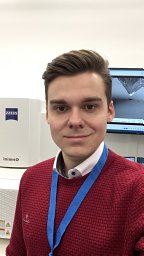 Leon Christiansen合作论文数Max-Planck-Institut für Eisenforschung GmbH2
 Chunhua Tian合作论文数Department Structure and Nano-/Micromechanics of Materials, Max-Planck-Institut für Eisenforschung GmbH2
 Hanna Bishara合作论文数Max Planck Inst Eisenforschung GmbH2
 F. Stein合作论文数Max-Planck-Institut für Eisenforschung GmbH2Lena Langenohl合作论文数1
 T. S. Prithiv合作论文数Max-Planck-Institut für Eisenforschung GmbH1
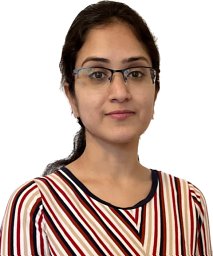 Anwesha Kanjilal合作论文数Department of Materials Engineering, Indian Institute of Science1
 Alireza Ghafarollahi合作论文数Corresponding author.1
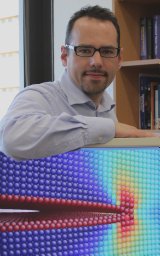 Erik Bitzek合作论文数Institut für Zuverlässigkeit von Bauteilen und Systemen (izbs, Universität Karlsruhe (TH)1




