Code Division Multiple Access (CDMA) is a digital multiple-access technique, whereby each signal has its own unique binary sequence, and all signals share the same spectrum. In the United States, personal communication networks using CDMA, will provide to each user, a separate code, which will change from cell-to-cell. We call this code reuse, just like the frequency reuse employed in the FDMA or TDMA systems. However, there are many more codes, than frequency bands.
Because of the continually increasing demand for mobile communications, it has been suggested that personal communication networks (PCNs) be established in the 1850-1990 MHz range. However, that band of frequencies is currently occupied by various microwave signals transmitted by users ranging from utility companies to state and local agencies. In order to allow both sets of users to occupy these frequencies as well as improve the spectral efficiency of this band, a spread-spectrum overlay is proposed, whereby a code-division multiple-access (CDMA) PCN would share the spectral band with the existing narrowband microwave traffic. The results of several field tests which have been designed to demonstrate the feasibility of an overlay of this type are discussed. >
The field test experiments performed for Millicom Inc., and LOCATE Inc., by SCS Mobilecom Inc. using the SCS developed broadband-CDMA mobile PCN system, are described. The frequency band selected for this field test was between 1850-1990 MHz, a band in which SCS, Millicom, and LOCATE each hold an experimental license. The purpose of these licenses is to study new PCN and to demonstrate the capability of a broadband-CDMA PCN system to share the spectrum with fixed-service point-to-point microwave systems
Field tests were conducted to test whether a broadband code division multiple access (CDMA) network can be overlayed on the 1850-1990-MHz band which will not interfere with existing FSM (fixed site microwave) users of that band and will itself function properly. The test demonstrated that, on the average, even without the use of a notch filter and without voice activity, there will be no significant interference to microwave receivers under EIA specification 10E when 50 users are located in single cells of diameter 1200 ft. The CDMA system functioned with excellent voice quality at mobile power levels of 100 mu W or less, and the microwave signals caused no significant effect on performance. Additionally, the tests obtained data on propagation conditions in the 1850-1990-MHz band in urban, rural, suburban and in-building areas.< >
Multipath propagation in a broadband CDMA environment is described. A propagation model for broadband spread-spectrum signals is presented. Experimental results relating to the sharing of the band by fixed service microwave users and mobile personal communications network (PCN) users are discussed. Field tests indicate that PCN systems can provide high-quality communications when sharing the spectrum with fixed-service microwave systems in suburban and urban areas
The authors describe a scenario in which a direct-sequence spread-spectrum personal communications network is overlaid on top of an existing set of narrowband microwave users. An overlay of this type results in very efficient use of the RF spectrum, and is indicative of what needs to be done to relieve the spectral congestion at radio frequencies
The authors describe how spread spectrum operates and explain why the FCC has allocated several spectral bands for spread spectrum. They examine what is wrong with the spectrum allocations the way they are now. They show who is using and will use spread spectrum and why. In particular, they discuss the use of spread spectrum for mobile cellular communications: the personal communications network; digital stereo; alarms; sports applications; communications in the stock exchange; police radars, radios, and covert communications, and amateur radio.< >
Experimental results achieved during recent meteor-burst channel communications link operations are discussed. Extrapolations are derived to determine diurnal and seasonal communication statistics. Based on a performance metric of error-free packet reception probability, the tradeoff of the transmission data rate is examined. Efficient communications over the channel require adaptive transmission rates. Such an adaptive scheme is presented, along with the results to indicate the advantages obtained.< >
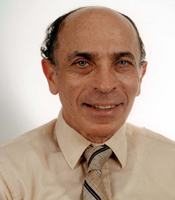 Raymond L. Pickholtz合作论文数Department of Electrical Engineering, The George Washington University, Washington D.C.8
 William Biederman合作论文数New York5
 Laurence B. Milstein合作论文数Department of Electrical and Computer Engineering, Jacobs School of Engineering, University of California, San Diego;Center for Wireless Communications, Jacobs School of Engineering, University of California, San Diego4
 V. Erceg合作论文数3
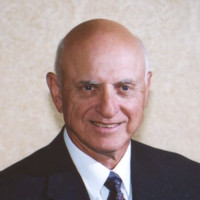 Donald L. Schilling合作论文数Polytechnic Institute of Brooklyn/City College of New York3Schilling, D.L.合作论文数3douglas fishman合作论文数2w biederman合作论文数2Dl Schilling合作论文数2Pavelchek, A.合作论文数1Raymond L Pickholtz合作论文数1
 Vinko Erceg合作论文数Broadcom Corp.1E. Kanterakis合作论文数1
 Donald L Schilling合作论文数1D. S. Fishman合作论文数1E. G. Kanterakis合作论文数1D. C. Salerno合作论文数1




