With the progression of communication technologies, there has been a decline in people's utilization of fixed-line telephones. It is essential to ascertain the fundamental causes underlying this phenomenon. There are numerous assumptions that service providers tend to favor their interests. Gaining an understanding of the factors that contribute to client satisfaction may require a significant investment of effort. Consequently, this study aims to ascertain the determinants that impact consumers' happiness with their fixed-line telecommunications service. In order to achieve the objectives of the research, a theoretical framework is presented whereby consumer satisfaction is considered the dependent variable. At the same time, responsiveness, perceived value, perceived service quality, and staff attitude are regarded as independent variables. The primary objective of this study is to ascertain the key factors that significantly influence Customer Satisfaction with Fixed-Line Telecom Services in Pakistan.
Deep learning has seen significant success in several fields of artificial intelligence research during the last decade. This technique, which arose from prior research on artificial neural networks, has outperformed conventional machine learning algorithms in image and speech recognition, natural language processing, and others. The first wave of deep learning applications in pharmaceutical research appeared in recent years. Its value has expanded beyond bioactivity predictions to address a wide range of drug development challenges. Bioactivity prediction, de novo molecule design, synthesis prediction, and biological image analysis will be addressed as examples.
Nowadays, cloud computing has gained popularity because it provides a platform for pay-as-you-go services, including hardware, software, and operating environment. However, technological resources cannot only be shared, but allocated on-demand to various users. With the emerged rate of inevitable vulnerabilities and network crime activities all over the globe, cybercriminals targets cloud environments. So, the demand for digital investigation is increased drastically. These extreme challenges pose serious issues for the cloud investigation. It has an impact on the researcher community of digital forensics as well. The cloud service providers and customers have yet to establish adequate forensics capacity and support digital forensics investigations on cybercrime activities in the cloud. In this paper, we present a digital forensics-enabled cloud investigation framework. In addition, we survey previous related works based on existing cloud forensics practices, fog forensics, edge forensics, and law and highlight the significant role of cloud computing in digital forensics. Finally, we discuss the technical challenges and limitations along with the future directions.
This chapter examines wireless medical devices within the human body to provide sensing and stimulation functions. A critical literature evaluation focuses on three categories of medical in-body devices, namely, IBs that are a) implanted within the human body (implantables), b) eaten like ordinary tablets (ingestibles), and c) injected into the human body through needles (injectables). The following IBs are reviewed in terms of design considerations, present state, and future directions. IBs provide a variety of design problems, including selecting an operating frequency, antenna design, powering, and biocompatibility. Nonetheless, IBs are opening new avenues for medical prevention, prognosis, and therapy, which soon exceed any design problems and/or concerns about their intrusive nature. IBs assist in various medical applications, including pacemakers and capsule endoscopes, as well as injectable microstimulators. As technology advances, IBs are presenting numerous new and hitherto untapped potentials in healthcare. Unobtrusive IBs may capture a plethora of physiological data from each individual's early years. This big-data strategy intends to facilitate the transition from symptom-based treatment to a proactive healthcare paradigm.
Digital forensics (DF) is the scientific investigation of digital criminal activities, illegal attempts, and cyber-attacks through computer systems. It is becoming a crucial aspect of law enforcement agencies, court law, and business farms to identify, preserve, examine, and analyse digital evidence using proof approve and efficient techniques for eventual demonstration of evidence that help to take further actions. This review paper explores the different methodologies and frameworks related to digital forensics investigation and incident response, and explain the impact of forgery and tampering in the evidence chain-of-custody. Moreover, we highlight a list of popular investigation tools along with the features in terms of distinct prospects. Finally, we have evaluated and examined various applications, implementation research challenges, and limitations. The open research areas and future directions also address which need concern for a better and more efficient digital investigation.
SummaryWith the arrival of the Internet of Things (IoT) many devices such as sensors, nowadays can communicate with each other and share data easily. However, the IoT paradigm is prone to security concerns as many attackers try to hit the network and make it vulnerable. In this scenario, security concerns are the most important and to address them various models have been designed to overcome these security issues, but still there exist many emerging variants of botnet attacks such as Mirai, Persirai, and Bashlite that exploits the security breaches. This research article aims to investigate cyber security in the advent of B‐IDS, DDOS, and malware attacks. For this purpose, different machine learning algorithms, namely, support vector machine, naive Bayes, linear regression, artificial neural network, decision tree, random forest, the fuzzy classifier, K‐nearest neighbor, adaptive boosting, gradient boosting, and tree ensemble have been implemented for botnet attack detection. For performance measures, these algorithms have been tested on nine sensor devices over N‐BaIoT datasets to measure the security and accuracy of the intrusion detection system. The results show that the tree‐based algorithm achieved more than 99% accuracy which is quite higher as compared to other tested methods on the same sensor devices.
Information Technology (IT) is an emerging field that plays a significant role in every field of today’s world. In the education systems, IT has replaced many traditional methods with trending digital technologies and solved the problems and hurdles that usually occur. Besides these, IT is a key factor that is responsible for digitization and automation that ultimately have led us to the 4th industrial revolution (4IR), which is an upgrade of the previous 3 industrial revolutions. The 4IR is not only for industrial production, but it is also involved in almost every field including education and commercial domains. In every organization, including an educational institute or any other commercial organization, attendance has a great importance. In the recent past, several IT technologies have been used to replace the traditional paper-based attendance method with digital attendance mode, for that purpose, there have been several techniques in use since long time i.e. Near Field Communication; NFC, Radio Frequency Identification; RFID, Biometric, Quick Response Code; QR-Code, etc. Though, these types of techniques were very efficient but had some flaws such as risks of prone attendance, the queue of a crowd waiting in front of attendance device, high time consuming etc. This research was planned to overcome these issues by introducing a new approach by designing a framework for location-based attendance system using digital technologies of the 4IR. The designed framework was based on BYOD (Bring Your Own Device) trend, in which students rather than teachers can mark their attendance using their own devices. This framework was a 3 layered framework i.e. client layer, data synchronization layer, and server layer. The framework was validated by developing a system and testing it at the Information Technology Centre, Sindh Agriculture University Tandojam, Pakistan. For calculating the empirical results, an evaluation was performed. The designed framework proved to be more secure, all the data in the framework was encrypted with a strong encryption algorithm, final attendance of successful students was stored in the blockchain structure to maintain the confidentiality and integrity in data. The designed framework used triple authentication i.e. biometric authentication, QR-code authentication, and location based authentication that reduced the risk of prone attendance.
Today various applications like Command line client (OH phone, SIP), Video conferencing server (MCU), SIP answering machine, gatekeeper and gateways, Gnome Meeting.Session Initiation Protocol (SIP) is a multimedia conferencing protocol standard by ITU-T.Open SIP project is the most comfortable and most economical approach to develop an open source implementation of the SIP protocol standard in the form of a library.This Open SIP Library is written in and based on Open source library (OPSlip).Open SIP library is used to develop various applications like Command line client (OH phone, Callen-SIP), Video conferencing server (MCU), SIP answering machine, gatekeeper and gateways, Gnome Meeting.In this project, the first SIP Protocol standard is implemented using the Open SIP Project on two endpoints without a gatekeeper.OH, phone, Callen-SIP, and NetMeeting were used for calling purpose.The performance analysis of this SIP protocol is done by measuring different QoS parameters like network bandwidth, Delay, Jitter and Packet loss.An investigation of the suitable tools led to the use of Ethereal and me perf as packet analyzers.Pack-ETH was used as a load generator.From the output of packet analyzers relative delay, jitter and packet loss are calculated.The result showed that protocol efficiency is more sensitive to changes in Jitter.
As the Web quickly advances, Web clients are developing with it. In a time of social connectedness, individuals are turning out to be increasingly more excited about associating, sharing, and teaming up through informal communities, online networks, sites, Wikis, and other online communitarian media. Lately, this aggregate insight has spread on various zones, with specific spotlight on fields identified with regular daily existence, for example, business, the travel industry, instruction, and wellbeing, making the size of the Social Web extend exponentially
Objectives: Teacher’s evaluation in education system is quite important to improve the learning experience ininstitutions. For this purpose, sentiment analysis model is developedto identify the student sentiments from the piece of text. Methods/ Statistical Analysis: Long Short-Term Memory Model (LSTM) is used for analyzing the sentiments expressed by students through textual feedback. For this purpose, dataset has been built through student’s feedback and then divided into 70% and 30% for training and testing. The proposed model has been trained using softmax and adam along with drop out values 0.1 and 0.2. Obtained results showed that our model provides 99%, and 90% accuracy over training and validation with 0.2 and 0.5 losses respectively. Findings: It was found that proposed model provides an efficient way for sentiment analysis for teacher’s evaluation. Model used input as word embedding over the LSTM for mapping the words. Andmoreover, the model is collected significant semantic and syntactic information by implementing pre-trained word vector model. Hence, this model has the prospective to overcome several flaws in traditional methods e.g., bag-of-words, n-gram, Naïve Bayes and SVM models where order and information about word is vanished. The experimental results show that the model can achieve state-ofthe-art accuracy on student feedback dataset. Application/Improvements: The study helps for improving the quality of teaching in education system. And moreover,it will be upgrade by increasing the data samples of neutral comments in dataset. Keywords: Course Evaluation, Opinion Mining, Sentiment Analysis, Student’s Feedback, LSTM, RNN
Background:Since 2001 Sindhi language has been part of the computational world with the advent of Abdul Majid Bhurgiri’s Fonts technology.It is evolving technologically and becoming part of various computational areas, which includes Word Processing, Optical Character Recognition and Natural Language Processing.Aims and Objectives:Primarily this research enables Sindhi language to be computationally platform independent. In this regard this research takes an initiative to identify methods to develop Sindhi-English bilingual parallel Ontology to be used as bilingual dictionary. METHODOLOGY: This research proposes a methodology to exploit two most common terminological resources i.e. Lexicon and Taxonomy. This system maps available taxonomies from one language(English) or creates theTaxonomy of other language(Sindhi) manually. More than a hundred different digital dictionaries and thesaurieavailable online as traditional (lexical) terminological sourcesin Sindhi-English language pair, these sources were accessed and analyzed to create alternative (semantic taxonomic) source (Ontology). Findings:Mapping lexicons to taxonomiescannot be done directly, since these are fundamentally two different terminological sources. This research provides an alternative through parallel Ontologies. Ontologies are Semantic Taxonomies and proved to be universal terminological source. To the best of our knowledge this is going to be the novel attempt in the field of Semantic Web Technologies for Sindhi-English language pair. Application: This translation system can be used to displaymulti-lingual search results, multi-lingual Education and to develop real time translation of application’s user interface.
Keeping in view the tough competitive market, customer satisfaction is one of the most important factors for the survival of any service provisioning organization. Research community has been contributing enough literature with special focus on the analysis of the important predictors that has significant impact on customer satisfaction. Most of the empirical research studies are conducted to understand customer satisfaction related to products as compared to services. Additionally, very few studies have been conducted in context of telecommunication service quality. Therefore, this research is aimed to explore the customer satisfaction of broadband telecommunication services provided by Pakistan Telecommunication Company Limited (PTCL). To identify the most significant factors that affect customers' satisfaction of broadband services provided by (PTCL) in Pakistan, a comprehensive framework is proposed. The results of research study will provide potential guidelines to (PTCL) management in formulating appropriate strategies as a mean to improve their efficiency and gain competitive advantage to attract more customers and retain existing customers.
Object detection and tracking with the aid of computer vision is a most challenging task in the context of Driver Assistant System (DAS) for vehicles. This paper presents pedestrians detection techique using Haar-Like Features. The main aim of this research is to develop a detection system for vehicle drivers that will intimate them in advance for pedestrian's movement when they are crossing the zebra region or passing nearby to it along the road. For this purpose, dataset of 1000 images have been taken via CCTV camera which was mounted for road monitoring. A Haar based cascade classifiers have been implemented over images. And system is trained for positive (with people) and negative (without people) image samples, respectively. After testing, the obtained results show that it attained 90% accuracy while pedestrian detection. The proposed work provides significant contribution in order to reduce the road accidents as well as ensure the safety measurement for road management.
Altmetrics is complementary to the traditional bibliographic impact measurement techniques. This study explores the extent to which Altmetrics co-relate with the bibliographic impact measurement techniques: H-index and its variants. Analysis is accomplished based on around 70,000 published papers of 45categories from the field of mathematics. Number of tweets containing title, URL, or DOI of research papers has been compared with the H-index, G-index, HC-index, M-quotient and HW-index of the scholar. Analysis has been done for around 57,155 authors and shows that with the very low twitter citation rate that is 1.47%, almost no correlation exists between Twitter citation data and conventional impact measurement techniques. It implies that the social media metrics (Altmetrics) does not reflect the same kind of metrics as bibliometric indices. It further implies that Altmetrics should also be considered along with bibliometric indices to access an author's popularity
In today's world as the innovation in computing application is advancing day by day which required more and more bandwidth. For example online gaming, video streaming and mega file uploading and downloading. All these application are bandwidth demanding, to full fill the requirement of these applications in communication, a medium play an important role, there are two major types of medium i.e Wired and Wireless. In wired medium fiber optic cable is the major stakeholder to fulfill the bandwidth demand but it has mobility limitation, so another medium which is called wireless that fulfill not only bandwidth demand but also provide mobility to the users. In this paper we will discuss comparison about the existing WLAN and forthcoming WLAN with respect to General, Technical parameters and Advantages and Disadvantages differences. It has been concluded which one is the best to fulfill the future communication demands.
In computer science field, one of the basic operation is sorting. Many sorting operations use intermediate steps. Sorting is the procedure of ordering list of elements in ascending or descending with the help of key value in specific order. Many sorting algorithms have been designed and are being used. This paper presents performance comparisons among the two sorting algorithms, one of them merge sort another one is quick sort and produces evaluation based on the performances relating to time and space complexity. Both algorithms are vital and are being focused for long period but the query is still, which of them to use and when. Therefore this research study carried out. Each algorithm resolves the problem of sorting of data with a unique method. This study offers a complete learning that how both of the algorithms perform operation and then distinguish them based on various constraints to come with outcome.
This paper is intended to examine the impact of perceived risk and perceived cost to accept mobile commerce in Pakistan. This research uses extended Technology Acceptance Model (TAM). The proposed model was tested through Structural Equation Modeling (SEM) with the help of Analysis of Moment Structures (AMOS) software using sample data of 414 responses collected through clustered sampling approach, on seven point Likert scale. Findings indicate that risk, cost, perceived ease of use and perceived usefulness are the considerable factors that influence the behavioural intention to accept M-commerce. Results further indicate that 71.4% variance in behavioural intention is explained by its predictor variables. Moreover, Pakistani consumers have some reservations about the cost and risk factors involved in M-commerce. Results indicate negative correlation between cost, risk and behavioural intention. Therefore, both cost and risk can be considered barriers in large scale diffusion of M-commerce in Pakistan. Besides many contributions, this research seizes many significant practical and theoretical implications for researchers, practitioners, policy makers, retailers, managers, technology consultants, software vendors, information systems developers, investors.
The challenging issues in the Mobile adhoc network technology (MANET) are power and routing. These issues are affecting the performance between devices during communication. The Mobile adhoc network technology is most demanding area of research it is totally centralized control free platform where devices can communicate with each other. However, it is the environment no intermediary access points are required. If any device is far from transmission range than the intermediary devices perform their role of router and forward the traffic towards the designated device. Therefore the communication performance highly mattered. That's why in this research paper it has been focused that by using WLAN (wireless LAN) technology 802.11a and 802.11g in the mobile adhoc network the performance of GRP routing protocol has been evaluated. The parameters which has been considered as delay, traffic sent, traffic received, traffic load and throughput. The OPNET modeler 14.5 has been used to carried out the performance analysis of GRP in two different wireless LAN environment.
With the emergence of internet and WWW (World Wide Web), traditional businesses got a new opportunity to compete globally. A new term of M-Commerce (Mobile Commerce) emerged and set a new trend in commerce and business. Traditional bricks-and-mortar businesses became e-business (electronic business) with the help of ICT (Information & Communication Technology) tools. Evidences from literature review suggest that there has been little growth in the acceptance of M-commerce in developing economies such as Pakistan as compared to developed economies. There are doubts that users of M-commerce demonstrate a lack of enthusiasm, which may be because of the lack of trustworthiness. Based on the well-known and widely used TAM (Technology Acceptance Model), this study provides the theoretical underpinning and empirical evidence between the relationships of trust construct with the adoption of Mcommerce in Pakistan. A cross sectional questionnaire survey was conducted to collect data from Mcommerce users in Pakistan to check the influence of trust. After the analysis of 390 valid responses obtained results indicate that trust and other constructs of TAM are related and there is positive and significant role of trust in the acceptance of M-commerce in Pakistan. Results also prove the hypothesized relationship among all constructs of proposed Model.
 Dr. Muhammad Yaqoob Koondhar合作论文数ITC SAU TandoJam10
 Asadullah Shah合作论文数8
 Haque Nawaz Lashari合作论文数Dept Comp Sci, Sindh Madressatul Islam Univ7
 Aftab Ahmed Shaikh合作论文数5
 Imran Anwar Ujan合作论文数Int Islamic Univ5
 Kamlesh Kumar合作论文数Sch. of Comput. Sci. & Eng., UESTC;c;Sch. of Comput. Sci. & Eng., UESTC5
 Abdul Sattar Saand合作论文数Electr. & Electron. Eng. Dept., Univ. Technol. PETRONAS;c;Electr. & Electron. Eng. Dept., Univ. Technol. PETRONAS5
 Fida Chandio合作论文数Institute of Mathematics and Computer Science, Sindh University5
 Asif Ali Laghari合作论文数Dept Math, Quaid I Azam Univ5
 M. Ameen Chhajro合作论文数Dept Comp Sci, Sindh Madressatul Islam Univ4
 Alzabi, T.合作论文数Inf. Technol. Dept. Int., Islamic Univ. Malaysia KL;c4
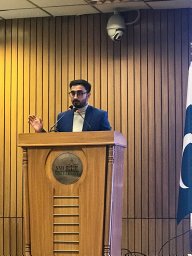 Abdullah Ayub Khan合作论文数Dept Comp Sci, Sindh Madressatul Islam Univ3
 Abdul Waheed Mahesar合作论文数3
 Nikolaos Andreopoulos合作论文数2
 Abdullah Maitlo合作论文数Inst Comp Sci, Shah Abdul Latif Univ2
 Ali Raza合作论文数2Mazhar Ali Dootio合作论文数2Abdul Khalique Junejo合作论文数2
 Anand Deshpande合作论文数Corresponding author.2
 Mansoor Hyder合作论文数2
 Imran Khan Keerio合作论文数1MASOOMI HIFAZAT ALI SHAH合作论文数1Imran Khan合作论文数1Andrey Terziev合作论文数1
 Basit Hassan Qureshi合作论文数1
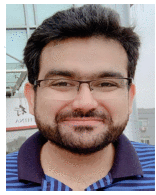 Muhammad Waqas合作论文数1
 Athaul Rai合作论文数Data Science Department, Cubix.co1
 Fahad Hussain合作论文数1
 Sadaquat Ali Ruk合作论文数Department of Computer Science, Shah Abdul Latif University Ghotki Campus1Edwiges G. H Grata合作论文数1
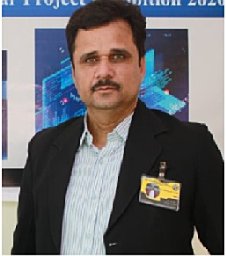 Rafaqat Hussain合作论文数Inst Comp Sci, Shah Abdul Latif Univ Khairpur1
 S. A. Awan合作论文数Dept.of Computer Science, Education Benazir Bhutto Shaheed University1
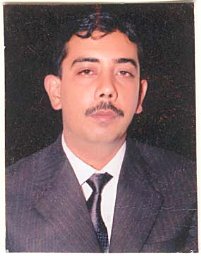 Zulfikar Ahmed Maher合作论文数Informat Technol Ctr, Sindh Agr Univ1
 Irfan Ali合作论文数Department of Computer Science, Sindh Madressatul Islam University1
 Sadaf Solangi合作论文数SMIU1
 Shaukat Wasi合作论文数Dept Comp Sci, Mohammad Ali Jinnah Univ1
 F. Memon合作论文数Dept Chem, Univ Karachi1Umair Saeed合作论文数1
 Zulfiqar Ali Solangi合作论文数Royal Commiss Jubail, Jubail Tech Inst1
 Abdul Hameed Pitafi合作论文数Hefei Univ Technol, Sch Management, Hefei, Peoples R China1
 Ahthasham Sajid合作论文数Balochistan Univ Informat Technol Engn & Manageme, Comp Sci Dept, Quetta, Pakistan1
 Ahmad Waqas合作论文数1Imran Ali Qureshi合作论文数1
 Nurul Nuha Abdul Molok合作论文数1
 Vania Vieira Estrela合作论文数Department of Telecommunications, Universidade Federal Fluminense1
 Husnain Mansoor Ali合作论文数Centre Scientifique d’Orsay, University Paris XI1




