As part of the International Sexuality Description Project, 16,954 participants from 53 nations were administered an anonymous survey about experiences with romantic attraction. Mate poaching--romantically attracting someone who is already in a relationship--was most common in Southern Europe, South America, Western Europe, and Eastern Europe and was relatively infrequent in Africa, South/Southeast Asia, and East Asia. Evolutionary and social-role hypotheses received empirical support. Men were more likely than women to report having made and succumbed to short-term poaching across all regions, but differences between men and women were often smaller in more gender-egalitarian regions. People who try to steal another's mate possess similar personality traits across all regions, as do those who frequently receive and succumb to the poaching attempts by others. The authors conclude that human mate-poaching experiences are universally linked to sex, culture, and the robust influence of personal dispositions.
This study assessed the role of rape myth acceptance (RMA) and situational factors in the perception of three different rape scenarios (date rape, marital rape, and stranger rape). One hundred and eighty-two psychology undergraduates were asked to emit four judgements about each rape situation: victim responsibility, perpetrator responsibility, intensity of trauma, and likelihood to report the crime to the police. It was hypothesized that neither RMA nor situational factors alone can explain how rape is perceived; it is the interaction between these two factors that best account for social reactions to sexual aggression. The results generally supported the authors' hypothesis: Victim blame, estimation of trauma, and the likelihood of reporting the crime to the police were best explained by the interaction between observer characteristics, such as RMA, and situational clues. That is, the less stereotypic the rape situation was, the greater was the influence of attitudes toward rape on attributions.
As part of the International Sexuality Description Project, a total of 17,804 participants from 62 cultural regions completedthe RelationshipQuestionnaire(RQ), a self-reportmeasure of adult romanticattachment. Correlational analyses within each culture suggested that the Model of Self and the Model of Other scales of the RQ were psychometrically valid within most cultures. Contrary to expectations, the Model of Self and Model of Other dimensions of the RQ did not underlie the four-category model of attachment in the same way across all cultures. Analyses of specific attachment styles revealed that secure romantic attachment was normative in 79% of cultures and that preoccupied romantic attachment was particularly prevalent in East Asian cultures. Finally, the romantic attachment profiles of individual nations were correlated with sociocultural indicators in ways that supported evolutionary theories of romantic attachment and basic human mating strategies.
Gender differences in the dismissing form of adult romantic attachment were investigated as part of the International Sexuality Description Project - a survey study of 17,804 people from 62 cultural regions. Contrary to research findings previously reported in Western cultures, we found that men were not significantly more dismissing than women across all cultural regions. Gender differences in dismissing romantic attachment were evident in most cultures, but were typically only small to moderate in magnitude. Looking across cultures, the degree of gender differentiation in dismissing romantic attachment was predictably associated with sociocultural indicators. Generally, these associations supported evolutionary theories of romantic attachment, with smaller gender differences evident in cultures with high-stress and high-fertility reproductive environments. Social role theories of human sexuality received less support in that more progressive sex-role ideologies and national gender equity indexes were not cross-culturally linked as expected to smaller gender differences in dismissing romantic attachment.
Evolutionary psychologists have hypothesized that men and women possess both long-term and short-term mating strategies, with men's short-term strategy differentially rooted in the desire for sexual variety. In this article, findings from a cross-cultural survey of 16,288 people across 10 major world regions (including North America, South America, Western Europe, Eastern Europe, Southern Europe, Middle East, Africa, Oceania, South/Southeast Asia, and East Asia) demonstrate that sex differences in the desire for sexual variety are culturally universal throughout these world regions. Sex differences were evident regardless of whether mean, median, distributional, or categorical indexes of sexual differentiation were evaluated. Sex differences were evident regardless of the measures used to evaluate them. Among contemporary theories of human mating, pluralistic approaches that hypothesize sex differences in the evolved design of short-term mating provide the most compelling account of these robust empirical findings.
In the present paper the construct of Neosexism, as one of the new forms of sexism, and the Spanish version of the Neosexism scale (Tougas, Brown, Beaton & Joly,(1995) are presented. Using a sample of 1191 men, we tested the psychometric properties of the scale and the relationship between Neosexism and some other sociodemographic characteristics and with old-fashioned sexism, attitudes toward affirmative action and men's collective interest. Ours results show that Neosexism, a construct created in a cultural and economic context different to Spain, could be applied to a Spanish context. We also found that the Neosexism scale can be an appropriate instrument to measure modern forms of sexism, specially in organizational and work settings. A mediational analysis performed on the data suggest that, among men, neosexist beliefs influence subjective threat to collective interests, this perceived threat triggering an opposition to affirmative action programs.
The authors argue that complementary hostile and benevolent components of sexism exist across cultures. Male dominance creates hostile sexism (HS), but men's dependence on women fosters benevolent sexism (BS)--subjectively positive attitudes that put women on a pedestal but reinforce their subordination. Research with 15,000 men and women in 19 nations showed that (a) HS and BS are coherent constructs that correlate positively across nations, but (b) HS predicts the ascription of negative and BS the ascription of positive traits to women, (c) relative to men, women are more likely to reject HS than BS, especially when overall levels of sexism in a culture are high, and (d) national averages on BS and HS predict gender inequality across nations. These results challenge prevailing notions of prejudice as an antipathy in that BS (an affectionate, patronizing ideology) reflects inequality and is a cross-culturally pervasive complement to HS.
The aim of this research was to study participants perception of loneliness. More specifically we were interested on the perception of the different kind of persons who can feel alone, and in the cognitive dimensions used by judges to differentiate between such persons. In a first study the most representative types of persons who usually feel alone and the characteristics associated to them were selected. In a second study, a sample of 269 male and female college students were asked to evaluate the similarity between the different types of persons presented and were asked to rate them on several bipolar scales, multidimensional scaling (MDS) was used in order to obtain a graphical representation of the perceptions of the different kind of people who can feel alone as well as the underlying dimensions of these perceptions. Cluster analysis was also used. Results showed that two dimensions underlied perceptions of persons who can feel alone: first dimension was related to person perceived physical atracttive and wether the loneliness situation was choosen or imposed; second dimension was related to person's socioeconomic status and to the fact of having or not a dating relationship. The results are discussed from a psychosocial perspective.
 A Schutz合作论文数4L Grimaldi合作论文数4M Supekova合作论文数4R Diaz-Loving合作论文数4t vanhoomissen合作论文数4V Locke合作论文数4M. Munyae合作论文数4Vs Rus合作论文数4Peter Weiss合作论文数4Glaucia Ribeiro Starling Diniz合作论文数Instituto de Psicologia, Universidade de Brasília4I Luksik合作论文数4miroslav popper合作论文数4
 Dora Herrera合作论文数4Marcela Echegaray合作论文数4Maria Martina Casullo合作论文数4
 Frank Van Overwalle合作论文数Brain Body and Cognition Department, Vrije Universiteit Brussel4
 Kevin Durkin合作论文数University of Strathclyde4Joao Verissimo合作论文数4
 Michel Raymond合作论文数Institute of Evolutionary Sciences, CNRS, University of Montpellier II4
 Phillip Shaver合作论文数Department of Psychology, University of California, Davis4
 Sergio Moreira合作论文数4
 Khoury Brigitte合作论文数4
 Voracek Martin合作论文数Fakultät für Psychologie, Universitat Wien4
 Patricia Noller合作论文数School of Psychology, University of Queensland4
 Jüri Allik合作论文数Department of Psychology, University of Tartu4Heather Hoffmann合作论文数4
 Willibald Ruch合作论文数Psychologisches Institut, Universität Zürich4
 Rui Mata合作论文数Dept Psychol, Univ Basel4
 Joao Moreira合作论文数4
 Kenneth Locke合作论文数University of Idaho4
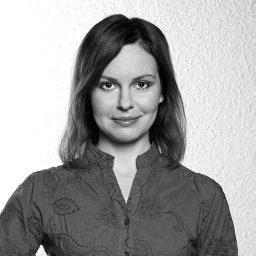 Kaia Laidra合作论文数The Estonian Centre of Behavioural and Health Sciences, University of Tartu4Gabrielle Caron合作论文数4
 Alexia Panayiotou合作论文数University of Cyprus;Mediterranean Institute of Gender Studies;Mediterranean Institute of Gender Studies, University of Cyprus4Debra L. Golden合作论文数4
 Francisca Expósito合作论文数Universidad de Granada4
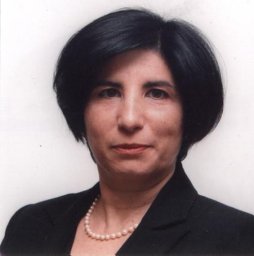 Ruth Falzon合作论文数4
 Nebi Sumer合作论文数Department of Psychology, Middle East Technical University4
 Wendy W. N. Wan合作论文数Department of Marketing Academic Building, City University of Hong Kong4
 Marilyn P. Safir合作论文数Department of Psychology, University of Haifa4
 Charlotte de backer合作论文数Institute for Social, Behavioral and Economic Research, University of California at Santa Barbara4
 Karolien Poels合作论文数Dept Commun Studies, Univ Antwerp4Lidia Alcalay合作论文数4Dolores Foley合作论文数4
 Liesbeth Woertman合作论文数4
 Adrian Opre合作论文数4
 Kevin L. Bennett合作论文数4M. Arif Ghayur合作论文数4
 Wade C. Rowatt合作论文数Department of Psychology and Neuroscience, Baylor University4
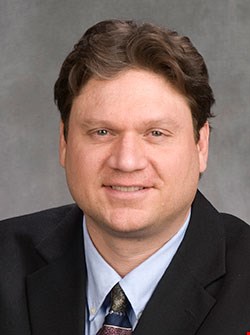 David P. Schmitt合作论文数Department of Life Sciences, College of Health, Medicine and Life Sciences, Brunel University London4




