INTRODUCTION:Renal transplantation is the therapy of choice for children with end-stage renal failure. There are many challenges associated with a paediatric programme in a developing country where organs are limited.METHODS:A retrospective review was undertaken of 149 paediatric renal transplants performed between 1968 and 2006 with specific emphasis on transplants performed in the last 10 years. Survival of patients and grafts was analysed and specific problems related to drugs and infections were reviewed.RESULTS:On review of the total programme, 60% of the transplants have been performed in the last 10 years, with satisfactory overall patient and graft survival for the first 8 years post transplant. At this point, transfer to adult units with non-compliance becomes a significant problem. Rejection is less of a problem than previously but infection is now a bigger issue--specifically tuberculosis (TB), cytomegalovirus (CMV) and Epstein-Barr virus (EBV) infections with related complications. A wide variety of drugs are available for tailoring immunosuppression to minimise side-effects.CONCLUSION:It is possible to have a successful paediatric transplant programme in a developing country. However, to improve long-term outcomes certain issues need to be addressed, including reduction of nephrotoxic drugs and cardiovascular risk factors and providing successful adolescent to adult unit transition.
The first patient was a 29-year-old woman with chronic renal failure with crescentic mesangiocapillary glomerulonephritis. She received a cadaveric transplant in April 1996. She had good initial renal function and was maintained on cyclosporine, azathioprine, and prednisone. She unfortunately lost renal allograft function due to chronic rejection after 2.5 years, and she was recommenced on hemodialysis. Immunosuppression was discontinued. The patient developed a persistent intermittent fever and subsequently developed mild graft tenderness and haematuria necessitating a graft nephrectomy. The histology of the graft showed caseating granulomata, with acid-fast bacilli seen on Ziehl-Neelsen staining. No other sites of past or present tuberculosis were identified. The patient was commenced on anti-tuberculous therapy consisting of rifampicin, isoniazid, ethambutol, and pyrazinamide.
The management of patients with end-stage renal failure (ESRF) poses worldwide technical, moral, financial and social dilemmas. In order to move into the future in an unencumbered way, many concepts of the past will need to be discarded or radically modified. In South Africa we have a unique but short-lived opportunity to do just that before our current practice again becomes accepted dogma. Our current approach, with few exceptions, has led us to assume that pursuit of 'the ideal' automatically resutts in an optimal outcome. Due regard for the overall price we pay and the likelihood of attaining these 'ideals' have received less emphasis. Compromises may not seem ideal; calculated compromise, however, may surprisingly bring us closer to the attainable best. Issues to be considered include the following.
 A R Pontin合作论文数2J. Halkett合作论文数2GR KEETON合作论文数2RV SMIT合作论文数2van Zyl-Smit R合作论文数2M. J. D. Cassidy合作论文数2R VANZYLSMIT合作论文数1I GRAYCE合作论文数1r i raine合作论文数1D PHILCOX合作论文数1F Bonnici合作论文数1R P Bonafede合作论文数1E D Bateman合作论文数1P Pillans合作论文数1D Woolf合作论文数1B. Kies合作论文数1RE KIRSCH合作论文数1van dugteren合作论文数1AR HORAK合作论文数1Wpu Jackson合作论文数1P Sinclair合作论文数1P Gajjar合作论文数1CR SWANEPOEL合作论文数1Cj Uys合作论文数1MJD CASSIDY合作论文数1JE JACOBSON合作论文数1
 Elmi Muller合作论文数Dept Surg, Univ Cape Town1
 Alp Numanoglu合作论文数Division of Paediatric Surgery, Red Cross War Memorial Children's Hospital and University of Cape Town1
 Richard Kirsch合作论文数Department of Laboratory Medicine and Pathobiology, Temerty Faculty of Medicine, University of Toronto1
 Jonathan Bruce Kruskal合作论文数Department of Radiology, Beth Israel Deaconess Medical Center;Harvard Medical School1Rayner Brian L合作论文数1
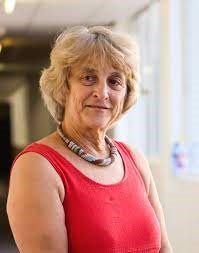 Naomi Levitt合作论文数Division of Diabetic Medicine and Endocrinology, Department of Medicine, University of Cape Town;Groote Schuur Hospital1
 Dhehan Khan合作论文数1Lorgat F合作论文数1
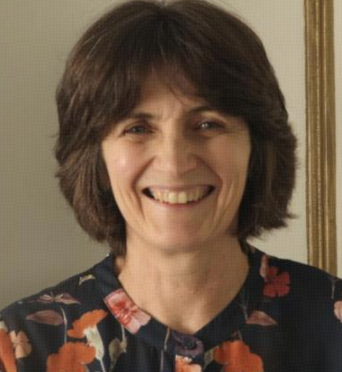 Wendy Spearman合作论文数Division of Hepatology, Department of Medicine, Faculty of Health Sciences, University of Cape Town1
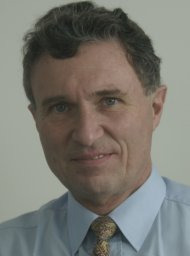 Stephen Morrison合作论文数1B. G. Evans合作论文数1Robin Wood合作论文数Fac Hlth Sci, Univ Cape Town1Millar A J W合作论文数1Behari R合作论文数1H. Rode合作论文数1
 Simon Robson合作论文数Division of Gastroenterology, Department of Medicine, Beth Israel Deaconess Medical Center;Department of Anesthesia, Beth Israel Deaconess Medical Center;Division of Medical Sciences, Harvard Griffin Graduate School of Arts and Sciences, Harvard University;Liver Center, University of Cape Town;Harvard Medical School, Harvard University;Inner Mongolian Medical College;Department of Medicine, New England Deaconess Hospital1A. Swanepoel合作论文数1Sandra B. Barker合作论文数1Delawir Kahn合作论文数1Jan Wiggelinkhuizen合作论文数1
 Charles Swanepoel合作论文数1
 Kristie J. Newton合作论文数College of Education, Temple University1Walter J Friedlander合作论文数1




