Cryptic habitats on coral reefs consist of crevices, tunnels, and holes that are estimated to comprise 30%-75% of the total reef surface area. These large habitats are vastly understudied because they are often difficult to access. Crustose coralline algae (CCA) are thought to perform important ecological functions, including calcium accretion, both inside cryptic habitats and on the exposed (top) reef. Using GoPro cameras, we surveyed 250 coral crevices from 13 reefs on West Maui, Hawai'i. We compared relative CCA cover between crevice microhabitats and the well-studied top-reef and identified abiotic and biotic factors that correlated with CCA abundance. We found that crevices had approximately 3.1 times more CCA cover than the top-reef and that CCA cover was highest on crevice ceilings and entrances, which had low sediment and macroalgal cover, compared to the back walls of crevices, which had higher sediment abundance. These results suggest that crevice openings and ceilings are key microhabitats for CCA and therefore may also be important for reef building and stabilization. Thus, these findings help establish functional links between coral reef structural complexity, cryptic habitats, and reef resilience, and highlight the importance of studying cryptic habitats to inform approaches to coral reef conservation.
A central question in ecology is to what extent do trophic interactions govern the structure and function of communities? This question is becoming more pressing as trophic interactions shift with rapid climate change. Sea urchins and abalone are key invertebrates in the habitats where they reside. Sea urchins are critical members of exemplar trophic cascades in kelp forests due to their impact on kelp establishment and maintenance; yet their populations are controlled by predators, such as sea otters and sunflower sea stars. Abalone compete with urchins for macroalgal food resources and therefore can help regulate urchin populations in kelp forests. Given that both urchin tests and abalone shells used for predator defense are comprised of calcium carbonate, much research has been conducted on the impacts of ocean acidification (OA) on these calcified structures. A growing body of literature has shown that urchin tests are less calcified and break with less force under OA conditions. Less is known about abalone, but their shells also appear to respond negatively to OA. Using kelp forest communities as exemplar ecosystems, we discuss the morphological, biomechanical, and physiological responses to OA in urchins and abalone and consider how these individual level responses scale to trophic interactions and ultimately whole ecosystem processes. Although the impacts of OA on the calcified structures used for defense have been well studied, calcified mechanisms for food consumption, such as the Aristotle's lantern of urchins, are much less understood. Thus, examining both the feeding and defense sides of trophic interactions would greatly improve our understanding of OA responses across individual to ecosystem scales. More generally, measurements of morphological, biomechanical, and physiological responses to OA can be made in individuals to help predict higher level ecological responses, which would greatly contribute to broader predictions of whole ecosystem responses to OA.
Spiny lobsters rely on multiple biomineralized exoskeletal predator defenses that may be sensitive to ocean acidification (OA). Compromised mechanical integrity of these defensive structures may tilt predator-prey outcomes, leading to increased mortality in the lobsters’ environment. Here, we tested the effects of OA-like conditions on the mechanical integrity of selected exoskeletal defenses of juvenile California spiny lobster, Panulirus interruptus . Young spiny lobsters reside in kelp forests with dynamic carbonate chemistry due to local metabolism and photosynthesis as well as seasonal upwelling, yielding daily and seasonal fluctuations in pH. Lobsters were exposed to a series of stable and diurnally fluctuating reduced pH conditions for three months (ambient pH/stable, 7.97; reduced pH/stable 7.67; reduced pH with low fluctuations, 7.67 ± 0.05; reduced pH with high fluctuations, 7.67 ± 0.10), after which we examined the intermolt composition (Ca and Mg content), ultrastructure (cuticle and layer thickness), and mechanical properties (hardness and stiffness) of selected exoskeletal predator defenses. Cuticle ultrastructure was consistently robust to pH conditions, while mineralization and mechanical properties were variable. Notably, the carapace was less mineralized under both reduced pH treatments with fluctuations, but with no effect on material properties, and the rostral horn had lower hardness in reduced/high fluctuating conditions without a corresponding difference in mineralization. Antennal flexural stiffness was lower in reduced, stable pH conditions compared to the reduced pH treatment with high fluctuations and not correlated with changes in cuticle structure or mineralization. These results demonstrate a complex relationship between mineralization and mechanical properties of the exoskeleton under changing ocean chemistry, and that fluctuating reduced pH conditions can induce responses not observed under the stable reduced pH conditions often used in OA research. Furthermore, this study shows that some juvenile California spiny lobster exoskeletal defenses are responsive to changes in ocean carbonate chemistry, even during the intermolt period, in ways that can potentially increase susceptibility to predation among this critical life stage.
Integrated multi-trophic aquaculture (IMTA) has the potential to enhance growth, reduce nutrient loads, and mitigate environmental conditions compared to traditional single-species culture techniques. The goal of this project was to develop a land-based system for the integrated culture of seaweeds and shellfish, to test the efficacy of integrated versus non-integrated designs, and to assess the potential for IMTA to mitigate the effects of climate change from ocean acidification on shellfish growth and physiology. We utilized the red abalone (Haliotis rufescens) and the red seaweed dulse (Devaleraea mollis) as our study species and designed integrated tanks at three different recirculation rates (0%, 30%, and 65% recirculation per hour) to test how an integrated design would affect growth rates of the abalone and seaweeds, modify nutrient levels, and change water chemistry. We specifically hypothesized that IMTA designs would raise seawater pH to benefit calcifying species. Our results indicated that juvenile abalone grew significantly faster in weight (22% increase) and shell area (11% increase) in 6 months in tanks with the highest recirculation rates (65%). The 65% recirculation treatment also exhibited a significant increase in mean seawater pH (0.2 pH units higher) due to the biological activity of the seaweed in the connected tanks. We found a significant positive relationship between the mean pH of seawater in the tanks and juvenile abalone growth rates across all treatments. There were no significant differences in the growth of dulse among treatments, but dulse growth did vary seasonally. Seawater phosphate and nitrate concentrations were depleted in the highest recirculation rate treatment, but ammonium concentrations were elevated, likely due to the abalone effluent. Overall, our results indicate that there are benefits to IMTA culture of seaweeds and abalone in terms of improving growth in land-based systems, which will reduce the time to market and buffer commercial abalone operations against the effects of ocean acidification during vulnerable early life stages.
In the spirit of this symposium on the physical mechanisms of behavior, we review mantis shrimp ritualized fighting, from the telson to the attack, as an inspiring example of how the integration of biomechanics and behavioral research can yield a penetrating narrative for how animals accomplish important activities, including agonistic actions. Resolving conflicts with conspecifics over valuable resources is an essential task for animals, and this takes an unusual form in mantis shrimp due to their powerful raptorial appendages. Decades of field and laboratory research have provided key insights into the natural agonistic interactions of diverse mantis shrimp species, including how they use their raptorial weapons against one another in telson sparring matches over cavities. These insights provided the foundation for functional morphologists, biomechanists, and engineers to work through different levels of organization: from the kinematics of how the appendages move to the elastic mechanisms that power the strike, and down to the structure, composition, and material properties that transmit and protect against high-impact forces. Completing this narrative are studies on the defensive telson and how this structure is biomechanically matched to the weapon and the role it plays in ritualized fighting. The biomechanical understanding of the weapon and defense in mantis shrimp has, in turn, enabled a better understanding of whether mantis shrimp assess one another during contests and encouraged questions of evolutionary drivers on both the arsenal and behavior. Altogether, the body of research focused on mantis shrimp has presented perhaps the most comprehensive understanding of fighting, weapons, and defenses among crustaceans, from morphology and biomechanics to behavior and evolution. While this multi-level analysis of ritualized fighting in mantis shrimp is comprehensive, we implore the need to include additional levels of analysis to obtain a truly holistic understanding of this and other crustacean agonistic interactions. Specifically, both molting and environmental conditions are often missing from the narrative, yet they greatly affect crustacean weapons, defenses, and behavior. Applying this approach more broadly would generate a similarly profound understanding of how crustaceans carry out a variety of important tasks in diverse habitats.
Animal acoustic communication systems can be built upon co-opted structures that become specialized for sound production or morphological novelties. The ghost crab, Ocypode quadrata, evolved a novel stridulation apparatus on the claws that is used during agonistic interactions, but they also produce a rasping sound without their claw apparatus. We investigated the nature of these sounds and show that O. quadrata adopted a unique and redundant mode of sound production by co-opting the gastric mill (grinding teeth of the foregut). Acoustic characteristics of the sound are consistent with stridulation and are produced by both male and female crabs during aggressive interactions. Laser Doppler vibrometry localized the source of maximum vibration to the gastric region and fluoroscopy showed movement of the gastric mill that coincided with stridulation. The lateral teeth of the gastric mill possess a series of comb-like structures that rub against the median tooth to produce stridulation with dominant frequencies below 2 kHz. This previously undescribed gastric stridulation can be modulated and provide a means of assessment during aggressive interactions, similar to the use of the claw stridulation apparatus. This functional redundancy of stridulation in crabs offers unique insights into the mechanisms of evolution of acoustic communication systems.
Coral reefs are declining worldwide. Yet, critical information remains unknown about the basic biological, ecological, and chemical processes that sustain coral reefs because of the challenges to access their narrow crevices and passageways. A robot that grows through its environment would be well suited to this challenge as there is no relative motion between the exterior of the robot and its surroundings. In this work, we design and develop an eversion robot for operation underwater, show that existing models work for constrained passageways if external contacts are taken into account, and present a new model to describe the forces on the robot during retraction. We use ambient water to pressurize the robot and maintain a neutral buoyancy. The robot operates in open loop without any steering, but can rely on its compliance to conform to natural crevices and pathways in its environment. We demonstrate the mechanism of eversion and retraction for an underwater soft robot as a potential approach for future non-destructive exploration of coral reefs.
Morphological plasticity is a critical mechanism that animals use to cope with variations in resource availability. During periods of food scarcity, sea urchins demonstrate an increase in jaw length relative to test diameter. This trait is thought to be reversible and adaptive by yielding an increase in feeding efficiency. We directly tested the hypotheses that (1) there are reversible shifts in jaw length to test diameter ratios with food abundance in individual urchins, and (2) these shifts alter feeding efficiency. Purple sea urchins, Strongylocentrotus purpuratus , were collected and placed in either high or low food treatments for 3 months, after which treatments were switched for two additional months in La Jolla, CA (32.8674°N, 117.2530°W). Measurements of jaw length to test diameter ratios were significantly higher in low compared to high food urchins, but this was due to test growth in the high food treatments. Ratios of low food urchins did not change following a switch to high food conditions, indicating that this trait is not reversible within the time frame of this study. Relatively longer jaws were also not correlated with increased feeding efficiency. We argue that jaw length plasticity is not adaptive and is simply a consequence of exposure to high food availability, as both jaw and test growth halt when food is scarce.
Chytridiomycosis is an emerging infectious disease of amphibians caused by the fungal pathogen Batrachochytrium dendrobatidis (Bd), which has led to devastating declines in amphibian populations worldwide. Current theory predicts that Bd infections are maintained through both reproduction on the host’s skin and reinfection from sources outside of the host. To investigate the importance of external reinfection on pathogen burden, we infected captive-bred individuals of the highly susceptible Panamanian Golden Frog, Atelopus glyphus, and wild-caught glass frogs, Espadarana prosoblepon, with Bd. We housed the animals in one of three treatments: individually, in heterospecific pairs, and in conspecific pairs. For 8 weeks, we measured the Bd load and shedding rate of all frogs. We found that Atelopus had high rates of increase in both Bd load and shedding rate, but pathogen growth rates did not differ among treatments. The infection intensity of Espadarana co-housed with Atelopus was indistinguishable from those housed singly and those in conspecific pairs, despite being exposed to a large external source of Bd zoospores. Our results indicate that Bd load in both species is driven by pathogen replication within an individual, with reinfection from outside the host contributing little to the amplification of host fungal load.
Competition for food drives divergence and specialization in feeding morphology. Stomatopod crustaceans have two kinds of highly specialized feeding appendages: either elongate spear-like appendages (spearers) used to ambush soft-bodied evasive prey or hammer-like appendages (smashers) that produce extremely high forces used both to break hard-shelled prey and to capture evasive prey. To evaluate associations between appendage type and feeding ecology, the diet of two small smasher and spearer species (size range: 21–27 mm) that co-occur were compared. Stable isotope analysis and the Bayesian mixing model MixSIAR were used to estimate the proportional contributions of prey types to the diet. Both species had relatively wide diets that included hard-shelled and soft-bodied prey, albeit in different proportions; the smasher consumed a greater proportion of hard-shelled prey, and the spearer consumed mostly soft-bodied prey. Appendage kinematics in stomatopods is known to scale linearly across species. These two small species may produce similar kinematics allowing them both to capture evasive prey and hammer hard-shelled prey, thereby widening their diets. Yet, the spearer species is more highly adept at capturing evasive prey, indicating that small spearers are stronger competitors for soft-bodied prey. These findings suggest that a smasher's ability to access hard prey reduced competition for soft prey, and therefore conferred an important benefit favouring the evolution of the impressive smashing strike.
Many animals are considered to be specialists because they have feeding structures that are fine-tuned for consuming specific prey. For example, “smasher” mantis shrimp have highly specialized predatory appendages that generate forceful strikes to break apart hard-shelled prey. Anecdotal observations suggest, however, that the diet of smashers may include soft-bodied prey as well. Our goal was to examine the diet breadth of the smasher mantis shrimp, Neogonodactylus bredini, to determine whether it has a narrow diet of hard-shelled prey. We combined studies of prey abundance, feeding behavior, and stable isotope analyses of diet in both seagrass and coral rubble to determine if N. bredini’s diet was consistent across different habitat types. The abundances of hard-shelled and soft-bodied prey varied between habitats. In feeding experiments, N. bredini consumed both prey types. N. bredini consumed a range of different prey in the field as well and, unexpectedly, the stable isotope analysis demonstrated that soft-bodied prey comprised a large proportion (29–53 %) of the diet in both habitats. Using a Bayesian mixing model framework (MixSIAR), we found that this result held even when we used uninformative, or generalist, priors and informative priors reflecting a specialist diet on hard-shelled prey and prey abundances in the field. Thus, contrary to expectation, the specialized feeding morphology of N. bredini corresponds to a broad diet of both hard-shelled and soft-bodied prey. Using multiple lines of study to describe the natural diets of other presumed specialists may demonstrate that specialized morphology often broadens rather than narrows diet breadth.
Calcified marine organisms typically experience increased oxidative stress and changes in mineralization in response to ocean acidification and warming conditions. These effects could hinder the potency of animal weapons, such as the mantis shrimp's raptorial appendage. The mechanical properties of this calcified weapon enable extremely powerful punches to be delivered to prey and aggressors. We examined oxidative stress and exoskeleton structure, mineral content, and mechanical properties of the raptorial appendage and the carapace under long-term ocean acidification and warming conditions. The predatory appendage had significantly higher % Mg under ocean acidification conditions, while oxidative stress levels as well as the % Ca and mechanical properties of the appendage remained unchanged. Thus, mantis shrimp tolerate expanded ranges of pH and temperature without experiencing oxidative stress or functional changes to their weapons. Our findings suggest that these powerful predators will not be hindered under future ocean conditions.
 Jennifer Taylor合作论文数Scripps Institution of Oceanography, University of California, San Diego10
 Summer J. Webb合作论文数4
 K. B. Lowder合作论文数Scripps Inst Oceanog, Univ Calif San Diego3
 Todd Dawson合作论文数Departments of Environmental Science, Policy, and Management, College of Natural Resources, University of California;Department of Integrative Biology, College of Letters & Science, University of California, Berkeley3SJ Webb合作论文数2J. M. Jawor合作论文数2
 Stuart Sandin合作论文数Scripps Institution of Oceanography, University of California, San Diego2
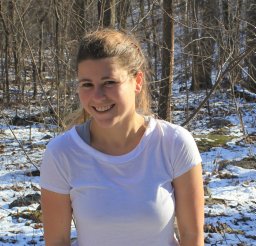 Elizabeth Murphy合作论文数Dept Zool, Stockholm Univ2Sheila N Patek合作论文数Department of Biology, Trinity College of Arts & Sciences, Duke University2Tunstall Tate S合作论文数2Winters Caitlin P合作论文数2Holbrook Aaron L合作论文数2
 Dimitri D Deheyn合作论文数Scripps Institution of Oceanography, University of California San Diego2
 Carlos Martinez del Rio合作论文数Department of Zoology and Physiology, College of Agriculture, Life Sciences and Natural Resources, University of Wyoming2
 Peter Wainwright合作论文数Department of Evolution and Ecology, College of Biological Sciences, University of California, Davis2
 John H. Christy合作论文数Smithsonian Tropical Research Institute2Jason Adelaars合作论文数1
 James Day合作论文数Scripps Institution of Oceanography, University of California, San Diego1
 Andreas Andersson合作论文数Scripps Institution of Oceanography, University of California, San Diego1
 Aaron C. Ong合作论文数Univ Calif San Diego, Dept Bioengn, 9500 Gilman Dr, La Jolla, CA 92093 USA1
 Emily L A Kelly合作论文数Center for Marine Biodiversity and Conservation, Scripps Institution of Oceanography, University of California San Diego, 9500 Gilman Drive, La Jolla, CA, 92093, USA. elkelly@ucsd.edu.1
 Susan Lu合作论文数1
 Paul E. Glick合作论文数Jet Propulsion Laboratory, NASA;Ocean Motion Technologies1
 Damian Octavio Elias合作论文数Department of Environmental Science, Policy and Management, College of Natural Resources, University of California, Berkeley1
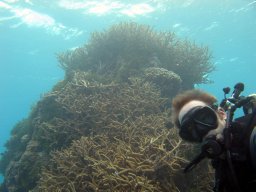 Scott L. Hamilton合作论文数Marine Science Institute, University of California1
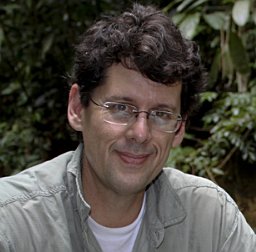 Ibáñez Roberto合作论文数Smithsonian Tropical Research Institute1Esther Cory合作论文数1
 Kelly Zamudio合作论文数Department of Ecology and Evolutionary Biology, Faculty Curator of Herpetology, Cornell University1
 Stock Brian C合作论文数1
 Robert L. Sah合作论文数Cartilage Tissue Engineering Laboratory, Shu Chien-Gene Lay Department of Bioengineering, Jacobs School of Engineering, University of California, San Diego;Institute of Engineering in Medicine, University of California, San Diego1
 Direnzo Graziella V合作论文数Department of Biology, University of Maryland1
 Michael H. Graham合作论文数Moss Landing Marine Laboratories, San Jose State University1
 Michael T. Tolley合作论文数Department of Mechanical and Aerospace Engineering, Jacobs School of Engineering, University of California, San Diego1
 Steven Beaupre合作论文数Department of Biological Sciences, Fulbright College of Arts & Sciences, University of Arkansas1
 Ana V. Longo合作论文数Department of Biology, University of Puerto Rico1
 Greg Goldsmith合作论文数Schmid College of Science and Technology, Chapman University1
 Elliot Hawkes合作论文数Department of Mechanical Engineering, College of Engineering, University of California, Santa Barbara1
 Jennifer E. Smith合作论文数Deparment of Botany;University of Hawai;Deparment of Botany, University of Hawai1
 Karen Lips合作论文数Department of Biology, College of Computer, Mathematical, & Natural Sciences, University of Maryland;International Institute for Applied Systems Analysis1




