The paper presents a transient simulation phase of the new benchmark on a large sodium fast reactor (SFR). This phase of the benchmark is devoted to the modeling of selected operational transients performed during startup tests of the French SFR Superphenix. Six operational transients were selected for the analysis. The specifications of a simplified thermal hydraulic model equipped with point kinetics reactivity data and boundary conditions for the selected transients are given in the paper. The developed model contains a necessary thermal hydraulic description of the primary system components, assumptions to account for thermal expansion reactivity feedback from out-of-core structures, neutron kinetics parameters, power distribution, and reactivity coefficients. The neutronic input parameters were obtained with the help of the Monte Carlo code SERPENT during the first phase of the benchmark related to the static neutronic characterization of the core. In this study, the solution of the transient benchmark was obtained with three thermal hydraulic system codes, namely, TRACE, SIM-SFR, and ATHLET. The numerical results, compared to the available experimental data, exhibit a reasonable mutual agreement. Particular discrepancies between calculations and experiments could not be fully resolved. Therefore, a set of recommendations for achieving an improved agreement was proposed. In general, the proposed transient benchmark can be seen as an effective tool for validation and cross comparisons of system codes applied for safety analyses of SFRs, including approbation and comparison of different modeling features for thermal expansion of the out-of-core structures.
This paper discusses system codes benchmarking activities on an ASTRID-like heterogeneous fast core under a representative design basis accident condition: the unprotected loss of flow accident (ULOF). The paper provides evidence that all the system codes used in this exercise are capable to simulate the transient behavior of heterogeneous SFR cores up to the initiation of sodium boiling. As a proof of this, a comparison of steady-state results and dynamic simulation results for a ULOF transient (simulated using system codes in combination with neutron point kinetics) are provided and discussed in this paper. The paper contains a brief description of the system codes (TRACE, CATHARE, SIM-SFR, SAS-SFR, ATHLET, SPECTRA, SAS4A) used by the participants (PSI, CEA, EDF, KIT, GRS, UPVLC, NRG, KTH), assumptions made during the simulations, as well as results obtained. (C) 2017 Elsevier B.V. All rights reserved.
•Innovative sodium cooled fast reactor concepts are investigated.•Newly conceived mitigation measures of the severe transients are being investigated.•Evaluation of severe transient behavior in sodium-cooled fast reactors is being performed.
•Benchmarked models have been applied for the analysis of DBA transients of the ESFR design.•Two system codes are able to simulate the behavior of the system beyond sodium boiling.•The optimization of the core design and its influence in the transients’ evolution is described.•The analysis has identified peak values and grace times for the protection system design.
The effect of temperature changes and in particular those that are accompanied by strong gradients was extensively investigated for fast reactors. Subcritical systems designed for their transmutation ability are to some extent similar to critical power reactors in their sub-assembly structure. However, they differ in two main aspects. First, the coolant in a subcritical system is lead or lead-bismuth eutectic (LBE) and not sodium, and second, the main cause for steep temperature gradients in a fast power reactor is sudden control rod insertion, or scram, whereas in subcritical systems shutdown of the accelerator and its proton beam is the main cause for temperature gradients. Furthermore, the increased probability of operational interruptions in an accelerator-driven system is largely due to the instability of the accelerator generating the proton beam. This study uses the knowledge gained from fast reactors as a preliminary reference and concentrates further on the unique features of the proposed subcritical systems. In particular, the effect of beam trips on the fuel pin integrity is evaluated as a function of the temperature gradients and the duration of the beam trips. It seems, however, that the largest hazard to the fuel pin integrity is due to the lead (or LBE) coolant. In particular, the stability of the protective oxide layer built on the clad surface with the lead coolant appears quite sensitive to sudden temperature changes. In the second part of this study, several available experimental results show that even very moderate temperature changes are sufficient to cause crack formation in the oxide layer thereby exposing the clad surface to enhanced LBE corrosion. In the worst case, complete exfoliation of the magnetite outer layer is observed. As a consequence, clad failure probability due to corrosion is considerably increased.
Abstract The effect of temperature changes and in particular those that are accompanied by strong gradients was extensively investigated for fast reactors. Subcritical systems designed for their transmutation ability are to some extent similar to critical power reactors in their subassembly structure. However, they differ in two main aspects. First, the coolant in a subcritical system is lead or lead-bismuth eutectic (LBE) and not sodium, and second, the main cause for steep temperature gradients in a fast power reactor is sudden control rod insertion, or scram, whereas in subcritical systems shutdown of the accelerator and its proton beam is the main cause for temperature gradients. Furthermore, the increased probability of operational interruptions in an accelerator-driven system is largely due to the instability of the accelerator generating the proton beam. This study uses the knowledge gained from fast reactors as a preliminary reference and concentrates further on the unique features of the proposed subcritical systems. In particular, the effect of beam trips on the fuel pin integrity is evaluated as a function of the temperature gradients and the duration of the beam trips. It seems, however, that the largest hazard to the fuel pin integrity is due to the lead (or LBE) coolant. In particular, the stability of the protective oxide layer built on the clad surface with the lead coolant appears quite sensitive to sudden temperature changes. In the second part of this study, several available experimental results show that even very moderate temperature changes are sufficient to cause crack formation in the oxide layer thereby exposing the clad surface to enhanced LBE corrosion. In the worst case, complete exfoliation of the magnetite outer layer is observed. As a consequence, clad failure probability due to corrosion is considerably increased.
The development of accelerator-driven systems (ADSs) is motivated by the potential of these machines to reduce the volume and the radio toxicity of accumulated nuclear waste, more particularly that of minor actinides currently generated by the operation of existing pressurized water reactors. The reduction of both volume and radiotoxicity of nuclear waste is achieved by transmutation and fission of minor actinides into less-active isotopes or shorter-lived by-products.Various technical challenges exist regarding designing reliable and efficient ADSs. The key points are very much linked to the design of the spallation module, the assurance that reactivity remains below criticality under any circumstances, and the accelerator reliability.This paper addresses the latter two challenges imposed on the accelerator in order to assure safe and reliable ADS operation. It discusses the possibility of performing online absolute reactivity measurements and the limits in the number of allowable accelerator beam trips, which might impede plant integrity and/or plant efficiency.
The new reactor concepts proposed in the Generation IV International Forum (GIF) are conceived to improve the use of natural resources, reduce the amount of high-level radioactive waste and excel in their reliability and safe operation. Among these novel designs sodium fast reactors (SFRs) stand out due to their technological feasibility as demonstrated in several countries during the last decades. As part of the contribution of EURATOM to GIF the CP-ESFR is a collaborative project with the objective, among others, to perform extensive analysis on safety issues involving renewed SFR demonstrator designs. The verification of computational tools able to simulate the plant behaviour under postulated accidental conditions by code-to-code comparison was identified as a key point to ensure reactor safety. In this line, several organizations employed coupled neutronic and thermal-hydraulic system codes able to simulate complex and specific phenomena involving multi-physics studies adapted to this particular fast reactor technology. In the "Introduction" of this paper the framework of this study is discussed, the second section describes the envisaged plant design and the commonly agreed upon modelling guidelines. The third section presents a comparative analysis of the calculations performed by each organisation applying their models and codes to a common agreed transient with the objective to harmonize the models as well as validating the implementation of all relevant physical phenomena in the different system codes. (C) 2013 Elsevier B.V. All rights reserved.
In order to reduce the volume and the radiotoxicity of the nuclear waste coming from the operation of existing pressurized water reactors, accelerator-driven systems (ADSs) have been envisioned.The Helium-cooled (He) European Facility for Industrial-scale Transmutation (He-EFIT) concept is the EUROpean Research Programme for the TRANSmutation of High Level Nuclear Waste in Accelerator Driven System (EUROTRANS) Integrated Project (IP) (EUROTRANS IP) backup option, whereas Pb-cooled EFIT is the reference one. The plant has a power of similar to 400 MW(thermal). Like all ADS plants, it consists of three main components: the accelerator, the spallation target module, and the subcritical core.This paper describes the He-EFIT design at the end of the EUROTRANS JP as well as the studies performed to support this design: spallation performances, trasmutation capabilities, and plant safety analyses.No specific technology deadlock has been identified, and it might be possible to build such a plant given necessary research and development in support.
In order to reduce the volume and the radiotoxicity of the nuclear waste coming from the operation of existing pressurized water reactors, accelerator-driven systems (ADSs) have been envisioned. The Lead-Cooled (Pb) European Facility for Industrial-Scale Transmutation (EFIT) (Pb-EFIT) plant is the first ADS design that has been going into a rather detailed engineering level. It is a lead-cooled, 385-MW(thermal) ADS prototype for minor actinide (MA) transmutation designed to achieve an optimal MA destruction rate of [approximately]42 kg/TW·h(thermal). The spallation target unit is located in the center of the diagrid where 800-MeV protons from the accelerator impinge on a free surface of lead exposed to vacuum. The core inlet temperature was set at 400°C to assure a sufficiently large safety margin to lead freezing, and the core outlet temperature was limited to 480°C to allow acceptable corrosion. The ferritic-martensitic 9% Cr steel T91 protected against corrosion with alumina FeCrAlY [GESA (Gepulste Elektronen Strahl Anlage) treatment]. The primary circuit is designed for effective natural circulation, i.e., relatively low pressure losses, and the design offers good protection for a heat removal system in case of a blackout accident. The EFIT plant is designed to have a low likelihood and a low degree of core damage, to eliminate the need for off-site emergency responses in case of a severe accident, to use an extensively reliable passive safety system to fulfill the safety functions, and to eliminate the need of alternating-current safety-grade power (no safety-grade diesel generator). Three systems contribute to the decay heat removal (DHR) function of Pb-EFIT: the steam generators, the direct reactor cooling system, and the isolation condenser system. The EFIT plant exhibits four primary pumps; eight steam generator units, each rated at 52 MW, provide heat removal under normal operation. On the secondary side, the water steam ensures a thermal efficiency of [approximately]40% with the superheated vapor secondary circuit, taking into account the electricity required by pumps (from both the primary circuit and the secondary circuits) but without deducing the power required for the accelerator. An estimate of the Pb-EFIT plant cost has been performed based mainly on experience and engineering judgment. A best estimate (base cost and contingency) of about €1890 million, with an overall uncertainty of 22%, has been found.
CONTAIN-LMR 1 is an analytical tool for the containment performance of sodium cooled fast reactors. In this code, the modelling for the sodium fire is included: the oxygen diffusion model for the sodium pool fire, and the liquid droplet model for the sodium spray fire. CONTAIN-LMR is also able to model the interaction of liquid sodium with concrete structure. It may be applicable to different concrete compositions. Testing and validation of these models will help to qualify the simulation results. Three experiments with sodium performed in the FAUNA facility at FZK have been used for the validation of CONTAIN-LMR. For pool fire tests, calculations have been performed with two models. The first model consists of one gas cell representing the volume of the burn compartment. The volume of the second model is subdivided into 32 coupled gas cells. The agreement between calculations and experimental data is acceptable. The detailed pool fire model shows less deviation from experiments. In the spray fire, the direct heating from the sodium burning in the media is dominant. Therefore, single cell modeling is enough to describe the phenomena. Calculation results have reasonable agreement with experimental data. Limitations of the implemented spray model can cause themore » overestimation of predicted pressure and temperature in the cell atmosphere. The ability of the CONTAIN-LMR to simulate the sodium pool fire accompanied by sodium-concrete reactions was tested using the experimental study of sodium-concrete interactions for construction concrete as well as for shielding concrete. The model provides a reasonably good representation of chemical processes during sodium-concrete interaction. The comparison of time-temperature profiles of sodium and concrete shows, that the model requires modifications for predictions of the test results. (authors)« less
The aim of this paper is to correlate experimentally measured pressure drop data across grid spacers to the set of correlations proposed by Rehme, based on the experiments performed in a water loop at the Scalbatraio Laboratory of Pisa University (2003), as well as in a water loop of the KALLA test facility (2008). Based on the presented study one can state that using slightly modified Rehme/Dalle Donne pressure drop correlations for pressure drop prediction in a fuel bundle with grid spacers, it is possible to obtain very good agreement with the experimental measurements of the fuel assembly pressure drops in various segments of a fuel assembly, provided that the grid spacer blockage factor can be estimated to a reasonable degree of confidence.
In the RACE (reactor–accelerator coupling experiments) project, a series of ADS (accelerator driven system) experiments are envisaged for the study of the coupling of a neutron source with sub-critical reactors. In these experiments, a continuous electron beam impacts on an actively cooled solid target where it is converted through photonuclear reactions in a neutron flux, able to feed the reactor. In a RACE foreseen ‘high power’ phase, where the beam power would be enhanced from 1 to about 30 kW, the target would be submitted to very severe conditions both from the mechanical and the thermal points of view. In this paper, the development of a new concept of uranium target is described with detailed neutron production analyses, power deposition distributions, thermo-mechanical simulations and cooling schemes. Two possible solutions are envisaged in order to control the power deposition distribution.
The aim of this paper is to provide an overview of the existing wire-wrapped fuel bundle friction factor/pressure drop correlations and to qualitatively evaluate which of the existing friction factor correlations are the best in retracing the results of a large set of the experimental data available on wire-wrapped fuel assemblies tested under different coolant conditions.
In preparation for the transient analysis of the Generation IV gas fast reactor (GFR) and experimental technology demonstration reactor (ETDR) designs, a transient benchmark exercise (in the frame of the Generation IV GFR project) was performed to compare the capabilities and limitations of the different code systems to analyse these new reactor concepts.The benchmark was based on the ETDR concept and was performed in three phases, i.e. a loss-of-flow (LOF) transient with reactor scram for phases I and 2 and a small-break loss-of-coolant accident for phase 3. The organizations which participated in the benchmark were AREVA, France; CEA, France; NRG and TUD, The Netherlands; AMEC, United Kingdom; INL, USA (phase 1); CIRTEN, Italy; JRC-IE EURATOM and PSI, Switzerland.Phase I of the benchmark was performed in a "blind" manner in that all participants were provided with the same information, but were free to make their own judgement on the use of this information. Following a review of the results from phase 1, the conclusion was made that the agreement between all the partners was acceptable, but better agreement was to be preferred. The reason for the discrepancies was identified, namely: different heat transfer correlations for the main and DHR heat exchangers and reactor core, modelling of the vessel wall thermal capacity, core and vessel pressure drop calculations and flow resistance in the DHR helium and water loops.The phase 1 transient was repeated as (phase 2) but with more 'strict boundary conditions' to identify which of the above gave the largest contribution to the differences in the phase I submissions. The second phase results were much improved. However, to demonstrate the capabilities of the codes at low pressures a SB-LOCA transient with reactor scram (phase 3) was defined to model the ETDR DHR system during the depressurization from 70 bar to the 3 bar containment pressure.The phases 1 and 2 results showed that the use of different heat transfer correlations for the main heat exchanger does not significantly affect the core coolant temperatures, while the modelling of ETDR heat structures has a major impact on the core inlet temperatures.Even though three participants used the RELAP5 code and two participants used CATHARE, there was limited consistency between the results for each specific code. This was particularly true for phase 1, where the wide spread in the results came from different input and boundary assumptions by the codes users, i.e. the so-called "user-effect".The results of the third phase (SB LOCA with reactor scram), showed sensitivity to the extrapolation of the core pressure drop calculation to low pressures and low Reynolds numbers, with the result that there was an extreme sensitivity of the core flow rate to small changes in core geometry, grid spacer losses, etc. resulting in large differences in coolant, clad and fuel temperatures.
In 2003 the IAEA has initiated a Coordinated Research Project (CRP) on "Studies of Advanced Reactor Technology Options for Effective Incineration of Radioactive Waste". Major intermediate results have been obtained and will be reported here. The overall objective of the CRP, performed within the framework of IAEA's Nuclear Energy's Department Technical Working Group on Fast Reactors, is to increase the capability of Member States in developing and applying advanced technologies in the area of long-lived radioactive waste utilization and transmutation. Sixteen institutions from 12 member states and one international organization participated in this CRP. The CRP concentrated on the assessment of the dynamic behaviour of various transmutation systems. The reactor systems investigated comprise critical reactors, subcritical accelerator driven systems with heavy liquid metal and gas cooling, critical molten salt systems and hybride fusion/fission systems. Both fertile and fertile-free fuel options have been investigated. For a deep assessment of the transient and safety behaviour, the analytical capabilities have to be qualified. A major effort of the CRP consisted in the benchmarking of steady state core configurations and performing transient/accident simulations. For a general assessment and comparison, the safety coefficients were determined for the individual systems. In a second step transient analyses were performed which reflected the generic behaviour of the various reactors types. In addition the transmutation potential, burn-up behaviour and decay heat of minor actinide bearing fuels were investigated.
 E. Bubelis合作论文数11
 Gerald Rimpault合作论文数6
 K. Mikityuk合作论文数5l mansani合作论文数4A. Lazaro合作论文数3
 Alexander Ponomarev合作论文数3M.M. Stempniewicz合作论文数3D. Struwe合作论文数3Andrei Rineiski合作论文数3Alfons Weisenburger合作论文数3
 W. Maschek合作论文数3d de bruyn合作论文数2G. Bandini合作论文数2a jianu合作论文数2Máté Szieberth合作论文数2
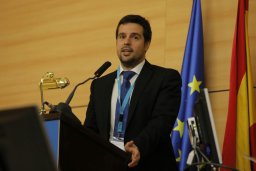 Gonzalo Jimenez合作论文数2
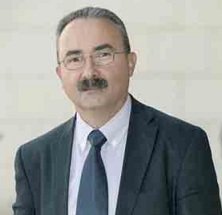 Eduardo Gallego合作论文数Universidad de Almería Departamento de Biología Vegetal y Ecología, Escuela Politécnica Superior Ctra. Sacramento2
 Piero Ravetto合作论文数Department of Energy, Politecnico di Torino2Julien Champigny合作论文数2
 Jozsef Kophazi合作论文数2B. Arien合作论文数2Hartmut Wider合作论文数2Carlo Artioli合作论文数2
 S. Dulla合作论文数2G. Darmet合作论文数Association Euratom-CEA, CEA Cadarache2
 Luca Ammirabile合作论文数2
 Carlo Petrovich合作论文数ENEA2Maes D合作论文数1B. Carluec合作论文数1o feynberg合作论文数1E.A.R. de Geus合作论文数1Diego Castelliti合作论文数1a takibayev合作论文数1Murgatroyd Jt合作论文数1N. Elmi合作论文数1
 Fabio Alcaro合作论文数NRG1
 Wolfgang Hering合作论文数Karlsruhe Inst Technol KIT1
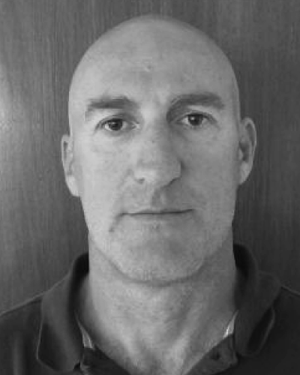 y peneliau合作论文数1kaspar koop合作论文数Division of Nuclear Engineering, Royal Institute of Technology1kamil tucek合作论文数1D. Schmitt合作论文数1K. Morita合作论文数1
 Stefano Monti合作论文数1J. Ordóñez合作论文数1W. Pfrang合作论文数1
 marti jeltsov合作论文数Division of Nuclear Engineering, Royal Institute of Technology1Jakub Luley合作论文数Institute of Nuclear and Physical Engineering, Slovak University of Technology in Bratislava1Branislav Vrban合作论文数Institute of Nuclear and Physical Engineering, Slovak University of Technology in Bratislava1




