In this study, the development of an efficient nano-electrode for fabricating electrochemical sensors to detect arsenic(v) in drinking water is presented. This nano-electrode is composed of a metal-semiconductor hybrid, namely ZnO NRs/α-Fe2O3/Au NPs, denoted as (ZFA), which was synthesized in three separate steps, including the low-temperature hydrothermal and dip-coating methods. The properties of the nanocomposite were characterized by UV-vis, FESEM, XRD and XPS. Moreover, its electrochemical characteristics were analyzed via several techniques, such as linear sweep voltammetry and square wave voltammetry in different water solutions with a wide range of arsenic concentrations from 0 to 50 μg L-1. Results indicate that the ZFA nanocomposites that were prepared with different concentrations of Au NPs showed different characteristics. From optical measurements, the best Au NP sample having the highest surface plasmon resonance (SPR) effect was determined, and this sample was further utilized for sensing. Moreover, using the optimized sample and from electrochemical studies, the arsenic(v) sensor's limit of detection was found to be 2.25 ppb, which is lower than the maximum dose recommended by the World Health Organization. In general, the results indicate that the addition of Au NPs led to better optical absorption properties. The findings of this study indicate that the addition of Au improves the electrochemical catalytic activity of the ZFA nanocomposite, which can be utilized as an electrode to further develop efficient arsenic(v) sensing systems for detection in drinking water.
Expression of concern for ‘Electrochemical genosensor based on gold nanostars for the detection of Escherichia coli O157:H7 DNA’ by Nasrin Razmi et al. , Anal. Methods , 2022, 14 , 1562–1570, https://doi.org/10.1039/D2AY00056C.
Developing a robust screen-printed electrochemical sensor for the determination of As5+ in drinking water based on metal oxide nanocomposite is still a challenging task. In this article, the development of electrochemical sensors by using ZnO/α-Fe2O3 nanoparticles (NPs) deposited on a screen-printed carbon electrode (SPCE) for As5+ detection is presented. The SPCE was modified by drop casting of ZnO NPs and α-Fe2O3NPs on the SPCE and used as a working electrode. This electrode was analysed for different concentrations of α-Fe2O3NPs and ZnO NPs. The samples were denoted 2.5 wt% F, 5 wt% F, 7.5 wt% F, 2.5 wt% Z, 5 wt% Z and 7.5 wt% Z, depending on the weight percentage of the NPs. The properties of the nanocomposite were characterised by UV-vis, FESEM and XRD. Moreover, the electrochemical characteristics were also analysed via linear sweep voltammetry in different water solutions with a wide range of arsenic concentrations from 0 to 50 µg/L. The results were analysed for different concentrations of both of the NPs. The best performance sample was then identified and used for further analysis. From the electrochemical studies, the sensor attained a low detection limit of 2.7 ppb for As5+, which is below the maximum allowable limit recommended by the World Health Organization for standard drinking water. Consequently, the results confirm that the electrochemical catalytic activity of ZnO/α-Fe2O3NPs/SPCE with 2.5 wt% ZF can be used as an efficient electrode to further develop an As5+ sensor system for analysis of real samples.
The demonstration of an efficient nanostructure that provides acceptable photoelectrochemical water splitting properties using the sun visible radiation is an appealing issue. In this connection, a new ternary nanocomposite of Ag2S/MoS2/ZnO photoanode is subsequently fabricated via hydrothermal, solvothermal and SILAR methods. Different properties of the nanocomposite are characterized by XRD, SEM, EDX, XPS, UV-Vis-IR spectroscopy and electrochemical techniques. The post-grown annealed 8-Ag2S/MoS2/ZnO photoanode exhibits a good performance with a photocurrent density of 2 mA/cm2 at a bias potential 1.23 V vs. RHE. The photocurrent of the post-grown annealed 8-Ag2S/MoS2/ZnO photoanode is 71.42 times, 40 times and 2 times higher compares to the pure ZnO, post-grown annealed MoS2/ZnO, and post-grown annealed 8-Ag2S/ZnO photoanodes, respectively. The enhanced PEC performance may originate from the combination of different effects such as the expansion of light absorption and energy band alignment (type II heterostructures), [SO4] acted as a charge -transfer medium, and electrode-electrolyte interface kinetic reactions.
AbstractLow temperature hydrothermal methods have been utilized to synthesize Hematite/Zinc oxide α‐Fe2O3/ZnO composite nano‐heterojunction nanorods grown on FTO glass substrates while monitoring the effect of different concentrations of urea on the morphology of the composite nano‐heterojunction. X‐ray diffraction (XRD) and scanning electron microscopy (SEM) techniques were used for the structural characterization of the α‐Fe2O3/ZnO different samples. UV‐visible spectroscopy was used for the characteristic absorbance versus wavelength of α‐Fe2O3/ZnO composite nano‐heterojunction which shows an absorption edge from 400 to 560 nm. X‐ray photoelectron spectroscopy (XPS) technique was applied to study of chemical composition of the α‐Fe2O3/ZnO and the obtained information demonstrated a pure phase α‐Fe2O3/ZnO has been achieved. The best efficiency among urea concentrations for the best composite nano‐heterojunction sample was achieved when using 0.2 M of urea. The electrochemical properties of the composite nano‐heterojunction were investigated using a three‐electrode electrochemical cell. Estimation of the electrochemical area shows that both the composite nano‐heterojunction and the bare α‐Fe2O3 have similar values. This confirms that the enhanced electrochemical property of the composite nano‐heterojunction is due to a synergetic effect as expected.
Arsenic is a toxic contaminant that can be found in drinking water. In this study, the development of an efficient electrode as an electrochemical sensor to detect arsenic(v) in drinking water is presented. The surface of ZnO nanorods (NRs) synthesized on a Ni-foam substrate was modified by depositing alpha-Fe2O3 nanoparticles (NPs) to fabricate an electrode for the detection of arsenic(v) contamination in drinking water. This electrode was synthesized through two separate growth steps: a hydrothermal (ZnO NRs) step followed by the dip-coating method (alpha-Fe2O3 NPs). The dip-coating method was repeated multiple times, 2 times (ZNF-2), 3 times (ZNF-3) and 4 times (ZNF-4), in order to achieve a uniform coverage of the ZnO NR surface. The electrodes were characterized using XRD, XPS, SEM and UV-vis spectroscopy. The best efficiency among the alpha-Fe2O3NP-modified nanorod samples was observed for the 3-time dip-coated ZNF-3 sample, which presented a uniform and homogeneous morphology, as observed from the SEM images, accompanied with the highest oxidation current. The electrochemical performance of the sensor electrodes was tested for a wide range of arsenic(v) concentrations from 0 to 50 ppb and was monitored using cyclic voltammetry. The results demonstrated a calibration plot that was linear over a concentration range of 0-50 ppb of arsenic(v), and the regression equation extracted from the calibration curve was found to be y = 0.003x - 0.6271 (with R2 = 0.991). The limit of detection (LOD) and limit of quantification (LOQ) were found to be 4.12 ppb and 13.74 ppb, respectively, which are lower than the maximum allowed value recommended by the World Health Organization (WHO) for arsenic in drinking water. This reasonable performance of the ZnO NRs/Ni-foam/alpha-Fe2O3NP nanocomposite electrode can be further enhanced, and the electrode can be utilized for efficient arsenic(v) detection in drinking water.
While world energy consumption is rising every year, the development of clean and renewable energy sources becomes very important for keeping the standard of living and preserving the environment. Solar driven photoelectrochemical (PEC) water splitting to produce hydrogen and oxygen is a promising method to contribute to the energy increasing demand. The development of the photoelectrode is a key factor for improving the PEC performance. A new morphology of 3D CdS-branched ZnO nanorod array nanocomposite has successfully been synthesized via solution routes as a photoanode. The present nanocomposite provides the highest photocurrent density of 2.5 mA/cm2 at a potential 1.23 V vs. RHE, which is about 83.3 times compared to a photocurrent density of about 0.03 mA/cm2 of the bare ZnO nanorod array photoelectrode. The boost of the PEC performance is improved due to the improvement of light absorption capacity, the enhanced energy band alignment (type-II heterostructure) promoting the charge transfer and separation, and the improvement of the electrode-electrolyte interface reaction kinetics. The result will be useful for further research on energy conversion and energy storage devices.
Energy and the environment are very important issues to secure, preserve and improve our modern lifestyle. The conversion of sunlight into hydrogen and oxygen via photoelectrochemical (PEC) water splitting is one of the most potential routes for clean energy. Cadmium sulfide (CdS) is a promising semiconductor for utilization as a photoanode. In this work, CdS has been grown via the hydrothermal method by optimizing the thiourea concentration. The growth of CdS with equal concentration of Cd2+ and S2-demonstrates the crowded hexagonal-shaped nanorod arrays with small diameter and relatively longer length, and it exhibits the highest photocurrent density due to some factors, such as high length-to-diameter ratio, large reaction area, suitable flat band potential, slow charge recombination rate, fast charge transfer, suitable conduction and valence band edges, and surface reaction kinetics. This work will be of potential to further develop improved nanocomposites of CdS nanorods for hydrogen production and research in related fields.
pH value is a significant environmental factor controlling the bacterial growth, activity and affecting their metabolic properties. In the present study, the effect of the different pH values (5, 6, 7, 8, and 9) of the cultivation medium on the growth rate of Escherichia coli ATCC 8739, Bacillus cereus ATCC 10876 and Pseudomonas aeruginosa 134,909/2 were studied. Plate count method and spectrophotometric measurement of optical density of the cultivation broth were used to assess growth of the pathogenic bacteria. Moreover, impedance spectroscopy measurement was applied to monitor the impedance change caused by the bacterial growth and activity at different pH values. Although the results showed that the initial pH did not completely inhibit the growth of the bacteria, the bacterial growth varied with the pH change showing the interference of pH with cell metabolism. Based on the results, the optical density of the cultivation broth measured spectrophotometrically for E. coli and B. cereus has shown good correlation with cell number determined by the plate count method in each phase of bacterial cultivation. Moreover, the results indicated that for E. coli and B. cereus the impedance value of the bacteria and the medium decreased from the beginning of the experiment till its end after 96 h from the start The impedance value during the first 24 h increased for P. aeruginosa, and then was decreasing until the end of the experiment. Nevertheless, the change in the resistance of the bacteria and the medium was proportionate to the change in cell number. For E. coli and B. cereus the resistance was decreasing with the growth of the bacteria. The linear dependency between the impedance and cell number was observed at low frequencies around 10–100 Hz. For P. aeruginosa, the resistance was increasing during the first 24 h and was decreasing afterwards. Furthermore, the resistance for P. aeruginosa was decreasing with the increase in cell number. Nonetheless, the impedance of the medium with P. aeruginosa was in linear dependency on the logarithm of cell number with the best R2 at high frequencies (0.1–1 MHz).
Water splitting energy production relies heavily on the development of high-performance photoelectrochemical cells (PECs). Among the most highly regarded semiconductor materials, cupric oxide (CuO) is an excellent photocathode material. Pristine CuO does not perform well as a photocathode due to its tendency to recombine electrons and holes rapidly. Photocathodes with high efficiency can be produced by developing CuO-based composite systems. The aim of our research is to develop an Ag2WO4/CuO composite by incorporating silver tungstate (Ag2WO4) nanoparticles onto hydrothermally grown CuO nanoleaves (NLs) by successive ionic layer adsorption and reaction (SILAR). To prepare CuO/Ag2WO4 composites, SILAR was used in conjunction with different Ag2WO4 nanoparticle deposition cycles. Physicochemical characterization reveals well-defined nanoleaves morphologies with tailored surface compositions. Composite CuO/Ag2WO4 crystal structures are governed by the monoclinic phase of CuO and the hexagonal phase of Ag2WO4. It has been demonstrated that the CuO/Ag2WO4 composite has outstanding performance in the PEC water splitting process when used with five cycles. In the CuO/Ag2WO4 photocathode, water splitting activity is observed at low overpotential and high photocurrent density, indicating that the reaction takes place at low energy barriers. Several factors contribute to PEC performance in composites. These factors include the high density of surface active sites, the high charge separation rate, the presence of favourable surface defects, and the synergy of CuO and Ag2WO4 photoreaction. By using SILAR, silver tungstate can be deposited onto semiconducting materials with strong visible absorption, enabling the development of energy-efficient photocathodes.
In this work, we demonstrate a novel low-cost template-assisted route to synthesize vertical ZnO nanorod arrays on Si (100). The nanorods were grown on a patterned double seed layer comprised of reduced graphene oxide (rGO) and Al-doped ZnO nanoparticles. The seed layer was fabricated by spray-coating the substrate with graphene and then dip-coating it into a Al-doped ZnO sol-gel solution. The growth template was fabricated from a double-layer resist, spin-coated on top of the rGO/ZnO:Al seed layer, and patterned by colloidal lithography. The results show a successful chemical bath deposition of vertically aligned ZnO nanorods with controllable diameter and density in the nanoholes in the patterned resist mask. Our novel method can presumably be used to fabricate electronic devices on virtually any smooth substrate with a thermal budget of 1 min at 300 °C with the seed layer acting as a conductive strain-relieving back contact. The top contact can simply be made by depositing a suitable transparent conductive oxide or metal, depending on the specific application.
Waterborne pathogens are unambiguously menacing for public health. Waterborne diseases encompass various kinds of life-threatening illnesses from diarrhea to cancers and in some cases lead to death. Thus, rapid and accurate detection of pathogenic bacteria plays a key role in disease prevention, food safety, and environmental monitoring. However, lack of suitable monitoring systems is the main cause of waterborne illnesses. Due to operational complexity, high cost, long data acquisition, and analyzing time, conventional laboratory-based methods are inadequate for effective monitoring purposes. Biosensor technology overcomes the limitations and disadvantages of conventional techniques and opens novel opportunities for the development of cost-effective analytical devices with high simplicity, sensitivity, and selectivity for pathogen detection. This chapter provides an overview of the electrochemical detection of waterborne bacteria with a focus on nanomaterials and different available bioreceptors for these devices. Further discussion related to the challenges and directions of this field for upcoming on-site monitoring is also presented.
Escherichia coli O157:H7 (E. coli O157:H7) is an enterohemorrhagic E. coli (EHEC), which has been issued as a major threat to public health worldwide due to fatal contamination of water and food. Thus, its rapid and accurate detection has tremendous importance in environmental monitoring and human health. In this regard, we report a simple and sensitive electrochemical DNA biosensor by targeting Z3276 as a genetic marker in river water. The surface of the designed gold electrode was functionalized with gold nanostars and an aminated specific sensing probe of E. coli O157:H7 to fabricate the genosensor. Cyclic voltammetry (CV) and square wave voltammetry (SWV) techniques were applied for electrochemical characterization and detection. The synthesized gold nanostars were characterized using different characterization techniques. The fabricated DNA-based sensor exhibited a high selective ability for one, two, and three-base mismatched sequences. Regeneration, stability, selectivity, and kinetics of the bioassay were investigated. Under optimal conditions, the fabricated genosensor exhibited a linear response range of 10-5 to 10-17 μM in the standard sample and 7.3 to 1 × 10-17 μM in water samples with a low limit of quantification of 0.01 zM in water samples. The detection strategy based on silver plated gold nanostars and DNA hybridization improved the sensitivity and specificity of the assay for E. coli O157:H7 detection in real water samples without filtration. The detection assay has the advantages of high selectivity, sensitivity, low amounts of reagents, short analysis time, commercialization, and potential application for the determination of other pathogenic bacteria.
In this study, we have used cotton silk as a source of abundant hydroxyl groups for the fast nucleation/growth of cobalt oxide (Co3O4) nanowiresviaa hydrothermal method.
The sensor technology for water quality monitoring (WQM) has improved during recent years. The cost-effective sensorised tools that can autonomously measure the essential physical-chemical-biological (PCB) variables are now readily available and are being deployed on buoys, boats, and ships. Yet, there is a disconnect between the data quality, data gathering, and data analysis due to the lack of standardized approaches for data collection and processing, spatiotemporal variation of key parameters in water bodies and new contaminants. Such gaps can be bridged with a network of multiparametric sensor systems deployed in water bodies using autonomous vehicles, such as marine robots and aerial vehicles to broaden the data coverage in space and time. Furthermore, intelligent algorithms [e.g., artificial intelligence (AI)] could be employed for standardized data analysis and forecasting. This article presents a comprehensive review of the sensors, deployment, and analysis technologies for WQM. A network of networked water bodies could enhance the global data intercomparability and enable WQM at a global scale to address global challenges related to food (e.g., aqua/agriculture), drinking water, and health (e.g., water-borne diseases).
In this research work, we have produced a composite material consisting titanium dioxide (TiO₂) and zinc oxide (ZnO) nanostructures via precipitation method. Scanning electron microscopy (SEM) study has shown the mixture of nanostructures consisting nanorods and nano flower. Energy dispersive spectroscopy (EDS) study has confirmed the presence of Ti, Zn and O as main elements in the composite. X-ray diffraction (XRD) study has revealed that the successful presence of TiO₂ and ZnO in the composite. The composite material exhibits small optical energy band gap which led to reduction of the charge recombination rate of electron-hole pairs. The band gap for the composite TiO₂/ZnO samples namely 1, 2, 3 and 4 is 3.18, 3.00, 2.97 and 2.83 eV respectively. Small optical bandgap gives less relaxation time for the recombination of electron and hole pairs, thus favorable photodegradation is found. The degradation efficiency for the TiO₂/ZnO samples for methylene blue in order of 55.03%, 75.7%, 85.14% and 90.08% is found for the samples 1, 2, 3 and 4 respectively. The proposed study of titanium dioxide addition into ZnO is facile and inexpensive for the development of efficient photocatalysts. This can be capitalized at large scale for the energy and.
 Omer Nur合作论文数266
 Ibupoto Zafar Hussain合作论文数Dept Sci & Technol, Linkoping Univ113
 Qx Zhao合作论文数58Ying Fu合作论文数47
 Kimleang Khun合作论文数42
 Aneela Tahira合作论文数Institute of Chemistry, Shah Abdul Latif University of Khairpur Mirs37
 Xianjie Liu合作论文数Laboratory of Organic Electronics, Department of Science and Technology, Linköping University36
 Syed M. Usman Ali合作论文数Department of Electronic Engineering, NED University of Engineering and Technology29G.V. Hansson合作论文数28
 Peter Klason合作论文数28
 Chan Oeurn Chey合作论文数Department of Science and Technology, Linköping University23
 Abbasi Mazhar Ali合作论文数Dept Sci & Technol, Linkoping Univ23
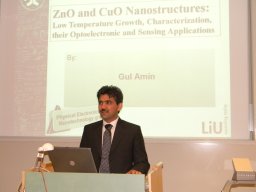 Dr. Gul Amin合作论文数Department of Science and Technology, Linköping University22
 A. Zainelabdin合作论文数Department of Science and Technology, Linköping University22
 Wei Lu (陆卫)合作论文数Shanghai Institute of Technical Physics, Chinese Academy of Sciences;University of Chinese Academy of Sciences20
 Ijaz Hussain合作论文数20
 Lozovik Yurii E合作论文数Institute of Spectroscopy, Russian Academy of Sciences;Laboratory of Nanostructures, Institute of Spectroscopy;Department of Theoretical Nuclear Physics, National Research Nuclear University;University of Rostock;Department of the Problems of Physics and Power Engineering, Moscow Institute of Physics and Technology20M. Karlsteen合作论文数20
 Danxia Xu合作论文数Department of Electronics, Carleton University;National Research Council of Canada, Government of Canada19
 Qamar ul Wahab合作论文数19S Zaman合作论文数19
 Naveed ul Hassan Alvi合作论文数Department of Science and Technology, Linköping University19
 Soomro Razium A合作论文数National Centre of Excellence in Analytical Chemistry, University of Sindh18
 Khan Azam合作论文数18
 Hatim Alnoor合作论文数These authors contributed equally.17
 Lars Hultman合作论文数Department of Physics, Chemistry and Biology, Linkoping University17
 Bengt Danielsson合作论文数Acromed Invest AB17N. Bano合作论文数16Sadaf Jamil R合作论文数Department of Science and Technology, Linköping University16
 Sami Elhag合作论文数Department of Science and Technology, Linkoping University16
 Mushtaque Hussain合作论文数16
 M. Atif合作论文数Universiti Sains Malaysia (USM),16omer nour合作论文数15
 T. V. Shubina合作论文数AF Ioffe Phys Tech Inst, St Petersburg 194021, Russia15Yevgeny V. Mamontov合作论文数15
 Syed Tufail Hussain Sherazi合作论文数National Center of Excellence in Analytical Chemistry, University of Sindh15
 Galia Pozina合作论文数Department of Physics, Chemistry and Biology, Linköping University15Sc Shen合作论文数14
 Muhammad Israr Qadir合作论文数Dept Sci & Technol, Linkoping Univ14
 Victor Ryzhii合作论文数University of Aizu;Research Institute of Electrical Communication, Tohoku University;Institut Sverhvysokocastotnoj Poluprovodnikovoj Elektroniki, Rossijskoj Akademii Nauk14M. Q. Israr合作论文数13A. Ouacha合作论文数13
 Mohamad AlSalhi合作论文数Department of Physics and Astronomy, College of Science, King Saud University13W.-X. Ni (倪卫新)合作论文数13A. A. Toropov合作论文数13Soomro Muhammad Yousuf合作论文数13
 Muhammad Ishaque Abro合作论文数Nanomaterials Research Group, Mehran University of Engineering and Technology;Department of Metallurgy and Materials Engineering, Mehran University of Engineering and Technology;Mehran University of Engineering and Technology, Mehran University of Engineering and Technology13
 Bo Monemar合作论文数12Rania E. Adam合作论文数12




