This pedagogical review presents the proof of the Solovay-Kitaev theorem in the form of an efficient classical algorithm for compiling an arbitrary single-qubit gate into a sequence of gates from a fixed and finite set. The algorithm can be used, for example, to compile Shor's algorithm, which uses rotations of $\pi / 2^k$, into an efficient fault-tolerant form using only Hadamard, controlled-{\sc not}, and $\pi / 8$ gates. The algorithm runs in $O(\log^{2.71}(1/\epsilon))$ time, and produces as output a sequence of $O(\log^{3.97}(1/\epsilon))$ quantum gates which is guaranteed to approximate the desired quantum gate to an accuracy within $\epsilon > 0$. We also explain how the algorithm can be generalized to apply to multi-qubit gates and to gates from $SU(d)$.
What is the minimal size quantum circuit required to exactly implement a specified n-qubit unitary operation, U, without the use of ancilla qubits? We sbow that a lowerbound on the minimal size is provided by the length of the minimal geodesic between Uand the identity, I, where length is defined by a suitable Finsler metric on the manifoldSU(2n). The geodesic curves on these manifolds have the striking property that oncean initial position and velocity are set, the remMnder of the geodesic is completelydeternfined by a second order differential equation known as the geodesic equation. Thisis in contrast with the usual case in circuit design, either classical or quantum, wherebeing given part of an optimal circuit does not obviously assist in the design of therest of the circuit. Geodesic analysis thus offers a potentially powerful approacb to theproblem of proving quantum circuit lower bounds. In this paper we construct severalFinsler metrics whose minimal length geodesics provide lower bounds on quantum circuitsize. For eacb Finsler metric we give a procedure to compute the corresponding geodesicequation. We also construct a large class of solutions to the geodesic equation, whichwe call Pauli geodesics, since they arise from isometries generated by the Pauli group.For any unitary U diagonal in the computational basis, we sbow that: (a) proposed theminimal length geodesic is unique, it must be a Pauli geodesic; (b) finding the length ofthe minimal Pauli geodesic passing from I to U is equivalent to solving an exponentialsize instance of the closest vector in a lattice problem (CVP); and (c) all but a doublyexponentially small fraction of sucb unit aries have nfinimal Pauli geodesics of exponentiallength.
This article is a short introduction to and review of the cluster-state model of quantum computation, in which coherent quantum information processing is accomplished via a sequence of single-qubit measurements applied to a fixed quantum state known as a cluster state. We also discuss a few novel properties of the model, including a proof that the cluster state cannot occur as the exact ground state of any naturally occurring physical system, and a proof that measurements on any quantum state which is linearly prepared in one dimension can be efficiently simulated on a classical computer, and thus are not candidates for use as a substrate for quantum computation.
We present unified, systematic derivations of schemes in the two known measurement-based models of quantum computation. The first model (introduced by Raussendorf and Briegel, [Phys. Rev. Lett. 86, 5188 (2001)]) uses a fixed entangled state, adaptive measurements on single qubits, and feedforward of the measurement results. The second model (proposed by Nielsen, [Phys. Lett. A 308, 96 (2003)] and further simplified by Leung, [Int. J. Quant. Inf. 2, 33 (2004)]) uses adaptive two-qubit measurements that can be applied to arbitrary pairs of qubits, and feedforward of the measurement results. The underlying principle of our derivations is a variant of teleportation introduced by Zhou, Leung, and Chuang, [Phys. Rev. A 62, 052316 (2000)]. Our derivations unify these two measurement-based models of quantum computation and provide significantly simpler schemes.
Arguably the deepest fact known about the von Neumann entropy, the strong subadditivity inequality is a potent hammer in the quantum information theorist's toolkit. This short tutorial describes a simple proof of strong subadditivity due to Petz [Rep. on Math. Phys. 23 (1), 57-65 (1986)]. It assumes only knowledge of elementary linear algebra and quantum mechanics.
When can a quantum system of finite dimension be used to simulate another quantum system of finite dimension? What restricts the capacity of one system to simulate another? In this paper we complete the program of studying what simulations can be done with entangling many-qudit Hamiltonians and local unitary control. By entangling we mean that every qudit is coupled to every other qudit, at least indirectly. We demonstrate that the only class of finite-dimensional entangling Hamiltonians that are not universal for simulation is the class of entangling Hamiltonians on qubits whose Pauli operator expansion contains only terms coupling an odd number of systems, as identified by Bremner [Phys. Rev. A 69, 012313 (2004)]. We show that in all other cases entangling many-qudit Hamiltonians are universal for simulation.
What is the computational power of a quantum computer? We show that determining the output of a quantum computation is equivalent to counting the number of solutions to an easily computed set of polynomials defined over the finite field Z_2. This connection allows simple proofs to be given for two known relationships between quantum and classical complexity classes.
The one-way quantum computing model introduced by Raussendorf and Briegel [Phys. Rev. Lett. 86, 5188 (2001)] shows that it is possible to quantum compute using only a fixed entangled resource known as a cluster state, and adaptive single-qubit measurements. This model is the basis for several practical proposals for quantum computation, including a promising proposal for optical quantum computation based on cluster states [M. A. Nielsen, Phys. Rev. Lett. (to be published), quant-ph/0402005]. A significant open question is whether such proposals are scalable in the presence of physically realistic noise. In this paper we prove two threshold theorems which show that scalable fault-tolerant quantum computation may be achieved in implementations based on cluster states, provided the noise in the implementations is below some constant threshold value. Our first threshold theorem applies to a class of implementations in which entangling gates are applied deterministically, but with a small amount of noise. We expect this threshold to be applicable in a wide variety of physical systems. Our second threshold theorem is specifically adapted to proposals such as the optical cluster-state proposal, in which nondeterministic entangling gates are used. A critical technical component of our proofs is two powerful theorems which relate the properties of noisy unitary operations restricted to act on a subspace of state space to extensions of those operations acting on the entire state space. We expect these theorems to have a variety of applications in other areas of quantum-information science.
Entanglement in the ground state of a many-body quantum system may arise when the local terms in the system Hamiltonian fail to commute with the interaction terms in the Hamiltonian. We quantify this phenomenon, demonstrating an analogy between ground-state entanglement and the phenomenon of frustration in spin systems. In particular, we prove that the amount of ground-state entanglement is bounded above by a measure of the extent to which interactions frustrate the local terms in the Hamiltonian. As a corollary, we show that the amount of ground-state entanglement is bounded above by a ratio between parameters characterizing the strength of interactions in the system, and the local energy scale. Finally, we prove a qualitatively similar result for other energy eigenstates of the system.
What interactions are sufficient to simulate arbitrary quantum dynamics in a composite quantum system? It has been shown that all two-body Hamiltonian evolutions can be simulated using any fixed two-body entangling n-qubit Hamiltonian and fast local unitaries. By entangling we mean that every qubit is coupled to every other qubit, if not directly, then indirectly via intermediate qubits. We extend this study to the case where interactions may involve more than two qubits at a time. We find necessary and sufficient conditions for an arbitrary n-qubit Hamiltonian to be dynamically universal, that is, able to simulate any other Hamiltonian acting on n qubits, possibly in an inefficient manner. We prove that an entangling Hamiltonian is dynamically universal if and only if it contains at least one coupling term involving an even number of interacting qubits. For odd entangling Hamiltonians, i.e., Hamiltonians with couplings that involve only an odd number of qubits, we prove that dynamic universality is possible on an encoded set of n-1 logical qubits. We further prove that an odd entangling Hamiltonian can simulate any other odd Hamiltonian and classify the algebras that such Hamiltonians generate. Thus, our results show that up to local unitary operations, there are only two fundamentally different types of entangling Hamiltonian on n qubits. We also demonstrate that, provided the number of qubits directly coupled by the Hamiltonian is bounded above by a constant, our techniques can be made efficient.
What correlations are present in the ground state of a many-body Hamiltonian? We study the relationship between ground-state correlations, especially entanglement, and the energy gap between the ground and first excited states. We prove several general inequalities which show quantitatively that ground-state correlations between systems not directly coupled by the Hamiltonian necessarily imply a small energy gap.
How useful is a quantum dynamical operation for quantum information processing? Motivated by this question we investigate several strength measures quantifying the resources intrinsic to a quantum operation. We develop a general theory of such strength measures, based on axiomatic considerations independent of state-based resources. The power of this theory is demonstrated with applications to quantum communication complexity, quantum computational complexity, and entanglement generation by unitary operations.
What is the time-optimal way of using a set of control Hamiltonians to obtain a desired interaction? Vidal, Hammerer, and Cirac [Phys. Rev. Lett. 88, 237902 (2002)] have obtained a set of powerful results characterizing the time-optimal simulation of a two-qubit quantum gate using a fixed interaction Hamiltonian and fast local control over the individual qubits. How practically useful are these results? We prove that there are two-qubit Hamiltonians such that time-optimal simulation requires infinitely many steps of evolution, each infinitesimally small, and thus is physically impractical. A procedure is given to determine which two-qubit Hamiltonians have this property, and we show that almost all Hamiltonians do. Finally, we determine some bounds on the penalty that must be paid in the simulation time if the number of steps is fixed at a finite number, and show that the cost in simulation time is not too great.
We define several quantitative measures of the robustness of a quantum gate against noise. Exact analytic expressions for the robustness against depolarizing noise are obtained for all bipartite unitary quantum gates, and it is found that the controlled-NOT gate is the most robust two-qubit quantum gate, in the sense that it is the quantum gate which can tolerate the most depolarizing noise and still generate entanglement. Our results enable us to place several analytic upper bounds on the value of the threshold for quantum computation, with the best bound in the most pessimistic error model being p(th)less than or equal to0.5.
What makes quantum information science a science? This paper explores the idea that quantum information science may offer a powerful approach to the study of complex quantum systems.
We give a simple proof of a formula for the minimal time required to simulate a two-qubit unitary operation using a fixed two-qubit Hamiltonian together with fast local unitaries. We also note that a related lower bound holds for arbitrary n-qubit gates.
What resources are universal for quantum computation? In the standard model, a quantum computer consists of a sequence of unitary gates acting coherently on the qubits making up the computer. This paper shows that a very different model involving only projective measurements, quantum memory, and the ability to prepare the |0>state is also universal for quantum computation. In particular, no coherent unitary dynamics are involved in the computation.
Complete and precise characterization of a quantum dynamical process can be achieved via the method of quantum process tomography. Using a source of correlated photons, we have implemented several methods, each investigating a wide range of processes, e.g., unitary, decohering, and polarizing. One of these methods, ancilla-assisted process tomography (AAPT), makes use of an additional "ancilla system," and we have theoretically determined the conditions when AAPT is possible. Surprisingly, entanglement is not required. We present data obtained using both separable and entangled input states. The use of entanglement yields superior results, however.
This Brief Report presents a corollary to Uhlmann's theorem which provides a simple operational interpretation of the fidelity of mixed states.
We introduce a model of computation based on read only memory (ROM), which allows us to compare the space-efficiency of reversible, error-free classical computation with reversible, error-free quantum computation. We show that a ROM-based quantum computer with one writable qubit is universal, whilst two writable bits are required for a universal classical ROM-based computer. We also comment on the time-efficiency advantages of quantum computation within this model.
 Christopher M. Dawson合作论文数6Tobias J. Osborne合作论文数Institut für Theoretische Physik, Gottfried Wilhelm Leibniz Universität5Jennifer L. Dodd合作论文数4
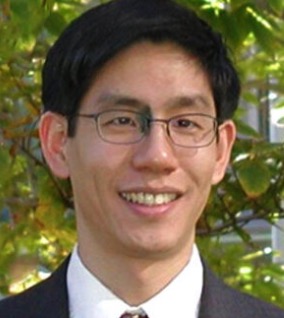 Isaac Chuang合作论文数Department of Electrical Engineering and Computer Science, Massachusetts Institute of Technology3Henry L. Haselgrove合作论文数3
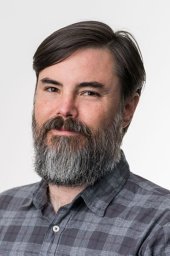 Michael J. Bremner合作论文数Centre for Quantum Computer Technology;Department of Physics;University of Queensland;Centre for Quantum Computer Technology, University of Queensland3
 Howard Barnum合作论文数Perimeter Institute;Center for Quantum Information and Control, The University of New Mexico3
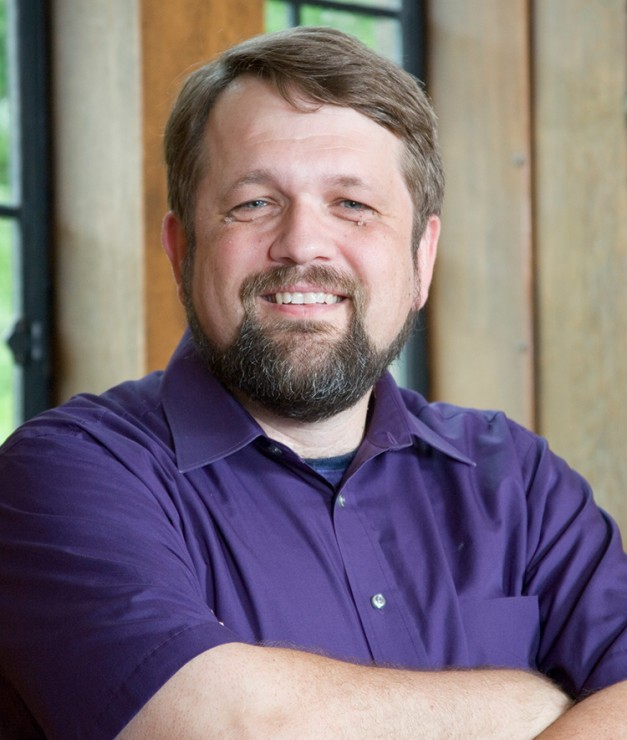 Benjamin Schumacher合作论文数Physics Department, Kenyon College;Physics Faculty, Kenyon College3
 Carlton M. Caves合作论文数Center for Quantum Information and Control, Department of Physics and Astronomy, University of New Mexico2
 Aram Harrow合作论文数Center for Theoretical Physics, Massachusetts Institute of Technology2Andrew P. Hines合作论文数2Duncan Mortimer合作论文数2
 Debbie Leung合作论文数Institute for Quantum Computing, University of Waterloo2
 Andrew White合作论文数Department of Physics, School of Mathematics and Physics, The University of Queensland;Centre for Engineered Quantum Systems1David Branning合作论文数1
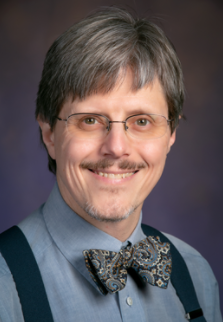 Paul G Kwiat合作论文数Department of Physics, The Grainger College of Engineering, University of Illinois Urbana-Champaign1
 Julia Kempe合作论文数Center for Data Science, New York University;Meta FAIR Paris;CNRS1
 Yoshihisa Yamamoto合作论文数National Chiao Tung University;Physics and Informatics Laboratories, NTT Research, Inc.;Edward L. Ginzton Laboratory, Stanford University1
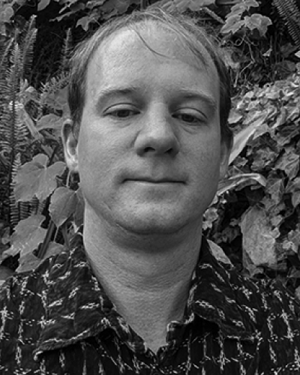 Evan R. Jeffrey合作论文数1Joseph B. Altepeter合作论文数1
 Dave Bacon合作论文数Paul G. Allen School of Computer Science & Engineering, University of Washington;CIFAR;Google Research1
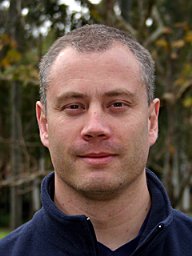 Alexei Gilchrist合作论文数Centre for Quantum Computer Technology;Department of Physics;University of Queensland;Centre for Quantum Computer Technology, University of Queensland1
 Rob Thew合作论文数Group of Applied Physics;University of Geneva;Group of Applied Physics, University of Geneva1




