This study develops a comprehensive optimization-simulation model to enhance the efficiency and resilience of the COVID-19 Vaccine Supply Chain Network (VSCN). The model integrates multi-objective, multi-product, and multi-period programming to address critical decisions related to location-allocation, inventory levels, safety stock, vaccine flow, and shortage, while considering stringent ultra-cold chain requirements for mRNA vaccines and wastage. Leveraging constrained multi-objective Grey Wolf Optimizer (MOGWO) and Non-Dominated Sorting Genetic Algorithm (NSGA-II), the study provides robust solutions for a wide range of problem sizes, demonstrating the superior performance of constrained MOGWO in solving high-dimensional constraints. The algorithms are fine-tuned using the Taguchi method, and their performance is validated through metrics such as MID, HV, SP, and NS, highlighting their respective strengths. A large-scale case study conducted in Iran using anyLogistix simulation software over 60 days evaluates the resiliency of the SC under disruption scenarios. Strategies like equipping specific hubs with ultra-cold chains and implementing a Min-Max inventory policy with an LTL transportation policy reduce total costs and enhance service levels. The findings emphasize the importance of demand fulfillment, waste reduction, and resource allocation, offering actionable insights for logistics managers and policymakers in the healthcare sector, such as dynamically adjusting vaccine distribution based on real-time demand, optimizing cold chain infrastructure placement, and prioritizing vaccination center locations based on accessibility and fair distribution considerations. This study further highlights the importance of fine-tuning delivery frequency to vaccination centers based on actual demand patterns, reducing operational costs related to storage, transportation, and wastage, improving VSC resilience to respond rapidly to disruptions, and provides strategies for minimizing operational costs, reducing wastage, and improving vaccine accessibility. This work significantly contributes to COVID-19 VSC management by presenting a holistic framework that addresses real-world complexities.
This research tackles a crucial aspect of manufacturing system design: optimizing the Facility Layout Problem (FLP). We address a specific scenario involving multiple products with flexible processing plans on various machines in a job-shop environment. Redundant machines of each type exist, with known acquisition costs and capacities. Processing times and production volumes for each product are also pre-determined. An integer non-linear mathematical model is formulated to represent the problem. While a linearization technique is applied, the inherent NP-hardness renders exact solution methods impractical for medium to large-scale problems. To address this, three algorithms are proposed: a matheuristic, Iterated Local Search (ILS), and a Genetic Algorithm (GA). These are evaluated based on solution quality, runtime, and robustness across diverse problem instances. Results demonstrate the superiority of the ILS algorithm in terms of solution quality, robustness, and overall effectiveness. These findings offer valuable guidance for decision-makers seeking optimization tools for FLPs. The ILS's consistent delivery of high-quality solutions with minimal variation makes it a reliable choice. Additionally, as many facility layout decisions are tactical or strategic - where computational time is less critical - the matheuristic demonstrates acceptable performance and holds promise for handling problems of varying sizes and complexities. To further validate the effectiveness and demonstrate the practical applicability of our proposed solution methodology, the ILS and matheuristic algorithms were applied to a real-world layout design case adapted from the literature. The results once again confirm the strong performance of both methods in terms of solution quality, computational efficiency, and robustness.
In this paper, a Mixed-Integer Linear Programming (MILP) model to simultaneously schedule jobs and transporters in a flexible flow shop system is suggested. Wherein multiple jobs, finite transporters, and stages with parallel unrelated machines are considered. In addition to the mentioned technicalities, the jobs are able to omit one or more stages, and may not be executable by all the machines, and similarly, transportable by all the transporters. To the best of our knowledge, no study in the literature has featured efficacy of the parallel computing in simultaneous scheduling of jobs and transporters in the flexible flow shop system which remarkably shortens run time if the solution approaches are designed accordingly. To this end, we employ Gurobi solver, Parallel Genetic Algorithm (PGA), Parallel Particle Swarm Optimization (PPSO) and hybrid Parallel PSO-GA Algorithm (PPSOGA) to deal with the problem instances. Furthermore, a parallel version of Ant Colony Optimization (ACO) algorithm adapted from the state-of-the-art literature is developed to verify the performance of our suggested solution methods. Using 60 problem instances generated via uniform distribution, the suggested solution approaches are compared against one another. After assessing the results of the computational experiments, it is deduced that PPSOGA algorithm outperforms PGA, PPSO, Parallel Ant Colony Optimization (PACO) and Gurobi solver in terms of the quality of the solutions. The efficiency and run time of the suggested approaches are then assessed through two prominent statistical tests (i.e., Wald and Analysis of Variance (ANOVA)). Eventually, it comes to spotlight that PPSOGA algorithm is computationally rewarding and dependable.
The quality of public transportation service has major effects on people’s quality of life. During frequency and timetable setting, synchronization is a very important and complicated issue which can directly influence the utility and attractiveness of the system. In this paper, a mixed-integer nonlinear programming model is proposed that aims at setting timetables on a bus transit network with the maximum synchronization and the minimum number of fleet size. The proposed model is shown to be applicable for both small and large-scale transit networks by employing it for setting timetables on two samples of both sizes. As an illustrative example, a simple version of the model is coded and run in GAMS Software and a completely reasonable timetable is obtained. As the second example, the proposed model is used to set timetables on Tehran BRT networks through the genetic algorithm; then the NSGA-II is used to obtain the Pareto optimal solutions of the problem for five different scenarios. The Pareto optimal solutions are used to draw the Pareto optimal fronts which act as an essential decision making tool. The overall results show that the proposed model is efficient enough to be employed setting timetables on transit networks with different sizes.
In this paper, we investigate the Single-Source Capacitated Multi-Facility Weber Problem. The aim is to locate several new facilities among existing customers and simultaneously allocate customers to the facilities. A Genetic Algorithm is proposed for solving the problem, in which a local search method is embedded. The proposed Genetic Algorithm is tested on existing data sets to evaluate its robustness over available methods in the literature.
One of the most popular forming processes is the shape rolling process in which the desired shape change is achieved by pressing two rollers with a special shape in the opposite rotational direction. In order to improve the product’s quality and reduce production costs, accurate analysis of the shape rolling process of the compressor blades as well as the investigation of the effective parameters have been done. First, the shape rolling process of a typical compressor blade was simulated based on the experimental data using the finite element method and Design of Experiment (DOE). Then, the effect of various process parameters, including the thickness and width of the preform, the roller diameter, the thickness and width of the flash channel, and the number of the rolling steps on two objectives, namely the rolling force and the amount of the flash were investigated. The obtained data were analyzed by Analysis of Variance (ANOVA), and the contributory factors of the shape rolling process were identified. The results revealed that all of the considered factors affected the rolling load, but only the initial sheet's width and thickness were the factors with impact on the volume of the flash as the second objective. The required process load decreased by increasing the number of the rolling steps, but the rolling load increased by increasing other factors. Furthermore, increasing the thickness and width of the initial sheet increased the flash volume.
Integrated water resources management is a systematic process for sustainable development, allocation and monitoring of water resources that is used for social, economic and environmental purposes. In this study, a multi-period mixed-integer linear programming (MILP) model for urban water supply network management is proposed. The proposed model considers all echelons of water supply chain from supply centers to wastewater treatment centers. Also, the model optimizes the decisions such as selecting the suitable water supply centers and capacity level optimization. To verify and validate the proposed model a real case study is conducted in Urmia. The model is solved by the General Algebraic Modeling System (GAMS) software and its results have been analyzed. According to the results, the optimal water supply centers, optimal water flow, optimal water inventory, and optimal capacity levels of wastewater treatment centers in different periods are determined. Also, in case of transferring the remaining additional treated water to Urmia lake, its level is increased by about 0.007 cm.
Like other organizations, universities must evaluate their performance to identify areas for improvement. Although the different aspects of a university are considered for evaluation, the research section is deemed to be the most important and is where the necessity of the performance evaluation is most salient. In this study, the relative efficiency of the sub-units of several faculties of the university has been investigated through dynamic data envelopment analysis (DDEA) and inverse DDEA (IDDEA). The capability of traditional DEA to differentiate between efficient and non-efficient units decreases as the ratio of the number of inputs and outputs to the number of decision-making units increases. To remove this limitation by adding intermediate constraints between stages, a dynamic form of the method was applied in this research. The paper provides distinctions between the faculties as well as sensitivity analysis of the inputs/outputs of each faculty. The proposed IDDEA is implemented to scrutinize the changes in the input and output levels. The proposed approach is output-oriented to account for the homogeneity of faculties and their subordination under a specific unified management policy. A case study of Urmia University is used to demonstrate the proposed approach.
This paper deals with multi-model assembly line balancing problem (MuMALBP). In multi-model assembly lines several products are produced in separate batches on a single assembly line. Despite their popular applications, these kinds of lines have been rarely studied in the literature. In this paper, a multi-objective mixed-integer linear programing model is proposed for balancing multi-model assembly lines. Three objectives are simultaneously considered in the proposed model. These are: (1) minimizing cycle time for each model (2) maximizing number of common tasks assigned to the same workstations, and (3) maximizing level of workload distribution smoothness between workstations. Performance of the proposed model is empirically investigated in a real world engine assembly line. After applying the proposed model, possible minimum cycle time is attained for each model. All common tasks are assigned to the same workstations and a highest possible level of workload distribution smoothness is achieved. It is shown that the best compromise solution has led to the best value of the first and second objective functions with a slight distance from the best value of third one.
Achieving an efficient supply chain is impossible without integrating supply chain processes and extending long-term relationships between its members. Evaluating the process, selecting a set of suppliers, and allocating orders are effective parameters in the coordination among supply chain members. In this study, to achieve an organized process, a two-stage hybrid model is presented to choose efficient suppliers, allocate order, and determine price in a supply chain with regard to coordination among members. First, an integrated Multi-Objective Mixed-Integer Nonlinear Programming (MOMINLP) model is provided to minimize costs and evaluate suppliers simultaneously. The proposed model includes a single-buyer multi-vendor coordination model and Data Envelopment Analysis (DEA). Then, the model is simplified and converted into a quadratic programming model. In the second stage, a model is presented to determine the price agreed upon by the buyer and the selected efficient suppliers using the bargaining game and the Nash equilibrium concept. The purpose of this model is to maximize the parties' utilities considering the order quantity specified in the first stage. At the end of this paper, the data taken and adapted from the previous researches are applied to show the abilities of the proposed models.
Increasing the emissions of greenhouse gases (GHG) due to fossil fuel consumption has led to problems such as global warming, climate change, loss of biodiversity, and urban pollutions. Bioethanol production especially from different biomass such as wheat straw has been specified as one of the sustainable solutions to deal with energy crisis. Bioethanol logistics network optimization will reduce total costs of supply chain management and improves its competency with fossil fuels. In this paper, a mixed-integer linear programming (MILP) model is proposed to integrate and optimize bioethanol logistics network design problem. The proposed model is a multi-period and multi-echelon including feedstock supply centers, collection centers, bio-refineries, and customer centers. The proposed model is applied in a real case in Iran. The results justify the applicability and performance of the model in efficient design of bioethanol logistics network problems.
Supply chain is a system involved in moving a product or service from supplier to customer. Since the supply chain in a company includes all responsibilities and operations of the company, its designing is necessarily a complete part of strategic planning procedure of the company. This paper intends to develop supply chain strategy through such tools as system dynamics and game theory. In this research, we have first identified key and principal variables of the supply chain to draw the causal diagrams with feedback loops. Then the layer and rate variables were identified, layer and flow models were created and by writing equations the simulation model is implemented for 10 years. The review of automotive industry, four main aspects is selected for programming. The issue of selecting best combination of strategy as a game with four players is considered in which each player can select three strategies. Then, the Shapely Value is used, the influence of each player in creating desirability is measured and by creation of the decision tree the best strategy combination is achieved. The results of this study showed that automotive part makers will have the greatest impact on the future of the automotive industry in Iran.
Background and objective: The location of facilities is of great importance in healthcare and is of interest to researchers due to its importance. In this regard, a large proportion of classic location-allocation models concentrate on solving problems in an exclusive environment (non-competitive), but this assumption is rarely true in reality. Methods: At first, a basic Non-Competitive Location Model (NCLM) is presented. Then, a Competitive Location Model (CLM) is developed based on the initial model. This study proposes a multi-objective integer programming model based on Nash bargaining game. The first objective function maximizes the two-person Nash product, which in turn maximizes the total number of patients covered by the newly established healthcare centers. The second objective function minimizes the sum of distances between population centers and the newly established healthcare centers. Findings: The results obtained from applying the CLM on Tehran’s Health Centers revealed the abilities of this model in simulating the competitive situations. For instance, by comparing the results obtained from both models (non-competitive and competitive) it was clear that the total covered population was considerably increased in the CLM. Conclusions: The proposed location model can be used as a basis for decision making by managers. Because of any wrong decision, in addition to raising the costs of the health system, can also lead to irreparable damage to human and social health.
The critical and undeniable role of hubs in telecommunication and networking brings about some precautions to be taken to protect networks against any disruption. In this paper, a multi-objective model in a group of hub location problems, referred to as protection models for survivable network design, is developed. In fact, this model is a hub location problem that aims to maximize the potential flow between the origin and destination node pairs in the network, which has the minimum potential flow among all O-D pairs, including multiple assignment and back-up routes. In addition, it concerns the fixed cost of installation of the hub facilities. A fuzzy goal programming method is applied to solve the model. Different scenarios are implemented using Turkish data set and also numerical experiments are presented to illustrate the advantages of the proposed model in some aspects, compared to previous models. The results can give useful insights into telecommunication network design. (C) 2016 Sharif University of Technology. All rights reserved.
Inadequate supply of energy has become one of the major problems in societies due to consumers' increasing demand. Economic growth is a key reason for the increase in the energy consumption. Although different policies can be employed for resolving this problem, optimizing the efficiency of energy suppliers can be addressed as a key policy in this regard. This paper presents an adjusted Network Data Envelopment Analysis (NDEA) model for evaluating performance of energy supply chain in Iran from production to distribution stages. Some suggestions have been proposed to optimize the performance of the energy supply chain. The NDEA model is adjusted by using Assurance Region (AR) to achieve more realistic and scientific results. Borders of the assurance region obtained from Data Envelopment Analytic Hierarchy Process (DEAHP) method are entered into the NDEA model. The results obtained from this model are compared with those of conventional NDEA and technical efficiency in pairs. Finally, the Spearman and Kendall'sTau correlation tests are used for validating the results. (C) 2016 Sharif University of Technology. All rights reserved.
In this article, we formulate the problem of optimum joint replica server deployment and content placement in urban content delivery networks as a bi-objective binary integer programming model namely JSSRPP. The proposed formulation results in an optimum design such that the miss ratio of requests, the client response time and the cost of server deployment are minimised. In practice, the popularity of files may change over the course of time, thus, a novel adaptive file replacement algorithm namely UDCR is also proposed in which files are scored according to different criteria including the time and the number of recent requests and the size of requested files. Then, in discrete points of time, the files with the lowest score are replaced with the one experiencing the highest number of misses. Results of extensive simulation study with NS-2, confirms that the hit ratio of UDCR approaches that of JSSRPP in steady state.
Hole-making is a type of machining processes that are specifically used to cut a hole into a part. The objective of interest in hole-making operations is to reduce the summation of tool airtime and tool switching time in order to reduce total processing time. This objective is affected by the sequence through which operations are done. This problem is formulated as a zero–one nonlinear mathematical programming model. In this paper, a dynamic programming-based method is developed to solve the proposed mathematical model and obtain the globally optimum solutions. An illustrative example is given to show the application and efficiency of the proposed method for optimizing the sequence of hole-making operations in a typical industrial part. The quality of solutions obtained by the proposed method is compared to those obtained by both branch-and-bound method and an ant algorithm available in the literature. The computational experiments reflect the high efficiency of our proposed method.
In this paper, a heuristic method is developed to solve the location and machine selection problem in a two-dimensional continuous area. In this method, a two-step algorithm is proposed in which the choosing sequence of the machines is determined in the first step and machines are located in the second step. Initially, the problem is formulated as a nonlinear mixed integer programming (MIP) model. This model is then modified to determine the location of machines step by step. Some small, medium and large-sized problems are designed and solved by both branch-and-bound (B&B) and the proposed method to verify the efficiency and effectiveness of the proposed method and the results obtained are compared. Computational results show that the proposed method can provide high quality solutions in a very reasonable time in comparison to B&B method, particularly in the case of medium-to-large sized problems.
Portfolio optimization is one of the important issues for effective and economic investment. There is plenty of research in the literature addressing this issue. Most of these pieces of research attempt to make the Markowitz’s primary portfolio selection model more realistic or seek to solve the model for obtaining fairly optimum portfolios. In this paper, P/E criterion and Experts’ Recommendations on Market Sectors have been added to the primary Markowitz mean-variance model as two objectives. The P/E ratio is one of the important criteria for investment in the stock market, which captures the current expectations of the market activists about different companies. Experts’ Recommendations for different Market Sectors, on the other hand, captures the experts’ predictions about the future of the stock market. There are many solving methods for the portfolio optimization problem, but almost none of them investigates Invasive Weed Optimization algorithm (IWO). In this research, the proposed multi-objective portfolio selection model has been transformed into a single-objective programming model using fuzzy normalization and uniform design method. Some guidelines are given for parameter setting in the proposed IWO algorithm. The model is then applied to monthly data of top 50 companies of Tehran Stock Exchange Market in 2013. The proposed model is then solved by three methods: (1) the proposed IWO algorithm, (2) the Particle Swarm Optimization algorithm (PSO), and (3) the Reduced Gradient Method (RGM). The non-dominated solutions of these algorithms are compared with each other using Data Envelopment Analysis (DEA). According to the comparisons, it can be concluded that IWO and PSO algorithms have the same performance in most important criteria, but IWO algorithm has better solving time than PSO algorithm and better performance in dominating inefficient solutions, and PSO algorithm has better results in total violation of constraints.
Supply chain configuration and supplier selection are two significant strategic decision making problems in supply chain management. In order to tackle the uncertain environment in these two problems, we propose an integrated mathematical programming model based on robust optimization theory. The framework of the proposed supply chain network involves a forward flow from heterogeneous capacitated suppliers offering price discounts to customers, and also a reverse flow from customer zones to disposal centers or production facilities. The objective function of the model is to minimize the total cost of the supply chain network by determining a set of best suppliers, order allocation to selected suppliers, the location of facilities in each layer and transportation quantities between them. Moreover, to measure the imprecise input parameters, according to three types of uncertainty sets, the robust counterparts of the model have been developed. Finally, to validate the robust model, the eventual optimal solutions are compared with the deterministic model, and numerical studies have been implemented along with sensitivity analysis. (C) 2016 Elsevier Inc. All rights reserved.
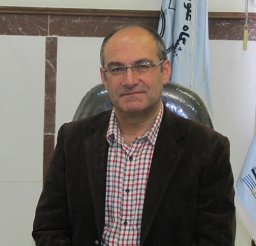 Iraj Mahdavi合作论文数Department of Industrial Engineering, Mazandaran University of Science and Technology22
 Mohammad Mahdi Paydar合作论文数Department of Industrial, Faculty of Materials & Industrial Engineering, Babol Noshirvani University of Technology;Department of Industrial Engineering, Babol Noshirvani University of Technology11
 Ravi Shankar合作论文数Department of Management Studies, Indian Institute of Technology Delhi8
 Prem Vrat合作论文数6
 Babak Shirazi合作论文数Mazandaran University of Science and Technology5
 Amin Aalaei合作论文数Department of Industrial Engineering, Mazandaran University of Science and Technology4
 Mehdi A.Kamran合作论文数Department of Industrial Engineering, Amirkabir University4
 Mustafa Jahangoshai Rezaee合作论文数Department of Industrial Engineering, Iran University of Science and Technology4
 Reza Azadegan合作论文数3
 Ahad Foroughi合作论文数3
 Shahram Saeidi合作论文数islamic azad university3Ali Doniavi合作论文数Mechanical Engineering;Urmia University3
 Saleh Yousefi合作论文数Faculty of Engineering, Urmia University3
 Atabak Elmi合作论文数Faculty of Engineering, Urmia University3
 Hamid Karimi合作论文数Dept Agr Extens & Educ, Univ Zabol2
 Samuel Yousefi合作论文数Urmia Univ Technol, Fac Ind Engn, Orumiyeh, Iran2
 Nikbakhsh Javadian合作论文数Department of Industrial Engineering, Mazandaran University of Science and Technology2
 Reza Babazadeh合作论文数2
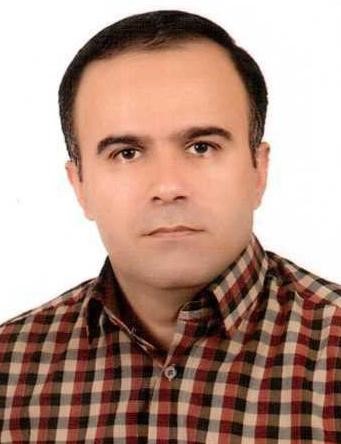 Abdolrahman Dadvand合作论文数Department of Mechanical Engineering, Urmia University of Technology2Amir Musa Abazari合作论文数2Hossein Sattari合作论文数2Sh. Khalilarya合作论文数2Fahimeh Biglari合作论文数1Sina Masoumzadeh合作论文数1Sahar Hanifeh Dokht合作论文数1Abolfazl Jafari Asl合作论文数1Salar Fathi合作论文数1
 R. Gharizadeh Beiragh合作论文数1zeynalzadeh amin合作论文数1Meysam Shafiei Kisomi合作论文数1
 Iman Seyedi合作论文数Payame Noor University1
 Faraz Baradarani合作论文数Fac Mech Engn, Univ Tabriz1
 Kamran Azimi合作论文数1
 Hadi Mahmoudzadeh合作论文数Fac Ind Engn, Urmia Univ Technol1Arash Amirteimoori合作论文数Firoozkooh Branch, Islamic Azad Univ1
 Meisam Shamsi合作论文数Fac Engn, Urmia Univ1Farzad Ghayour合作论文数Accounting, Urmia Univ1
 Saeed Shafiei Kaleibari合作论文数Sch Mech Engn, Shanghai Jiao Tong Univ1
 s m mahdi amiripour合作论文数Toos Inst Higher Educ1
 Erfan Babaee Tirkolaee合作论文数Faculty of Engineering and Natural Sciences, Istinye University1Mahdi Shahin合作论文数1
 Peyman Mashhadi Keshtiban合作论文数Fac Mech Engn, Urmia Univ Technol1
 Reza Alizadeh合作论文数School of Industrial and Systems Engineering, University of Oklahoma1Khonakdari, S.V.合作论文数1Khenanisho, R.合作论文数1Kaveh Taghizadeh合作论文数1
 Siamak Heidarzadeh合作论文数1
 Gholamreza Mansourfar合作论文数1
 Sadia Samar Ali合作论文数1




