In order to study differential properties of a subdivision surface at a markpoint, it is necessary to parametrise it over a so-called characteristic map defined as the infinite union of C k-parametrised rings. Construction of this map is known when a single step of the subdivision scheme does not rotate a regular lattice. Otherwise, two steps are considered as they realign the lattice and its subdivided version. We present a new subdivision scheme which rotates the lattice and nevertheless allows a direct construction of the characteristic map. It is eigenanalysed with techniques introduced in a companion article and proved to define a C 1 2-algorithm around a face-centre. This scheme generalises Loop's scheme, allowing the designer to choose between extraordinary vertices or faces in regard to the shape of the mesh, the location of the extraordinary elements, and the aimed limit shape.
In order to study differential properties of a subdivision surface at a markpoint, it is necessary to parametrise it over a so-called characteristic map defined as the infinite union of Ck-parametrised rings. Construction of this map is known when a single step of the subdivision scheme does not rotate a regular lattice. Otherwise, two steps are considered as they realign the lattice and its subdivided version. We present a new subdivision scheme which rotates the lattice and nevertheless allows a direct construction of the characteristic map. It is eigenanalysed with techniques introduced in a companion article and proved to define a C12-algorithm around a face-centre. This scheme generalises Loop's scheme, allowing the designer to choose between extraordinary vertices or faces in regard to the shape of the mesh, the location of the extraordinary elements, and the aimed limit shape.
The quality of a subdivision scheme in the vicinity of a vertex or a face-centre is related to the eigenstructure of the subdivision matrix. When the scheme has the appropriate symmetries, a common technique, based on discrete Fourier transform, builds small complex matrices that ease the numerical analysis of the eigenelements using in particular their Fourier index. But the numerical analysis of the eigenelements remains difficult when matrix entries involve complex numbers and unknowns, for example, in cases where we are tuning a scheme. We present techniques to build similar small matrices, still associated with a Fourier index and whose eigenstructure is simply related to the full matrix, but which are real. They extend the known techniques to schemes which rotate the lattice and with vertices which do not lie topologically on symmetry axes of the studied vicinity of vertex or face centre. Our techniques make it easier to tune these subdivision schemes. We illustrate it with the analysis of the so-called Simplest Scheme at the centre of an n-sided face.
Finite Element Analysis is seen as a particular technique for solving problems in Field Analysis in which some quantity which varies with position in a domain satisfies a Partial Differential Equation (PDE). Traditionally the approach to finite element analysis has been first to partition the domain into elements, sharing nodes. Each element then has a shape function associated with each node, and the shape functions associated with a given node together form a basis function. The coefficients of these basis functions are the field values at their nodes, and so the basis functions are interpolating. Gradually it became evident that some of these assumptions were unnecessary. This paper traces the development of the technology, and leads to the conclusion that in order to achieve significantly higher performance in our field analysis we need to regard the partitioning as a side-effect of the choice of basis functions instead of being the first step. Explicitly choosing the basis functions can give very significant enhancements in the cost/accuracy pareto tradeoff, which is of particular importance when the analyses are embedded in optimisation.
This paper describes a method for adding surface details to existing CAD models. Our approach is based on truncated powers, which allows us to align the added details with curved knot lines on the surface. Additionally, (truncated) powers give us precise control over the continuity of the perturbed surface across the (curved) knot lines. Our representation is compatible with current CAD/CAM practise and standards, and we showcase it on several examples.
Subdivision techniques are natural when extending isogeometric analysis beyond regular grid control nets, i.e., to integrated design and analysis of irregular layouts in several variables. This report identifies and discusses several challenges that need to be addressed to place the use of subdivision techniques for isogeometric analysis on a solid foundation. The report highlights issues of regularity, approximation and numerical quadrature. The challenges are illustrated by an implementation solving elliptic partial differential equations in the space of trivariate Catmull-Clark subdivision.
Gupta et al. (2018, 2019) describe a very beautiful application of algebraic geometry to lattice structures composed of quadric of revolution (quador) implicit surfaces. However, the shapes created have concave edges where the stubs meet, and such edges can be stress-raisers which can cause significant problems with, for instance, fatigue under cyclic loading. This note describes a way in which quadric fillets can be added to these models, thus relieving this problem while retaining their computational simplicity and efficiency.
A novel surface interrogation technique is proposed to compute the intersection of curves with spline surfaces in isogeometric analysis. The intersection points are determined in one-shot without resorting to a Newton–Raphson iteration or successive refinement. Surface-curve intersection is required in a wide range of applications, including contact, immersed boundary methods and lattice-skin structures, and requires usually the solution of a system of nonlinear equations. It is assumed that the surface is given in form of a spline, such as a NURBS, T-spline or Catmull–Clark subdivision surface, and is convertible into a collection of Bézier patches. First, a hierarchical bounding volume tree is used to efficiently identify the Bézier patches with a convex-hull intersecting the convex-hull of a given curve segment. For ease of implementation convex-hulls are approximated with k-dops (discrete orientation polytopes). Subsequently, the intersections of the identified Bézier patches with the curve segment are determined with a matrix-based implicit representation leading to the computation of a sequence of small singular value decompositions (SVDs). As an application of the developed interrogation technique the isogeometric design and analysis of lattice-skin structures is investigated. Although such structures have been common in large-scale civil engineering, current additive manufacturing, or 3d printing, technologies make it possible to produce up to metre size lattice-skin structures with designed geometric features reaching down to submillimetre scale. The skin is a spline surface that is usually created in a computer-aided design (CAD) system and the periodic lattice to be fitted consists of unit cells, each containing a small number of struts. The lattice-skin structure is generated by projecting selected lattice nodes onto the surface after determining the intersection of unit cell edges with the surface. For mechanical analysis, the skin is modelled as a Kirchhoff–Love thin-shell and the lattice as a pin-jointed truss. The two types of structures are coupled with a standard Lagrange multiplier approach.
Among the bivariate subdivision schemes available, spline-based schemes, such as Catmull-Clark and Loop, are the most commonly used ones. These schemes have known continuity and can be evaluated at arbitrary parameter values. In this work, we develop a C 1 spline-based scheme based on cubic half-box splines . Although the individual surface patches are triangular, the associated control net is three-valent and thus consists in general of mostly hexagons. In addition to introducing stencils that can be applied in extraordinary regions of the mesh, we also consider boundaries. Moreover, we show that the scheme exhibits ineffective eigenvectors . Finally, we briefly consider architectural geometry and isogeometric analysis as selected applications.
Subdivision surfaces provide an elegant isogeometric analysis framework for geometric design and analysis of partial differential equations defined on surfaces. They are already a standard in high-end computer animation and graphics and are becoming available in a number of geometric modelling systems for engineering design. The subdivision refinement rules are usually adapted from knot insertion rules for splines. The quadrilateral Catmull–Clark scheme considered in this work is equivalent to cubic B-splines away from extraordinary, or irregular, vertices with other than four adjacent elements. Around extraordinary vertices the surface consists of a nested sequence of smooth spline patches which join C1 continuously at the point itself. As known from geometric design literature, the subdivision weights can be optimised so that the surface quality is improved by minimising short-wavelength surface oscillations around extraordinary vertices. We use the related techniques to determine weights that minimise finite element discretisation errors as measured in the thin-shell energy norm. The optimisation problem is formulated over a characteristic domain and the errors in approximating cup- and saddle-like quadratic shapes obtained from eigenanalysis of the subdivision matrix are minimised. In finite element analysis the optimised subdivision weights for either cup- or saddle-like shapes are chosen depending on the shape of the solution field around an extraordinary vertex. As our computations confirm, the optimised subdivision weights yield a reduction of 50% and more in discretisation errors in the energy and L2 norms. Although, as to be expected, the convergence rates are the same as for the classical Catmull–Clark weights, the convergence constants are improved.
The conditions for subdivision surfaces which are piecewise polynomial in the regular region to have continuity higher than C1 were identified by Reif [7]. The conditions are ugly and although schemes have been identified and implemented which satisfy them, those schemes have not proved satisfactory from other points of view. This paper explores what can be created using schemes which are not piecewise polynomial in the regular regions, and the picture looks much rosier. The key ideas are (i) use of quasi-interpolation (ii) local evaluation of coefficients in the irregular context. A new method for determining lower bounds on the Hölder continuity of the limit surface is also proposed.
This paper takes a stage further the work of Kraft [1] and of Grinspun et al. [2] who used subdivision formulations to show that finite element formulation can be expressed better in terms of the basis functions used to span the space, rather than in terms of the partitioning of the domain into elements. Adaptivity is achieved not by subpartitioning the domain, but by nesting of solution spaces. This paper shows how, with B-spline elements, their approach can be further simplified: a B-spline element of any degree and in any number of dimensions can be refined independently of every other within the basis. This completely avoids the linear dependence problem, and can also give slightly more focussed adaptivity, adding extra freedom only, and exactly, where it is needed, thus reducing the solution times.
CAD models generally consist of multiple NURBS patches, both trimmed and untrimmed. There is a long-standing challenge that trimmed NURBS patches cause unavoidable gaps in the model. We address this by converting multiple NURBS patches to a single untrimmed NURBS-compatible subdivision surface in a three stage process. First, for each patch, we generate in domain space a quadrangulation that follows boundary edges of the patch and respects the knot spacings along edges. Second, the control points of the corresponding subdivision patch are computed in model space. Third, we merge the subdivision patches across their common boundaries to create a single subdivision surface. The converted model is gap-free and can maintain inter-patch continuity up to C2.
Traditionally, modelling using spline curves and surfaces is facilitated by control points. We propose to enhance the modelling process by the use of control vectors. This improves upon existing spline representations by providing such facilities as modelling with local (semi-sharp) creases, vanishing and diagonal features, and hierarchical editing. While our prime interest is in surfaces, most of the ideas are more simply described in the curve context. We demonstrate the advantages provided by control vectors on several curve and surface examples and explore avenues for future research on control vectors in the contexts of geometric modelling and finite element analysis based on splines, and B-splines and subdivision in particular.
Automatic feature recognition aids downstream processes such as engineering analysis and manufacturing planning. Not all features can be defined in advance; a declarative approach allows engineers to specify new features without having to design algorithms to find them. Naive translation of declarations leads to executable algorithms with high time complexity. Database queries are also expressed declaratively; there is a large literature on optimizing query plans for efficient execution of database queries. Our earlier work investigated applying such technology to feature recognition, using a testbed interfacing a database system (SQLite) to a CAD modeler (CADfix). Feature declarations were translated into SQL queries which are then executed. The current paper extends this approach, using the PostgreSQL database, and provides several new insights: (i) query optimization works quite differently in these two databases, (ii) with care, an approach to query translation can be devised that works well for both databases, and (iii) when finding various simple common features, linear time performance can be achieved with respect to model size, with acceptable times for real industrial models. Further results also show how (i) lazy evaluation can be used to reduce the work performed by the CAD modeler, and (ii) estimating the time taken to compute various geometric operations can further improve the query plan. Experimental results are presented to validate our main conclusions.
This paper introduces a novel method to convert trimmed NURBS surfaces to untrimmed subdivision surfaces with Bézier edge conditions. We take a NURBS surface and its trimming curves as input, from this we automatically compute a base mesh, the limit surface of which fits the trimmed NURBS surface to a specified tolerance. We first construct the topology of the base mesh by performing a cross-field based decomposition in parameter space. The number and positions of extraordinary vertices required to represent the trimmed shape can be automatically identified by smoothing a cross field bounded by the parametric trimming curves. After the topology construction, the control point positions in the base mesh are calculated based on the limit stencils of the subdivision scheme and constraints to achieve tangential continuity across the boundary. Our method provides the user with either an editable base mesh or a fine mesh whose limit surface approximates the input within a certain tolerance. By integrating the trimming curve as part of the desired limit surface boundary, our conversion can produce gap-free models. Moreover, since we use tangential continuity across the boundary between adjacent surfaces as constraints, the converted surfaces join with G1 continuity.
Celia Hoyles, Malcolm Sabin and John Macey presented Why Does Mathematics Matter? The Case of the Digital Arts at the British Congress of Mathematics Education in April 2014. Celia Hoyles introduced the session which was inspired by one of the Mathematics Matters series of mathematics research case studies, ‘Advancing the Digital Arts’ and introduced her co-presenters. Jon Macey is from the University of Bournemouth which is now a world leading institution in the field of computer animation. Jon, Celia explained, would describe the crucial underpinning role that mathematics plays in the truly astonishing field of computer animation. Malcolm Sabin, a pioneer of many techniques that have permitted the development of modern CAD tools, would describe the closely related field of computer aided design. Mathematics, Celia continued, remains invisible to most people despite its pervading influence in so many aspects of the modern world. It remains sealed in a black box to many, but it is essential that the lid of this box should be prised back just enough so that the public, and policy makers, can gain the knowledge that they need without learning to fear the details. The penalty for not doing this could be severe indeed. It is clear that we inhabit an increasingly mathematical world which is evident in both the home and the workplace. The recently published report by Deloitte [1] showed that the employment of 2.8 million people and a contribution of £200 billion to the UK economy were both due to research in the mathematical sciences. Clearly, there would therefore be a demand for a consequent increase in both the quality and quantity of mathematical education provision. This view was supported by a quotation from Michael Gove, Education Secretary: ‘...the vast majority of people within a decade, will study mathematics to the age of 18’, a comment made in 2011. Mathematics, however, remains camouflaged, well hidden in plain sight especially as it contributes to its own elusive nature by also underpinning the design process. Malcolm Sabin, one of the co-presenters of this paper, has observed that ‘a design has to work as well as looking good’ and mathematics contributes to both aspects of the process. To help to see beneath the cloak requires mathematical eyes. This is the purpose or the Mathematics Research Case Studies which have been published in Mathematics Today and are also available on the IMA website [2]. Now covering three phases with a fourth in preparation, they are intended to describe the mathematics that affects everyday life in so many ways, without resorting to mathematical notation. This approachability is essential if comments such as that made by Simon Jenkins in the Guardian newspaper are to be countered with evidence which can be widely understood. On 18 February 2014, Jenkins expressed the view he found his mathematics education ‘even more pointless than Latin and Greek’. This may be a personal view but cannot be generalised without challenge. In stark contrast, the ‘Next Gen’ report by Nesta [3] noted that ‘... the UK can be transformed into the world’s leading talent hub for video games and visual effects’ but ‘the education system (including universities and FE colleges) doesn’t provide the skills that the UK video games and visual effects industries need.’ As will be shown, mathematics is a skill vital to such industries, but there is a worrying lack of knowledge of the underpinning role played by mathematics in this industry. A representative of an example company has noted that a combination of art and mathematics is highly desirable, an ‘A’ level combination that is normally difficult. These opening remarks proved a good introduction to Jon Macey from the University of Bournemouth, the home of the National Centre for Computer Animation. Graduates of courses at Bournemouth have been extraordinarily successful and a number recently collected academy awards for their contribution to the film ‘Gravity’. Jon began his part of the presentation with a quotation from a senior member of staff: ‘I’ve seen Wall-E and there is no maths in it!’ For those not familiar with Wall-E, it is a Disney-Pixar film which is entirely animated! This comment was made in response to a requirement that animation courses required four hours of taught mathematics a week during each year of the course. This comment, however, is a perfect example of the invisibility of mathematics. It is little understood that modern animations cannot be created without mathematics, physics, engineering and programming. As Jon said, ‘Mathematics wins Oscars!’. There were 60 Bournemouth graduates who worked on Gravity, animations for which were created by the London based company Framestore. A Technical Oscar was won this year by a team including an ex-MSc student from Bournemouth who graduated in 2007, for the process of ‘Deep Compositing’. For reasons peculiar to the culture of the animation industry, technical contributors to the films are known as Technical Directors and they may outnumber artists by 4 or 5 to 1. Nevertheless artistic skills are still prized, especially when combined with mathematical ability; a combination Jon considers natural. Although animation software is commercially available, it is very limited in its capability and so is used as a ‘pipeline’ to which custom code is added extensively (a process which demands ‘computational thinking’) and a system must be written to create the sophisticated effects demanded of contemporary films. This may require application of Newtonian physics, the Navier-Stokes equations, the study of buckling of materials and many other aspects of science and mathematics. If the correct mathematical models of the world are not used, effects will not appear lifelike. It is an irony that the more mathematics that is used, the less evidence there is of its presence. uelling wizards, alien invaders and fairytale monsters have little need for proofs and equations, but advanced mathematics is essential to the computer animation and visual effects industry that creates them. The UK is a market leader in this sector, generating annual sales of around £375 million, and many of Hollywood’s biggest releases are brought to life by visual effects generated in UK postproduction houses. Our animators’ artistic talents delight millions of viewers around the world, and their work is in turn supported by UK mathematicians.
Our goal is to find subdivision rules at creases in arbitrary degree subdivision for piece-wise polynomial curves, but without introducing new control points e.g. by knot insertion. Crease rules are well understood for low degree (cubic and lower) curves. We compare three main approaches: knot insertion, ghost points, and modifying subdivision rules. While knot insertion and ghost points work for arbitrary degrees for B-splines, these methods introduce unnecessary (ghost) control points. The situation is not so simple in modifying subdivision rules. Based on subdivision and subspace selection matrices, a novel approach to finding boundary and sharp subdivision rules that generalises to any degree is presented. Our approach leads to new higher-degree polynomial subdivision schemes with crease control without introducing new control points. © 2014 The Authors. Published by Elsevier Inc.
We investigate univariate and bivariate binary subdivision schemes based on cubic B-splines with double knots. It turns out that double knots change the behaviour of a uniform cubic scheme from primal to dual. We focus on the analysis of new bivariate cubic schemes with double knots at extraordinary points. These cubic schemes produce C1 surfaces with the original Doo–Sabin weights.
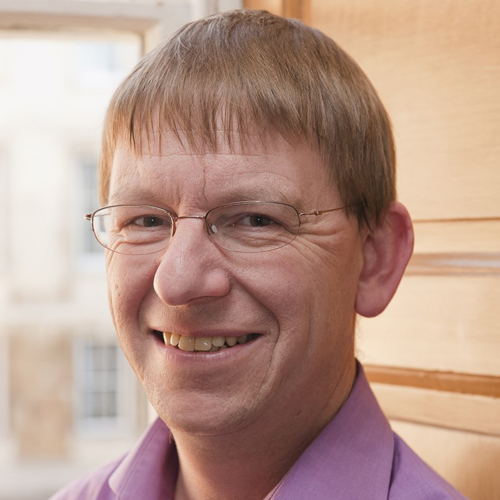 Neil Dodgson合作论文数School of Engineering and Computer Science, Victoria University of Wellington;Faculty of Graduate Research, Victoria University of Wellington28
 Jirí Kosinka合作论文数Bernoulli Institute, University of Groningen8
 Ralph Martin合作论文数Cardiff University6
 Loic Barthe合作论文数Universite Paul Sabatier of Toulouse6
 Ioannis Ivrissimtzis合作论文数Department of Computer Science, Faculty of Science, Durham University6
 Cédric Gérot合作论文数6
 Thomas J. Cashman合作论文数Mixed Reality & AI Lab, Microsoft5
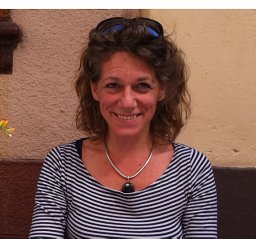 Ursula H. Augsdörfer合作论文数University of Cambridge5
 Fehmi Cirak合作论文数Department of Engineering, University of Cambridge4
 JingJing Shen合作论文数2
 Michael Stephen Floater合作论文数University of Oslo2
 Helmut Bez合作论文数available - click to provide one
No description available of H. E. Bez2
Helmut Bez合作论文数available - click to provide one
No description available of H. E. Bez2 Adrian Bowyer合作论文数RepRap Ltd2Ahmad H. Nasri合作论文数 Faculty of Arts & Sciences;Department of Computer Science2
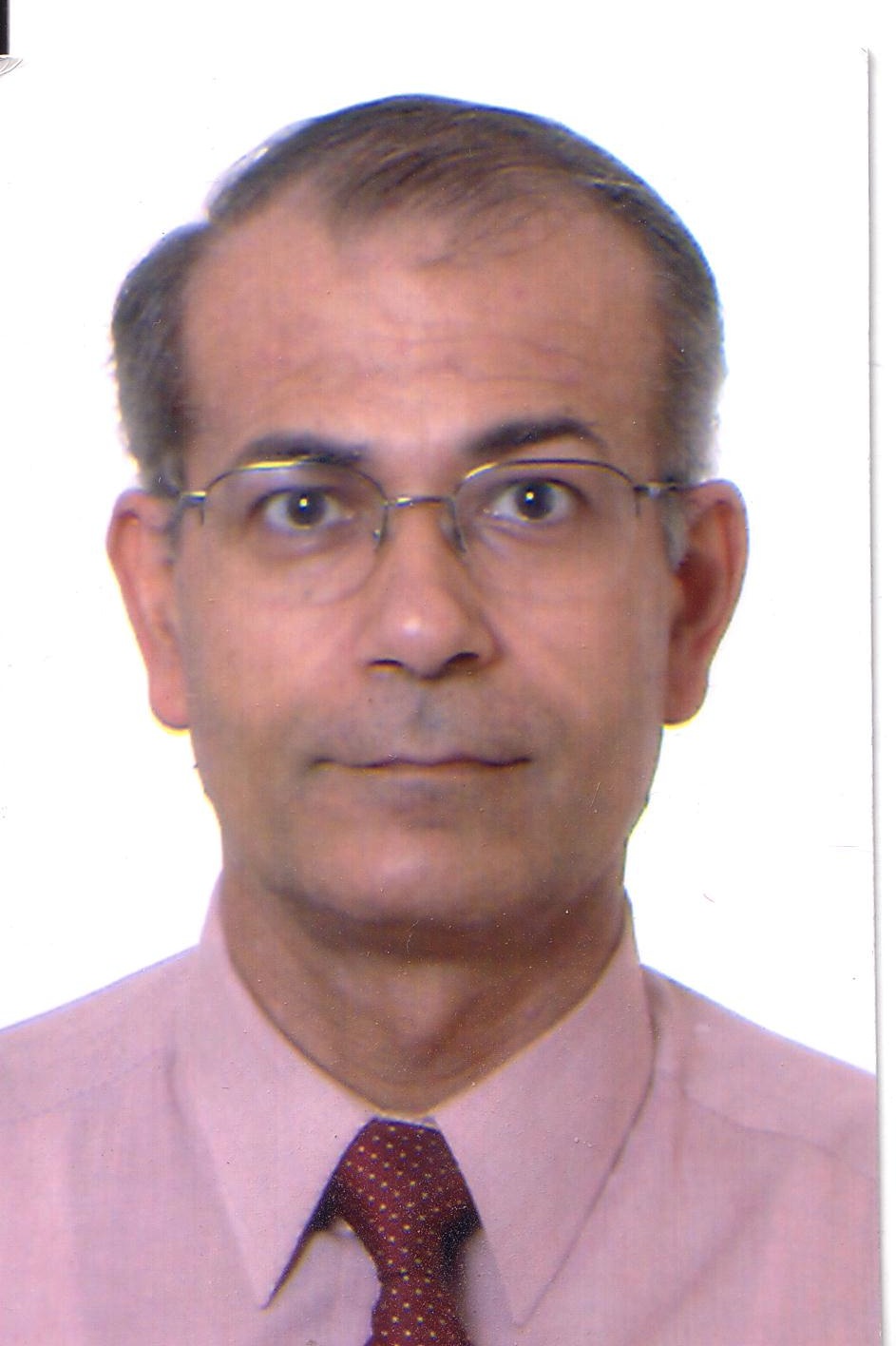 Ahmad Nasri合作论文数 Faculty of Arts & Sciences;Department of Computer Science2
 Aurelian Bejancu合作论文数Department of Mathematics, Kuwait University2
 Kai Hormann合作论文数Faculty of Informatics, Università Della Svizzera Italiana2
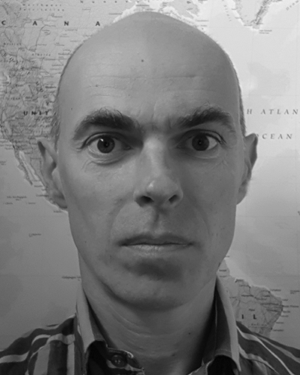 Benjamin Mora合作论文数University of Wales Swansea2David Sewell合作论文数1John Woodwark合作论文数1Jeremy Youngquist合作论文数1Pieter J. Barendrecht合作论文数Scientific Visualization and Computer Graphics1Jonathan Corney合作论文数Mechanical Engineering, School of Engineering, The University of Edinburgh1
 Qiaoling Zhang (张巧玲)合作论文数1
 Jorg Peters合作论文数Computer and Information Sciences, University of Florida1
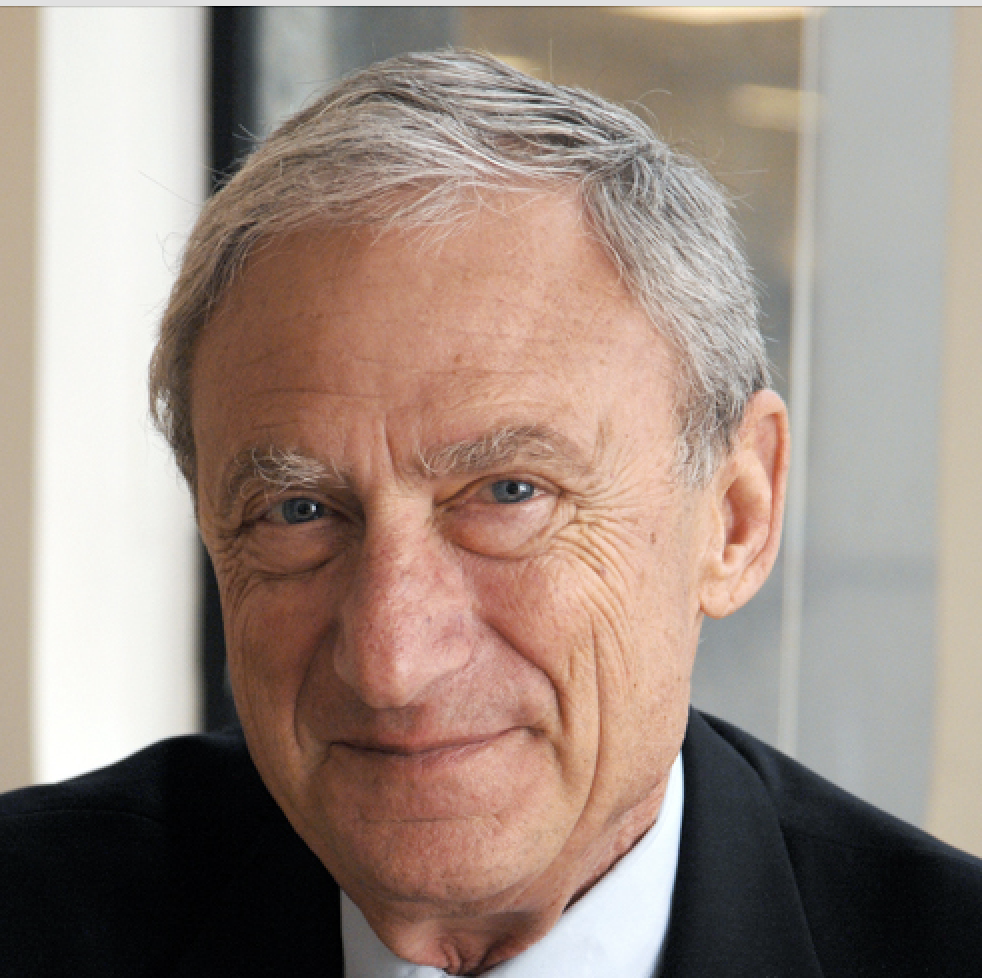 David S. Rosenthal合作论文数Dana-Farber Cancer Institute, Harvard Medical School;Brigham and Women's Hospital, Harvard Medical School1
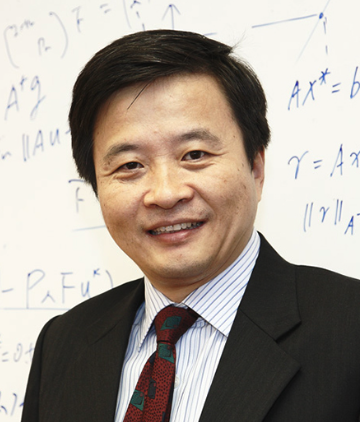 Zuowei Shen (沈佐伟)合作论文数Department of Mathematics, Faculty of Science, National University of Singapore;Institute for Mathematical Sciences, National University of Singapore1
 Edwin Hancock合作论文数Department of Computer Science, University of York;Beijing Advanced Innovation Centre for Big Data and Brain Compuring, Beihang University1
 Carl De Boor合作论文数Department of Applied Mathematics, College of Arts & Sciences, University of Washington1
 Zhibin Niu (牛志彬)合作论文数College of Intelligence and Computing, Tianjin University1
 Thomas W. Sederberg合作论文数College of Physical and Mathematical Sciences, Brigham Young University1
 Jianmin Zheng (郑建民)合作论文数Division of Computer Science, School of Computer Science and Engineering, College of Computing & Data Science, Nanyang Technological University1
 Albert Cohen合作论文数Google1
 Frank C. Langbein合作论文数School of Computer Science and Informatics, Cardiff University1Stephen Cameron合作论文数1
 Jean-Louis Merrien合作论文数1Graham Jared合作论文数1Günther E. Pfaff合作论文数1Alan Middleditch合作论文数1
 Nasser Nassiri合作论文数Higher Colleges of Technology, Dubai Women’s College1
 Richter Dyn合作论文数School of Mathematical Sciences, Tel Aviv University1
 Richard Southern合作论文数Foundry1
 Leif Kobbelt合作论文数Visual Computing Institute, RWTH Aachen University;Institute for Computergraphics and Multimedia, RWTH Aachen University1Helmut E. Bez合作论文数1R. Abu Zaki合作论文数1James C. Michener合作论文数1
 Dongjoe Shin合作论文数School of Creative Technologies, University of Portsmouth1
 Cecil G Armstrong合作论文数School of Mechanical and Aerospace Engineering, Queen's University Belfast1




