This chapter aims to help you to: • Develop an understanding of how to analyse qualitative data – particularly text; • Recognise that there is a strong link between data collection and data analysis; • Undertake content analysis and develop coding techniques for data handling; • Deal with a potential for bias that is commonly to be found in qualitative data handling; • Explore the benefits of computer assisted analysis and investigate some relevant software; • Present your data in a meaningful and helpful way; • Ensure your conclusions are justified by the evidence you have collected.
[Publisher's Description:] Are you a final year social science student who has to do a dissertation or final year project? Do you have no idea where to start? If so, Doing Your Undergraduate Social Science Dissertation is the book for you, covering the whole dissertation journey from project planning to submission. Using a mixture of useful information, exercises, practical strategies, case study material and further reading, it helps you through the process, giving hints and tips on beginning and managing your research project and working with your supervisors. Packed with proven practical advice, it also identifies many other sources of information and resources, making it your most dependable starting point and guide on your dissertation journey. Also included are links to accompanying materials on the Routledge website. The authors have extensive experience in teaching at all levels in the social sciences, supervising social science undergraduates and dissertations.
A visible light driven photoelectrocatalytic fuel cell (PECFC) recently developed at Aberdeen has been shown to have the capacity to oxidatively degrade a wide range of contaminants commonly found in water supplies and associated with risk to human health. It has also shown great potential to kill human pathogens such as toxigenic strains of Escherichia coli. Remediation of chemical contaminants has been confirmed by analytical chemistry, and we have integrated a biosensor based assay into the process to confirm concomitant removal of all chemical toxicity. We have also used a biosensor approach to confirm considerable reduction in infection potential associated with human pathogens. The PECFC used to generate the data comprised a basic, batch system with sub-optimal catalyst and static conditions. We are now evaluating the performance of a dynamic, flow reactor (with catalyst optimisation) which continually delivers water borne contaminants (molecules or cells) to the catalyst surface.
The importance of employability in higher education and increasing numbers of students working while studying led leaders on a social science degree to introduce work experience modules. This paper reports on an in‐depth case study based on the analysis of staff and student interviews, the students’ reflective assignments, and a focus group session with students a year after completing the module. The themes of reflection and linkages are discussed. Linking theory to practice was difficult, but when achieved, students spoke of new ways of seeing the social sciences. The major challenge was learning to be reflective about themselves as employees, while reflecting on the workplace. The paper concludes by emphasising the value of this mode of study for producing deep learning.
 Julia Waldman合作论文数16Francis Jegede合作论文数14
 Philip Hodgson合作论文数Law & Social Sci, Univ Derby14Charlotte Hargreaves合作论文数13
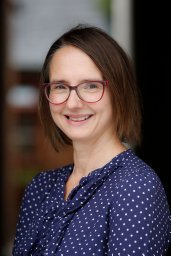 Karen Smith合作论文数School of Health and Life Sciences, Glasgow Caledonian University5
 Clegg Sue合作论文数Leeds Metropolitan University4Elizabeth Lawrence合作论文数2Phil Bannister合作论文数2Jürgen Oldenstein合作论文数1r pirling合作论文数1W Cairns S Smith合作论文数1
 Kruth Angela合作论文数Leibniz Institute for Plasma Science and Technology (INP), Felix-Hausdorff-Str. 2, 17489 Greifswald, Germany. angela.kruth@inp-greifswald.de1David E. Johnston合作论文数1
 Taha M Elmorsi合作论文数Department of Chemistry, The University of Winnipeg1
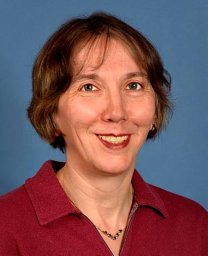 Dubravka Pokrajac合作论文数University of Aberdeen School of Engineering1Patricia Ware合作论文数1
 Norval J C Strachan合作论文数University of Aberdeen School of Biological Sciences1Mike Mcmanus合作论文数1Mwiny Mwinyhija合作论文数1Silke Nissen合作论文数1Richard P. K. Wells合作论文数1Donald E. Macphee合作论文数Department of Chemistry, University of Aberdeen1George C. Boon合作论文数1Efe Scott-Emuakpor合作论文数1K. S. Killham合作论文数1




