Chain-of-thought (CoT) reasoning and its variants have substantially improved the performance of language models on complex reasoning tasks, yet the precise mechanisms by which different strategies facilitate generalization remain poorly understood. While current explanations often point to increased test-time computation or structural guidance, establishing a consistent, quantifiable link between these factors and generalization remains challenging. In this work, we identify as a quantitative measure for characterizing the effectiveness of reasoning chains. Intrinsic dimensionality quantifies the minimum number of model dimensions needed to reach a given accuracy threshold on a given task. By keeping the model architecture fixed and varying the task formulation through different reasoning strategies, we demonstrate that effective reasoning strategies consistently reduce the intrinsic dimensionality of the task. Validating this on GSM8K with Gemma-3 1B and 4B, we observe a strong inverse correlation between the intrinsic dimensionality of a reasoning strategy and its generalization performance on both in-distribution and out-of-distribution data. Our findings suggest that effective reasoning chains facilitate learning by better compressing the task using fewer parameters, offering a new quantitative metric for analyzing reasoning processes.
Industrial Water Treatment Systems (IWTS) are safety critical cyber-physical infrastructures and due to increased connectivity, these systems are exposed to cyber threats that can manipulate process behaviour without creating obvious devices outliers. In particular, logic-layer deception anomalies can preserve numerically plausible measurements while breaking expected cause-and-effect relationships in the control process. These attacks are difficult to detect using threshold-based monitoring or require heavy server-oriented anomaly detection models. This paper explores the potential of Tiny Deep Learning (TinyDL) to provide lightweight on-device logic-level anomaly detection for resource constrained Programmable Logic Controllers (PLCs). We propose a novel framework, TinyDL-based incremental LSTM (Ti-iLSTM) which optimises the memory and space foot print of Long Short-Term Memory (LSTM), to detect logic-layer inconsistencies in Programmable Logic Controller (PLC) based Industrial Water Treatment Systems (IWTS). Experiments on the publicly available SWaT dataset show that the optimised model achieves high detection performance (F1-score=0.983 and ROC-AUC=0.998). A deployment-style validation on the WADI dataset confirms that the proposed light-weight framework remains applicable beyond a single dataset. The research demonstrates that combining logic-aware supervision with Tiny Deep Learning (TinyDL) sequence learning creates an efficient and accurate anomaly detection suitable for resource constrained Programmable Logic Controllers (PLCs) in industrial environments.
Following natural language instructions by executing actions in digital environments (e.g. web-browsers and REST APIs) is a challenging task for language model (LM) agents. Unfortunately, LM agents often fail to generalize to new environments without human demonstrations. This work presents BAGEL, a method for bootstrapping LM agents without human supervision. BAGEL converts a seed set of randomly explored trajectories or synthetic instructions, into demonstrations, via round-trips between two noisy LM components: an LM labeler which converts a trajectory into a synthetic instruction, and a zero-shot LM agent which maps the synthetic instruction into a refined trajectory. By performing these round-trips iteratively, BAGEL quickly converts the initial distribution of trajectories towards those that are well-described by natural language. We use BAGEL demonstrations to adapt a zero shot LM agent at test time via in-context learning over retrieved demonstrations, and find improvements of over 2-13% absolute on ToolQA and MiniWob++, with up to 13x reduction in execution failures.
In this research work, a Z-shaped printed slot microstrip antenna with variations in feed location has been presented to realize broadband and compact antenna.The Z-shaped slot has been realized by placing two right angle triangle shaped patches in opposite directions inside rectangular shaped slot.Further by aligning the microstrip line as feed along the length and width of Z-shaped slot, the broadband and compact antenna respectively has been realized.The antenna is fabricated using an FR4 substrate having electrical dimension of 0.48λ0 × 0.4λ0.The antenna offers 407 MHz (27%) measured impedance bandwidth for broadband and 22% of reduction in size for compact configurations.The parametric analysis, equivalent circuit analysis, and temperature as an environmental testing parameter of proposed designs are presented and validated in this paper.
This research work presents, design of slot cut half hexagonal shaped microstrip antenna for dual band wireless applications. The rectangular slot is cut inside the half hexagonal shape patch thereby reducing the resonant frequency and realizing dual band operation. The antenna is designed, simulated and fabricated using flexible foam substrate having the thickness of 10 mm. The antenna offers measured impedance bandwidth of 21 MHz (2.13
Understanding visually situated language requires interpreting complex layouts of textual and visual elements. Pre-processing tools, such as optical character recognition (OCR), can map document image inputs to textual tokens, then large language models (LLMs) can reason over text. However, such methods have high computational and engineering complexity. Can small pretrained image-to-text models accurately understand visual documents through similar recognition and reasoning steps instead? We propose Rationale Distillation (RD), which incorporates the outputs of OCR tools, LLMs, and larger multimodal models as intermediate "rationales", and trains a small student model to predict both rationales and answers. On three visual document understanding benchmarks representing infographics, scanned documents, and figures, our Pix2Struct (282M parameters) student model finetuned with RD outperforms the base model by 4-5% absolute accuracy with only 1% higher computational cost.
We present the training recipe and results of scaling up PaLI-X, a multilingual vision and language model, both in terms of size of the components and the breadth of its training task mixture. Our model achieves new levels of performance on a wide-range of varied and complex tasks, including multiple image-based captioning and question-answering tasks, image-based document understanding and few-shot (in-context) learning, as well as object detection, video question answering, and video captioning. PaLI-X advances the state-of-the-art on most vision-and-language benchmarks considered (25+ of them). Finally, we observe emerging capabilities, such as complex counting and multilingual object detection, tasks that are not explicitly in the training mix.
Visual language data such as plots, charts, and infographics are ubiquitous in the human world. However, state-of-the-art vision-language models do not perform well on these data. We propose MatCha (Math reasoning and Chart derendering pretraining) to enhance visual language models' capabilities in jointly modeling charts/plots and language data. Specifically, we propose several pretraining tasks that cover plot deconstruction and numerical reasoning which are the key capabilities in visual language modeling. We perform the MatCha pretraining starting from Pix2Struct, a recently proposed image-to-text visual language model. On standard benchmarks such as PlotQA and ChartQA, the MatCha model outperforms state-of-the-art methods by as much as nearly 20%. We also examine how well MatCha pretraining transfers to domains such as screenshots, textbook diagrams, and document figures and observe overall improvement, verifying the usefulness of MatCha pretraining on broader visual language tasks.
Large-scale multi-modal pre-training models such as CLIP and PaLI exhibit strong generalization on various visual domains and tasks. However, existing image classification benchmarks often evaluate recognition on a specific domain (e.g., outdoor images) or a specific task (e.g., classifying plant species), which falls short of evaluating whether pre-trained foundational models are universal visual recognizers. To address this, we formally present the task of Open-domain Visual Entity recognitioN (OVEN), where a model need to link an image onto a Wikipedia entity with respect to a text query. We construct OVEN-Wiki by re-purposing 14 existing datasets with all labels grounded onto one single label space: Wikipedia entities. OVEN challenges models to select among six million possible Wikipedia entities, making it a general visual recognition benchmark with the largest number of labels. Our study on state-of-the-art pre-trained models reveals large headroom in generalizing to the massive-scale label space. We show that a PaLI-based auto-regressive visual recognition model performs surprisingly well, even on Wikipedia entities that have never been seen during fine-tuning. We also find existing pretrained models yield different strengths: while PaLI-based models obtain higher overall performance, CLIP-based models are better at recognizing tail entities.
We introduce the task of Open-domain Visual Entity Linking (OVEN), targeting a wide range of entities including animals, plants, buildings, locations and much more. Given an image (e.g., an image of an aircraft), a text query (`What is the model?' or `What is the airline?'), and a multi-modal knowledge base (e.g., Wikipedia), the goal is to link to an entity (Boeing-777 or EVA Air) out of all entities in the knowledge base. We build a benchmark dataset (OVEN-wiki), by repurposing 14 existing image classification, image retrieval, and visual QA datasets. We link all existing labels to Wikipedia entities when possible, using a state-of-the-art entity linking system and human annotators, creating a diverse and unified label space. OVEN is a rich and challenging task, which requires models to recognize and link visual content to both a small set of seen entities as well as a much larger set of unseen entities (e.g., unseen aircraft models). OVEN also requires models to generalize to previously unseen intents that may require more fine-grained reasoning (`Who manufactured the aircraft in the back?'). We build strong baselines based on state-of-the-art pre-trained models and find that current pre-trained models struggle to address the challenges posed by OVEN. We hope OVEN will inspire next-generation pre-training techniques and pave the way to future knowledge-intensive vision tasks.
Visually-situated language is ubiquitous -- sources range from textbooks with diagrams to web pages with images and tables, to mobile apps with buttons and forms. Perhaps due to this diversity, previous work has typically relied on domain-specific recipes with limited sharing of the underlying data, model architectures, and objectives. We present Pix2Struct, a pretrained image-to-text model for purely visual language understanding, which can be finetuned on tasks containing visually-situated language. Pix2Struct is pretrained by learning to parse masked screenshots of web pages into simplified HTML. The web, with its richness of visual elements cleanly reflected in the HTML structure, provides a large source of pretraining data well suited to the diversity of downstream tasks. Intuitively, this objective subsumes common pretraining signals such as OCR, language modeling, image captioning. In addition to the novel pretraining strategy, we introduce a variable-resolution input representation and a more flexible integration of language and vision inputs, where language prompts such as questions are rendered directly on top of the input image. For the first time, we show that a single pretrained model can achieve state-of-the-art results in six out of nine tasks across four domains: documents, illustrations, user interfaces, and natural images.
Visual language such as charts and plots is ubiquitous in the human world. Comprehending plots and charts requires strong reasoning skills. Prior state-of-the-art (SOTA) models require at least tens of thousands of training examples and their reasoning capabilities are still much limited, especially on complex human-written queries. This paper presents the first one-shot solution to visual language reasoning. We decompose the challenge of visual language reasoning into two steps: (1) plot-to-text translation, and (2) reasoning over the translated text. The key in this method is a modality conversion module, named as DePlot, which translates the image of a plot or chart to a linearized table. The output of DePlot can then be directly used to prompt a pretrained large language model (LLM), exploiting the few-shot reasoning capabilities of LLMs. To obtain DePlot, we standardize the plot-to-table task by establishing unified task formats and metrics, and train DePlot end-to-end on this task. DePlot can then be used off-the-shelf together with LLMs in a plug-and-play fashion. Compared with a SOTA model finetuned on more than >28k data points, DePlot+LLM with just one-shot prompting achieves a 24.0% improvement over finetuned SOTA on human-written queries from the task of chart QA.
Much of the previous work towards digital agents for graphical user interfaces (GUIs) has relied on text-based representations (derived from HTML or other structured data sources), which are not always readily available. These input representations have been often coupled with custom, task-specific action spaces. This paper focuses on creating agents that interact with the digital world using the same conceptual interface that humans commonly use — via pixel-based screenshots and a generic action space corresponding to keyboard and mouse actions. Building upon recent progress in pixel-based pretraining, we show, for the first time, that it is possible for such agents to outperform human crowdworkers on the MiniWob++ benchmark of GUI-based instruction following tasks.
Creating labeled natural language training data is expensive and requires significant human effort. We mine input output examples from large corpora using a supervised mining function trained using a small seed set of only 100 examples. The mining consists of two stages -- (1) a biencoder-based recall-oriented dense search which pairs inputs with potential outputs, and (2) a crossencoder-based filter which re-ranks the output of the biencoder stage for better precision. Unlike model-generated data augmentation, our method mines naturally occurring high-quality input output pairs to mimic the style of the seed set for multiple tasks. On SQuAD-style reading comprehension, augmenting the seed set with the mined data results in an improvement of 13 F1 over a BART-large baseline fine-tuned only on the seed set. Likewise, we see improvements of 1.46 ROUGE-L on Xsum abstractive summarization.
We introduce HTLM, a hyper-text language model trained on a large-scale web crawl. Modeling hyper-text has a number of advantages: (1) it is easily gathered at scale, (2) it provides rich document-level and end-task-adjacent supervision (e.g. class and id attributes often encode document category information), and (3) it allows for new structured prompting that follows the established semantics of HTML (e.g. to do zero-shot summarization by infilling title tags for a webpage that contains the input text). We show that pretraining with a BART-style denoising loss directly on simplified HTML provides highly effective transfer for a wide range of end tasks and supervision levels. HTLM matches or exceeds the performance of comparably sized text-only LMs for zero-shot prompting and fine-tuning for classification benchmarks, while also setting new state-of-the-art performance levels for zero-shot summarization. We also find that hyper-text prompts provide more value to HTLM, in terms of data efficiency, than plain text prompts do for existing LMs, and that HTLM is highly effective at auto-prompting itself, by simply generating the most likely hyper-text formatting for any available training data. We will release all code and models to support future HTLM research.
We introduce CM3, a family of causally masked generative models trained over a large corpus of structured multi-modal documents that can contain both text and image tokens. Our new causally masked approach generates tokens left to right while also masking out a small number of long token spans that are generated at the end of the string, instead of their original positions. The casual masking object provides a type of hybrid of the more common causal and masked language models, by enabling full generative modeling while also providing bidirectional context when generating the masked spans. We train causally masked language-image models on large-scale web and Wikipedia articles, where each document contains all of the text, hypertext markup, hyperlinks, and image tokens (from a VQVAE-GAN), provided in the order they appear in the original HTML source (before masking). The resulting CM3 models can generate rich structured, multi-modal outputs while conditioning on arbitrary masked document contexts, and thereby implicitly learn a wide range of text, image, and cross modal tasks. They can be prompted to recover, in a zero-shot fashion, the functionality of models such as DALL-E, GENRE, and HTLM. We set the new state-of-the-art in zero-shot summarization, entity linking, and entity disambiguation while maintaining competitive performance in the fine-tuning setting. We can generate images unconditionally, conditioned on text (like DALL-E) and do captioning all in a zero-shot setting with a single model.
ABSTRACT This research presents an inverted ‘T’-shaped Defected Ground Structure (DGS)-loaded single feed circularly polarised nearly square microstrip patch antenna for wireless communication applications. The proposed antenna structure uses an inverted ‘T’-shaped DGS and exhibits an overall impedance (S11< −10 dB) of 665 MHz (12%) and an axial ratio bandwidth of 140 MHz (2.61%) with right-hand circular polarisation having a gain of 3.91 dBi. The proposed antenna is designed, simulated and fabricated using the FR4 substrate. The electrical size of the designed microstrip patch antenna is 0.238λ × 0.216λ. Using an inverted ‘T’-shaped DGS, the antenna size has been reduced by 13.8%. The detailed design and analysis of the proposed broadband circularly polarised microstrip patch antenna are discussed and presented. The fabricated antenna is tested, and the measured impedance bandwidth is 557 MHz (10%). The measured results are in good agreement with simulated results, and the proposed antenna can be suitable for WLAN, Wi-MAX and Hyper LAN applications.
We propose a simple and effective re-ranking method for improving passage retrieval in open question answering. The re-ranker re-scores retrieved passages with a zero-shot question generation model, which uses a pre-trained language model to compute the probability of the input question conditioned on a retrieved passage. This approach can be applied on top of any retrieval method (e.g. neural or keyword-based), does not require any domain- or task-specific training (and therefore is expected to generalize better to data distribution shifts), and provides rich cross-attention between query and passage (i.e. it must explain every token in the question). When evaluated on a number of open-domain retrieval datasets, our re-ranker improves strong unsupervised retrieval models by 6%-18% absolute and strong supervised models by up to 12% in terms of top-20 passage retrieval accuracy. We also obtain new state-of-the-art results on full open-domain question answering by simply adding the new re-ranker to existing models with no further changes.
Current models for Word Sense Disambiguation (WSD) struggle to disambiguate rare senses, despite reaching human performance on global WSD metrics. This stems from a lack of data for both modeling and evaluating rare senses in existing WSD datasets. In this paper, we introduce FEWS (Few-shot Examples of Word Senses), a new low-shot WSD dataset automatically extracted from example sentences in Wiktionary. FEWS has high sense coverage across different natural language domains and provides: (1) a large training set that covers many more senses than previous datasets and (2) a comprehensive evaluation set containing few- and zero-shot examples of a wide variety of senses. We establish baselines on FEWS with knowledge-based and neural WSD approaches and present transfer learning experiments demonstrating that models additionally trained with FEWS better capture rare senses in existing WSD datasets. Finally, we find humans outperform the best baseline models on FEWS, indicating that FEWS will support significant future work on low-shot WSD.
Short textual descriptions of entities provide summaries of their key attributes and have been shown to be useful sources of background knowledge for tasks such as entity linking and question answering. However, generating entity descriptions, especially for new and long-tail entities, can be challenging since relevant information is often scattered across multiple sources with varied content and style. We introduce DESCGEN: given mentions spread over multiple documents, the goal is to generate an entity summary description. DESCGEN consists of 37K entity descriptions from Wikipedia and Fandom, each paired with nine evidence documents on average. The documents were collected using a combination of entity linking and hyperlinks to the Wikipedia and Fandom entity pages, which together provide high-quality distant supervision. The resulting summaries are more abstractive than those found in existing datasets and provide a better proxy for the challenge of describing new and emerging entities. We also propose a two-stage extract-then-generate baseline and show that there exists a large gap (19.9% in ROUGE-L) between state-of-the-art models and human performance, suggesting that the data will support significant future work.
 John Anthony Bauer合作论文数Division of Pharmacology/College of Pharmacy and OSU Heart and Lung Research Institute, The Ohio State University29
 JA Bauer合作论文数25Bl Schanbacher合作论文数23
 Luke Zettlemoyer合作论文数Paul G. Allen School of Computer Science & Engineering, University of Washington;Facebook AI12
 Kenton Lee合作论文数Google11E. D. Crouser合作论文数9Nam Ho Jeoung合作论文数Dept Fundamental Med & Pharmaceut Sci, Catholic Univ Daegu8saurabh b khanvilkar合作论文数7
 Mike Lewis合作论文数Meta7kaushalender aggarwal合作论文数6MW Julian合作论文数6Joshi, J.G.合作论文数6
 Gond, V.J.合作论文数6
 Robert Harris合作论文数Department of Clinical Neuroscience, Karolinska Institutet6
 Kristina Toutanova合作论文数Google Research6Philip J Berger合作论文数5Huang Hong合作论文数5
 Omer Levy合作论文数Google DeepMind5Bing Han合作论文数5
 Peter Giannone合作论文数5
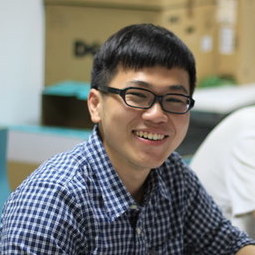 Hexiang (Frank) Hu合作论文数Google Deepmind5
 Daniel S. Weld合作论文数Paul G. Allen School of Computer Science & Engineering, University of Washington;Allen Institute of Artificial Intelligence;Madrona Venture Group5
 Leif D. Nelin合作论文数Center for Perinatal Research, Nationwide Children's Hospital;College of Medicine, The Ohio State University5nitin v sarangdhar合作论文数4dana r coldren合作论文数4SE Welty合作论文数4Cv Smith合作论文数4AC Cook合作论文数4
 Peter Shaw合作论文数Google DeepMind4
 Yinhan Liu (刘胤焓)合作论文数FlickBloom4
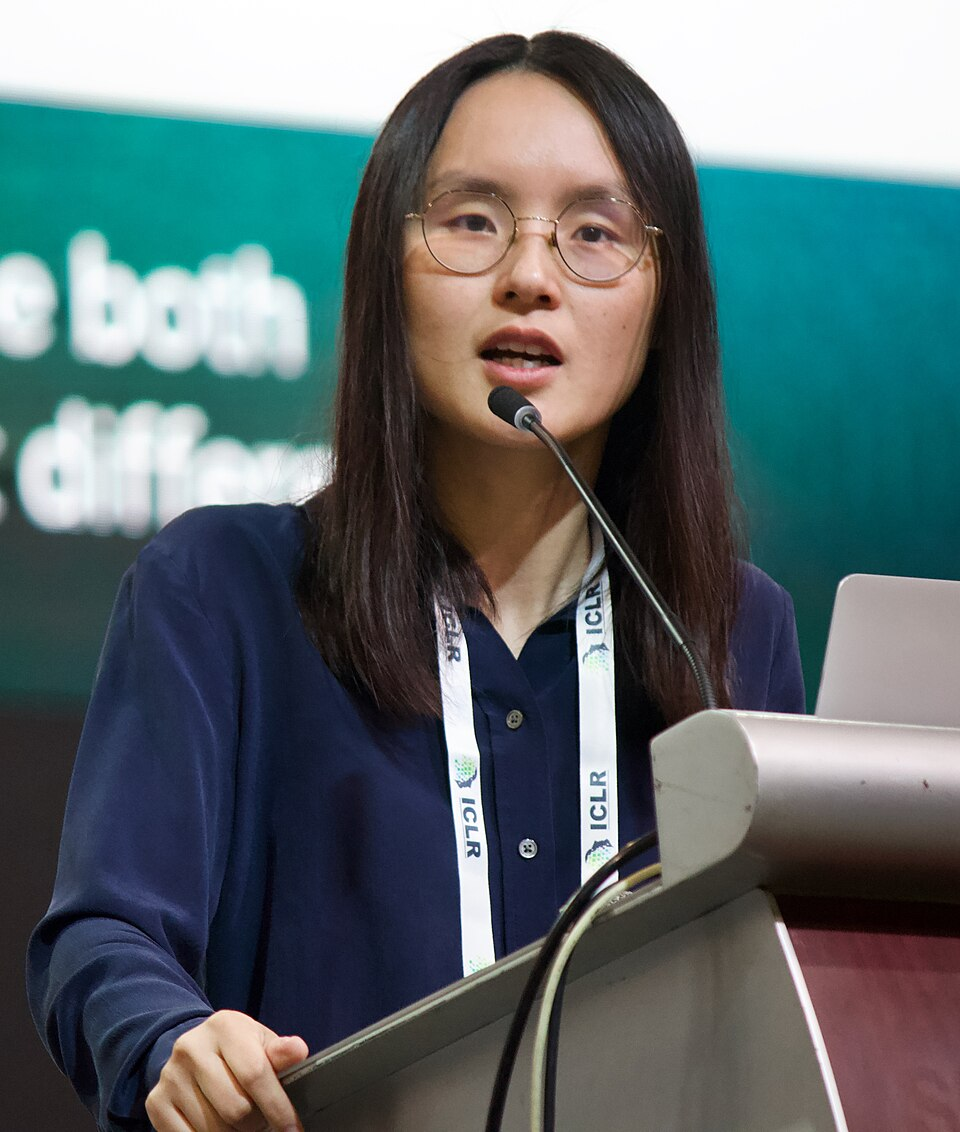 Danqi Chen (陈丹琦)合作论文数4
 Thilini Samarasinghe合作论文数4
 Ming-Wei Chang合作论文数Google Deepmind4
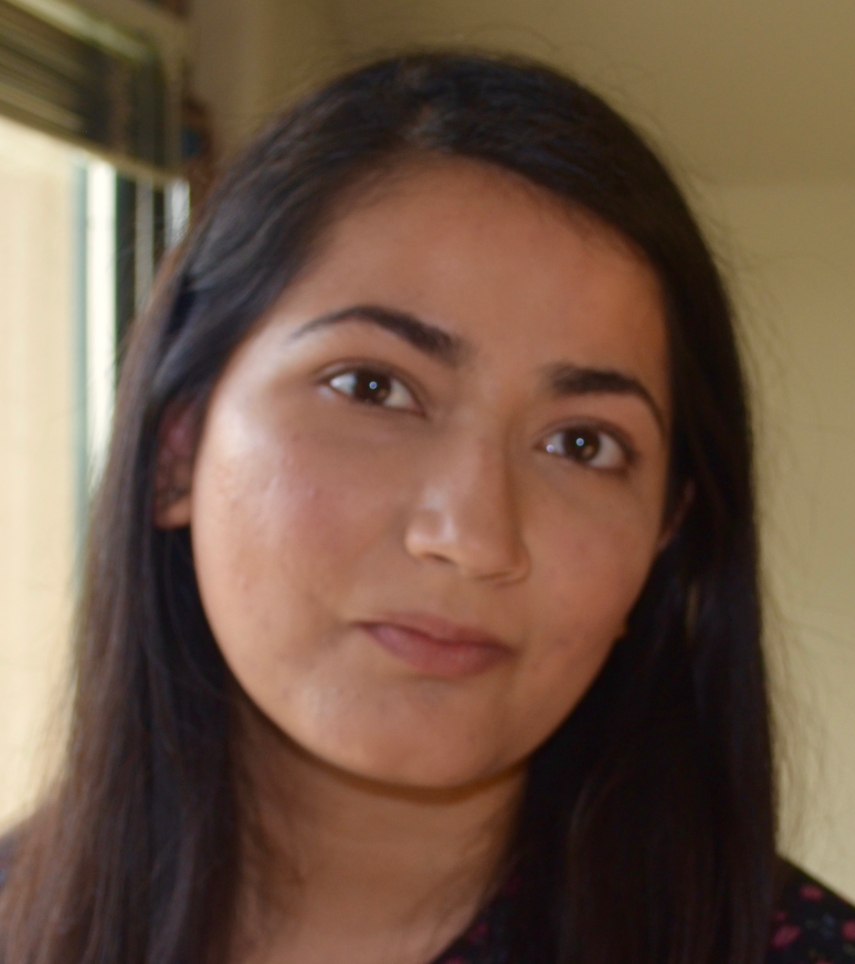 Urvashi Khandelwal合作论文数Google DeepMind4Michael R. Stenger合作论文数4
 Uma Sawant合作论文数IIT Bombay4J. J. Kadam合作论文数3andrew f glew合作论文数3glenn j hinton合作论文数3brent e lince合作论文数3paul d madland合作论文数3Steve W. Otto合作论文数3Tn Hansen合作论文数3Ac Cook合作论文数3LK Rogers合作论文数3
 Lisa M Nicholson合作论文数3
 Naman Goyal合作论文数Thinking Machines Lab3
 Julian Eisenschlos合作论文数Google DeepMind3
 Gabriel Stanovsky合作论文数School of Computer Science and Engineering, Hebrew University of Jerusalem3




