Very high adoption of mobile phones enables the possibility of using mobile phones to empower type 2 diabetes patients to self-manage their diabetic condition by providing timely information in right context through the mobile application, thus facilitating them to make informed decisions. Having identified the lack of such information is badly affecting type 2 patients we embarked on a project to develop a mobile-based information system. Iterative development of interfaces for the mobile application was carried out and its relevance evaluated.
Very high adoption of mobile phones enables the possibility of using mobile phones to empower type 2 diabetes patients to self-manage their diabetic condition by providing timely information in right context through the mobile application, thus facilitating them to make informed decisions. Having identified the lack of such information is badly affecting type 2 patients we embarked on a project to develop a mobile-based information system. We have developed an architecture for a mobile application that can help in empowering users to self-manage type 2 diabetes. We have received positive feedbacks from patients and health care provider after carrying out the evaluation of the application.
Current high numbers of diabetes patients worldwide and the associated cost indicates current approaches to managing this chronic disease is not effective. The literature indicates the need to provide context specific actionable information to these patients to better manage diabetes which is not happening at present. Making use of wide spread digital connectivity now available due to rapid growth of mobile phone usage and concept of Digital Knowledge Ecosystem to enhance flow of information within a domain we applied scenario based design approach to develop a new scenario for better manage diabetes. The transformed scenario captures the current life situation such as exercise, food and emotional habit of the patient on a day to day basis using mobile application and sensor devices. This collected information is aggregated and provided to the care provider, allowing the care provider to understand which advice has been successfully followed and which of the advices need to be modified to suit the needs of the patient. The care provider can set up modified advice as protocols through the system. The protocols are then used by the system based on the context to generate the set of daily actions that the patient has to perform. We also developed the initial set of user interfaces to support the transformed scenario. Thus we have shown that conceptually now it is possible to have a new scenario to better manage diabetes overcoming deficiencies reported in literature of the current scenario.
Very high adoption of mobile phones in developing countries can be used to empower people engaged in various sectors such as agriculture, fisheries and healthcare by providing timely information in right context, thus facilitating them to make informed decisions. Having identified lack of such information is badly affecting farmers in Sri Lanka we embarked on a project to develop a mobile based agriculture information system. We had to combine different theories and methods both from Requirements Engineering (RE) and Human Computer Interaction (HCI) on a need basis to successfully gather the requirements. When we retraced the process we saw a definitive systematic pattern as to how RE and HCI can be used to enrich such an artefact; highlighting the strong interplay between RE and HCI. Discovery of this pattern enabled us to generalise the process.
Crop production problems are common in Sri Lanka which severely effect rural farmers, agriculture sector and the country's economy as a whole. A deeper analysis revealed that the root cause was farmers and other stakeholders in the domain not receiving right information at the right time in the right format. Inspired by the rapid growth of mobile phone usage among farmers a mobile-based solution is sought to overcome this information gap. Farmers needed published information (quasi static) about crops, pests, diseases, land preparation, growing and harvesting methods and real-time situational information (dynamic) such as current crop production and market prices. This situational information is also needed by agriculture department, agro-chemical companies, buyers and various government agencies to ensure food security through effective supply chain planning whilst minimising waste. We developed a notion of context specific actionable information which enables user to act with least amount of further processing. User centered agriculture ontology was developed to convert published quasi static information to actionable information. We adopted empowerment theory to create empowerment-oriented farming processes to motivate farmers to act on this information and aggregated the transaction data to generate situational information. This created a holistic information flow model for agriculture domain similar to energy flow in biological ecosystems. Consequently, the initial Mobile-based Information System evolved into a Digital Knowledge Ecosystem that can predict current production situation in near real enabling government agencies to dynamically adjust the incentives offered to farmers for growing different types of crops to achieve sustainable agriculture production through crop diversification.
We report on the structural and luminescence properties of ZnTe:Cu films containing Cu concentrations up to 12 at. % and prepared using rf magnetron sputtering. The lattice parameters of the various crystalline phases prevailing at different Cu concentrations (cubic, hexagonal, and orthorhombic) are calculated and compared with literature results on films prepared using other techniques. Study of the steady state photoluminescence and excitation spectra revealed the presence of three donor impurities involved in the well-known band at ∼1.70 eV (peak L) attributed to self-activated transition. One of these donors is merging partially with the conduction band and the two others have mutually overlapping density of states with maxima at 0.29 eV and 0.45 eV below the conduction band edge. Another donor that is resonant with the conduction continuum is responsible for a higher energy emission band (peak H). The density of states of this donor has a maximum at 0.57 eV above the conduction band edge for a copper concentration of 8.2 at. %. The emission peak H undergoes a blue shift and its intensity increases sharply relative to the intensity of the L peak with the increase of Cu concentration. Moreover, the H emission extends to photon energies higher than the band gap. A possible interpretation of the behaviour of the peak H in terms of recombination involving the resonant states is suggested.
We have developed and successfully trialled a Social Life Network (SLN); a Mobile Based Information System to support farming activities in Sri Lanka. It provides information required to support activities such as crop selection and cultivation planning in the context of farmer, farm location, season and task being performed. The system also provides a facility for farmers to sell farming related products and services to other farmers. The final system architecture evolved through a series of iterative relevance and design cycles based on Design Science Research methodology. In the first relevance cycle we identified farmer information needs, their current de cision making patterns, and some possible ways to enhance their decision making process. In the first design cycles we developed the initial prototype to visualise a possible solution and in subsequent cycles a crop ontology to reorganise published crop information that would be queried in context and processes to empower farmers. Next we went through 2 cycles of creating functional prototypes, field testing with farmers and improving these to arrive at the final system. We noted that this system can enhance the flow of information in the agriculture domain by aggregating or disaggregating information produced by some stakeholders to be consumed by others. Based on this observation the overall architecture was reconceptualised as a Digital Knowledge Ecosystem.
Better decisions can be made in the profession of the users if they can easily access and filter out the relevant information from all available information sources. The mass availability of the mobile devices has enabled the users to quickly access timely information from any location. We have developed a novel approach to provide timely information in context by capturing contextual information. We developed a model to identify the context of the user by identifying the task being performed. The system through the domain experts, is aware of the information need and the information source for each task of the user and the relevant information is filtered from the information source, by using the users context. The context model was designed and tested for the farming domain, to support the livelihood activities of the farmer, by extending the concepts of social life networks.
Better decisions can be made in the profession of the users if they can filter out the relevant information from all the available information sources. The mass availability of the mobile devices has enabled the users to quickly access timely information from any location. The aim of this work is to identify a suitable way to provide timely information in context by capturing contextual information through the mobile device, to support the activities of the user. The context model tries to identify the context of the user by identifying the task being performed by the user. The system is aware of the information need and the information source for each task of the user and the relevant information is filtered out of the information source, by using the users context. The context model was designed and tested for the farming domain, to support the livelihood activities of the farmer, by extending the concepts of Social life networks. Social life networks aggregates information from various sensors on a mobile phone, other published data sources and micro blogs such as twitter to detect evolving situations and make that information available to the users in real time. This initial prototype was evaluated with a sample of farmers to check usefulness of provided information and usability of the application in order to support their day to day decision making process. The sample group strongly endorsed the various aspects of the prototype application and provided valuable insights for improvement. The current application is a specific instance of the SLN project and we plan to create more application for SLN to test and refine the context models.
 Athula Ginige合作论文数WIDYA;University of Western Sydney9
 Tamara Ginige合作论文数5
 Jeevani Samantha Goonethillake合作论文数School of Computing, The University of Colombo5
 Gihan N. Wikramanayake合作论文数School of Computing, University of Colombo5
 Lasanthi N. C. De Silva合作论文数5
 Anusha Indika Walisadeera合作论文数University of Western Sydney, University of Colombo4
 Genoveffa Tortora合作论文数Dipartimento di Informatica, University of Salerno4
 Monica Maria Lucia SEBILLO合作论文数Dipartimento di Informatica, Università degli Studi di Salerno4Pasquale Di Giovanni合作论文数4
 Giuliana Vitiello合作论文数Department of Computer Science, University of Salerno4Deborah Richards合作论文数3
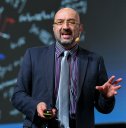 Federico Girosi合作论文数Translational Health Research Institute, Western Sydney University3
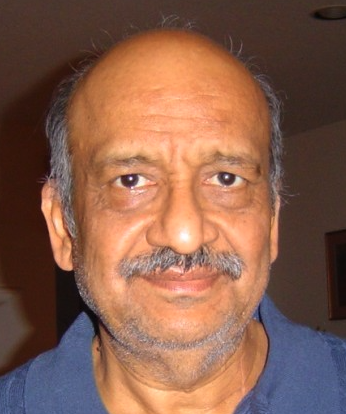 Ramesh Jain合作论文数Department of Computer Science, Donald Bren School of Information & Computer Sciences, University of California, Irvine3Uma Srinivasan合作论文数School of Computing and Mathematics, Western Sydney University;CMCRC3fikry el akkad合作论文数1
 Maurizio Tucci合作论文数University of Salerno1




