The participants of the 12th International Atomic Energy Agency (IAEA) meeting on stable isotope reference materials reached a consensus, acknowledging the existence and use of two carbon isotope delta scales: the VPDB (Vienna Peedee belemnite) scale and the VPDB-LSVEC (LSVEC - lithium carbonate prepared by H. J. Svec). Conversion models between the two scales can be established and used but introduce uncertainty. A format for isotope delta scale definition was agreed upon and was used to define the two carbon isotope delta scales and the two main oxygen isotope delta scales, VSMOW-SLAP (Vienna Standard Mean Ocean Water-Standard Light Antarctic Precipitation) and VPDB. Confirmation or identification of a second-scale-defining point is still necessary for the nitrogen and sulfur isotope delta scales. Efforts are encouraged to improve consistency among laboratories in the isotopic analysis of "non-exchangeable hydrogen" in bulk organic materials and oxygen in carbonates using the phosphoric acid reaction. Additional topics discussed include (1) need for improvement in reference materials for accurate greenhouse gas isotopic analyses; (2) reference materials under production by the IAEA, the US Geological Survey (USGS), and the US National Institute of Standards and Technology (NIST); (3) methods for value and uncertainty assignment of reference materials; and (4) calculation of carbon-13 isotope delta and oxygen-18 isotope delta of CO2 measured by dual-inlet isotope ratio mass spectrometry.
Following the reviews of atomic-weight determinations and other cognate data in 2015, 2017, 2019 and 2021, the IUPAC (International Union of Pure and Applied Chemistry) Commission on Isotopic Abundances and Atomic Weights (CIAAW) reports changes of standard atomic weights. The symbol Ar°(E) was selected for standard atomic weight of an element to distinguish it from the atomic weight of an element E in a specific substance P, designated Ar(E, P). The CIAAW has changed the values of the standard atomic weights of five elements based on recent determinations of terrestrial isotopic abundances:
The Guide to the Expression of Uncertainty in Measurement (GUM) provides a framework for evaluating analytical data and characterizing their dispersion in a consistent manner. This is of eminent importance in the case of reference materials and their recommended values that are used for calibration of further measurements. The proper propagation of uncertainties for those data is essential. Guidance is provided in the GUM on how to calculate the combined standard uncertainty for a mean value or central value based on multiple individual measurements including their calibration uncertainty. However, according to published data, the guidance provided by GUM is not always properly applied in practice. Several published studies show calculated uncertainties much lower than those of input quantities. This may be caused by improper handling of the propagation of uncertainty components, thereby breaking the traceability chain for reported values. A simple check method using conventional statistical means is proposed to detect and to avoid such mistakes related to calibration uncertainties. It is intended to help to ensure a proper uncertainty propagation, to maintain a system of reliable and traceable reference materials. A spreadsheet is provided for the implementation of such a check. Example calculations for published data are presented.
Abstract Following the reviews of atomic-weight determinations and other cognate data in 2015, 2017, 2019 and 2021, the IUPAC (International Union of Pure and Applied Chemistry) Commission on Isotopic Abundances and Atomic Weights (CIAAW) reports changes of standard atomic weights. The symbol A r°(E) was selected for standard atomic weight of an element to distinguish it from the atomic weight of an element E in a specific substance P, designated A r(E, P). The CIAAW has changed the values of the standard atomic weights of five elements based on recent determinations of terrestrial isotopic abundances: Ar (argon): from 39.948 ± 0.001 to [39.792, 39.963] Hf (hafnium): from 178.49 ± 0.02 to 178.486 ± 0.006 Ir (iridium): from 192.217 ± 0.003 to 192.217 ± 0.002 Pb (lead): from 207.2 ± 0.1 to [206.14, 207.94] Yb (ytterbium): from 173.054 ± 0.005 to 173.045 ± 0.010 The standard atomic weight of argon and lead have changed to an interval to reflect that the natural variation in isotopic composition exceeds the measurement uncertainty of A r(Ar) and A r(Pb) in a specific substance. The standard atomic weights and/or the uncertainties of fourteen elements have been changed based on the Atomic Mass Evaluations 2016 and 2020 accomplished under the auspices of the International Union of Pure and Applied Physics (IUPAP). A r° of Ho, Tb, Tm and Y were changed in 2017 and again updated in 2021: Al (aluminium), 2017: from 26.981 5385 ± 0.000 0007 to 26.981 5384 ± 0.000 0003 Au (gold), 2017: from 196.966 569 ± 0.000 005 to 196.966 570 ± 0.000 004 Co (cobalt), 2017: from 58.933 194 ± 0.000 004 to 58.933 194 ± 0.000 003 F (fluorine), 2021: from 18.998 403 163 ± 0.000 000 006 to 18.998 403 162 ± 0.000 000 005 (Ho (holmium), 2017: from 164.930 33 ± 0.000 02 to 164.930 328 ± 0.000 007) Ho (holmium), 2021: from 164.930 328 ± 0.000 007 to 164.930 329 ± 0.000 005 Mn (manganese), 2017: from 54.938 044 ± 0.000 003 to 54.938 043 ± 0.000 002 Nb (niobium), 2017: from 92.906 37 ± 0.000 02 to 92.906 37 ± 0.000 01 Pa (protactinium), 2017: from 231.035 88 ± 0.000 02 to 231.035 88 ± 0.000 01 Pr (praseodymium), 2017: from 140.907 66 ± 0.000 02 to 140.907 66 ± 0.000 01 Rh (rhodium), 2017: from 102.905 50 ± 0.000 02 to 102.905 49 ± 0.000 02 Sc (scandium), 2021: from 44.955 908 ± 0.000 005 to 44.955 907 ± 0.000 004 (Tb (terbium), 2017: from 158.925 35 ± 0.000 02 to 158.925 354 ± 0.000 008) Tb (terbium), 2021: from 158.925 354 ± 0.000 008 to 158.925 354 ± 0.000 007 (Tm (thulium), 2017: from 168.934 22 ± 0.000 02 to 168.934 218 ± 0.000 006) Tm (thulium), 2021: from 168.934 218 ± 0.000 006 to 168.934 219 ± 0.000 005 (Y (yttrium), 2017: from 88.905 84 ± 0.000 02 to 88.905 84 ± 0.000 01) Y (yttrium), 2021: from 88.905 84 ± 0.000 01 to 88.905 838 ± 0.000 002
Abstract Stable hydrogen, carbon, nitrogen, oxygen and sulfur (HCNOS) isotope compositions expressed as isotope-delta values are typically reported relative to international standards such as Vienna Standard Mean Ocean Water (VSMOW), Vienna Peedee belemnite (VPDB) or Vienna Cañon Diablo Troilite (VCDT). These international standards are chosen by convention and the calibration methods used to realise them in practice undergo occasional changes. To ensure longevity and reusability of published data, a comprehensive description of (1) analytical procedure, (2) traceability, (3) data processing, and (4) uncertainty evaluation is required. Following earlier International Union of Pure and Applied Chemistry documents on terminology and notations, this paper proposes minimum requirements for publishing HCNOS stable-isotope delta results. Each of the requirements are presented with illustrative examples.
Rationale LSVEC, the second anchor Reference Material (RM) for the VPDB δ 13 C scale realisation, was introduced in 2006. In 2015, its δ 13 C value was found to be drifting and, in 2017, its use as an RM for δ 13 C was officially discontinued by IUPAC. New RMs of low uncertainty are needed. This paper describes the preparation and characterisation of IAEA‐610, IAEA‐611 and IAEA‐612 (calcium carbonate, of chemical origin) which shall serve as a set of RMs aimed at anchoring the VPDB scale at negative δ 13 C values. Methods The preparation and characterisation of IAEA‐610, IAEA‐611 and IAEA‐612 were performed by addressing the contemporary technical requirements for RM production and characterisation (ISO Guide 35:2017). The three RMs were produced in large quantities, and the first batch was sealed into ampoules (0.5 g) to ensure the integrity of the RM during storage; additional batches were sealed for long‐term storage. The most accurate method of CO 2 preparation and stable isotope measurements was used, namely carbonate‐H 3 PO 4 reaction under well‐controlled conditions combined with well‐tested stable isotope ratio mass spectrometry. Results The assigned values of δ 13 C and associated uncertainties are based on a large number of analyses (~10 mg aliquots) performed at IAEA and address all the known uncertainty components. For aliquots down to ~100 μg, the δ 13 C uncertainty is increased. The uncertainty components considered are as follows: (i) material homogeneity, (ii) value assignment against IAEA‐603, (iii) potential storage effects, (iv) effect of the 17 O correction, and (v) mass spectrometer linearity and cross‐contamination memory in the ion source. Conclusions The new RMs IAEA‐610, IAEA‐611 and IAEA‐612 have been characterised on the VPDB δ 13 C scale in a mutually consistent way. The use of three RMs will allow a consistent realisation of the VPDB δ 13 C scale with small uncertainty to be established, and to reach metrological compatibility of measurement results over several decades.
RationaleIn recent years, the primary reference material (RM) for the VPDB scale, NBS19, has become unavailable, and the RM used for low‐end scale‐anchoring, LSVEC, was found unsuitable due a drift in theδ13C value. Given these problems, new RMs aimed at realising the VPDBδ13C scale with low uncertainty were produced. Establishing the consistency of the new RMs with the “old” RMs prompted our revision of the underlying principles of RM value assignments, and the VPDBδ13C scale realisation and its long‐term sustainability.MethodsAnalysis of major developments of the VPDB scale, a review of the contemporary requirements for RMs, and comparison with well‐established measurement scales have been performed, with the aim of revising the VPDBδ13C scale, principles of RM value assignments, and calibrator hierarchy. Requirements for scale‐anchoring RMs with low uncertainty and measures to establish the scale sustainability have been formulated.ResultsThe revised scale realisation is based on multiple reference points, well‐defined calibration hierarchy and the use of well‐understood methods for value assignment. The realisation scheme includes the new primary RM IAEA‐603 and scale‐anchoring RMs IAEA‐610, IAEA‐611 and IAEA‐612, coveringδ13C from +2.46 to −36.7 ‰ VPDB, with uncertainties, including inhomogeneity and stability assessment, of less than 0.015 ‰. The values of these four RMs were assigned in a mutually consistent way; agreement between measurements made using this realisation with those made using the VPDB scale of 2006 has been demonstrated on NIST CO2RMs 8562–8564.ConclusionsMultipoint‐anchoring of the VPDBδ13C scale provides several distinct “points” on the scale as means for cross‐measurements to check the stability and viability of RMs and detect drift of values, if any. This ensures that theδ13C scale is suitable for the most demanding applications, and provides options for developing further RMs with high accuracy inside a robust scale realisation scheme.
The stable isotope scales of the light elements (H, C, O, S) are artefact-based (related to a primary reference material) and their practical realisation is based on several refence materials (RMs) traceable to the primary RM on a respective delta-scale. NBS19 carbonate, the primary RM for the VPDB scale introduced in 1987, exhausted in 2012, and its replacement was not available for several years. In 2016, IAEA-603 carbonate (replacement for NBS19) was released as the new primary RM having been carefully calibrated versus the remaining NBS19. The IAEA-603 uncertainty in δ13C and δ18O for the first batch (5200 ampoules produced) is ±0.010 ‰ and ±0.040 ‰ respectively (1-sigma level); the homogeneity assessment is the major component of total uncertainty which is limited by the best mass-spectrometer performance and the method (carbonate-acid reaction) reproducibility. In 2015, monitoring of LSVEC (formerly the second scale-anchor on the VPDB scale) detected variable drifts in its δ13C value and therefore the use of LSVEC as RM for δ13C was discontinued. It was recognised that a replacement for LSVEC is needed for normalization of the δ13C measurement results, also to address the strict uncertainty requirements for δ13C observations in atmospheric CO2 and methane (≤0.01 ‰ and ≤0.02 ‰ correspondingly). Similar to IAEA-603, any new RMs will address the technical requirements for RMs laid out by ISO Guide 35: 2017 including (i) RM batch production and batch characterisation; (ii) homogeneity and stability assessment of the final product (RMs sealed off in 0.5 g ampoules) and (iii) value and uncertainty assignment based on the metrological traceability. Three new carbonate RMs are in preparation at the IAEA; the uncertainty in δ13C for all three materials due to RM’ homogeneity is already confirmed at ≤0.01 ‰ (on 10 mg aliquots), which is at the limit of the best modern mass-spectrometers. The isotopic characterisation of these new carbonate RMs is in progress; they should be released in 2020. Together with IAEA-603, the three new RMs will provide a reliable realization of the VPDB scale with the lowest possible uncertainty. With these RMs users can (i) select RMs in a suitable δ13C range, (ii) detect any potential drift of RMs including the behaviour of daily lab-standards and (iii) detect any potential problem in applying the 17O correction at end-user laboratories. In conclusion, these new reference materials will allow laboratories worldwide to establish metrological comparability for decades.
The biennial review of atomic-weight determinations and other cognate data has resulted in changes for the standard atomic weights of 19 elements. The standard atomic weights of four elements have been revised based on recent determinations of isotopic abundances in natural terrestrial materials:
An environmental isotope and noble gas study of groundwater was carried out in the provinces Northern Darfur and Northern Kordofan of Sudan, which belong to the Sahel, the climatically highly sensitive transition zone between the Tropical Rain Forest and the Sahara. This chapter presents the isotope data obtained from the groundwater study and the temperature data derived from the dissolved noble gases together with some information about the type of sampled wells, their subsoil water level and their screen depth and length. Some groundwater samples from the Darfur area have been analyzed for tritium using the highly sensitive 3He mass-spectrometry technique. Considerably smaller recharge rates can be derived from the 14C-data of the groundwater. Conventional groundwater MC-ages derived from these data fall almost into the Holocene time span. Only the deepest 14C-dated wells in Kordofan pump isotopically depleted paleowater from the last glacial period.
Abstract The biennial review of atomic-weight determinations and other cognate data has resulted in changes for the standard atomic weights of 19 elements. The standard atomic weights of four elements have been revised based on recent determinations of isotopic abundances in natural terrestrial materials: cadmium to 112.414(4) from 112.411(8), molybdenum to 95.95(1) from 95.96(2), selenium to 78.971(8) from 78.96(3), and thorium to 232.0377(4) from 232.038 06(2). The Commission on Isotopic Abundances and Atomic Weights (ciaaw.org) also revised the standard atomic weights of fifteen elements based on the 2012 Atomic Mass Evaluation: aluminium (aluminum) to 26.981 5385(7) from 26.981 5386(8), arsenic to 74.921 595(6) from 74.921 60(2), beryllium to 9.012 1831(5) from 9.012 182(3), caesium (cesium) to 132.905 451 96(6) from 132.905 4519(2), cobalt to 58.933 194(4) from 58.933 195(5), fluorine to 18.998 403 163(6) from 18.998 4032(5), gold to 196.966 569(5) from 196.966 569(4), holmium to 164.930 33(2) from 164.930 32(2), manganese to 54.938 044(3) from 54.938 045(5), niobium to 92.906 37(2) from 92.906 38(2), phosphorus to 30.973 761 998(5) from 30.973 762(2), praseodymium to 140.907 66(2) from 140.907 65(2), scandium to 44.955 908(5) from 44.955 912(6), thulium to 168.934 22(2) from 168.934 21(2), and yttrium to 88.905 84(2) from 88.905 85(2). The Commission also recommends the standard value for the natural terrestrial uranium isotope ratio, N(238U)/N(235U)=137.8(1).
 Tyler B Coplen合作论文数Reston Stable Isotope Laboratory, United States Geological Survey19
 Willi A. Brand合作论文数BGC-IsoLab, Max Planck Institute for Biogeochemistry15
 Juris Meija合作论文数National Research Council Canada12
 Sergey Assonov合作论文数12
 Thomas Prohaska合作论文数University of Natural Resources and Applied Life Sciences Department of Chemistry, Division of Analytical Chemistry-VIRIS Laboratory Muthgasse 18 1190 Vienna Austria10
 Ales Fajgelj合作论文数International Atomic Energy Agency9
 Harro A. J. Meijer合作论文数9
 Michael Berglund合作论文数8Paul De Bièvre合作论文数8
 Matthias Gehre合作论文数Department of Isotope Biogeochemistry, Helmholtz Centre for Environmental Research - UFZ8
 Norman E. Holden合作论文数Inorganic Chemistry Division, International Union of Pure and Applied Chemistry8Robert D. Loss合作论文数7
 Johanna Irrgeher合作论文数VIRIS Laboratory, University of Natural Resources and Life Sciences Vienna6
 Thomas Walczyk合作论文数Department of Chemistry, Faculty of Science, National University of Singapore6
 Pradeep Aggarwal合作论文数Isotope Hydrology Section, International Atomic Energy Agency6
 Blaza Toman合作论文数Information Technology Laboratory, National Institute of Standards and Technology5
 Jean-François Hélie合作论文数GEOTOP—Université du Québec à Montréal (UQÀM),5
 Axel Suckow合作论文数Joint Geological Research Institute5
 Dunn Philip J H合作论文数School of Chemistry, University of Bristol4
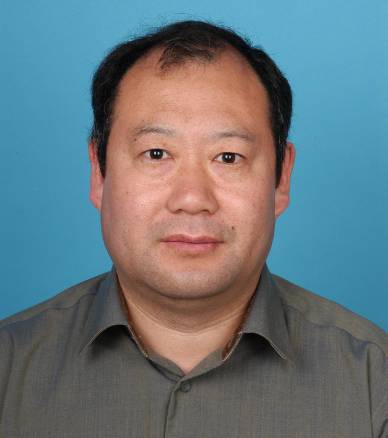 Xiangkun Zhu (朱祥坤)合作论文数Institute of Geology, Chinese Academy of Geological Sciences4
 Heiko Moossen合作论文数4Colin E. Allison合作论文数Division of Atmospheric Research, Commonwealth Scientific and Industrial Research Organisation4Haiping Qi合作论文数4
 Thomas Walczyk合作论文数4
 Michael E. Wieser合作论文数Department of Physics and Astronomy, University of Calgary4
 JK Bohlke合作论文数Reston Stable Isotope Laboratory, United States Geological Survey4Liang-Feng Han合作论文数Institute of Inorganic Chemistry, Technical University of Vienna3R. Michael Verkouteren合作论文数3Brent D. Newman合作论文数3
 Antonio Possolo合作论文数Information Technology Laboratory, National Institute of Standards and Technology3Heike Geilmann合作论文数3A Adorni-Braccesi合作论文数2A. Dini合作论文数2Ulf Thorweihe合作论文数2Stanley J. Mroczkowski合作论文数2Glenda O’Connor合作论文数2Shige Yoneda合作论文数2n e holden合作论文数2
 Jacqueline Benefield合作论文数2Brewer Paul J合作论文数2
 Roberto Gonfiantini合作论文数Consiglio Nazionale delle Ricerche2Anita Aertsbijma合作论文数2G. Ferrara合作论文数2
 Rebecca Kraft合作论文数2
 Michael Wiedenbeck合作论文数GeoForschungsZentrum Helmholtz Centre Potsdam2
 Tomas Vitvar合作论文数digital enterprise research institute2
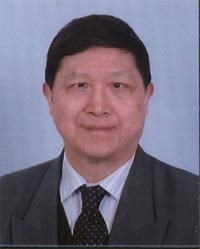 Tiping Ding (丁悌平)合作论文数Chinese Academy of Geological Sciences2
 Ronny Schoenberg合作论文数Institut für Mineralogie, Universität Hannover2
 Lesley Chesson合作论文数IsoForensics Inc.2




