Frequently, the complete functional units of biological molecules are assemblies of protein and nucleic acid chains. Stunning examples are the complex structures of ribosomes. Here, we present TopMatch-web, a computational tool for the study of the three-dimensional structure, function and evolution of such molecules. The unique feature of TopMatch is its ability to match the protein as well as nucleic acid chains of complete molecular assemblies simultaneously. The resulting structural alignments are visualized instantly using the high-performance molecular viewer NGL. We use the mitochondrial ribosomes of human and yeast as an example to demonstrate the capabilities of TopMatch-web. The service responds immediately, enabling the interactive study of many pairwise alignments of large molecular assemblies in a single session. TopMatch-web is freely accessible at https://topmatch.services.came.sbg.ac.at.
Retrieval and characterization of protein structure relationships are instrumental in a wide range of tasks in structural biology. The classifi cation of protein structures (COPS) is a web service that provides effi cient access to structure and sequence similarities for all currently available protein structures. Here, we focus on the application of COPS to the problem of template selection in homology modeling.
Structural domains are believed to be modules within proteins that can fold and function independently. Some proteins show tandem repetitions of apparent modular structure that do not fold independently, but rather co-operate in stabilizing structural forms that comprise several repeat-units. For many natural repeat-proteins, it has been shown that weak energetic links between repeats lead to the breakdown of co-operativity and the appearance of folding sub-domains within an apparently regular repeat array. The quasi-1D architecture of repeat-proteins is crucial in detailing how the local energetic balances can modulate the folding dynamics of these proteins, which can be related to the physiological behaviour of these ubiquitous biological systems.
Multiprotein complexes govern virtually all cellular processes. Their 3D structures provide important clues to their biological roles, especially through structural correlations among protein molecules and complexes. The detection of such correlations generally requires comprehensive searches in databases of known protein structures by means of appropriate structure-matching techniques. Here, we present a high-speed structure search engine capable of instantly matching large protein oligomers against the complete and up-to-date database of biologically functional assemblies of protein molecules. We use this tool to reveal unseen structural correlations on the level of protein quaternary structure and demonstrate its general usefulness for efficiently exploring complex structural relationships among known protein assemblies.
MOTIVATIONPairwise alignment of protein structures is a fundamental task in structural bioinformatics. There are numerous computer programs in the public domain that produce alignments for a given pair of protein structures, but the results obtained by the various programs generally differ substantially. Hence, in the application of such programs the question arises which of the alignment programs are the most trustworthy in the sense of overall performance, and which programs provide the best result for a given pair of proteins. The major problem in comparing, evaluating and judging alignment results is that there is no clear notion of the optimality of an alignment. As a consequence, the numeric criteria and scores reported by the individual structure alignment programs are largely incomparable.RESULTSHere we report on the development and application of a new approach for the evaluation of structure alignment results. The method uses the translation vector and rotation matrix to generate the superposition of two structures but discards the alignment reported by the individual programs. The optimal alignment is then generated in standardized form based on a suitably implemented dynamic programming algorithm where the length of the alignment is the single most informative parameter. We demonstrate that some of the most popular programs in protein structure research differ considerably in their overall performance. In particular, each of the programs investigated here produced in at least in one case the best and the worst alignment compared with all others. Hence, at the current state of development of structure comparison techniques, it is advisable to use several programs in parallel and to choose the optimal alignment in the way reported here.AVAILABILITY AND IMPLEMENTATIONThe computer software that implement the method described here is freely available at http://melolab.org/stovca.
The notion of energy landscapes provides conceptual tools for understanding the complexities of protein folding and function. Energy Landscape Theory indicates that it is much easier to find sequences that satisfy the Principle of Minimal Frustration when the folded structure is symmetric (Wolynes, P. G. Symmetry and the Energy Landscapes of Biomolecules. Proc. Natl. Acad. Sci. U.S.A. 1996, 93, 14249-14255). Similarly, repeats and structural mosaics may be fundamentally related to landscapes with multiple embedded funnels. Here we present analytical tools to detect and compare structural repetitions in protein molecules. By an exhaustive analysis of the distribution of structural repeats using a robust metric we define those portions of a protein molecule that best describe the overall structure as a tessellation of basic units. The patterns produced by such tessellations provide intuitive representations of the repeating regions and their association towards higher order arrangements. We find that some protein architectures can be described as nearly periodic, while in others clear separations between repetitions exist. Since the method is independent of amino acid sequence information we can identify structural units that can be encoded by a variety of distinct amino acid sequences.
Retrieval and characterization of protein structure relationships are instrumental in a wide range of tasks in structural biology. The classification of protein structures (COPS) is a web service that provides efficient access to structure and sequence similarities for all currently available protein structures. Here, we focus on the application of COPS to the problem of template selection in homology modeling.
Protein structures are frequently related by spectacular and often surprising similarities. Structural correlations among protein chains are routinely detected by various structure-matching techniques, but the comparison of oligomers and molecular complexes is largely uncharted territory. Here we solve the structure-matching problem for oligomers and large molecular aggregates, including the largest molecular complexes known today. We provide several challenging examples that cannot be handled by conventional structure-matching techniques and we report on a number of remarkable correlations. The examples cover the cell-puncturing device of bacteriophage T4, the secretion system of P. aeruginosa, members of the dehydrogenase family, DNA clamps, ferredoxin iron-storage cages, and virus capsids.
Recurring groups of atoms in molecules are surrounded by specific canonical distributions of electrons. Deviations from these distributions reveal unrealistic molecular geometries. Here, we show how canonical electron densities can be combined with classical electron densities derived from X-ray diffraction experiments to drive the real space refinement of crystal structures. The refinement process generally yields superior molecular models with reduced excess electron densities and improved stereochemistry without compromising the agreement between molecular models and experimental data.
Understanding the relationship between protein structure and biological function is a central theme in structural biology. Advances are severely hampered by errors in experimentally determined protein structures. Detection and correction of such errors is therefore of utmost importance. Electron densities in molecular structures obey certain rules which depend on the molecular environment. Here we present and discuss a new approach that relates electron densities computed from a structural model to densities expected from prior observations on identical or closely related molecular environments. Strong deviations of computed from expected densities reveal unrealistic molecular structures. Most importantly, structure analysis and error detection are independent of experimental data and hence may be applied to any structural model. The comparison to state-of-the-art methods reveals that our approach is able to identify errors that formerly remained undetected. The new technique, called RefDens, is accessible as a public web service at http://refdens.services.came.sbg.ac.at.
SUMMARY:The performance of sequence database search methods is usually judged by receiver operating characteristic (ROC) analysis. The proper interpretation of the results obtained and a fair comparison across different methods critically depends on the properties of the data set used for such an analysis; in particular, each query must have the same number of true positives and true negatives. Here, we present a novel web service based on a dataset specifically designed for ROC analysis and the investigation of alignment quality. The data set is derived from a quantitative classification of protein structures (COPS), while analysis and results are presented through an intuitive web interface. The analysis provides details such as false positives per query, and visualization of the structural similarity between query and targets. Most importantly, results obtained for a specific alignment method are immediately related to those obtained for several popular standard sequence alignment methods.
The COPS (Classification Of Protein Structures) web server provides access to the complete repertoire of known protein structures and protein structural domains. The COPS classification encodes pairwise structural similarities as quantified metric relationships. The resulting metrical structure is mapped to a hierarchical tree, which is largely equivalent to the structure of a file browser. Exploiting this relationship we implemented the Fold Space Navigator, a tool that makes navigation in fold space as convenient as browsing through a file system. Moreover, pairwise structural similarities among the domains can be visualized and inspected instantaneously. COPS is updated weekly and stays concurrent with the PDB repository. The server also exposes the COPS classification pipeline. Newly determined structures uploaded to the server are chopped into domains, the locations of the new domains in the classification tree are determined, and their neighborhood can be immediately explored through the Fold Space Navigator. The COPS web server is accessible at http://cops.services.came.sbg.ac.at/.
UNLABELLED:Three dimensional structures of proteins contain errors which often originate from limitations of the experimental techniques employed. Such errors frequently result in unfavorable atomic interactions. Here we present a new web service, called Interaction Viewer, for the visualization and correction of such errors. We show how the Interaction Viewer is used in combination with the NQ-Flipper service to spot strained asparagine and glutamine rotamers and we emphasize the convenience of this service in correcting such errors.AVAILABILITY:The web service is integrated with the NQ-Flipper service and accessible at http://flipper.services.came.sbg.ac.at
UNLABELLED The database of known protein structures contains an overwhelming number of structural similarities that frequently point to intriguing biological relationships. The similarities are often difficult to spot, and once detected their comprehension needs proper visualization. Here we introduce the new concept of a Fold Space Navigator, a user interface enabling the efficient navigation through fold space and the instantaneous visualization of pairwise structure similarities. AVAILABILITY The Fold Space Navigator is accessible as a public web service at http://services.came.sbg.ac.at
Metric information on similarities and distances in fold space is essential for quantitative work in structural bioinformatics and structural biology. Here we derive a suitable metric for protein structures from the fundamental axioms of similarity. Derivation of the metric also clarifies the relationship between the interrelated concepts of distance and similarity.
UNLABELLED:Progress in structural biology depends on several key technologies. In particular tools for alignment and superposition of protein structures are indispensable. Here we describe the use of the TopMatch web service, an effective computational tool for protein structure alignment, for the visualization of structural similarities, and for highlighting relationships found in protein classifications. We provide several instructive examples.AVAILABILITY:TopMatch is available as a public web service at http://services.came.sbg.ac.at.
UNLABELLED:The accuracy of current signal peptide predictors is outstanding. The most successful predictors are based on neural networks and hidden Markov models, reaching a sensitivity of 99% and an accuracy of 95%. Here, we demonstrate that the popular BLASTP alignment tool can be tuned for signal peptide prediction reaching the same high level of prediction success. Alignment-based techniques provide additional benefits. In spite of high success rates signal peptide predictors yield false predictions. Simple sequences like polyvaline, for example, are predicted as signal peptides. The general architecture of learning systems makes it difficult to trace the cause of such problems. This kind of false predictions can be recognized or avoided altogether by using sequence comparison techniques. Based on these results we have implemented a public web service, called Signal-BLAST. Predictions returned by Signal-BLAST are transparent and easy to analyze.AVAILABILITY:Signal-BLAST is available online at http://sigpep.services.came.sbg.ac.at/signalblast.html.
 Peter Lackner合作论文数Christian Doppler Laboratory for Allergy Diagnosis and Therapy, University of Salzburg22
 Markus Wiederstein合作论文数Center of Applied Molecular Engineering, University of Salzburg20
 Francisco S. Domingues合作论文数Max-Planck-Institute for Informatics, Stuhlsatzenhausweg 85, 66123 Saarbrücken, Germany15
 Andreas Prlic合作论文数Wellcome Trust Sanger Institute;Wellcome Trust Genome Campus;Wellcome Trust Genome Campus, Wellcome Trust Sanger Institute11
 Markus Gruber合作论文数Department of Training and Movement Science, University of Potsdam8WA Koppensteiner合作论文数7Weichenberger Christian X合作论文数7Stefan J. Suhrer合作论文数7Hannes Flöckner合作论文数6
 Markus Jaritz合作论文数Novartis Institutes for BioMedical Research6Karl Frank合作论文数5M Ortner合作论文数3Manfred Hendlich合作论文数3
 Antonina Andreeva合作论文数MRC Centre for Protein Engineering3Walter A. Koppensteiner合作论文数2
 Ferreiro Diego U合作论文数Prot Physiol Lab, Univ Buenos Aires2
 Espada Rocío合作论文数2
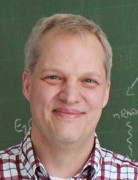 Ivo Hofacker合作论文数Institute for Theoretical Chemistry, University of Vienna2
 R. Gonzalo Parra合作论文数2
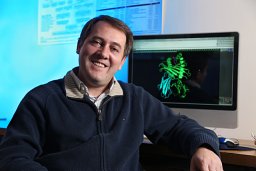 Francisco Melo合作论文数Facultad de Ciencias Biológicas, Pontificia Universidad Católica de Chile2
 Simon W. Ginzinger合作论文数Institut für Informatik, Ludwig-Maximilians-Universität München2Sabine Weitckus合作论文数2Aderonke Babajide合作论文数2M Braxenthaler合作论文数1W Friedl合作论文数1H Wiebusch合作论文数1
 Peter F. Stadler合作论文数Universität Leipzig;Facultad de Ciencias in Bogota1
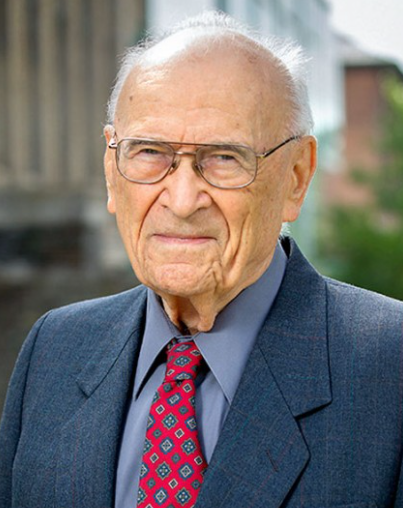 Harold A. Scheraga合作论文数College of Arts and Sciences, Cornell University1
 Friedrich Sandhofer合作论文数Landesklinik für Innere Medizin I1
 Thierry Mora合作论文数Laboratoire de Physique de l'Ecole Normale Superieure;Laboratoire de Physique de l'ENS, CNR;Ecole Normale Supérieure;PSL Université1Harald Funke合作论文数1
 Bernhard Paulweber合作论文数Paracelus Private Medical University, University of Salzburg1Nora Benhabiles合作论文数1Josef R. Patsch合作论文数1Gerd Assmann合作论文数1Karl Gottsbacher合作论文数1
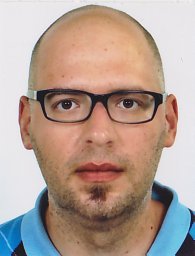 Rainer Malik合作论文数Institute for Information and Computing Sciences, Universiteit Utrecht1
 Ignacio E. Sánchez合作论文数Department of Biophysical Chemistry, Biozentrum der Universität Basel1S. Suhrer合作论文数1Piotr Byzia合作论文数1Rosina Froschauer合作论文数1
 Hans Brandstetter合作论文数Max-Planck-Institut für Biochemie, Am Klopferspitz 18a, D-82152 Planegg-Martinsried, Germany1C. Weichenberger合作论文数1
 Georg Casari合作论文数Haplogen Gmb1Hannes Floeckner合作论文数1Stefan Wegenkittl合作论文数Univ. Doz. Dr. Stefan Wegenkittl
Salzburg University of Applied Sciences, Information Technology and Systems Management1
Georg Casari合作论文数Haplogen Gmb1Hannes Floeckner合作论文数1Stefan Wegenkittl合作论文数Univ. Doz. Dr. Stefan Wegenkittl
Salzburg University of Applied Sciences, Information Technology and Systems Management1 Aleksandra Walczak合作论文数Laboratoire de Physique, Ecole Normale Supérieure1Hans Stegbuchner合作论文数1




