We describe research activities of the Liège group carried out since its creation (around the 1970s) until the beginning of the 2000s (retirement of the first author). They mainly have focused on the area of power systems operation and control. To address issues in this area, we have called upon non-conventional, innovative approaches, capable of improving traditional methods. One of these issues is power system transient stability. It has been explored by direct approaches and by machine learning approaches. Throughout our studies, the strong involvement of PhD students and researchers was instrumental. This contribution reports on work carried out collectively, by outlining the foundations of research in transient stability. References are limited to milestones, which may lead to publications that provide mathematical developments and describe practical achievements.
These remarks constitute an introduction to this special issue and were made on 21 September 2015, at the opening of a special symposium honouring Professor Erol Gelenbe at Imperial College London, UK. Gelenbe is a Computer Scientist and Computer Engineer, who has been a Fellow of Academia Europaea since 2005. He is also a Fellow of the Royal Academy of Sciences, Arts and Letters of Belgium, as well as of the Science Academies of Hungary, Poland and Turkey, and of the National Academy of Technologies of France.
This paper contains the first part of the transcribed oral discussions of Session “Island Systems and Interconnections” of the 2013 IREP Symposium-Bulk Power System Dynamics and Control, held on Sunday afternoon, August 25, 2013. Papers [1]–[4] were presented followed by the presentation of the written discussion [5] and the response included in the closure [6].
Despite very intensive research efforts in the field of transient stability during the last five decades, the large majority of the derived techniques have hardly moved from the research laboratories to the industrial world and, as a matter of fact, the very large majority of today's control centers do not make use of any real-time transient stability software. On the other hand, along all these years the techniques developed for real-time transient stability have mainly focused on the definition of stability margins and speeding-up techniques rather than on preventive or emergency control strategies. In the light of the above observations, this paper attempts to explain the reasons for lack of industrial interest in real-time transient stability, and also to examine an even more fundamental question, namely: is transient stability, as has been stated many decades ago, still the relevant issue in the context of the new power systems morphology towards more dispersed generation, higher penetration of power electronics, larger and more complex structures, and, in addition, of economic and environmental constraints? Or, maybe, there is a need for techniques different from those developed so far?
A general response-based technique is presented for closed-loop transient stability emergency control. It relies on E-SIME, derived from the hybrid transient stability method, SIME. E-SIME uses real-time information supposed to be furnished by phasor measurement units to predict the stability status of the power system, and, in view of an imminent instability, to design and trigger appropriate countermeasures, while continuing monitoring in order to check their effectiveness or to apply additional ones. Performance of the method in terms of accuracy and rapidity is scrutinized and illustrated on several real-world power system examples. New technical solutions and algorithms for the accurate estimation and prediction of power system quantities most relevant to the method are discussed. The observations from a recent investigation and conclusions that could prove useful for improving further the method are summarized together with some realistic timing considerations. A natural coupling of the two SIME based emergency control techniques: open-loop emergency control and E-SIME, so as to combine their complementary features is also discussed.
This paper proposes an efficient educational tool for evaluating the transient stability of multi-machine electric power systems with possible future extensions to control (stabilisation). It uses the Single Machine Equivalent (SIME) transient stability method combined with SIMULINK to model transient stability phenomena, and the GUIDE (Graphical User Interface Design Environment) software of MATLAB. The resulting package validates the data and simulates the results by executing the SIMULINK model in the background in a user-transparent manner. It also provides the user with an extremely flexible tool, which enables him or her to enter, modify, and/or add on complexity to the existing model, thanks to the powerful hierarchical structure of SIMULINK. Considering the popularity and availability of MATLAB at the university level, this package should prove useful for pedagogical and research purposes, while at the same time having the look and feel of commercial packages.
The paper presents a technical overview of a large research project on Dynamic Security Assessment (DSA) supported by EU. Transient Stability Assessment and Control, which was one of the main goals of the project, is taken into consideration by presenting the fundamental theoretical methodology and possible applications. A specific prototype installation for a realistic power system is then reported by presenting and commenting some of the obtained results.
A general approach to real-time transient stability control is described, yielding various complementary techniques: pure preventive, open loop emergency, and closed loop emergency controls. The organization of the resulting control schemes is then revisited in order to make it able to cover static and voltage security, in addition to transient stability. Distinct approaches for preventive and emergency operating conditions are advocated.
International Journal of Robust and Nonlinear ControlVolume 15, Issue 1 p. 51-53 Book ReviewFree Access Electric power systems: analysis and control. IEEE Press & Wiley-Interscience: New York, NY, 2003 Mania Pavella, Mania Pavella University of Liège, Institut Montefiore, Circuits Electriques, Sart-Tilman B28, B-4000 Liege, BelgiumSearch for more papers by this author Mania Pavella, Mania Pavella University of Liège, Institut Montefiore, Circuits Electriques, Sart-Tilman B28, B-4000 Liege, BelgiumSearch for more papers by this author First published: 06 December 2004 https://doi.org/10.1002/rnc.944AboutPDF ToolsRequest permissionExport citationAdd to favoritesTrack citation ShareShare Give accessShare full text accessShare full-text accessPlease review our Terms and Conditions of Use and check box below to share full-text version of article.I have read and accept the Wiley Online Library Terms and Conditions of UseShareable LinkUse the link below to share a full-text version of this article with your friends and colleagues. Learn more.Copy URL Share a linkShare onFacebookTwitterLinked InRedditWechat No abstract is available for this article. Volume15, Issue110 January 2005Pages 51-53 RelatedInformation
A general approach to real-time transient stability control is described, yielding various complementary techniques: pure preventive, open loop emergency, and closed loop emergency controls. The organization of the resulting control schemes is then revisited in order to make it able to cover static and voltage security, in addition to transient stability. Distinct approaches for preventive and emergency operating conditions are advocated.
A new approach to online assessment and control of transient oscillations is proposed. It relies on coupling Prony analysis and the SIME transient stability method, with the twofold objective: on one hand, to improve Prony's applicability and reliability, and on the other hand, to design generation rescheduling patterns able to enhance the damping of poorly damped oscillations and/or stabilize them. Simulations performed on two different systems illustrate the technique and show main features: accuracy, ability to uncover and assess the influence of system machines' generation on damping, and compatibility with real-time requirements. Comparison of the results obtained by the proposed approach with conventional eigenanalysis techniques is provided. Additional method's interesting byproducts are also discussed.
Summary form only given. The transient stability-constrained dispatch of an electric power system is a problematic task for the system operator who, under economic pressure, may be reluctant to take expensive preventive actions against very harmful contingencies. The open-loop emergency control (OLEC) technique proposed in this paper aims to relieve such preventive actions by complementing them with emergency ones. This is achieved by combining generation rescheduling, assessed and taken preventively, with generation tripping, assessed preventively but triggered only if the anticipated harmful contingency actually occurs. The relative size of preventive vs emergency control may be modulated so as to furnish panoply of solutions. Besides, the technique may stabilize simultaneously many contingencies. Simulations conducted on the EPRI 88-machine system illustrate various possibilities of the OLEC technique and compare it with the purely preventive one. Tradeoffs between preventive control and OLEC are also discussed, especially in the context of liberalized electricity markets. It is shown that OLEC is indeed able to provide a good compromise between economics and security, and to realize important savings.
Summary form only given. A general approach to real-time transient stability control is proposed, and two complementary techniques are devised: one for preventive, the other for emergency control. In this paper, the general transient stability control approach is first revisited then applied to real-time preventive control. The technique consists of shifting active power generation. The amount of power and the machines from which to shift it are methodically determined, and various patterns of generation decrease/increase are considered. Further, a standard OPF algorithm is combined with this control technique to get a real-time transient stability-constrained OPF software, able to meet power system security and electricity market requirements. Simulations conducted on the 88-machine EPRI system and the Mexican interconnected power system, illustrate the various techniques, highlight their specifics and assess their performance.
This paper proposes a new approach to on-line assessment and control of poorly damped transient oscillations. It relies on combining Prony analysis and the SIME transient stability method, with the twofold objective: on one hand, to improve Prony's, applicability, reliability and robustness, on the other hand to design generation rescheduling patterns able to enhance the damping of poorly damped oscillations and/or stabilize them. Simulations performed on two different systems illustrate the technique and shows main features: ability to uncover and assess the influence of system machines' generation on damping, accuracy, and compatibility with real-time requirements. Additional method's interesting by-products are also discussed.
The paper reports on the activity of an EU funded research project named OMASES that concerns a preventive approach to dynamic security assessment (DSA) and control of large power systems. The aims of the project are presented. A short description of the hardware and software architecture for implementing on-line DSA are recalled. Some hints about the theoretical background for the specific applications within OMASES (TSA-transient stability assessment, VSA-voltage stability assessment, TS-training simulator and MS-market simulator) are described. Preliminary results of the prototyping phase are commented upon.
 Louis Wehenkel合作论文数Department of Electrical Engineering and Computer Science, Montefiore Institute, University of Liege46
 Damien Ernst合作论文数Department of Electrical Engineering and Computer Science, Faculty of Applied Sciences, University of Lieg31
 daniel ruizvega合作论文数SEPI-ESIME-Zacatenco, Instituto Politécnico Nacional29
 b heilbronn合作论文数10
 Patricia Rousseaux合作论文数Department of Electrical Engineering and Computer Science (Montefiore Institute), the University of Liège8Y. Zhang合作论文数6I. Houben合作论文数4e euxibie合作论文数4a l bettiol合作论文数4P. Hirsch合作论文数4Belhomme, R.合作论文数4
 Thierry Van Cutsem合作论文数4
 Mevludin GLAVIC合作论文数consultant;Independent researcher3Xue, Y.合作论文数3D. Sobajic合作论文数3
 Yusheng Xue (薛禹胜)合作论文数State Grid Electric Power Research Institute;Business School, University of Shanghai for Science & Technology3
 Arturo Román Messina合作论文数Centre for Research and Advanced Studies, National Polytechnic Institute of Mexico3J Giri合作论文数2regine belhomme合作论文数2
 Stefano Massucco合作论文数2
 Dario Lucarella合作论文数Cesi Research2Giuliano Vimercati合作论文数2M. Goubin合作论文数2
 Diego Cirio合作论文数2T Vancutsem合作论文数1R Avila-Rosales合作论文数1tien nguyen合作论文数1P.G. Murthy合作论文数1jay giri合作论文数1m stubbe合作论文数1
 Sunil Bhat合作论文数Dept Elect Engn, Visvesvaraya Natl Inst Technol1Yiwei Zhang合作论文数1
 Ian A Hiskens合作论文数Department of Electrical Engineering and Computer Science, College of Engineering, University of Michigan1Rosales, R.A.合作论文数1
 Prabha Kundur合作论文数Kundur Power Systems Solutions, Inc.1
 Mehrdad Ghandhari Alavijh合作论文数Division of Electric Power and Energy Systems, Department of Electrical Engineering, School of Electrical Engineering and Computer Science, KTH Royal Institute of Technology1
 andrea morini合作论文数1
 D. P. Kothari合作论文数Gaikwad-Patil Group of Institutions1Bruno Meyer合作论文数1P. Pruvot合作论文数1
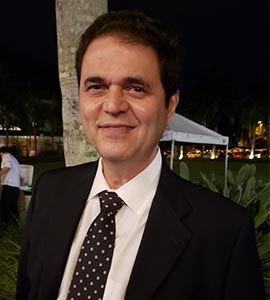 Nelson Martins合作论文数CEPEL1Yongchao Zhang合作论文数1Steven M Rovnyak合作论文数1
 Richard J Marceau合作论文数1
 Edmund Handschin合作论文数Universität Dortmund1
 Dejan J. Sobajic合作论文数Grid Consulting LLC1
 Constantin Bulac合作论文数1
 Yanbo Xue合作论文数Stealth Mode Startup1P. Balakrishna Murthy合作论文数1




