Hydroxyacetone (CH3C(O)CH2OH) is observed as a stable end product from reactions of the (CH3)2COO Criegee intermediate, acetone oxide, in a flow tube coupled with multiplexed photoionization mass spectrometer detection. In the experiment, the isomers at m/z = 74 are distinguished by their different photoionization spectra and reaction times. Hydroxyacetone is observed as a persistent signal at longer reaction times at a higher photoionization threshold of ca. 9.7 eV than Criegee intermediate and definitively identified by comparison with the known photoionization spectrum. Complementary electronic structure calculations reveal multiple possible reaction pathways for hydroxyacetone formation, including unimolecular isomerization via hydrogen atom transfer and -OH group migration as well as self-reaction of Criegee intermediates. Varying the concentration of Criegee intermediates suggests contributions from both unimolecular and self-reaction pathways to hydroxyacetone. The hydroxyacetone end product can provide an effective, stable marker for the production of transient Criegee intermediates in future studies of alkene ozonolysis.
Many alkyl-substituted Criegee intermediates are predicted to undergo an intramolecular 1,4-hydrogen transfer to form isomeric vinyl hydroperoxide species (C[double bond, length as m-dash]COOH moiety), which break apart to release OH and vinoxy radicals. We report direct detection of stabilized vinyl hydroperoxides formed via carboxylic acid-catalyzed tautomerization of Criegee intermediates. A doubly hydrogen-bonded interaction between the Criegee intermediate and carboxylic acid facilitates efficient hydrogen transfer through a double hydrogen shift. Deuteration of formic or acetic acid permits migration of a D atom to yield partially deuterated vinyl hydroperoxides, which are distinguished from the CH3CHOO, (CH3)2COO, and CH3CH2CHOO Criegee intermediates by mass. Using 10.5 eV photoionization, three prototypical vinyl hydroperoxides, CH2[double bond, length as m-dash]CHOOD, CH2[double bond, length as m-dash]C(CH3)OOD, and CH3CH[double bond, length as m-dash]CHOOD, are detected directly. Complementary electronic structure calculations reveal several reaction pathways, including the barrierless acid-catalyzed tautomerization reaction predicted previously and a barrierless addition reaction that yields hydroperoxy alkyl formate.
Density functional theory calculations predict that the gas-phase decomposition of carbonic acid, a high-energy, 1,3-hydrogen atom transfer reaction, can be catalyzed by a monocarboxylic acid or a dicarboxylic acid, including carbonic acid itself. Carboxylic acids are found to be more effective catalysts than water. Among the carboxylic acids, the monocarboxylic acids outperform the dicarboxylic ones wherein the presence of an intramolecular hydrogen bond hampers the hydrogen transfer. Further, the calculations reveal a direct correlation between the catalytic activity of a monocarboxylic acid and its pK(a), in contrast to prior assumptions about carboxylic-acid-catalyzed hydrogen-transfer reactions. The catalytic efficacy of a dicarboxylic acid, on the other hand, is significantly affected by the strength of an intramolecular hydrogen bond. Transition-state theory estimates indicate that effective rate constants for the acid-catalyzed decomposition are four orders-of-magnitude larger than those for the water-catalyzed reaction. These results offer new insights into the determinants of general acid catalysis with potentially broad implications.
Two transition metal complexes of 2,6-bis[N-(8-quinolyl)carbamoyl]pyridine (L1) and one of 2,6-bis[N-(8-quinolyl) carbamoyl] benzene (L2) were synthesized and structurally characterized. Nickel(II) and copper(II) complexes with L1 gave bifurcated-pyridine dimeric complexes (1 and 2). A copper(II) complex of L2 gave the dimeric complex, 3, in which the isophthaloyl C-H moieties of both ligands have short contacts with the pair of copper centers. Density functional theory calculations at the B3LYP/6-31G* and B97-D/6-31G* levels of theory offer strong supporting evidence that the Cu(II)center dot center dot center dot H-C interactions in 3 are best described as weak hydrogen bonds rather than agostic interactions. (C) 2014 Elsevier B. V. All rights reserved.
Toll-like receptor (TLR) 7 and 8 agonists are potential vaccine adjuvants, since they directly activate APCs and enhance Th1-driven immune responses. Previous SAR investigations in several scaffolds of small molecule TLR7/8 activators pointed to the strict dependence of the selectivity for TLR7 vis-à-vis TLR8 on the electronic configurations of the heterocyclic systems, which we sought to examine quantitatively with the goal of developing “heuristics” to define structural requisites governing activity at TLR7 and/or TLR8. We undertook a scaffold-hopping approach, entailing the syntheses and biological evaluations of 13 different chemotypes. Crystal structures of TLR8 in complex with the two most active compounds confirmed important binding interactions playing a key role in ligand occupancy and biological activity. Density functional theory based quantum chemical calculations on these compounds followed by linear discriminant analyses permitted the classification of inactive, TLR8-active, and TLR7/8 dual-active compounds, confirming the critical role of partial charges in determining biological activity.
Density functional theory calculations have been performed to gain insight into the origin of ligand effects in rhodium (Rh)-catalyzed hydroformylation of olefins. In particular, the olefin insertion step of the Wilkinson catalytic cycle, which is commonly invoked as the regioselectivity-determining step, has been examined by considering a large variety of density functionals (e.g., B3LYP, M06-L); a range of substrates, including simple terminal (e.g., hexene, octene), heteroatom-containing (e.g., vinyl acetate), and aromatic-substituted (e.g., styrene) alkenes, and different ligand structures (e.g., monodentate PPh3 ligands and bidentate ligands such as DIOP, DIPHOS). The calculations indicate that the M06-L functional reproduces the experimental regioselectivities with a reasonable degree of accuracy, while the commonly employed B3LYP functional fails to do so when the equatorial equatorial arrangement of phosphine ligands around the Rh center is considered. The different behavior of the two functionals is attributed to the fact that the transition states leading to the Rh alkyl intermediates along the pathways to isomeric aldehydes are stabilized by the medium-range correlation containing pi-pi it (ligand ligand) and it pi-CH (ligand substrate) interactions that cannot be handled properly by the B3LYP functional due to its inability to describe nonlocal interactions. This conclusion is further validated using the B3LYP functional with Grimme's empirical dispersion correction term: i.e., B3LYP-D3. The calculations also suggest that transition states leading to the linear Rh alkyl intermediates are selectively stabilized by these noncovalent interactions, which gives rise to the high regioselectivities. In the cases of heteroatom- or aromatic-substituted olefins, substrate electronic effects determine the regioselectivity; however, these calculations suggest that the pi-pi and pi-CH interactions also make an appreciable contribution. Overall, these computations show that the steric crowding-induced ligand-ligand and ligand substrate interactions, but not intraligand interactions, influence the regioselectivity in Rh-catalyzed hydroformylation when the phosphine ligands are present in an equatorial equatorial configuration in the Rh catalyst.
Electronic structure calculations have been used to investigate possible gas-phase decomposition pathways of α-hydroxyalkyl hydroperoxides (HHPs), an important source of tropospheric hydrogen peroxide and carbonyl compounds. The uncatalyzed as well as water- and acid-catalyzed decomposition of multiple HHPs have been examined at the M06-2X/aug-cc-pVTZ level of theory. The calculations indicate that, compared to an uncatalyzed or water-catalyzed reaction, the free-energy barrier of an acid-catalyzed decomposition leading to an aldehyde or ketone and hydrogen peroxide is dramatically lowered. The calculations also find a direct correlation between the catalytic effect of an acid and the distance separating its hydrogen acceptor and donor sites. Interestingly, the catalytic effect of an acid on the HHP decomposition resulting in the formation of carboxylic acid and water is relatively much smaller. Moreover, since the free-energy barrier of the acid-catalyzed aldehyde- or ketone-forming decomposition is ∼ 25% lower than that required to break the O-OH linkage of the HHP leading to the formation of hydroxyl radical, these results suggest that HHP decomposition is likely not an important source of tropospheric hydroxyl radical. Finally, transition state theory estimates indicate that the effective rate constants for the acid-catalyzed aldehyde- or ketone-forming HHP decomposition pathways are 2-3 orders of magnitude faster than those for the water-catalyzed reaction, indicating that an acid-catalyzed HHP decomposition is kinetically favored as well.
Density functional theory and transition state theory rate constant calculations have been performed to gain insight into the bimolecular reaction of the Criegee intermediate (CI) with carbon monoxide (CO) that is proposed to be important in both atmospheric and industrial chemistry. A new mechanism is suggested in which the CI acts as an oxidant by transferring an oxygen atom to the CO, resulting in the formation of a carbonyl compound (aldehyde or ketone depending upon the CI) and carbon dioxide. Fourteen different CIs, including ones resulting from biogenic ozonolysis, are considered. Consistent with previous reports for other CI bimolecular reactions, the anti conformers are found to react faster than the syn conformers. However, this can be attributed to steric effects and not hyperconjugation as generally invoked. The oxidation reaction is slow, with barrier heights between 6.3 and 14.7 kcal/mol and estimated reaction rate constants 6-12 orders-of-magnitude smaller than previously reported literature estimates. The reaction is thus expected to be unimportant in the context of tropospheric oxidation chemistry. However, the reaction mechanism suggests that CO could be exploited in ozonolysis to selectively obtain industrially important carbonyl compounds.
Electronic structure calculations indicate that the organic acids catalyze the tautomerization of Criegee intermediates via a 1,4 β-hydrogen atom transfer to yield a vinyl hydroperoxide to such an extent that it becomes a barrierless process.
 Bala Subramaniam合作论文数School of Engineering Chemical & Petroleum Engineering, University of Kansas;Center for Environmentally Beneficial Catalysis, University of Kansas;CritiTech, Inc.7
 Ward H. Thompson合作论文数Department of Chemistry, College of Liberal Arts & Sciences, University of Kansas7
 Timothy Jackson合作论文数College of Liberal Arts & Sciences, University of Kansas5
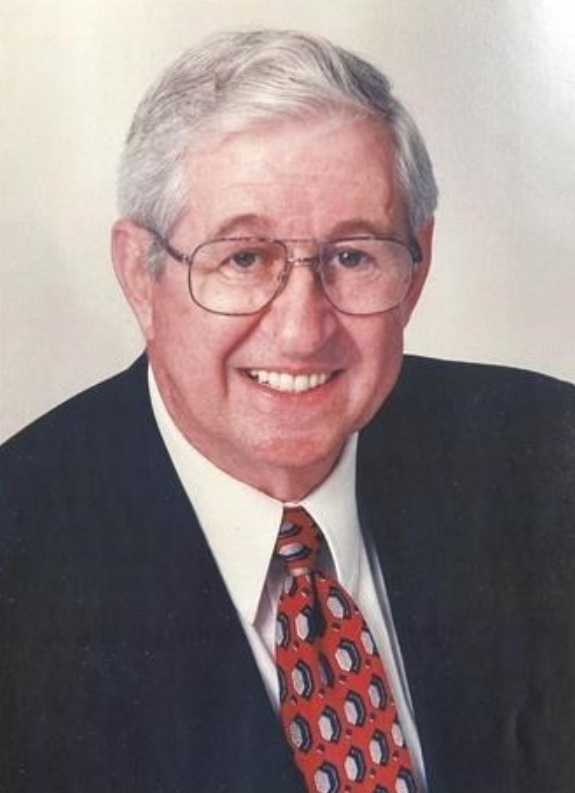 Daryle Busch合作论文数Department of Chemistry, College of Liberal Arts & Sciences, University of Kansas4
 Raghunath V. Chaudhari合作论文数Center for Environmentally Beneficial Catalysis, The University of Kansas/National Chemical Laboratory, The University of Kansas2
 Michael D. Lundin合作论文数Lawrence 660451
 Yi Fang合作论文数1
 Victor W. Day合作论文数The Blakemore Laboratory, Department of Chemistry, University of Kansas1
 Kristin Bowman-James合作论文数Department of Chemistry, College of Liberal Arts & Sciences, University of Kansas1
 Fang Liu合作论文数Department of Chemistry, School of Humanities and Sciences, Stanford University1
 Andrew Danby合作论文数Biorenewables Development Centre, University of York1
 Rowshan Ara Begum合作论文数1
 Marsha I. Lester合作论文数Department of Chemistry, School of Arts and Sciences, University of Pennsylvania1




