Combined cyber and physical attacks on Critical Infrastructures have disastrous consequences on economies and in social well-being. Protection and resilience of CIs under combined attacks is challenging due to their complexity, reliance on ICT systems and the interdependences between different types of CIs. The PRAETORIAN framework was designed to address these challenges, by integrating components responsible for detecting both cyber and physical threats. Additionally, it forecasts how the combined attacks will evolve and their cascading effects on interdependent CIs. The PRAETORIAN framework was demonstrated based on a realistic scenario in the Zagreb airport, combining both physical and cyber attacks.
We study the question of how well machine learning (ML) models trained on a certain data set provide privacy for the training data, or equivalently, whether it is possible to reverse-engineer the training data from a given ML model. While this is easy to answer negatively in the most general case, it is interesting to note that the protection extends over non-recoverability towards plausible deniability: Given an ML model $f$, we show that one can take a set of purely random training data, and from this define a suitable ``learning rule'' that will produce a ML model that is exactly $f$. Thus, any speculation about which data has been used to train $f$ is deniable upon the claim that any other data could have led to the same results. We corroborate our theoretical finding with practical examples, and open source implementations of how to find the learning rules for a chosen set of raining data.
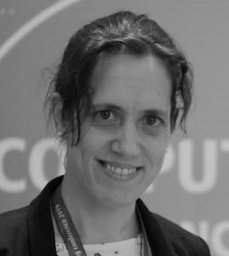 Sandra König合作论文数AIT Austrian Institute of Technology2
 Antonios Karteris合作论文数1Juan Jose Hernandez-Montesinos合作论文数1
 Stephane Paul合作论文数1
 Eva Maria Munoz Navarro合作论文数ETRA Invest & Desarrollo1
 Jasmin Wachter合作论文数1Javier Hingant合作论文数1
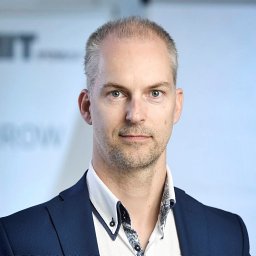 Stefan Schauer合作论文数Austrian Inst Technol GmbH, Digital Safety & Secur Dept, Klagenfurt, Austria1
 Tamara Hadjina合作论文数Fac. of Electr. Eng. & Comput., Univ. of Zagreb;c1
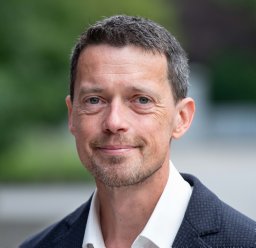 Stefan Rass合作论文数Institute for Smart-System Technologies;Klagenfurt University;Institute for Smart-System Technologies, Klagenfurt University1
 Lazaros Papadopoulos合作论文数VLSI Design and Testing Center, Democritus University Thrace1D. J. Soudris合作论文数Electrical and Computer Engineering
Democritus University of Thrace1
Lazaros Papadopoulos合作论文数VLSI Design and Testing Center, Democritus University Thrace1D. J. Soudris合作论文数Electrical and Computer Engineering
Democritus University of Thrace1 Nicolas Museux合作论文数THALES Research & Technology1




