Simulation can be a powerful technique for evaluating the performance of large-scale cloud computing services in a relatively low cost, low risk and time-sensitive manner. Large-scale data indexing, distribution and management is complex to analyse in a timely manner. In this paper, we extend the CloudSim cloud simulation framework to model and simulate a distributed search engine architecture and its workload characteristics. To test the simulation framework, we develop a model based on a real-world ElasticSearch deployment on Linknovate.com. An experimental evaluation of the framework, comparing simulated and actual query response time, precision and resource utilisation, suggests that the proposed framework is capable of predicting performance at different scales in a precise, accurate and efficient manner. The results can assist ElasticSearch users to manage their scalability and infrastructure requirements.
Increased complexity in IT, big data, and advanced analytical techniques are some of the trends driving demand for more sophisticated and scalable search technology. Despite Quality of Service (QoS) being a critical success factor in most enterprise software service offerings, it is often not a generic component of the enterprise search software stack. In this paper, we explore enterprise search engine dependability and performance using a real-world company architecture and associated data sourced from an ElasticSearch implementation on Linknovate.com. We propose a Fault Tree model to assess the availability and reliability of the Linknovate.com architecture. The results of the Fault Tree model are fed into a Stochastic Petri Net (SPN) model to analyze how failures and redundancy impact application performance of the use case system. Availability and MTTF were used to evaluate the reliability and throughput was used to evaluate the performance of the target system. The best results for all three metrics were returned in scenarios with high levels of redundancy.
The objective of the work package "Data Collection, Visualization and Analysis" of RECAP is to provide the necessary tools for managing and refining the data needed for the rest of the work packages. This includes the collection as well as the generation of data. Within this work package, the task of Artificial Workload Generation is responsible for the generation of a collection of datasets with artificial workloads, that complement the real data traces collected from industrial partners. Moreover, because publicly available workload data is scarce we provide the data as public data sets. This document is a companion report to deliverable which is of type “dataset”. The aim of the report is to describe the collection of datasets that constitute D5.3 and the mathematical techniques (structural time series models, generative adversarial networks, and workload based on traffic propagation) by which one can artificially generate and/or augment such datasets. The datasets described include real data traces collected by industrial partners and artificial data traces generated by the use of statistical models and neural networks. Each published data set can be used by the scientific and industrial community as a starting point for the modelling and experimental validation of distributed edge and cloud applications, facilitating the repeatability of the results.
The REliable CApacity Provisioning and enhanced remediation for distributed cloud applications (RECAP) project aims to advance cloud and edge computing technology, to develop mechanisms for reliable capacity provisioning, and to make application placement, infrastructure management, and capacity provisioning autonomous, predictable and optimized. This paper presents the RECAP vision for an integrated edge-cloud architecture, discusses the scientific foundation of the project, and outlines plans for toolsets for continuous data collection, application performance modeling, application and component auto-scaling and remediation, and deployment optimization. The paper also presents four use cases from complementing fields that will be used to showcase the advancements of RECAP.
 Sergej Svorobej合作论文数4
 James Byrne合作论文数3
 Theodore Gerard Lynn合作论文数3
 M. Eduardo Ares合作论文数2Per-Olov Östberg合作论文数2
 Malika Bendechache合作论文数Dublin City Univ, Dublin, Ireland2
 Peter Willis合作论文数British Telecommun PLC, Adastral Pk, England2
 Radhika Loomba合作论文数2
 Patricia Takako Endo合作论文数Federal University of Pernambuco2
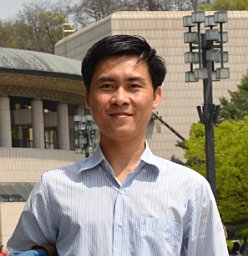 Thang Duc Le合作论文数College of Information and Communication Engineering, Sungkyunkwan University2
 Pascal Casari合作论文数Dept. of Inf. Eng., Univ. of Padova, Padova2Joerg Domaschka合作论文数1
 John Kennedy合作论文数1Philip Eardley合作论文数1
 Jörg Domaschka合作论文数1Linus Närvä合作论文数1
 Miguel Angel Lopez Pena合作论文数Sistemas Avanzados Tecnol SA1
 Hector Humanes合作论文数Sistemas Avanzados Tecnol SA, Dept Innovat, Madrid 28023, Spain1
 Rafael Garcia合作论文数IMDEA Networks Institute, Madrid, Spain1
 Guto Leoni Santos合作论文数Univ Fed Pernambuco, Recife, PE, Brazil1
 Mark Leznik合作论文数Ulm Univ, Inst Informat Resource Management, Ulm, Germany1
 Stefan Wesner合作论文数High Performance Computing Center Stuttgart1Antonio Fernandez合作论文数Institute IMDEA Networks,
Universidad Rey Juan Carlos1Konstantinos M. Giannoutakis合作论文数Department of Mathematics, University of the Aegean1
Stefan Wesner合作论文数High Performance Computing Center Stuttgart1Antonio Fernandez合作论文数Institute IMDEA Networks,
Universidad Rey Juan Carlos1Konstantinos M. Giannoutakis合作论文数Department of Mathematics, University of the Aegean1 Luiz Affonso Guedes合作论文数Dept Comp & Automat, Univ Fed Rio Grande do Norte1
 Vincenzo Mancuso合作论文数Institute IMDEA Networks1
 Ivanovitch Silva合作论文数1




