The systemic absorption of a drug depends on its physicochemical properties, the nature of the dosage form on which it is included, and the anatomical and physiological characteristics of the absorption site. These considerations are important for biopharmaceutical production and drug evaluation, and the design of dosage forms requires a deep knowledge of the physiological and pathological factors that affect drug absorption to guarantee therapeutic efficacy and to avoid possible drug-drug and drug-nutrient interactions.
Epilepsy is a neurological disorder characterized by recurrent seizures that arise from abnormal electrical activity in the brain. Voltage-gated sodium channels (NaVs), responsible for the initiation and propagation of action potentials in neurons, play a critical role in the pathogenesis of epilepsy. This study sought to discover potential anticonvulsant compounds that interact with NaVs, specifically, the brain subtype hNaV1.2. A ligand-based QSAR model and a docking model were constructed, validated, and applied in a parallel virtual screening over the DrugBank database. Montelukast, Novobiocin, and Cinnarizine were selected for in vitro testing, using the patch-clamp technique, and all of them proved to inhibit hNaV1.2 channels heterologously expressed in HEK293 cells. Two hits were evaluated in the GASH/Sal model of audiogenic seizures and demonstrated promising activity, reducing the severity of sound-induced seizures at the doses tested. The combination of ligand- and structure-based models presents a valuable approach for identifying potential NaV inhibitors. These findings may provide a basis for further research into the development of new antiseizure drugs for the treatment of epilepsy.
Background: Since their introduction in the virtual screening field, Receiver Operating Characteristic (ROC) curve-derived metrics have been widely used for benchmarking of computational methods and algorithms intended for virtual screening applications. Whereas in classification problems, the ratio between sensitivity and specificity for a given score value is very informative, a practical concern in virtual screening campaigns is to predict the actual probability that a predicted hit will prove truly active when submitted to experimental testing (in other words, the Positive Predictive Value - PPV). Estimation of such probability is however, obstructed due to its dependency on the yield of actives of the screened library, which cannot be known a priori. Objective: To explore the use of PPV surfaces derived from simulated ranking experiments (retrospective virtual screening) as a complementary tool to ROC curves, for both benchmarking and optimization of score cutoff values. Methods: The utility of the proposed approach is assessed in retrospective virtual screening experiments with four datasets used to infer QSAR classifiers: inhibitors of Trypanosoma cruzi trypanothione synthetase; inhibitors of Trypanosoma brucei N-myristoyltransferase; inhibitors of GABA transaminase and anticonvulsant activity in the 6 Hz seizure model. Results: Besides illustrating the utility of PPV surfaces to compare the performance of machine learning models for virtual screening applications and to select an adequate score threshold, our results also suggest that ensemble learning provides models with better predictivity and more robust behavior. Conclusion: PPV surfaces are valuable tools to assess virtual screening tools and choose score thresholds to be applied in prospective in silico screens. Ensemble learning approaches seem to consistently lead to improved predictivity and robustness.
Much interest has been paid in the last decade on molecular predictors of promiscuity, including molecular weight, log P, molecular complexity, acidity constant and molecular topology, with correlations between promiscuity and those descriptors seemingly being context-dependent. It has been observed that certain therapeutic categories (e.g. mood disorders therapies) display a tendency to include multi-target agents (i.e. selective non-selectivity). Numerous QSAR models based on topological descriptors suggest that the topology of a given drug could be used to infer its therapeutic applications. Here, we have used descriptive statistics to explore the distribution of molecular topology descriptors and other promiscuity predictors across different therapeutic categories. Working with the publicly available ChEMBL database and 14 molecular descriptors, both hierarchical and non-hierchical clustering methods were applied to the descriptors mean values of the therapeutic categories after the refinement of the database (770 drugs grouped into 34 therapeutic categories). On the other hand, another publicly available database (repoDB) was used to retrieve cases of clinically-approved drug repositioning examples that could be classified into the therapeutic categories considered by the aforementioned clusters (111 cases), and the correspondence between the two studies was evaluated. Interestingly, a 3- cluster hierarchical clustering scheme based on only 14 molecular descriptors linked to promiscuity seem to explain up to 82.9% of approved cases of drug repurposing retrieved of repoDB. Therapeutic categories seem to display distinctive molecular patterns, which could be used as a basis for drug screening and drug design campaigns, and to unveil drug repurposing opportunities between particular therapeutic categories.
The Blood-Brain Barrier (BBB) is a physical and biochemical barrier that restricts the entry of certain drugs to the Central Nervous System (CNS), while allowing the passage of others. The ability to predict the permeability of a given molecule through the BBB is a key aspect in CNS drug discovery and development, since neurotherapeutic agents with molecular targets in the CNS should be able to cross the BBB, whereas peripherally acting agents should not, to minimize the risk of CNS adverse effects. In this review we examine and discuss QSAR approaches and current availability of experimental data for the construction of BBB permeability predictive models, focusing on the modeling of the biorelevant parameter unbound partitioning coefficient (Kp, uu). Emphasis is made on two possible strategies to overcome the current limitations of in silico models: considering the prediction of brain penetration as a multifactorial problem, and increasing experimental datasets through accurate and standardized experimental techniques.
Despite the introduction of more than 15 third generation antiepileptic drugs to the market from 1990 to the moment, about one third of the epileptic patients still suffer from refractory to intractable epilepsy. Several hypotheses seek to explain the failure of drug treatments to control epilepsy symptoms in such patients. The most studied one proposes that drug resistance might be related with regional overactivity of efflux transporters from the ATP-Binding Cassette (ABC) superfamily at the blood-brain barrier and/or the epileptic foci in the brain. Different strategies have been conceived to address the transporter hypothesis, among them inhibiting or down-regulating the efflux transporters or bypassing them through a diversity of artifices. Here, we review scientific evidence supporting the transporter hypothesis along with its limitations, as well as computer-assisted early recognition of ABC transporter substrates as an interesting strategy to develop novel antiepileptic drugs capable of treating refractory epilepsy linked to ABC transporters overactivity.
Breast Cancer Resistance Protein (BCRP) is an ATP-dependent efflux transporter linked to the multidrug resistance phenomenon in many diseases such as epilepsy and cancer and a potential source of drug interactions. For these reasons, the early identification of substrates and nonsubstrates of this transporter during the drug discovery stage is of great interest. We have developed a computational nonlinear model ensemble based on conformational independent molecular descriptors using a combined strategy of genetic algorithms, J48 decision tree classifiers, and data fusion. The best model ensemble consists in averaging the ranking of the 12 decision trees that showed the best performance on the training set, which also demonstrated a good performance for the test set. It was experimentally validated using the ex vivo everted rat intestinal sac model. Five anticonvulsant drugs classified as nonsubstrates for BRCP by the model ensemble were experimentally evaluated, and none of them proved to be a BCRP substrate under the experimental conditions used, thus confirming the predictive ability of the model ensemble. The model ensemble reported here is a potentially valuable tool to be used as an in silico ADME filter in computer-aided drug discovery campaigns intended to overcome BCRP-mediated multidrug resistance issues and to prevent drug-drug interactions.
The advent of nanomedicines allows a diversity of drugs with unfavorable biopharmaceutical properties and safety issues to be accessible as pharmaceutical products. The expectations are particularly high in the field of cancer therapeutics, where nanotechnology promises to enhance treatment selectivity, solving or ameliorating off-target toxicity issues. The biocompatible nature of lipid-based nanosystems and their scalable production make them especially auspicious for therapeutic applications.
Nano-sized drug delivery systems might well be a fundamental tool to overcome some of the major challenges for future treatment of cancer, optimizing drug effectiveness while simultaneously reducing systemic side effects. This chapter is an update on patents related to nanosystems applications to anticancer drug delivery published in the last five years (2010-2015); the chapter focuses on polymeric nanosystems (nanospheres, nanocapsules, hydrogel based nanosystems, dendrimers and polymeric micelles).
Virtual screening encompasses a wide range of computational approaches aimed at the high-throughput, cost-efficient exploration of chemical libraries or databases to discover new bioactive compounds or novel medical indications of known drugs. Here, we have performed a systematic comparison of the performance of a large number of 2D and 3D ligand-based approaches (2D and 3D similarity, QSAR models, pharmacophoric hypothesis) in a simulated virtual campaign on a chemical library containing 50 known anticonvulsant drugs and 950 decoys with no previous reports of anticonvulsant effect. To perform such comparison, we resorted to Receiver Operating Characteristic curves. We also tested the relative performance of consensus methodologies. Our results indicate that the selective combination of the individual approaches (through voting and ranking combination schemes) significantly outperforms the individual algorithms and/or models. Among the best-performing individual approaches, 2D similarity search based on circular fingerprints and 3D similarity approaches should be highlighted. Combining the results from different query molecules also led to enhanced enrichment.
One of the greatest challenges in cancer drug therapy is to maximize the effectiveness of the active agent while reducing its systemic adverse effects. To add more, many widely-used chemoterapeutic agents present unfavorable physicochemical properties (e.g. low solubility, lack of chemical or biological stability) that hamper or limit their therapeutic applications. All these issues may be overcome by designing adequate drug delivery systems; nanocarriers are particularly suitable for this purpose. Nanosystems can be used for targeted-drug release, treatment, diagnostic imaging and therapy monitoring. They allow the formulation of drug delivery systems with user-defined characteristics regarding solubility, biodegradability, particle size, release kinetics and active targeting, among others. This review (Part I) focuses on recent patents published between 2008 and the present day, related to nanospheres, nanocapsules and nanogels applied to anticancer drug therapy. Other nanosystems is covered in a second article (Part II).
The great efforts of many researchers have brought down some of the barriers that exist to turn a good in vitro compound into a potential in vivo drug. The advent of pharmaceutical nanotechnology has allowed an arsenal of drugs with poor stability, low solubility, high off-target toxicity and other disadvantageous features, to be accessible as pharmaceutical products that could be administered to a patient. Nanotechnology was introduced in drug delivery very long ago, but has flourished with unprecedented intensity during the last twenty years and now a diversity of nano-based preparations are at clinical stage of development or already available in the market. Undoubtedly, nanotechnology plays a key role in future pharmaceutical development and pharmacotherapy. In the first part of this review, we have already discussed recent (2008-2012) patents on linear polymer-based nanosystems (nanogels, nanospheres and nanocapsules) applications to cancer therapy. Here, we have expanded such analysis to branched polymers (dendrimers), self-assembling nanomicelles and lipid-based nanocarriers.
One of the greatest challenges in cancer drug therapy is to maximize the effectiveness of the active ingredient while reducing its systemic adverse effects. Conventional (non-targeted) systemic drug therapy is characterized by unspecific distribution of the anticancer drugs: both healthy and affected tissues are thus exposed to the chemotherapeutic agent, giving raise to off-target side-effects. Besides, a number of widely-used chemoterapeutic agents present unfavorable physicochemical properties, such as low solubility or low stability issues, limiting their available routes of administration and therapeutic applications. Nano-delivery systems seem as promising solutions to these issues. They can be used for targeted-drug release, diagnostic imaging and therapy monitoring. Nanosystems allow the formulation of drug delivery systems with tailored properties (e.g. solubility, biodegradability, release kinetics and distribution) that provide means to improve cancer patients' quality of life by lowering the administered dose and, incidentally, the cost of clinical treatments. This article overviews the main features of different nanovehicles (linear and non-linear polymeric nanosystems, lipid-based systems, inorganic nanoparticles) and presents a selection of reports on applications of such systems to cancer therapy published between 2010 and 2013.
 Alan Talevi合作论文数Faculty of Exact Sciences, La Plata National University (UNLP),12
 Gantner Melisa E合作论文数6
 Di Ianni Mauricio E合作论文数3
 Luciana Gavernet合作论文数Facultad de Ciencias Exactas, Universidad Nacional de La Plata3Guido Pesce合作论文数2
 Juan F Morales合作论文数Department of Pharmaceutics Center for Pharmacometrics and Systems Pharmacology College, Pharmacy University of Florida2
 Sebastian Scioli Montoto合作论文数Faculty of Exact Sciences, Universidad Nacional de La Plata (UNLP)2Enrique Andrea合作论文数2
 Palestro Pablo H合作论文数Exact Science College, National University of La Plata (UNLP),2Luis E. Bruno-Blanch合作论文数2Vega Esteban-Lopez合作论文数1
 David Sánchez-Benito合作论文数Inst Neurosci Castilla & Leon INCYL, Univ Salamanca1Sara Chuguransky合作论文数European Mol Biol Lab, European Bioinformat Inst EMBL EBI1
 Manuel A Llanos合作论文数Departamento de Ciencias Biológicas and Laboratorio de Investigación y Desarrollo de Bioactivos (LIDeB),, Universidad Nacional de La Plata. La Plata1
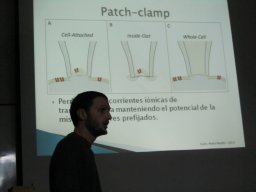 Pedro Martín合作论文数1Fagiolino Pietro合作论文数1
 Alberca Lucas合作论文数Faculty of Exact Sciences, National University of La Plata1
 Veronica Milesi合作论文数Facultad de Ciencias Exactas, Universidad Nacional de La Plata1
 Nicolas Enrique合作论文数Consejo Nacional de Investigaciones Científicas y Técnicas, Universidad Nacional de La Plata1Guillermo R. Castro合作论文数1
 Carolina L. Bellera合作论文数Faculty of Exact Sciences, Universidad Nacional de La Plata1
 Dolores E Lopez合作论文数Instituto de Neurociencias de Castilla y León, Universidad de Salamanca1




