Background The Children's Oncology Group Long-Term Follow-Up Guidelines provide exposure-based risks and recommendations for late effects screening of survivors of childhood cancer. Passport for Care (PFC) is a web-based clinical decision support tool for generating a personalized survivorship care plan (SCP) derived from the Guidelines and user-entered exposures. We assessed PFC clinician user practices and perceptions of PFC impact on clinic workflow, guidelines application, and survivor shared decision-making. Procedure A 35-item REDCap survey was emailed to all PFC users (n = 936) in 146 current and former PFC user clinics. Anonymous responses were permitted. Results were summarized and compared with a 2012 survey. Results Data were available from 148 respondents representing 64 out of 146 PFC user clinics (minimum clinic response rate 44%, excluding 49 anonymous responses). Generation of a personalized SCP was the most common application of PFC, followed by determination of surveillance recommendations and use as a survivor database. Twenty-five respondents (17%) felt data entry was a significant or insurmountable barrier to PFC application. Sixty-nine percent of respondents attributed PFC with a very high/high impact on guidelines adherence in their clinical practice, compared with 40% who attributed PFC with having a significant impact on adherence in 2012 (p < .001). Conclusion The survey results provide valuable insights on patterns of SCP delivery and Survivor Clinic workflow. User-perceived benefits to PFC included facilitating clinician ability to follow guidelines recommendations in clinical practice. Importantly, some barriers to resource utilization were also identified, suggesting a need for user-informed adaptations to further improve uptake.
e24058 Background: Survivors of childhood cancer are at lifelong risk for late effects. The Children’s Oncology Group evidence-based guidelines provide exposure-based risks and recommendations for late effects screening. The Passport for Care (PFC) was developed in 2007 as a web-based clinical decision support tool that uses advanced algorithms to generate a personalized survivorship care plan (SCP), derived from the guidelines and user-entered exposures. Over 150 Long-Term Survivor (LTS) clinics utilize PFC, generating over 47,000 SCPs to date. Our objective was to assess PFC user practices and perceptions of PFC’s impact on clinic workflow, guideline application, and survivor shared decision-making. Methods: We designed a 35-item survey based on a 2012 PFC survey and expanded to include items related to interval website improvements. In June 2021, a REDCap™ survey was sent via email to 935 PFC users in 145 clinics: 107 active PFC clinics and 38 inactive (no data entry in the preceding 6 months). Responses were anonymous, but those who provided an email address were given a $5 gift card. Survey results were reviewed, summarized, and compared with data from 2012 using a Chi square test, when applicable. Results: There were 148 respondents of whom 104 declined anonymity, representing 64 clinics (44%): 58 of the active (54%) and 6 of the inactive clinics (16%). Respondents were largely physicians (n = 46), advanced practice providers (APPs, n = 42), and nurses (n = 49). Of the 148 respondents, 142 provided valid data for the remaining items. PFC was most often used to generate a personalized SCP (n = 131, 93%), compared with 63% in 2012. Other common uses were as a clinical database (59%) and to document late effects (51%). Seventy-one respondents (50%) used PFC to generate an SCP at entry to LTS, and 54 (38%) used PFC at every survivor visit. Most used PFC for > 75% of survivors (n = 103, 73%). Nurses (n = 89, 63%), APPs (n = 63, 44%), physicians (n = 37, 26%), and data managers (n = 13, 9%) performed data entry. Sixty-four respondents (45%) estimated requiring over 30 minutes/patient for data abstraction and entry, and 67 respondents (48%) felt data entry was a modest or significant barrier to PFC application. The majority of respondents were very or generally satisfied with PFC (87%), unchanged from previous (90%). The perceived impact of PFC on accurate application of the guidelines improved from 41% to 72% (p < 0.001), and on fostering conversations with survivors about risk for late effects and screening improved from 44% to 70% (p < 0.001). Conclusions: These results underscore the PFC’s role in increasing guidelines utilization and facilitating conversations with survivors about screening needs. The burden of data entry was a noted limitation, particularly when this responsibility fell to the physician or APP, and was further corroborated by user prioritization of ‘exposure data pre-population by treatment protocol’ for future PFC modifications.
This chapter describes a seminar designed to teach paediatric haematologists/oncologists about the psychological, social and organizational aspects of paediatric haematology/oncology through reflection and analysis of the leadership dimensions of their role. The seminar's theory base and design is rooted in the Tavistock tradition of group relations training and incorporates basic elements of transitional thinking and the transitional approach to change. The ultimate design of the seminar can be also seen as a variant of a classical Michael Balint group that has many features common to a transitional approach. The principle alterations that derive from the Tavistock approach to group relations involve adding group and institutional levels of analysis and focusing on the dimension of leadership. This translates into three specific modifications of the classic Balint design. The circumstances raised by the fellows in the seminar are typically multi-dimensional, including ethical and technical dilemmas.
Survivors of childhood cancer are at increased risk for late effects of cancer therapy, but evidence suggests that adherence to follow-up care is suboptimal. Here, we review the barriers to adherence, including those unique to childhood cancer survivors, and the rationale for distribution of a survivorship care plan. We also discuss advantages and potential limitations of delivering survivorship care plans via web-based platforms, and describe the unique features of one of these platforms, Passport for Care. A baseline survey directed toward survivors and conducted through Passport for Care found that a significant proportion of survivors are unaware of their specific health risks resulting from cancer and its treatment, and compared with their parents, are less afraid of the risks of recurrence and of cancer therapy-associated late effects (n = 528). Web-based platforms such as Passport for Care have enormous potential for improving access to health information, as well as for enhancing patient, family caregiver, and healthcare provider awareness of both risks of late effects and recommended surveillance. Results from this survey also suggest the potential utility of leveraging these tools to conduct additional research on consenting survivors.
Background. The randomized controlled Pediatric Oncology Group study 9233 tested the hypothesis that dose-intensive (DI) chemotherapy would improve event-free survival (EFS) for children <3 years of age with newly diagnosed malignant brain tumors.Methods. Of 328 enrolled eligible patients, diagnoses were medulloblastoma (n = 112), ependymoma (n = 82), supratentorial primitive neuroectodermal tumor (sPNET, n = 38) and other malignant brain tumors (n = 96), and were randomized to 72 weeks of standard dose chemotherapy (Regimen A, n = 162) or DI chemotherapy (Regimen B, n = 166). Radiation therapy (RT) was recommended for patients with evidence of disease at completion of chemotherapy or who relapsed within 6 months of chemotherapy completion.Results. Distributions of EFS for Regimens A and B were not significantly different (P = 0.32) with 2- and 10-year rates of 22.8%+/- 3.3% and 15.4%+/- 3.7%, and 27.1%+/- 3.4% and 20.8%+/- 3.8%, respectively. Thus, the study hypothesis was rejected. While distributions of EFS and OS were not significantly different between Regimens A and B for patients with medulloblastoma and sPNET, DI chemotherapy resulted in significantly improved EFS distribution (P = .0011) (2-year EFS rates of 42.1% vs. 19.6% with SD chemotherapy), but not OS distribution, for patients with centrally confirmed ependymoma. The degree of surgical resection affected EFS, OS or both for most tumor groups. Approximately 20%, 40% and 20% of patients with medulloblastoma, ependymoma treated with DI chemotherapy, and sPNET, respectively appear to have been cured without RT. Of 11 toxic deaths on study, 10 occurred on the DI chemotherapy arm.Conclusions. Prolonged dose-intensive chemotherapy given to infants with malignant brain tumors resulted in increased EFS only for patients with ependymoma.
Survivors of childhood cancer are at risk of long-term adverse effects and late effects of the disease and/or its treatment. In response to national recommendations to improve evidence-based follow-up care, a web-based support system for clinical decision making, the Passport for Care (PFC), was developed for use at the point of care to produce screening recommendations individualized to the survivor. To date, the PFC has been implemented in over half of the nearly 200 clinics affiliated with the Children's Oncology Group across the USA. Most clinician users report that the PFC has been integrated into clinic workflows, and that it fosters improved conversations with survivors about the potential late effects a survivor might experience and about the screening and/or behavioural interventions recommended to improve health status. Furthermore, clinicians using the PFC have indicated that they adhered more closely to follow-up care guidelines. Perspectives on the challenges encountered and lessons learned during the development and deployment of the PFC are reviewed and contrasted with other nationwide approaches to the provision of guidance on survivor follow-up care; furthermore, the implications for the care of childhood cancer survivors are discussed.
The progress made in the past six decades in improving the prognosis of U.S. children with cancer is one of modern medicine’s great success stories. Overall, the survival rate approximates 80%. It is estimated that there are more than 350,000 childhood cancer survivors in the United States.
Pediatric hematologist/oncologists lead in a variety of roles and settings: at the bedside, in private or academic practice, in the laboratory, and in wider society. Whether their leadership is the result of innate ability, technical expertise, or educational experience, patients, colleagues, academic centers, and communities turn to physicians for leadership. But where do these physicians learn this complex skill? Physicians do acquire leadership skills, but mainly through interaction with role models and in a hit or miss fashion. This article provides a theoretical framework for medical leadership education and describes a leadership-focused educational seminar that has been offered to pediatric hematology-oncology fellows at Texas Children's Cancer Center since 1995. Retrospective pre/post evaluations by fellows indicated significant improvement in self-rated ability for all 24 dimensions assessed, including a variety of items drawn from the roster of the Accreditation Council for Graduate Medical Education Core Competencies. In this article we extend the concept of physician leadership from its roots in practice and present a comprehensive model that prepares pediatric hematologist/oncologists for leadership in clinical, research, and educational arenas.
Approximately 12,000 children in the United States are diagnosed with cancer each year, and roughly 75% of these patients become long-term survivors. The Passport for Care was developed to support these survivors and their health care providers.
Surveillance and management for therapy-related normal tissue damage in survivors of both childhood and adult-onset cancer is necessary to maximize health-related quality of life. Progress by the Children's Oncology Group (COG) can be modeled or adapted for adult malignancy, and is described in this report. Investigators from COG developed risk-based, exposure-related guidelines to provide recommendations for screening and management of late effects that may arise as a result of therapeutic exposures used during treatment for childhood, adolescent and young adult cancer. The guidelines are both evidence-based and grounded in the collective clinical experience of experts providing clinical care to these patient populations. A therapy-based design was chosen to permit modular formatting of the guidelines by therapeutic exposure and based on the patient's age, presenting features, and treatment era. Multidisciplinary system-based (e.g., cardiovascular, neurocognitive, reproductive, etc.) task forces organized within the COG Late Effects Committee are responsible for monitoring the literature, evaluating guideline content, and providing recommendations for guideline revision as new information becomes available. The COG Long-Term Follow-Up (LTFU) Guidelines and accompanying health education materials are available at www.survivorshipguidelines.org.
We describe the successful heterotransplantation of a human ependymoma in CBA/CaJ mice immune deprived by infant thymectomy and whole-bodyirradiation. The xenograft, HxBrS, was established from a fourth ventricularependymoma,locallyrecurrent in an 11-yr-oldgirl who had been treated with radiation therapy to the posterior fossa. HxBrS retains histolÃ3gica! and ultrastructural fidelity to the tumor from which it was derivedas does the DNA content, as confirmedby flowcytometric analysis. The karyotype of the xenograft, which is pseudodiploidand exhibits trisomy Iq and deletion of Ip, is the first human ependymoma banded karyotype to be reported. Growth rates of the xenograft rumors are similar to the primary tumor as clinically observedwith a doubling time of approximately42 days. Cell kinetic parameters indicatethat this slow-growingtumor has a relatively high growth fraction of 7(1.8%with a high cell loss of approximately 91%. We anticipate that HxBrS may be useful as one component of a more complex model for studying the biologyand differentiationof human ependymoma.
http://bloodjournal.hematologylibrary.org/site/misc/rights.xhtml#repub_requests Information about reproducing this article in parts or in its entirety may be found online at: http://bloodjournal.hematologylibrary.org/site/misc/rights.xhtml#reprints Information about ordering reprints may be found online at: http://bloodjournal.hematologylibrary.org/site/subscriptions/index.xhtml Information about subscriptions and ASH membership may be found online at:
The observation that neuroectodermal differentiation imparts a worse prognosis to the Ewing family of tumors has been suggested by some studies and refuted by others. To assess whether the diagnosis of Ewing's sarcoma versus peripheral primitive neuroectodermal tumor (PNET) affects prognosis, we analyzed tumors from 63 analogously treated pediatric and young adult patients from the National Cancer Institute and St Jude Children's Research Hospital and retrospectively compared the results with clinical outcomes. The tumors were assessed using standard light microscopy and immunohistochemical stains for neuron-specific enolase, CD57, S100 protein, neurofilament protein, and synaptophysin with or without antigen retrieval. Ultrastructural evaluation was also performed in 39 tumors. Classification was performed using Kiel criteria as well as a modified classification. Kaplan-Meier analyses, with Mantel-Haenzel evaluation of the significance of the differences, were performed separately for localized or metastatic tumors. Using the Kiel classification on a subset of 60 cases, 39 tumors qualified as PNET and 21 as Ewing's sarcoma. Using the modified classification on a subset of 61 cases, 14 were classified as PNET, 21 as atypical Ewing's sarcoma, and 26 as Ewing's sarcoma. The addition of electron microscopy to the diagnostic armamentarium significantly increased the likelihood of identifying PNET. No significant differences in event-free or overall survival were seen using either the modified or Kiel classification, regardless of the ancillary diagnostic techniques employed. In this exploratory analysis, neuroectodermal differentiation did not play a role in clinical outcome. Confirmation of this finding will require a larger, separate study of similarly treated patients, and it may not apply to older patients.
Although survivals of infants with malignant brain tumors are worse than any other age group, one possible exception to this rule are the malignant gliomas. Eighteen children less than 3 years of age with malignant gliomas (glioblastoma multiforme, anaplastic astrocytoma and malignant glioma) were treated on the Pediatric Oncology Group regimen of prolonged postoperative chemotherapy and delayed irradiation, (1986-1990). Of 10 children evaluable for neuroradiologic response, 6 had partial responses (> 50% reduction) to two cycles of cyclophosphamide and vincristine. Progression free survivals at 1,3 and 5 years were 54.25% +/- 12, 43% +/- 16 and 43% +/- 23 respectively. Survivals at 5 years were 50% +/- 14. Four children were not irradiated after 24 months of chemotherapy due to parental refusal and none have developed recurrent disease. Neither degree of surgical resection, presence or absence of metastases, nor pathology influenced survival but this may reflect small sample size. This study suggests that some malignant gliomas in infants are chemotherapy sensitive and may be associated with a good prognosis. Why infants with these high-grade gliomas fare better than adults is not clear. It is likely that there is something intrinsically different about them that cannot be identified on routine pathologic examination.
Eleven infants with pineoblastomas were treated with prolonged postoperative chemotherapy in an attempt to delay radiation and reduce neurotoxicity. These infants were part of the Pediatric Oncology Group infant brain tumor study but the outcome of infants with pineoblastomas was not previously reported. Ages ranged from 1 month to 35 months, with eight of 11 < or = 12 months at diagnosis. Four had + cytology and three had + myelograms at diagnosis. The majority had partial surgical resection (25-75% reduction in tumor) and 10 had shunts. Chemotherapy consisted of two 28-day cycles of cyclophosphamide plus vincristine, followed by one 28-day cycle of cisplatin plus etoposide. Craniospinal radiation was planned following completion of either 2 years of chemotherapy (children less than 24 months at diagnosis) or following one year (children 24-36 months at diagnosis). Neuroimaging results following two cycles of cyclophosphamide and vincristine were one partial response, five stable disease, and five progressive disease. There were no responders in the leptomeninges. All children ultimately failed chemotherapy (2 months-11 months). Nine failed in the primary site. Of those eight children in whom a metastatic workup was performed at time of progression, all had evidence of leptomeningeal disease. Six received radiation following failure on chemotherapy. All failed either in the primary site, leptomeninges or extraneurally (peritoneal cavity). All children died. Survival following diagnosis ranged from 4 months to 13 months. This chemotherapy regimen was neither effective in controlling tumor in the primary site nor in treating or preventing leptomeningeal spread.
 David G. Poplack合作论文数9Michael Fordis合作论文数8
 Larry Emanuel Kun合作论文数St Jude Children’s5Edwin C. Douglass合作论文数4Susan Krause合作论文数3
 Maria Tsokos合作论文数Department of Medicine, Beth Israel Deaconess Medical Center, Harvard Medical School3William H. Meyer合作论文数3
 Smita Bhatia合作论文数Institute for Cancer Outcomes & Survivorship , School of Medicine, The University of Alabama at Birmingham3
 Melissa M. Hudson合作论文数Cancer Survivorship Division, Department of Oncology, St. Jude Children's Research Hospital;Department of Epidemiology and Cancer Control, St. Jude Children's Research Hospital;Comprehensive Cancer Center, St. Jude Children's Research Hospital3Jason E. King合作论文数3
 Louis S. Constine合作论文数Department of Radiation Oncology, University of Rochester Medical Center;Wilmot Cancer Center3Charles B Pratt合作论文数St. Jude Children's Research Hospital3Wendy Landier合作论文数University of California-Los Angeles USA.3Robert A. Sanford合作论文数3David Poplack合作论文数2Ellen Shohet合作论文数2FA HAYES合作论文数2
 Patricia K Duffner合作论文数2
 Ernest Fruge合作论文数2
 Kevin Charles Oeffinger合作论文数Department of Community and Family Medicine, School of Medicine, Duke University;Department of Medicine, School of Medicine, Duke University;Center For Onco-Primary Care, Duke Cancer Institute, Duke University;Supportive Care and Survivorship Center, Duke Cancer Institute, Duke University2Gramatges Maria M合作论文数2
 Philip A. Pizzo合作论文数Department of Microbiology and Immunology, Stanford School of Medicine;Department of Pediatrics, Stanford School of Medicine;Stanford Distinguished Careers Institute, Stanford University2
 Charles Sklar合作论文数Department of Pediatrics, Memorial Sloan Kettering Cancer Center;Department of Pediatrics, Weill Cornell Medical College, Cornell University2
 Amar Gajjar合作论文数Department of Pediatric Medicine, St. Jude Children's Research Hospital;Division of Neuro-Oncology, Department of Oncology, St. Jude Children's Research Hospital2Donald H. Mahoney合作论文数2
 Peter Burger合作论文数Division of Neuropathology, Department of Pathology, School of Medicine, The Johns Hopkins University2
 Peter Houghton合作论文数Department of Molecular Medicine, Long School of Medicine, The University of Texas Health Science Center at San Antonio;Department of Pediatrics, Long School of Medicine, The University of Texas Health Science Center at San Antonio;Greehey Children’s Cancer Research Institute, The University of Texas Health Science Center at San Antonio2Marshall P. Goren合作论文数2Elizabeth I. Thompson合作论文数2Reba K. Wright合作论文数2Jean B. Belasco合作论文数2Frank M. Balis合作论文数2Douglas Strother合作论文数2Janet A. Houghton合作论文数2
 Michael Scheurer合作论文数Dan L Duncan Comprehensive Cancer Center, Baylor College of Medicine;Center for Epidemiology & Population Health, Baylor College of Medicine;Texas Children's Cancer and Hematology Center, Texas Children's Hospital2
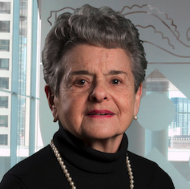 Anna T. Meadows合作论文数Division of Oncology, The Children's Hospital of Philadelphia;Perelman School of Medicine, University of Pennsylvania2Y Hijazi合作论文数1Am Goorin合作论文数1
 Francesca Bonaduce De Nigris合作论文数1David M. Puritani合作论文数1Lawrence J. Ettinger合作论文数1Murali Chintagumpala合作论文数1ALAN BAKER合作论文数1ME COHEN合作论文数1Masato Nakajima合作论文数1HS FRIEDMAN合作论文数1Wm Crist合作论文数1Ba Kamen合作论文数1




