BACKGROUND & AIMS: Human sporadic colorectal cancer (CRC) results from a multistep pathway with sequential acquisition of specific fi c genetic mutations in the colorectal epithelium. Modeling CRC in vivo is critical for understanding the tumor microenvironment. To accurately recapitulate human CRC pathogenesis, mouse models must include these multi-step genetic abnormalities. The aim of this study was to generate a sporadic CRC model that more closely mimics this multi-step process and to use this model to study the role of a novel Let7 target PLAGL2 in CRC pathogenesis. METHODS: We generated a CRISPR/Cas9 somatic mutagenesis mouse model that is inducible and multiplexed for simultaneous inactivation of multiple genes involved in CRC pathogenesis. We used both a doxycycline-inducible transcriptional activator and a doxycycline-inactivated transcriptional repressor to achieve tight, non-leaky expression of the Cas9 nickase. This mouse has transgenic expression of multiple guide RNAs to induce sporadic inactivation in the gut epithelium of 4 tumor suppressor genes commonly mutated in CRC, Apc, Pten, , Smad4, , and Trp53. . These were crossed to Vil-LCLPLAGL2 mice, which have Cre-inducible overexpression of PLAGL2 in the gut epithelium. RESULTS: These mice exhibited random somatic mutations in all 4 targeted tumor suppressor genes, resulting in multiple adenomas and adenocarcinomas in the small bowel and colon. Crosses with Vil-LCL-PLAGL2 mice demonstrated that gut- specific fi c PLAGL2 overexpression increased colon tumor growth. CONCLUSIONS: This conditional model represents a new CRISPR/Cas9-mediated mouse model of colorectal carcinogenesis. These mice can be used to investigate the role of novel, previously uncharacterized genes in CRC, in the context of multiple commonly mutated tumor suppressor genes and thus more closely mimic human CRC pathogenesis.
This chapter contains sections titled: Ulcers of the small intestine Drug-induced small bowel disease Necrotizing enterocolitis Protein-losing gastroenteropathy References
Loss of intestinal surface area causes short bowel syndrome, intestinal failure, and parenteral nutrition dependence. We analyzed the gut microbiota and bile acid metabolome of a large cohort of short bowel syndrome adult patients with different postsurgical anatomies. We report a novel analysis of the microbiome of patients with ileostomy and jejunostomy. Enrichment of specific microbial and bile acid species may be associated with the ability to wean from parenteral nutrition.
Loss of functional small bowel surface area following surgical resection for disorders such as Crohn's disease, intestinal ischemic injury, radiation enteritis, and in children, necrotizing enterocolitis, atresia, and gastroschisis, may result in short bowel syndrome, with attendant high morbidity, mortality, and health care costs in the United States. Following resection, the remaining small bowel epithelium mounts an adaptive response, resulting in increased crypt cell proliferation, increased villus height, increased crypt depth, and enhanced nutrient and electrolyte absorption. Although these morphologic and functional changes are well described in animal models, the adaptive response in humans is less well understood. Clinically the response is unpredictable and often inadequate. Here we address the hypotheses that human intestinal stem cell populations are expanded and that the stem cell niche is regulated following massive gut resection in short bowel syndrome (SBS). We use intestinal enteroid cultures from patients with SBS to show that the magnitude and phenotype of the adaptive stem cell response are both regulated by stromal niche cells, including intestinal subepithelial myofibroblasts, which are activated by intestinal resection to enhance epithelial stem and proliferative cell responses. Our data suggest that myofibroblast regulation of bone morphogenetic protein signaling pathways plays a role in the gut adaptive response after resection.
Background & aims: In this study of patients with non-malignant short bowel syndrome (SBS), who initiated home parenteral support (HPS), we estimated survival and investigated risk factors of mortality.We also examined the cumulative incidence of weaning off and predictors of regaining enteral autonomy.Methods: Patients were retrospectively included from 1970 to 2016 from the Copenhagen Intestinal Failure Database.The inclusion criteria at HPS initiation were pathophysiological classification of SBS, remnant small bowel length of 200 cm or less, and intestinal failure (IF).Patients with SBS due to malignant disease were excluded.Demographical data and duration of HPS treatment were obtained from the Copenhagen IF Database.Mortality data were retrieved from the Danish Register of Causes of Death.Data were analyzed with Kaplan-Meier method, Cox proportional hazard regression, and an Aalen-Johansen estimator.Results: A total of 331 patients with a median age of 54.9 years (interquartile range: 42.8-65.8)initiated HPS in the period from 1970 to 2016.The majority (84.9%) had a jejuno-/ileostomy at initiation.Surgical alterations of the bowel anatomy were frequent during HPS treatment (n=163 patients, 49.2%).The five-year survival rate after HPS initiation was 89.1% (95%CI: 81.4%-96.7%) in patients under 40 years of age, 80.2% (95%CI: 73.1%-87.2%) in patients aged 40 to 60 years, and 55.1% (95%CI: 45.0%-65.3%) in patients aged 60 years and above.In a multivariate analysis, patients who regained enteral autonomy had a significantly reduced hazard of death.Age at initiation and diagnosis other than IBD were significantly related to increased hazard (table 1).Preliminary results indicate that 17.2% of deaths in patients receiving HPS were due to HPS related complications (21 deaths out of 122).The estimated cumulative incidence of weaning off was 33.6% after 1 year and 41.1% after 5 years.In a multivariate cox regression with allowance of anatomy changes, anatomy of the remnant bowel was significantly associated with the ability to wean off (table 2).Conclusion: Mortality in patients with SBS initiating HPS is highly dependent on age at initiation and regaining enteral autonomy.However, it cannot be concluded that HPS itself causes this increased hazard.Preliminary results indicate that 17% of deaths in HPS dependent patients were caused by HPS related complications.In patients younger than 40 years, we report a 5-year survival of 89.1%.We confirm that total weaning off HPS is closely related to the anatomy of the remnant bowel and is highly unlikely to occur if the length of the remnant small bowel is less than 100 cm and there is no colon in continuity.
days after tamoxifen injection from Bmi1 Ctrl and Bmi1 hKlf4 mice in Matrigel.There was no significant difference for organoid formation efficiency between Bmi1 Ctrl and Bmi1 hKlf4 .We observed that organoids derived from control YFP + cells were capable of multipotent differentiation and contained MUC2-expressing cells that co-expressed KLF4.However, organoids derived from Klf4-deleted YFP + cells did not produce MUC2-expressing cells.The effect of Klf4 deletion from BMI1 + ISCs on tissue regeneration was evaluated by measuring organoid formation efficiency following 1, 2 and 4 Gy IR (Bmi1 Ctrl , n=3; Bmi1 hKlf4 , n=6).At 5 days post-IR, Klf4-deleted YFP + cells showed a decreased trend of organoid formation efficiency, suggesting that KLF4 protects BMI1 + ISCs against IR-induced injury.Conclusion: These results demonstrate that one of KLF4's functions in BMI1 + ISCs is to maintain a quiescent state during homeostasis.In addition, KLF4 plays a radio-protective role in BMI1 + ISCs.The mechanism by which KLF4 exerts these activities is currently under investigation.
Stem cell therapy is a potential therapeutic approach for disorders characterized by intestinal injury or loss of functional surface area. Stem cell function and proliferation are mediated by the stem cell niche. Stromal cells such as intestinal subepithelial myofibroblasts (ISEMFs) are important but poorly studied components of the stem cell niche. To examine the role of ISEMFs, we have previously generated mice with deletion of epimorphin ( Epim), an ISEMF protein and member of the syntaxin family of intracellular vesicle docking proteins that regulate cell secretion. Herein we explore the mechanisms for previous observations that Epim deletion increases gut crypt cell proliferation, crypt fission, and small bowel length in vivo. Stem cell-derived crypt culture techniques were used to explore the interaction between enteroids and myofibroblasts from Epim-/- and WT mice. Enteroids cocultured with ISEMFS had increased growth and crypt-like budding compared with enteroids cultured without stromal support. Epim deletion in ISEMFs resulted in increased enteroid budding and surface area compared with cocultures with wild-type (WT) ISEMFs. In primary crypt cultures, Epim-/- enteroids had significantly increased surface area and budding compared with WTs. However, stem cell assays comparing the number of Epim-/- vs. WT colony-forming units after first passage showed no differences in the absence of ISEMF support. Epim-/- vs. WT ISEMFs had increased Wnt4 expression, and addition of Wnt4 to WT cocultures enhanced budding. We conclude that ISEMFs play an important role in the stem cell niche. Epim regulates stem cell proliferation and differentiation via stromal contributions to the niche microenvironment. NEW & NOTEWORTHY The role of subepithelial intestinal myofibroblasts (ISEMFs) in the gut stem cell niche is controversial. We provide novel evidence supporting ISEMFs as important niche contributors. We show that the in vivo intestinal effects of deletion of myofibroblast Epim can be recapitulated in crypt stem cell cultures in vitro. ISEMFs support cocultured stem cell proliferation and enteroid growth, and these effects are augmented by deletion of Epim, a syntaxin that regulates myofibroblast cell secretion.
Colon cancer (CRC) is the third most common cancer worldwide. CRC develops through combinations of genetic and epigenetic changes. However, there is marked heterogeneity in the "driver gene" mutational profiles within and among colon cancers from individual patients, and these are not sufficient to explain differences in colon cancer behavior and treatment response. Global modulation of the tumor landscape may play a role in cancer behavior. Interferon-related developmental regulator 1 (IFRD1) is a transcriptional co-regulator that modulates expression of large gene cassettes and plays a role in gut epithelial proliferation following massive intestinal resection.
treatment alternative, with no side effects.This supplement warrants a randomized, controlled clinical study.
Intestinal resection for disorders such as Crohn's disease or bowel ischemia may result in short bowel syndrome, with nutrient malabsorption and parenteral nutrition dependence. There are few effective treatments. Stem cell therapies represent a novel potential therapeutic approach. We have previously shown that gut stem cell derived enteroids have increased growth and budding (increased crypt formation) when co‐cultured with intestinal subepithelial myofibroblasts (ISEMFS) vs. enteroids grown alone. Epimorphin (Epim), a syntaxin homolog expressed in ISEMFS, regulates growth factor secretion from these cells. Epim −/− mice have increased crypt cell proliferation and crypt fission during weaning, and Epim deletion in ISEMFs further increases co‐cultured enteroid growth and budding. Although Epim is not expressed in epithelial cells, we showed that primary cultures of Epim −/− enteroids without ISEMFS have increased surface area and budding compared to wild type (WT) enteroids. Our aims are to understand the mechanisms for the Epim deletion‐induced increase in enteroid growth and epithelial proliferation, to examine epithelial differentiation, and to determine whether the observed increase in budding and area in Epim −/− compared to WT enteroids cultured without ISEMFs reflects stromal environmental effects on the stem cell niche that are lost with passaging. Methods Crypts were isolated from WT and Epim −/− mouse small intestines and cultured in vitro. Enteroids were imaged at 6 days post plating (dpp) and analyzed for surface area, budding and epithelial differentiation by H&E staining. Enteroids were passaged twice and reimaged each 6dpp, and harvested for RNA. RNAseq was performed to determine the effect of the Epim‐deleted stromal microenvironment on global epithelial gene expression. Results In primary crypt stem cell cultures, Epim −/− enteroids had significantly larger surface area and more buds vs. WTs (p<0.001) as expected. In addition, the percentage of goblet and Paneth cells per enteroid was significantly increased in Epim −/− enteroids (p=0.01). Stem cell marker Lgr5 and Olfm4 expression was significantly increased in Epim −/− vs WT enteroids by qRT‐PCR (p<0.05). RNAseq analysis revealed significant differences in expression of 86 epithelial genes. Gene ontology molecular function analysis of Epim −/− vs WT enteroids showed significant differences in G‐protein receptor coupled signaling, histone binding, and phosphatidylinositol phospholipase C pathways. These differences were retained after first passage (p<0.001 for surface area and buds). At the second passage, enteroid area and budding in Epim −/− vs. WT enteroids were no longer significantly different (p=NS). Conclusions Epim regulates mouse intestinal epithelial and stem cell proliferation, differentiation, and gene expression via stromal contributions to the niche microenvironment, affecting the rapidly dividing Lgr5 stem cell population and a subset of gut secretory cells. The stromal microenvironment is responsible for the differences in crypt cell proliferation and crypt fission in Epim −/− intestine. Support or Funding Information Supported by the American Physiological Society Undergraduate Summer Research Fellow program (CV) and NIH NIDDK 106382.
 Deborah C. Rubin合作论文数54Swietlicki Elzbieta A合作论文数25
 Brad W. Warner合作论文数Division of Pediatric Surgery, Department of Surgery, School of Medicine, Washington University in St. Louis;Institute of Clinical and Translational Sciences, School of Medicine, Washington University in St. Louis;St. Louis Children's Hospital13
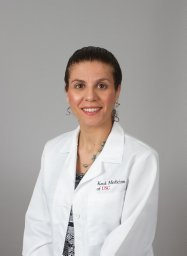 Anisa Shaker合作论文数Department of Medicine, Washington University School of Medicine13Gazit Vered合作论文数10
 Nicholas O. Davidson合作论文数Division of Gastroenterology, John T. Milliken Department of Medicine, Washington University School of Medicine in St. Louis;Digestive Disease Research Core Center, Washington University10Lihua Wang合作论文数9
 Shashi Bala合作论文数Division of Human Cancer Genetics, Ohio State University9Shujun Jiang合作论文数8Derek Wakeman合作论文数8
 Amy M. Garcia合作论文数7Taylor Geisman合作论文数6Sheevani Bhalsod合作论文数5
 Roshanak Rabbanifard合作论文数5christopher rowley合作论文数5Mackenzie M. Geisman合作论文数5Kiran Joglekar合作论文数5Jae Chung合作论文数5Jennifer Leigh合作论文数5
 Lipka Seth合作论文数5Jay J. Mamel合作论文数5
 Ambuj Kumar合作论文数Department of Internal Medicine, Morsani College of Medicine, University of South Florida;Department of Health Outcomes & Behavior, Moffitt Cancer Center and Research Institute5Gowri Kularatna合作论文数4
 Blair Madison合作论文数4Courtney Vishy合作论文数4Yuzhu Tang合作论文数4L Wang合作论文数4Hajime Kashima合作论文数3Raechel McDaniel合作论文数3
 Harold J Boutte合作论文数3Jacqueline Chen合作论文数3Cong Yu合作论文数3Coughlin Carrie C合作论文数Department of Medicine, Washington University School of Medicine3
 Thomas R. Ziegler合作论文数Division of Endocrinology, Department of Medicine, School of Medicine, Emory University3Wang Yuan合作论文数3
 Dean Jones合作论文数Winship Cancer Institute, Emory University;Department of Biochemistry, Emory University School of Medicine;Division of Pulmonary, Allergy, Critical Care and Sleep Medicine, Department of Medicine, Emory University School of Medicine3
 Isra Darwech合作论文数3
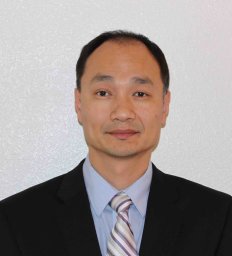 Junqiang Tian合作论文数Institute of Urology, Lanzhou University3
 Ilja Vietor合作论文数Biocenter, Innsbruck Medical University;Tel: +0043 512 9003 70175;Fax: +0043 512 9003 73100;Biocenter, Innsbruck Medical University3Shanthi Srinivasan合作论文数2Christopher W. Rowley合作论文数2Adam Surti合作论文数2Qun Zheng合作论文数2Noura M Sharabash合作论文数2Catherine R Butler合作论文数Department of Medicine and the Kidney Research Institute, University of Washington;Hospital and Specialty Medicine and Seattle-Denver Health Services Research and Development Center of Innovation, Veterans Affairs Puget Sound Health Care System2Yi Lu合作论文数2
 John R Kirby合作论文数2
 Jana Binkley合作论文数Departments of Molecular Microbiology and Microbial Pathogenesis and2Amara Suneetha合作论文数2




