We present a finite semigroup whose pseudovariety has membership problem hard for the class Difference P
We use high girth, high chromatic number hypergraphs to show that there are finite models of the equational theory of the semiring of non-negative integers whose equational theory has no finite axiomatisation, and show this also holds if factorial, fixed base exponentiation and operations for binomial coefficients are adjoined. We also derive the decidability of the equational logical entailment operator ⊢ $\vdash$ for antecedents true on N $\mathbb {N}$ by way of a form of the finite model property. Two appendices contain additional basic development of combinatorial operations. Amongst the observations are an eventual dominance well-ordering of combinatorial functions and consequent representation of the ordinal ε 0 $\epsilon _0$ in terms of factorial functions; the equivalence of the equational logic of combinatorial algebra over the natural numbers and over the positive reals; and a candidate list of elementary axioms.
The 3-element additively idempotent semiring S_7 is a nonnitely based algebra of the smallest possible order. In this paper we study the nite basis problem for some additively idempotent semirings that relate to S_7. We present a su cient condition under which an additively idempotent semiring variety is nonnitely based and as applications, show that some additively idempotent semiring varieties that contain S_7 are also nonnitely based. We then consider the subdirectly irreducible members of the variety 𝖵(S_7) generated by S_7. We show that 𝖵(S_7) contains exactly 6 finitely based subvarieties, all of which sit at the base of the subvariety lattice, then invoke results from the homomorphism theory of Kneser graphs to verify that 𝖵(S_7) contains a continuum of subvarieties.
We use high girth, high chromatic number hypergraphs to show that there are finite models of the equational theory of the semiring of non‐negative integers whose equational theory has no finite axiomatisation, and show this also holds if factorial, fixed base exponentiation and operations for binomial coefficients are adjoined. We also derive the decidability of the equational logical entailment operator for antecedents true on by way of a form of the finite model property. Two appendices contain additional basic development of combinatorial operations. Amongst the observations are an eventual dominance well‐ordering of combinatorial functions and consequent representation of the ordinal in terms of factorial functions; the equivalence of the equational logic of combinatorial algebra over the natural numbers and over the positive reals; and a candidate list of elementary axioms.
We examine some flexible notions of constraint satisfaction, observing some relationships between model theoretic notions of universal Horn class membership and robust satisfiability. We show the \texttt{NP}-completeness of $2$-robust monotone 1-in-3 3SAT in order to give very small examples of finite algebras with \texttt{NP}-hard variety membership problem. In particular we give a $3$-element algebra with this property, and solve a widely stated problem by showing that the $6$-element Brandt monoid has \texttt{NP}-hard variety membership problem. These are the smallest possible sizes for a general algebra and a semigroup to exhibit \texttt{NP}-hardness for the membership problem of finite algebras in finitely generated varieties.
A semigroup of binary relations (under composition) on a set X is complemented if it is closed under the taking of complements within X× X. We resolve a 1991 problem of Boris Schein by showing that the class of finite unary semigroups that are representable as complemented semigroups of binary relations is undecidable, so composition with complementation forms a minimal subsignature of Tarski's relation algebra signature that has undecidability of representability. In addition we prove similar results for semigroups of binary relations endowed with unary operations returning the kernel and cokernel of a relation. We generalise to signatures which may include arbitrary, definable operations and provide a chain of weaker and weaker signatures, each definable in the previous signature, each having undecidability of representability, but whose limit signature includes composition only, which corresponds to the well known, decidable and finitely axiomatised variety of semigroups. All these results are also proved for representability as binary relations over a finite set.
Despite the ubiquity of the rings Z(n) as the finite, cyclic models of integer arithmetic, it is rather less well-known that cyclic models of (positive) arithmetic with exponentiation exist only for cycle length 1, 2, 6, 42, and 1806. We explore finite cyclic models of other arithmetical and combinatorial operations on positive arithmetic: fixed base exponentiation, factorial, and binomial coefficients. In each case we find whether infinitely or finitely many models are possible. The case of fixed base exponentiation is particularly interesting, where for base b>2 we find that the compatible cycle sizes form a multiplicative monoid of positive integers, with infinitely many irreducible elements, and curiously sparse prime factors.
We apply, in the context of semigroups, the main theorem from the authors’ paper “Algebras defined by equations” (Higgins and Jackson in J Algebra 555:131–156, 2020) that an elementary class 𝒞 of algebras which is closed under the taking of direct products and homomorphic images is defined by systems of equations. We prove a dual to the Birkhoff theorem in that if the class is also closed under the taking of containing semigroups, some basis of equations of 𝒞 is free of the ∀ quantifier. We also observe the decidability of the class of equation systems satisfied by semigroups, via a link to systems of rationally constrained equations on free semigroups. Examples are given of EHP-classes for which neither (∀⋯ )(∃⋯ ) equation systems nor (∃⋯ )(∀⋯ ) systems suffice.
The present paper is devoted to the study of limit varieties of additively idempotent semirings. A limit variety is a nonfinitely based variety whose proper subvarieties are all finitely based. We present concrete constructions for one infinite family of limit additively idempotent semiring varieties, and one further ad hoc example. Each of these examples can be generated by a finite flat semiring, with the infinite family arising by a way of a complete characterisation of limit varieties that can be generated by the flat extension of a finite group. We also demonstrate the existence of other examples of limit varieties of additively idempotent semirings, including one further continuum-sized family, each with no finite generator, and two further ad hoc examples. While an explicit description of these latter examples is not given, one of the examples is proved to contain only trivial flat semirings.
Conventional Ramsey-theoretic investigations for edge-colourings of complete graphs are framed around avoidance of certain configurations. Motivated by considerations arising in the field of Qualitative Reasoning, we explore edge colourings that in addition to forbidding certain triangle configurations also require others to be present. These conditions have natural combinatorial interest in their own right, but also correspond to qualitative representability of certain nonassociative relation algebras , which we will call chromatic .
We provide complete classifications of algebras of partial maps for a significant swathe of combinations of operations not previously classified. Our focus is the many subsidiary operations that arise in recent considerations of the ‘override’ and ‘update’ operations arising in specification languages. These other operations turn out to have an older pedigree: domain restriction, set subtraction and intersection. All signatures considered include domain restriction, at least as a term. Combinations of the operations are classified and given complete axiomatizations with and without the presence of functional composition. Each classification is achieved by way of providing a concrete representation of the corresponding abstract algebras as partial maps acting on special kinds of filters determined with respect to various induced orders. In contrast to many negative results in the broader area, all of the considered combinations lead to finite axiomatizations.
We present some general results implying nonfinite axiomatisability of many additively idempotent semirings with finitely based semigroup reducts. The smallest is a 3-element commutative example, which we show also has NP-hard membership for its variety. As well as being the only nonfinite axiomatisable ai-semiring on 3-elements, we are able to show that its nonfinite basis property infects many related semirings, including the natural ai-semiring structure on the semigroup B21. We also extend previous group-theory based examples significantly, by showing that any finite additively idempotent semiring with a nonabelian nilpotent subgroup is not finitely axiomatisable for its identities.
We explore new interactions between finite model theory and a number of classical streams of universal algebra and semigroup theory. A key result is an example of a finite algebra whose variety is not finitely axiomatisable in first order logic, but which has first order definable finite membership problem. This algebra witnesses the simultaneous failure of the {\L}os-Tarski Theorem, the SP-preservation theorem and Birkhoff's HSP-preservation theorem at the finite level as well as providing a negative solution to a first order formulation of the long-standing Eilenberg Sch\"utzenberger problem. The example also shows that a pseudovariety without any finite pseudo-identity basis may be finitely axiomatisable in first order logic. Other results include the undecidability of deciding first order definability of the pseudovariety of a finite algebra and a mapping from any fixed template constraint satisfaction problem to a first order equivalent variety membership problem, thereby providing examples of variety membership problems complete in each of the classes $\texttt{L}$, $\texttt{NL}$, $\texttt{Mod}_p(\texttt{L})$, $\texttt{P}$, and infinitely many others (depending on complexity-theoretic assumptions).
Single-cell expression profiling opens up new vistas on cellular processes. Extensive cell-to-cell variability at the transcriptomic and proteomic level has been one of the stand-out observations. Because most experimental analyses are destructive we only have access to snapshot data of cellular states. This loss of temporal information presents significant challenges for inferring dynamics, as well as causes of cell-to-cell variability. In particular, we typically cannot separate dynamic variability from within cells (‘intrinsic noise’) from variability across the population (‘extrinsic noise’). Here, we make this non-identifiability mathematically precise, allowing us to identify new experimental set-ups that can assist in resolving this non-identifiability. We show that multiple generic reporters from the same biochemical pathways (e.g. mRNA and protein) can infer magnitudes of intrinsic and extrinsic transcriptional noise, identifying sources of heterogeneity. Stochastic simulations support our theory, and demonstrate that ‘pathway-reporters’ compare favourably to the well-known, but often difficult to implement, dual-reporter method.
Override and update are natural constructions for combining partial functions, which arise in various program specification contexts. We use an unexpected connection with combinatorial geometry to provide a complete finite system of equational axioms for the first order theory of the override and update constructions on partial functions, resolving the main unsolved problem in the area.
Let S be a signature of operations and relations definable in relation algebra (e.g. converse, composition, containment, union, identity, etc.), let R(S) be the class of all S-structures isomorphic to concrete algebras of binary relations with concrete interpretations for symbols in S, and let F(S) be the class of S-structures isomorphic to concrete algebras of binary relations over a finite base. To prove that membership of R(S) or F(S) for finite S-structures is undecidable, we reduce from a known undecidable problem—here we use the tiling problem, the partial group embedding problem and the partial group finite embedding problem to prove undecidability of finite membership of R(S) or F(S) for various signatures S. It follows that the equational theory of R(S) is undecidable whenever S includes the boolean operators and composition. We give an exposition of the reduction from the tiling problem and the reduction from the group embedding problem, and summarize what we know about the undecidability of finite membership of R(S) and of F(S) for different signatures S.
The variety generated by the Brandt semigroup $$B_2$$ can be defined within the variety generated by the semigroup $$A_2$$ by the single identity $$x^2y^2\approx y^2x^2$$ . Edmond Lee asked whether or not the same is true for the monoids $$B_2^1$$ and $$A_2^1$$ . We employ an encoding of the homomorphism theory of hypergraphs to show that there is in fact a continuum of distinct subvarieties of $$A_2^1$$ that satisfy $$x^2y^2\approx y^2x^2$$ and contain $$B_2^1$$ . A further consequence is that the variety of $$B_2^1$$ cannot be defined within the variety of $$A_2^1$$ by any finite system of identities. Continuing downward, we then turn to subvarieties of $$B_2^1$$ . We resolve part of a further question of Lee by showing that there is a continuum of distinct subvarieties all satisfying the stronger identity $$x^2y\approx yx^2$$ and containing the monoid $$M(\mathbf {z}_\infty )$$ , where $$\mathbf {z}_\infty $$ denotes the infinite limit of the Zimin words $$\mathbf {z}_0=x_0$$ , $$\mathbf {z}_{n+1}=\mathbf {z}_n x_{n+1}\mathbf {z}_n$$ .
We show that a class of algebras is closed under the taking of homomorphic images and direct products if and only if the class consists of all algebras that satisfy a set of (generally simultaneous) equations. For classes of regular semigroups in particular this allows an interpretation of a universal algebraic nature that is formulated entirely in terms of the associative binary operation of the semigroup, which serves as an alternative to the approach via so called e-varieties. In particular we prove that classes of Inverse semigroups, Orthodox semigroups, and $E$-solid semigroups are equational in our sense.
AbstractThe equational complexity function $\beta \nu \,:\,{\open N} \to {\open N}$ of an equational class of algebras bounds the size of equation required to determine the membership of n-element algebras in . Known examples of finitely generated varieties with unbounded equational complexity have growth in Ω(nc), usually for c ≥ (1/2). We show that much slower growth is possible, exhibiting $O(\log_{2}^{3}(n))$ growth among varieties of semilattice-ordered inverse semigroups and additive idempotent semirings. We also examine a quasivariety analogue of equational complexity, and show that a finite group has polylogarithmic quasi-equational complexity function, bounded if and only if all Sylow subgroups are abelian.
We give finite axiomatizations for the varieties generated by representable domain--range algebras when the semigroup operation is interpreted as angelic or demonic composition, respectively.
 Tim Stokes合作论文数Department of Mathematics;University of Waikato;Private Bag;Department of Mathematics, University of Waikato14
 Robin Hirsch合作论文数Computer Science, Faculty of Engineering Sciences, University College London6
 Todd Niven合作论文数Department of Mathematics, La Trobe University6
 Brian Davey合作论文数Department of Mathematics and Statistics, La Trobe University5
 Tomasz Stanisław Kowalski合作论文数4
 Lucy Ham合作论文数Sch Biosci, Univ Melbourne4
 Xianzhong Zhao (赵宪钟)合作论文数School of Mathematics, Northwest University3
 Miaomiao Ren (任苗苗)合作论文数School of Mathematics, Northwest University3
 Jane G Pitkethly合作论文数La Trobe University3
 Mikhail V. Volkov合作论文数Department of Algebra and Theoretical Computer Science, Institute of Natural Sciences and Mathematics, Ural Federal University3Belinda Trotta合作论文数2Ellen Greene合作论文数2Clinton F. Williams合作论文数2Manu Mathews合作论文数2
 Ralph N Mckenzie合作论文数Dept Math, Vanderbilt Univ2M. Jerie合作论文数2
 Jakub Bulin合作论文数Faculty of Mathematics and Physics, Charles University in Prague2T. Poole合作论文数2Dejan Delic合作论文数Ryerson University2
 Samuel Barnes合作论文数2
 Yuri Nikolayevsky合作论文数Department of Mathematics, La Trobe University2Mark Lodge合作论文数2Szabolcs Mikulás合作论文数School of Computer Science and Information Systems, Birkbeck College2
 Peter Higgins合作论文数Department of Mathematical Sciences, University of Essex;Institute of Mathematics and its Applications2a w siddons合作论文数1David M. Clark合作论文数1James M. Koussas合作论文数1
 Catarina Carvalho合作论文数1
 John Banks合作论文数1Donglin Lei合作论文数1Jaš Šemrl合作论文数1
 Rashed Talukder合作论文数1
 Robert Goldblatt合作论文数Sch Math & Stat, Victoria Univ1
 Csaba Szabo合作论文数Eotvos Lorand Univ1Grant Cairns合作论文数1
 Michael Stumpf合作论文数School of BioSciences, University of Melbourne;School of Mathematics & Statistics, The University of Melbourne;Cell Bauhaus1Wen Ting Zhang合作论文数1D. M. Clark合作论文数Department of Psychology;Institute of Psychiatry;De Crespigny Park;Department of Psychology, Institute of Psychiatry1
 Benjamin Steinberg合作论文数Department of Mathematics, City College of New York1
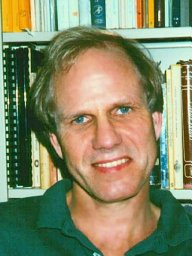 Ralph S. Freese合作论文数University of Hawaii1László Egri合作论文数1John Rhodes合作论文数1George F. Mcnulty合作论文数Department of Mathematics, University of South Carolina1
 Attila Egri-Nagy合作论文数Centre for Computer Science and Informatics Research, University of Hertfordshire1
 Mark Wallace合作论文数Department of Data Science & AI, Faculty of Information Technology, Monash University;Opturion Pty Ltd1
 Miklós Maróti合作论文数Bolyai Institute, University of Szeged1Mark Godfrey合作论文数1
 Ian Hodkinson合作论文数Department of Computing, Faculty of Engineering, Imperial College London1




