Davison's Mastiff Bat Promops davisoni is a poorly studied species, only present in Ecuador, Peru, and more recently in Chile, where its known geographic distribution is supported by very few records from the extreme north of the country. Using ultrasonic recordings, we reported new records of P. davisoni in northern Chile, extending its distribution range ca. 60 km southward to the Chaca and Camarones valleys in the province of Arica. Additionally, using Species Distribution Models, we predicted its potential distribution in the north of the country based on similar suitable habitats. The high number of recordings obtained in our study suggest a wide distribution and relative abundance of P. davisoni in the coastal valleys of the Arica province and surrounding urban areas, with a remarkable habitat diversity for populations of this species. In addition, our potential distribution models suggest its presence in other arid environments within the Atacama Desert. These data provide additional information on the current and potential distribution of P. davisoni and can be useful for further studies to better understand the biology and population dynamics of the species, as well as the design of conservation and management strategies.
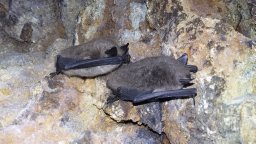
The AtacamaMyotisis an endangered and poorly studied bat species, endemic from Peru and Chile. Using mist nets and ultrasonic recordings we release new information on activity patterns and roost use byM. atacamensisin Chile. We also report new records for the species, extending its distribution range to Santiago Metropolitan region. Our results suggest a wide distribution and relative abundance ofM. atacamensisin northern Chile, in addition to remarkable habitat diversity for populations of this species. Bats were active in both natural and anthropogenic habitats. Abandoned mines and buildings in rural villages were the roosts most used by the species. These data provide additional information on the distribution, ecology, and natural history ofM. atacamensisand can be useful in the design of conservation action plans for populations in the country.