We present a probe for the first-order transition for layered vortex matter: A second step in the screening of an ac field that is independent of the frequency and amplitude of the excitation. This second step is observed in the intermediate temperature and field ranges where detecting the jump in induction associated with the transition is rather elusive with standard magnetometry techniques. We observe this second step following an experimental protocol where the screening of a locally generated ac field is remotely detected in another region of the sample. The coincidence of the typical temperature of the second step in direct and remote measurements strongly supports that this feature is a probe of the first-order transition. This nonlocal effect detected at distances of thousands of vortex lattice spacings away indicates that a very efficient mechanism propagates the change in rigidity of the structure from the more (liquid) to the less (solid) symmetric vortex phases.
The Remeika series superconductor, (Ca_xSr_1-x)_3Rh_4Sn_13, shows a rare nonmagnetic quantum critical point (QCP) associated with the continuous charge-density wave (CDW) and structural transition under the “dome” of superconductivity achieved by tuning composition and applying pressure. Here we use a nonmagnetic point-like disorder induced by 2.5 MeV electron irradiation to suppress the CDW and drive the system to and even beyond the QCP. This conclusion is based on a clear evolution of temperature-dependent resistivity, ρ(T), from the Fermi liquid to the non-Fermi liquid regime with increasing amount of disorder. Starting on the CDW side, below the suggested QCP concentration of x_c=0.9, added disorder resulted in a progressively larger linear term and a reduced quadratic term in ρ(T). Nearly perfect T-linear dependence is observed at the dose at which long-range CDW order is suppressed to T=0, consistent with the expectations. We refine the QCP location in this system and place it in the interval between x=0.75 and 0.85. Our results strongly support the concept that the disorder can tune the system to the quantum critical regime and even beyond. It follows from the argument by Imry and Ma that any ordered phase is unstable toward quenched disorder. Introduced in a controlled way, this disorder becomes a novel non-thermal tuning parameter likely applicable to a variety of different systems.
We study the effects of flux creep on the linear AC response of the vortex lattice in single crystals Ca3Ir4Sn13 by measuring the Campbell penetration depth, AC(T, H, t). Thermal fluctuations release vortices from shallow pinning sites, only for them to become re-trapped by deeper potential wells, causing an initial increase of the effective Labusch parameter, which is proportional to the pinning well curvature. This effect cannot be detected in conventional magnetic relaxation measurements but is revealed by our observation of a nonmonotonic time evolution of AC(T, H, t), which directly probes the average curvature of the occupied pinning centers. The time evolution of AC(T, H, t) was measured at different temperatures in samples with different densities of pinning centers produced by electron irradiation. The curves can be collapsed together when plotted on a logarithmic time scale t -> T ln (t/t0) confirming that the time evolution is driven by flux creep. The AC(T, H, t) is hysteretic with a noticeable nonmonotonic relaxation in the presence of a vortex density gradient (after zero-field cooling), but is monotonic after field cooling, where the vortex density is uniform. This result quantitatively corroborates the novel picture of vortex creep based on the strong pinning theory.
Kagome metals AV3Sb5 (A = K, Rb, Cs) provide a compelling platform to explore the interplay between superconductivity (SC) and charge-density-wave (CDW) orders. While distinct CDW orders have been identified in K/RbV3Sb5 versus CsV3Sb5, their influence on the SC order parameter remains unresolved. Here, we investigate low-energy quasiparticle excitations in AV3Sb5, uncovering a striking difference in SC gap anisotropy: K/RbV3Sb5 exhibit fully gapped, nearly isotropic s-wave states, in contrast to the strongly anisotropic SC gap in CsV3Sb5. Impurity scattering introduced via electron irradiation in K/RbV3Sb5 has a minimal impact on low-energy excitations, and it induces an increase in the SC transition temperature Tc, consistent with more isotropic s-wave SC competing with CDW order. Our theoretical analysis attributes the observed SC gap anisotropy differences to distinct CDW modulation patterns: the star-of-David structure unique to CsV3Sb5 preserves van Hove singularities near the Fermi level, promoting anisotropic s-wave SC with enhanced Tc via bond-order fluctuations. These findings establish a systematic framework for understanding the interplay between SC and CDW orders in AV3Sb5, driven by electron correlations.
Broken time-reversal symmetry (TRS) in superconductors can induce not only spontaneous magnetization by the finite angular momentum of Cooper pairs but also the anomalous thermal Hall effects (ATHEs), whose detection has been extremely challenging. Here, we report the successful observation of an ATHE developing below the superconducting transition temperature at zero magnetic field in the kagome-lattice superconductor CsV3Sb5. This finding is verified by the absence of a signal in a conventional type-II superconductor using the same setup and by ruling out the trapped-vortex effects through micro-Hall array measurements. Both the temperature dependence and the magnitude of the observed anomalous thermal Hall conductivity are quite different from those expected for the quantized thermal edge current of an intrinsic ATHE but consistent with extrinsic impurity-induced ATHEs in chiral superconductivity. Our study of ATHE offers an alternative approach to probe TRS breaking in the superconducting states.
Half-Heusler compounds from the REPtBi family exemplify Weyl semimetals in which an external magnetic field induces Weyl nodes. These materials exceptionally host topologically non-trivial states near the Fermi level and their manifestation can be clearly seen in the magnetotransport properties. In this study, we tune the Fermi level of the archetypal half-Heusler Weyl semimetal GdPtBi through high-energy electron irradiation, moving it away from the Weyl nodes to investigate the resilience of the contribution of topologically non-trivial states to magnetotransport properties. Remarkably, we observe that the negative longitudinal magnetoresistance, which is a definitive indicator of the chiral magnetic anomaly occurring in topological semimetals, persists even when the Fermi level is shifted by 100 meV from its original position in the pristine sample. Additionally, the anomalous Hall effect shows complex variations as the Fermi level is altered, attributed to the energy-dependent nature of the Berry curvature, which arises from avoided band crossing. Our findings show the robust influence of Weyl nodes on the magneto-transport properties of GdPtBi, irrespective of the Fermi level position, a behaviour likely applicable to many half-Heusler Weyl semimetals.
Gallium oxide, especially in the (3-phase, emerges as a transformative material for high-power semiconductor applications. However, despite its promising attributes, it is still in an exploratory phase. The present article delves into the transport properties and their modifications induced by low-temperature electron irradiations, which generate point defects that affect the electrical properties of the material. The methodology involves postirradiation isochronous annealing of n-type (3-Ga2O3 samples up to 573 K, which allows the study of defect thermal stability. Results reveal that annealing is able to induce a total recovery of conductive properties after electron irradiation-induced n-type to insulator transition. While this behavior may limit the use of irradiationtreated materials for high-power device realization, it highlights the self-healing properties in gallium oxide which would be subjected to radiation damage. In-situ experiments performed from 22 to 250 K have proved that relevant modifications of electrical properties take place upon warming up the sample after 22 K irradiation. Such data suggest the presence of defects with high mobility. Even room temperature defects do not survive thermal treatments at a few hundred degrees Celsius (approximately 530 K).
The pairing symmetry of superconducting infinite-layer nickelates is a fundamental yet experimentally challenging question. We employ high-energy electron irradiation to induce disorder in superconducting Nd_{0.825}Sr_{0.175}NiO_{2} thin films, examine the impact of pair-breaking defects on superconductivity, and elucidate the nature of the superconducting gap. Our measurements reveal a complete suppression of superconductivity with increasing disorder, suggesting an unconventional, sign-changing order parameter.
We report on two mechanisms of angularly selective enhanced screening in the solid vortex phase of extremely layered superconductors with tilted columnar defects (CDs). We study Bi2Sr2CaCu2O8+δ samples with different densities of CD tilted 45° from the c-axis, and conduct local ac Hall magnetometry measurements, probing the sustainable current of the vortex system. We reveal two types of maxima in sustainable current for particular directions, detected as dips in the magnetic transmittivity of the vortex system. First, for a smaller number of vortices than of defects, an enhancement of screening is detected at an angular location Θdip1∼45° for H applied close to the direction of CD. For a larger number of vortices than of CD, Θdip1 decreases towards the ab-plane direction upon warming. Second, a pair of additional dips in transmittivity are detected at angles Θdip2 closer to, and quite symmetric with, the ab-plane. These two types of angularly selective enhanced screening reveal the effective pinning by tilted CD even for the composite vortex lattices nucleated in tilted fields in Bi2Sr2CaCu2O8+δ.
The observation of time-reversal symmetry breaking and large residual density of states in tetragonal FeSe1-xSx 1-x S x suggests a novel type of ultranodal superconducting state with Bogoliubov Fermi surfaces (BFSs). Although such BFSs in centrosymmetric superconductors are expected to be topologically protected, the impurity effect of this exotic superconducting state remains elusive experimentally. Here, we investigate the impact of controlled defects introduced by electron irradiation on the superconducting state of tetragonal FeSe1-xSx 1-x S x (0.18 <= x <= 0.25). The temperature dependence of magnetic penetration depth is initially consistent with a model with BFSs in the pristine sample. After irradiation, we observe a nonmonotonic evolution of low-energy excitations with impurity concentrations. This nonmonotonic change indicates a transition from nodal to nodeless, culminating in gapless with Andreev bound states, reminiscent of the nodal s t case. This points to the accidental nature of the possible BFSs in tetragonal FeSe 1-x S x , which are susceptible to disruption by the disorder.
London, lambda(L)(T), and Campbell, lambda(C)(T), penetration depths were measured in single crystals of a topological superconductor candidate AuSn4. At low temperatures, lambda(L)(T) is exponentially attenuated and, if fitted with the power law, lambda(T)similar to T-n, gives exponents n>4n>4, indistinguishable from the isotropic single s-s-wave gap Bardeen-Cooper-Schrieffer (BCS) asymptotic. The superfluid density fits perfectly in the entire temperature range to the BCS theory. The superconducting transition temperature, T-c=2.40 +/- 0.05K, does not change after 2.5 MeV electron irradiation, indicating the validity of the Anderson theorem for isotropic s-s-wave superconductors. Campbell penetration depth before and after electron irradiation shows no hysteresis between the zero-field cooling (ZFC) and field cooling (FC) protocols, consistent with the parabolic pinning potential. Interestingly, the critical current density estimated from the original Campbell theory decreases after irradiation, implying that a more sophisticated theory involving collective effects is needed to describe vortex pinning in this system. In general, our thermodynamic measurements strongly suggest that the bulk response of the AuSn4 crystals is fully consistent with the isotropic s-wave weak-coupling BCS superconductivity.
We report an unusual anisotropic paramagnetic peak effect observed in reversible magnetization of a single crystalline nodal superconductor Rh_17S_15. Both temperature- and field-dependent magnetization measurements reveal a distinct novel vortex state above approximately 1 T. This peak effect is most pronounced when the magnetic field, H, is applied parallel to the [111] direction, whereas it diminishes for H∥[110]. Intriguingly, for H∥[100], instead of a peak, we observe a step-like decrease in M(T), with the step amplitude increasing in larger applied magnetic fields. This behavior is opposite to the expectations of conventional Meissner expulsion. The magnitude of the peak effect, expressed in terms of dimensionless volume susceptibility, is on the order of Δχ=10^-5 (with full diamagnetic screening corresponding to χ=-1). The observed anisotropic paramagnetic vortex response is unusual considering the cubic symmetry of Rh_17S_15. We propose that in this distinct vortex phase, a small but finite attractive interaction between vortices below H_c2 may be responsible for this unusual phenomenon. Furthermore, the vortices seem to prefer aligning along the [111] direction, rotating toward it when the magnetic field is applied in other directions. Our findings add another item to the list of unusual properties of Rh_17S_15 that attracted recent attention as the first unconventional superconductor that has a mineral analog, miassite, found in nature.
A recent theory of the disorder-dependent slope of the upper critical field at the superconducting transition temperature T-c, defined as S equivalent to|dH(c2)/dT|(T -> Tc), is extended to multiband superconductors aimed at iron-based super conductors, considering two constant gaps of different magnitudes and, potentially, different signs. We show that the slope S decreases with increasing nonmagnetic scattering rate P in the s(+/-) pairing state and increases in the s(++ )superconductor for a reasonable range of parameters. The experiment shows that in a typical iron-based superconductor, Ba(1-x)KxFe(2)As(2)(BaK122), the nonmagnetic disorder induced by electron irradiation leads to an increasing S(P) across the superconducting "dome," at differentx. This implies that Ba(1-x)KxFe(2)As(2 )is likely an s(++)superconductor with two effective gaps of different magnitudes, at least at moderate doping levels, x<0.6.This work reopens a decade-long discussion about the nature of the superconducting order parameter in ironpnictides.
The effects of 2.5 MeV electron irradiation were studied in the superconducting phase of single crystals of LaNiGa$_2$, using measurements of electrical transport and radio-frequency magnetic susceptibility. The London penetration depth is found to vary exponentially with temperature, suggesting a fully gapped Fermi surface. The inferred superfluid density is close to that of a single-gap weak-coupling isotropic $s-$wave superconductor. Superconductivity is extremely robust against nonmagnetic point-like disorder induced by electron irradiation. Our results place strong constraints on the previously proposed triplet pairing state by requiring fine-tuned impurity scattering amplitudes and are most naturally explained by a sign-preserving, weak-coupling, and approximately momentum independent singlet superconducting state in LaNiGa$_2$, which does not break time-reversal symmetry. We discuss how our findings could be reconciled with previous measurements indicating magnetic moments in the superconducting phase.
The excitations in the Kitaev spin liquid (KSL) can be described by Majorana fermions, which have characteristic field dependence of bulk gap and topological edge modes. In the high-field state of layered honeycomb magnet alpha-RuCl3, experimental results supporting these Majorana features have been reported recently. However, there are challenges due to sample dependence, and the impact of inevitable disorder on the KSL is poorly understood. Here, we study how low-energy excitations are modified by introducing point defects in alpha-RuCl3 using electron irradiation, which induces site vacancies and exchange randomness. High-resolution measurements of the temperature dependence of specific heat C(T) under in-plane fields H reveal that, while the field-dependent Majorana gap is almost intact, additional low-energy states with C/T = A(H)T are induced by introduced defects. At low temperatures, we obtain the data collapse of C/T similar to H-gamma(T/H) expected for a disordered quantum spin system but with an anomalously large exponent gamma. This leads us to find a power-law relationship between the coefficient A(H) and the fieldsensitive Majorana gap. These results are consistent with the picture that the disorder induces low-energy linear Majorana excitations, which may be considered as a weak localization effect of Majorana fermions in the KSL.
The quasi-skutterudites (Ca_xSr_1-x)_3(Rh, Ir)_4Sn_13 show a rare nonmagnetic quantum critical point associated with the second-order charge-density-wave (CDW) and structural distortion transition extended under the superconducting "dome". So far, the non-thermal tuning parameters for accessing the QCP included changing stoichiometry, pressure, and a magnetic field. Here we add another parameter – a nonmagnetic point-like disorder induced by 2.5 MeV electron irradiation. The non-Fermi liquid regime was inferred from the analysis of the temperature-dependent resistivity, ρ(T), in single crystals of (Ca_xSr_1-x)_3Rh_4Sn_13. Starting at compositions below the known QCP concentration of x_c=0.9, added disorder resulted in a progressively larger linear term and a reduced quadratic term in ρ(T). This behavior is supported by theoretical analysis based on the idea of superconducting fluctuations encompassing the crossover from quantum to thermal regimes. Our results strongly support the concept that the nonmagnetic disorder can drive the system toward the quantum critical regime.
Temperature variation of the lower critical field H c 1 ( T ) in the structurally disordered superconductor Y 5 Rh 6 Sn 18 with a transition temperature T c <^>, 3 . 2 K was investigated using micro -Hall -probe magnetometry for local magnetization measurements. Down to about 0 . 45 T c , an H c 1 ( T ) dependence typical for a single -band s -wave BCS superconductor was observed. However, deep within the superconducting state, a sudden increase of H c 1 ( T ) was found, indicating the presence of a two -band effect. By applying the two -gap gamma model to Y 5 Rh 6 Sn 18 , we revealed a very weak interband coupling in this skutterudite-related material. We speculate that the two -band superconductivity in Y 5 Rh 6 Sn 18 is a base for the boosted T c in slightly doped samples, which likely reflects a mechanism for enhancing superconductivity by disorder.
In bulk Sr_2RuO_4, the strong sensitivity of the superconducting transition temperature T_c to nonmagnetic impurities provides robust evidence for a superconducting order parameter that changes sign around the Fermi surface. In superconducting epitaxial thin-film Sr_2RuO_4, the relationship between T_c and the residual resistivity ρ_0, which in bulk samples is taken to be a proxy for the low-temperature elastic scattering rate, is far less clear. Using high-energy electron irradiation to controllably introduce point disorder into bulk single-crystal and thin-film Sr_2RuO_4, we show that T_c is suppressed in both systems at nearly identical rates. This suggests that part of ρ_0 in films comes from defects that do not contribute to superconducting pairbreaking, and establishes a quantitative link between the superconductivity of bulk and thin-film samples.
The intrinsically superconducting Dirac semimetal 2M-WS2 is a promising candidate for realizing proximityinduced topological superconductivity in its protected surface states. A precise characterization of the bulk superconducting state is essential to understand the nature of surface superconductivity in the system. Here, we report a detailed experimental study of the temperature -dependent London penetration depth, lambda(T ), the upper critical field, Hc2(T ), and the effects of nonmagnetic disorder on these quantities, as well as on the superconducting transition temperature Tc in single crystals of 2M-WS2. We observe a power -law variation of lambda(T) proportional to T3 at temperatures below 0.35Tc. Nonmagnetic pointlike disorder induced by 2.5 MeV electron irradiation at various doses results in a significant suppression of Tc. These observations are markedly different from expectations for a fully gapped isotropic s -wave superconductor. Together with the substantial increase of slope, dHc2/dT |T =Tc, with increasing disorder, our results suggest a strongly anisotropic s++ multiband superconducting state. These results have direct consequences for the expected proximity -induced superconductivity of the topological surface states.
LaCrGe$_3$ has attracted attention as a potential candidate for studies of quantum phase transitions in a ferromagnetic material. The application of pressure avoids a quantum critical point by developing a new magnetic phase. It was suggested that the disorder may provide an alternative route to a quantum critical point. We used low-temperature 2.5 MeV electron irradiation to induce relatively small amounts of point-like disorder in single crystals of LaCrGe$_3$. Irradiation leads to an increase of the resistivity at all temperatures with some deviation from the Matthiessen rule. Hall effect measurements show that electron irradiation does not cause any detectable change in the carrier density. Unexpectedly, the Curie temperature, $T_{\text{FM}}$, \emph{increases} with the increase of disorder from approximately 90 K in pristine samples up to nearly 100 K in the heavily irradiated sample, with a tendency towards saturation at higher doses. Although the mechanism of this effect is not entirely clear, we conclude that it cannot be caused by effective ``doping" or ``pressure" due to electron irradiation. We suggest that disorder-induced broadening of a sharp peak in the density of states, $D(E)$, situated at $E_p=E_F-0.25$ eV below the Fermi energy, $E_F$, causes an increase in $D(E_F)$, leading to an enhancement of $T_\text{FM}$ in this itinerant ferromagnet.
 Cornelis Jacominus van der Beek合作论文数Institut Polytechnique de Paris;École Polytechnique;CNRS Délégation Ile-de-France Sud112
 Ruslan Prozorov合作论文数Faculty of Science and Technology, Iowa State University;Department of Physics and Astronomy, College of Liberal Arts and Sciences, Iowa State University;Department of Material Science and Engineering, Ames National Laboratory56
 Yuji Matsuda (松田祐司)合作论文数Department of Physics, Kyoto University52
 Peter Kes合作论文数Institute of Physics, Faculty of Science, Leiden University;Kamerlingh Onnes Laboratory, University of Leiden49
 Eli Zeldov合作论文数Department of Condensed Matter Physics, Faculty of Physics, Weizmann Institute of Science46
 Noriko Chikumoto合作论文数Superconductivity Research Laboratory, ISTEC43
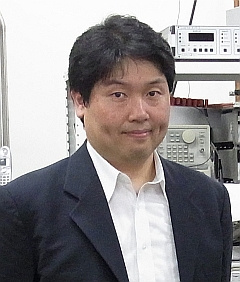 Takasada Shibauchi (芝内孝禎)合作论文数Department of Advanced Materials Science, Graduate School of Frontier Sciences, The University of Tokyo;Department of Applied Physics, School of Engineering, The University of Tokyo42
 Makariy Tanatar合作论文数Division of Material Science and Engineering, Ames National Laboratory;Clayton Swensson Low Temperature laboratory38Frederic Holtzberg合作论文数34T. Tamegai合作论文数24
 Romain Grasset合作论文数Laboratoire des Solides Irradiés, Institut Polytechnique de Paris24
 Yosef Yeshurun合作论文数Institute of Superconductivity, Department of Physics, Facuity of Exact Sciences, Bar-llan University;Center for Magnetic Measurements, Bar-llan University24
 Daniel Majer合作论文数Weizmann Institute of Science24
 Kohji Kishio (岸尾光二)合作论文数Department of Applied Chemistry, Graduate School of Engineering, The University of Tokyo23
 Yuta Mizukami (水上雄太)合作论文数Department of Physics, Graduate School of Science, Tohoku University21
 S. Ooi合作论文数20Piotr Gierlowski合作论文数20
 M.V. Indenbom合作论文数Institute of Solid State Physics, Russian Academy of Sciences19you si song tian (祐司 松田)合作论文数18
 Ryuji Okazaki合作论文数Department of Physics, Kyoto University18Y. Fasano合作论文数17
 Boris Khaykovich合作论文数Weizmann Institute of Science17
 Hernan Pastoriza合作论文数17xiao zhen zhi nei (孝禎 芝内)合作论文数16Kyuil Cho合作论文数16
 Vincent Mosser合作论文数16
 Wolos Agnieszka合作论文数15R.A. Doyle合作论文数15
 Mingshen Li合作论文数14Moira I. Dolz合作论文数14
 Nai-Chang Yeh合作论文数Department of Applied Physics and Materials Science, Division of Engineering and Applied Science, California Institute of Technology14
 Sunil Ghimire合作论文数Dept Phys & Astron, Iowa State Univ13K. Hashimoto合作论文数Kyoto Univ, Dept Phys, Kyoto 6068502, Japan13
 Paul C. Canfield合作论文数Department of Physics and Astronomy, College of Liberal Arts and Sciences, Iowa State University of Science and Technology13Z. Adamus合作论文数13
 Haiming Deng合作论文数12
 Yuri Myasoedov合作论文数12
 Lia Krusin Elbaum合作论文数City College of New York12Ming Li合作论文数12
 Shigeru Kasahara (笠原成)合作论文数The Research Institute for Interdisciplinary Science, Okayama University12
 Marta Z. Cieplak合作论文数Institute of Physics, Polish Academy of Sciences11
 Yanina Fasano合作论文数Centro Atomico Bariloche11
 Erez Yacoby合作论文数11
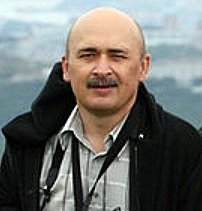 Marat B. Gaifullin合作论文数Department of Physics, Far-Eastern State Technical University11S. Colson合作论文数11
 Lior Klein合作论文数School of Physics and Astronomy, Tel Aviv University11T.W. Li合作论文数10R. J. Drost合作论文数10F. Rullier-Albenque合作论文数10




