Understanding and modelling heat transfer coefficient is essential for optimising the performance of high-temperature superconducting (HTS) devices. The heat transfer coefficient exhibits highly non-linear behaviour with respect to temperature and is typically inferred from the properties of the cooling fluid. However, when the device is fully immersed in a liquid, the coefficient can deviate significantly from conventional estimations, especially if the operating conditions do not involve an extremely rapid temperature increase. This study presents a practical method for estimating the heat transfer coefficient of HTS coils immersed in liquid nitrogen, based on an experimental investigation of a prototype superconducting coil where precise temperature measurements are not guaranteed. By analysing transient temperature evolution and material properties, the coefficient is determined and validated through the comparison of measured and simulated device voltage and current. The proposed approach only relies on experimental voltage and current measurements, combined with known temperature-dependent material properties, to infer a global heat transfer coefficient. The methodology is tested on helical HTS coils under transient light over-current conditions and assumes an homogenised temperature rise along the winding. The estimated coefficient may lead to curves that slightly deviate from classical models while preserving their overall trend and physical significance. The proposed experimentally-based approach is conceived as a relatively straightforward and experimentally robust alternative to the computational burden of finite-element method simulations requiring reliable parameters, while overcoming the need for direct temperature measurements, within the limits of compact windings immersed in liquid nitrogen and subjected to mild transient conditions leading to distributed quench phenomena.
The no-insulation high-temperature superconducting (NI-HTS) coil technology is a promising field of application of HTS tapes, which has gained popularity in recent years. Compared to conventional insulated coils, NI-HTS coils have a better ability to cope with quenches, given the possibility for current and heat to redistribute towards adjacent turns in presence of a hot-spot. In recent years, the authors developed a nonlinear circuit model to compute current distribution and AC losses in NI-HTS coils (named CALYPSO). This model describes the currents flowing from turn to turn due to the NI configuration, as well as the magnetization currents arising in each tape. However, applying this model to coils composed of a large number of turns results in a high computational burden. This work presents an in-depth discussion of the reasons for the long computation time and the solutions and code improvements implemented to tackle this issue. Additionally, a comparison between the losses predicted by the code and those measured on straight REBCO tapes is presented. The model is then applied to investigate the electrodynamics of a NI pancake coil including both magnetization currents and radial currents. The impact of surface contact resistivity between turns on the delay between the magnetic field along the coil axis and the transport current is analyzed, showing the details of the current distribution between turns and inside individual tapes.
In this article, the optimization tool called OSCaR, suited for the techno-economic analysis of superconducting cables, is applied to determine the lowest-cost configuration of an MgB2 DC transmission line cooled with liquid hydrogen (LH2). The tool includes a 1D fluid-dynamic numerical model to analyze the hydraulic behavior of the LH2, able to compare the temperature increase and pressure drop of the coolant along the line. The model is applied to determine the lowest-cost configuration of a transmission line of different power levels, between 500 MW to 3 GW, and with different line voltages, set to 50 kV, 110 kV and 220 kV. The results in terms of costs and cable geometries are compared for transmission lines of varying length, between 5 km and 100 km.
DC power transmission technologies have achieved significant advancements, gaining widespread adoption within modern electrical systems. The use of superconducting cables in Magnesium Diboride (MgB2) cooled by liquid hydrogen (LH2) could drastically increase the performance of DC grids, enabling higher power transport capacity and extending transmission distance, while reducing energy loss and land occupation. Today, the transport of DC electrical energy is enabled through modular muti-level converters (MMCs) capable of effectively controlling currents, voltages and power flow. Designing an optimal DC power system, along with appropriate superconducting cable design and protection apparatus, needs accurate, yet simplified, models of the converters. This study presents simplified models that apply during the fault, able to adapt to any pre-fault scenario without a need to implement complex control systems. The developed model can be easily integrated, along with a model of a superconducting MgB2 cable, in EMT power system simulators for analysing their mutual interaction during faults and for optimizing the cable design and its protection system.
IRIS (Innovative Research Infrastructure on applied Superconductivity) is a major project to build a research infrastructure in applied superconductivity, recently approved in Italy and led by INFN. The design and delivery of a Green Superconducting Line (GSL) for power transmission and the construction and commissioning of a test station for GSLs testing are two key deliverables of the project. The test station is under construction at the University of Salerno. It foresees the main building, and a outdoor space for 130 m long cable lodging. Into the building there will be the current and voltage power supplies (40 kA and 50 kV, respectively), a 500W@20 K He-refrigerator, monitor and control systems and diagnostics for GSLs testing. The facility will be kept open to external institutions and companies engaged in the same research field. The GSL will be 130 m long and designed to carry 40 kA at 20 K, isolated for 25 kV operation, i.e. 1 GW of power, with almost zero dissipation. The GSL will be used for the commissioning of the test station. In this paper we will present the line configuration. We updated the design of the line from a four conductors (two phases and two spares for redundancy) inside the same cryostat configuration to a three conductors (two phases and a spear) each inside its own cryostat, in order to have a better insulation between them in case of failure of one phase. Details and preliminary analysis of the updated line design will be presented.
In this work, the results of a broad experimental investigation carried out on two layer-wound High Temperature Superconducting (HTS) coils are presented, adopting an experimental set-up that allows a consistent comparison between multiple configurations. To focus on a few design choices only, the coils are wound with the same geometry and using the same tape. One of the windings includes electrical insulation between layers, while the other does not. Moreover, since the proposed set-up allows feeding the layers separately, the latter can be connected either in series or in parallel. Thus, inductive and non-inductive combinations can be efficiently tested without the need to unwind or rewind the tape around the mandrel. The voltage signals acquired, and the corresponding ac losses, obtained during ac tests in liquid nitrogen are compared in different working conditions, providing qualitative explanations of the experimental data in the different winding combinations.
In recent years the advent of the no-insulation high-temperature superconducting (NI-HTS) coils technology, has increased the need for new simulation tools to accurately predict their response in typical operating conditions. Detailed knowledge of the current distribution in NI-HTS coils is essential to compute the magnetic field profile generated by the coil, and investigate the losses in electrodynamic transient. Of the many circuit models proposed in the literature, few can describe the behavior of both the screening currents in the tape and the radial currents. This work aims to provide all the elements to create a lumped parameter circuit model suitable for an in-depth analysis of the current distribution inside a NI-HTS coil. The lumped parameters circuit model proposed in this work can compute the current distribution in both the radial and azimuthal directions inside the coil as well as the screening currents arising inside the REBCO tapes. To compute the distribution of the screening currents and their impact on AC losses, the tape composing each turn is discretized across its width with several sub-elements, each represented through different circuit components The model was compared with 2D FEM simulation and an analytical formula to asses its ability in evaluating the screening currents in the case of a single tape. Although this work is aimed at the study of layer wound NI-HTS coils, the model described can be applied to the study of tapes, stacks of tapes, or pancake coils just by modifying the topology of the network.
Equivalent circuits are a versatile approach for electromagnetic modelling of superconductors applications, as they allow to easily include full-scale devices in complex electric grid circuits and to investigate their mutual interaction. However, they rely on the correct definition and estimation of the equivalent circuit parameters. In particular, the inductance can be a critical parameter, especially for AC applications or when fast-transients are required. Nowadays, the estimation of self- and mutual-inductances between helically-wound components (as in superconducting coils or cables) is performed with different analytic formulae or numerical methods. Verifying the reliability of a given approach is not a simple task. This work proposes and validates a numerical model for estimating the self- and mutual-inductances of helical windings realized with High Temperature Superconducting (HTS) tapes. The model is based on the combined use of numerical and analytical methods, consisting of numerically integrating over the whole tape volume the analytical partial mutual-inductances between straight tape segments. The tool allows to get equivalent parameters for both single and multiple tapes’ windings connected in series and in parallel. The model is adopted for an HTS coil, composed by three windings, and supplied with AC currents. A novel sample holder allows the coil to be designed and realized to supply each winding individually. Then, multiple tests are carried out by putting in series the single windings realizing inductive or anti-inductive combinations. The tool is validated by comparing both the numerical voltage profiles with those acquired during tests and the inductances estimated from the measurements with those resulting from the model.
The European project SCARLET aims to study and realize a demonstrator of a MVDC (Medium Voltage Direct Current) high-power superconducting cable. This device might be employed to connect offshore wind farms with land, expecting to significantly simplify the offshore platform by eliminating the need for its conversion function. For this purpose, windmill conversion chain must be modified to directly produce the MVDC export voltage. In this scenario, this paper presents the case of a 1GW offshore windmill superconducting link and outlines the design consideration for a 1 GW onshore converter. For this cable, a protection strategy that combines DC circuit breakers with a Resistive Superconducting Fault Current Limiter is proposed. Moreover, this works demonstrates how a superconducting cable can be modelled as an electrical circuit to be integrated into a network simulation tool, enabling the investigation of various fault scenarios and protection strategies. Finally, a specific result is discussed to exemplify how the proposed approach can benefit the design of both the electrical network and the superconducting cable itself.
In recent years, the scientific and industrial interest regarding alternative technologies for transmission cables has increased. These conductors should efficiently transmit significant amounts of power between grid nodes, which are expected to be particularly congested due to the projected global increase in electricity production. Superconducting cables are considered a promising solution in this context, offering the potential to transmit large amounts of energy with minimal losses and compact dimensions, thereby potentially benefiting the environment. To evaluate the feasibility of integrating superconducting cables into existing grids, techno-economic approaches should be adopted. Such techniques enable the conceptual design of a specific cable structure, allowing users to explore a wide range of operating parameters to derive optimal designs. This paper reports a comprehensive techno-economic analysis of High Voltage Alternating Current (HVAC) cables realized with High-Temperature Superconducting (HTS) tapes, with the aim to transmit extremely high-power level. The optimal coaxial design is selected using Optimization Tool for Superconducting Cable Research (OSCaR) by implementing a graded approach to the critical current of the HTS tapes used for the different phases. This optimization aims to achieve the most effective balance between the cost of the coated conductors and their electrical properties. The whole set of model equations, the user-defined parameters, and the applied constraints are detailed. The OSCaR tool is then applied to assess the impact on the optimized design of the cable system and the corresponding cost indexes of several crucial parameters, such as the maximum transmitted power, the voltage level, and the line length.
This work presents a tool to define an optimized architecture of DC superconducting cables realized with magnesium diboride (MgB 2 ), aimed at minimizing the cable system costs by determining the optimal values of the geometric, physical, and operating parameters. The methodological approach is implemented in the numerical tool OSCaR, previously developed for HTS AC coaxial cables, and adapted here to the analysis of MgB 2 conductors. The major updates to the original code are listed in a dedicated section of this manuscript. As an upgrade of the previous version of the model, the fluid-dynamic constraints are evaluated with an accurate modeling of the thermodynamic and thermophysical properties of the cryogenic fluid. Helium gas is selected as the cable cryogen, but the tool allows the user to select also other cryogenic fluids (e.g., liquid hydrogen). As an example of the flexibility of the proposed tool, the results of a parametric analysis are provided. The optimized costs of the cable system, distinguishing between several cost indexes, and some optimized individual design parameters of the MgB 2 line are presented as a function of the delivered power.
The techno-economic convenience of installing a High Temperature Superconducting (HTS) cable rather than a conventional one depends on the type of line and the operating conditions selected. However, the comparisons available in the literature refer to specific case studies and the few cost analyses performed account for a limited number of cable and line parameters. This work presents the costs of a HTS cable system, obtained through a model called OSCaR (Optimization tool for Superconducting Cable Research). The study is focused on the so-called coaxial configuration of AC cables. The optimization tool determines the design of a superconducting cable which minimizes the total cost of the system by varying the voltage, the power and the length of the line. Several geometrical, electrical and fluid-dynamic constraints are imposed. OSCaR allows distinguishing between the different cost indexes and relating them to the individual cable parameters, thus providing useful information on the application limits of the superconducting technology and to guide a cost-effective design. This paper investigates the novel results of parametric analyses obtained with OSCaR, by varying the cable length, the line voltage, the load factor and the cost per unit of length of the superconducting tape. Furthermore, relevant conclusions are reported regarding the minimum distance between adjacent cooling stations to comply with the fluid-dynamic constraints.
So far, the No-insulation (NI) technology using High Temperature Superconducting (HTS) materials has been limited to magnetic and power devices involving slow charging rates, generally avoiding AC applications, due to the onset of transverse currents. However, the limits of applicability are not well defined and few quantitative comparisons between insulated and NI coils under time-varying regimes have been presented. A proper analysis of the AC losses under these conditions is important to assess the possible use of NI windings for fast-charging or AC devices. This paper focuses on the layer-wound configuration of NI coils, less studied in the literature than the pancake-wound configuration. The investigation aims at comparing the behavior of two coils wound from the same tape, with or without electrical insulation between turns. The two coils are characterized by a very similar geometry, with the same number of turns and layers. The AC losses are assessed by adopting appropriate experimental setups in two different laboratories. Charge-discharge tests are performed with different ramp-rates up to a peak current with a triangular or trapezoidal waveform, determining the electrodynamic losses during these current cycles. Furthermore, the windings are supplied with sinusoidal currents of different amplitude and frequency, pointing out the differences in terms of AC losses between the two coil configurations.
In this work, the electro-thermal behavior of two layer-wound High Temperature Superconducting (HTS) coils, realized with and without electrical insulation, is compared. Both coils are wound from the same BSCCO tape, and have a very similar geometry, with the same number of turns and layers. A heat input is applied to both coils, by tuning the current supplied to resistive heaters realized through stainless steel tapes wound on the mandrel at the inner surface of both coils. The heaters are in contact with one full inner turn of the winding. The coils are cooled in a liquid nitrogen bath, and the heaters are supplied with a constant current. Then, the windings are charged until the tape critical current is exceeded, and the tests are repeated for different heat loads. The signals acquired through voltage taps, suitably soldered at the same locations in both windings, are compared at the same testing conditions. Finally, the electrical characteristic of the different layers of the coils is related to the temperature of the heater and of the various turns of the coil by means of a 1-D thermal model.
In prevision of an expansion in the installed power and the progressive increase in electrification toward energy transition, high-efficiency electric grids are required. In this process, superconducting power cables could play an important role as they can be installed either to realize new lines or to replace existing infrastructures, potentially reducing the costs and the environmental impact compared to conventional solutions. The technical-economic convenience of the superconducting choice depends on the design parameters of the line, such as the voltage and power levels and the line length. For each condition, the configuration of the cable and its cooling system must be optimized while complying with a number of electrical and geometrical constraints. Identifying a priori the optimal cable configuration is not trivial, as the numerous variables involved are mutually dependent. This article describes a novel tool developed to quantify technical-economic aspects of superconducting cables, allowing the user to freely select the operating conditions for a generic electric line. The tool adopts a genetic algorithm to solve a constrained minimization problem for a multivariable function, returning the cable configuration characterized by the lowest costs. For this study, ac concentric cables realized with high temperature superconductors are selected, but the approach described can easily be adapted to other types of cable. By means of suitable simplifying hypotheses, the equations used to size the cable components and their corresponding costs, estimate the thermal inputs and describe the cryogen flows are introduced as parametric equations. Finally, the results of a detailed study on the impact of the relevant parameters on the cable design and costs is provided.
The EU FASTGRID project aimed at improving the REBCO conductor in order to enhance its economical attractiveness for the Superconducting Fault Current Limiter (SFCL). Two approaches were simultaneously investigated: i) the reduction of the tape length through the increase of the electric field during limitation, ii) the reduction of the tape cost through improved yield and higher critical current, including the lowering of the liquid nitrogen bath temperature to 65 K. We carried out a base line using an upgraded THEVA tape. Different approaches have been tried to improve the shunt layer, both with metallic and non-conductive materials. As a first solution, we developed and successfully tested a conductor with a Hastelloy shunt able to withstand 130 Vrms/m during 50 ms at 65 K and low prospective current faults. This conductor was used in two pancake coils. These have been successfully tested at IPH in Berlin. The second shunt solution developed consisted of a ceramic in epoxy matrix coating. Another significant improvement of the tape is the successful implementation of the Current Flow Diverter (CFD) concept with a simple sulfidation process or a deposition of an insulating yttria nanolayer by Inkjet Printing. An increase by one order of magnitude of the Normal Zone Propagation Velocity with respect to tapes without CFD has been measured. A low cost and fast hot spot detection system has also been developed. To reach much higher electric fields under limitation, the FASTGRID team also developed advanced tapes based on a sapphire substrate, which can tolerate ultra-high electric fields up to about 1 kV/m. Validated at laboratory scale, this game-changing technology needs to be implemented in long lengths with an industrial process. One pancake was integrated and tested with a low-cost optical fiber and fast hot spot detection system, developed and patented within the FASTGRID project. This manuscript will showcase most of these FASTGRID results.
This paper analyses the current distribution in no-insulation (NI) coils in a layer-wound configuration. The investigation aims at comparing the electrical characteristic of two coils wound from the same BSCCO tape, with or without electrical insulation between turns. Both coils are characterized by a very similar geometry, with the same number of turns and layers. Both coils, cooled in liquid nitrogen bath, are charged until the tape critical current is exceeded. To interpret the measurements and analyze the current distribution within the winding, a lumped-parameter equivalent electrical circuit is developed and solved numerically in a time-varying regime. The model results are compared with the signals acquired through voltage taps soldered at the same locations in both coils. Finally, the model is applied to investigate the impact of the transverse contact resistance and to estimate the most stressed locations of the coil during charging, in terms of power produced by Joule effect.
Electrical machines employing superconductors are attractive solutions in a variety of application domains. Numerical models are powerful and necessary tools to optimize their design and predict their performance. The electromagnetic modeling of superconductors by the finite-element method is usually based on a power-law resistivity for their electrical behavior. The implementation of such constitutive law in conventional models of electrical machines is quite problematic: the magnetic vector potential directly gives the electric field and requires using a power-law depending on it. This power-law is a nonbounded function that can generate enormous uneven values in the low electric field regions that can destroy the reliability of solutions. The method proposed here consists in separating the model of an electrical machine in two parts, where the magnetic field is calculated with the most appropriate formulation: the H-formulation in the part containing the superconductors and the A -formulation in the part containing conventional conductors (and possibly permanent magnets). The main goal of this work is to determine and to correctly apply the continuity conditions on the boundary separating the two regions. Depending on the location of such boundary - in the fixed or rotating part of the machine - the conditions that one needs to apply are different. In addition, the application of those conditions requires the use of Lagrange multipliers satisfying the field transforms of the electromagnetic quantities in the two reference systems, the fixed and the rotating one. In this paper, several exemplary cases for the possible configurations are presented. In order to emphasize and capture the essential point of this modeling strategy, the discussed examples are rather simple. Nevertheless, they constitute a solid starting point for modeling more complex and realistic devices.
In this paper, a methodology has been developed to perform techno-economic comparisons between superconducting fault current limiters (SFCL) devices and air-core reactors to be used for short-circuit current limitation following a parameterized approach. The methodology is based on the development of models dedicated to the SFCLs design, to the calculation of the electrical quantities in the grid under study, and to the economic analysis of the related costs. As an example of the developed methodology application, a parameterized study has been carried out with respect to the desired limitation and a comparison between SFCLs and air-core reactors installation in a test grid has been performed. In total, 30 different values of limitation factor have been fixed and, for each of them, design calculation of the device, its impact in the grid, both in steady-state and in transient regime, and the related economic analyses based on hypotheses of capital and operating costs (derived from the experience of Ricerca sul Sistema Energetico in the development and installation of resistive SFCL) have been carried out. The main outcome is that, for a given tariff plan, for a grid initial power factor and for a wide range of limitation factor values, it is possible that the installation of SFCL devices instead of air-core reactors may guarantee a time of return on investment shorter than ten years.
 Giuliano Angeli合作论文数27
 Luciano Martini合作论文数24
 Valerio Rossi合作论文数18Andrea Musso合作论文数16Massimo Ascade合作论文数13
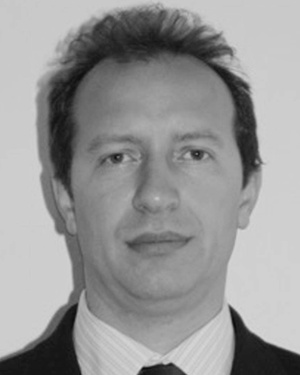 Marco Breschi合作论文数Department of Electrical, Electronic and Information Engineering, University of Bologna11Angelo Valzasina合作论文数9
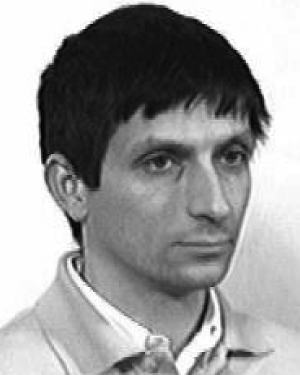 Pier Luigi Ribani合作论文数9Rossella Dalessandro合作论文数9
 Giovanni Grasso合作论文数8P.L. Ribani合作论文数8A. Morandi合作论文数6Cesare Ravetta合作论文数6
 Antonio Morandi合作论文数Dipartimento di Ingegneria5M. Tassisto合作论文数5
 Roberto Penco合作论文数PRD sas4Massimo Fabbri合作论文数4M. Modica合作论文数3R. Marabotto合作论文数3Antonio Macchiagodena合作论文数3F. Negrini合作论文数3
 Lorenzo Cavallucci合作论文数3Davide Nardelli合作论文数3marco modica合作论文数2
 Edoardo Martino合作论文数Laboratory of Physics of Complex Matter, École Polytechnique Fédérale de Lausanne2Imparato, S.合作论文数2Roberto Marabotto合作论文数2R Dalessandro合作论文数2D. Nardelli合作论文数2
 Roberto Brambilla合作论文数2A. Bertinato合作论文数1C. Creusot合作论文数1S. Ginocchio合作论文数1Francesco Negrini合作论文数1christophe creusot合作论文数1
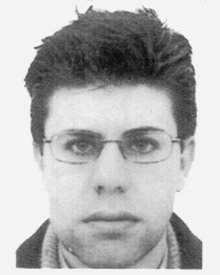 a calleja合作论文数1f fontana合作论文数1
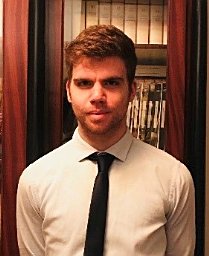 Mattia Simonazzi合作论文数Dept Elect Elect & Informat Engn DEI, Univ Bologna1
 Arooj Akbar合作论文数Appl Superconduct Grp, Ecole Polytech Fed Lausanne1
 Pierre-Baptiste Steckler合作论文数1Laura Serri合作论文数1C. Santini合作论文数1L. Trevisani合作论文数1M. Noe合作论文数1luca martini合作论文数1
 Francesco Sanniti合作论文数1l trevisani合作论文数1
 Daniele Colangelo合作论文数1
 Sebastian Dambone Sessa合作论文数1




